Bäuerin vor einer Almhütte — History & Analysis
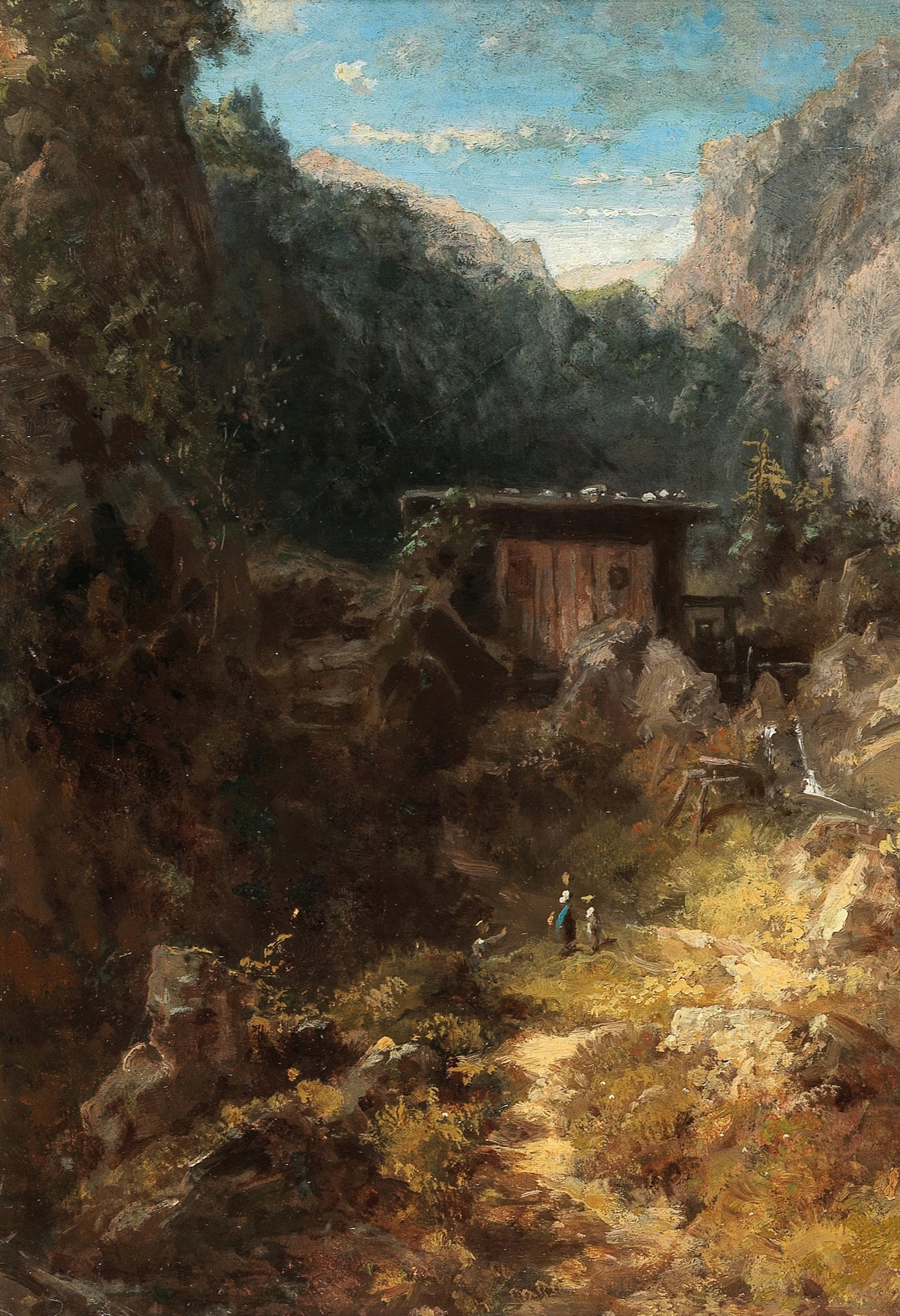
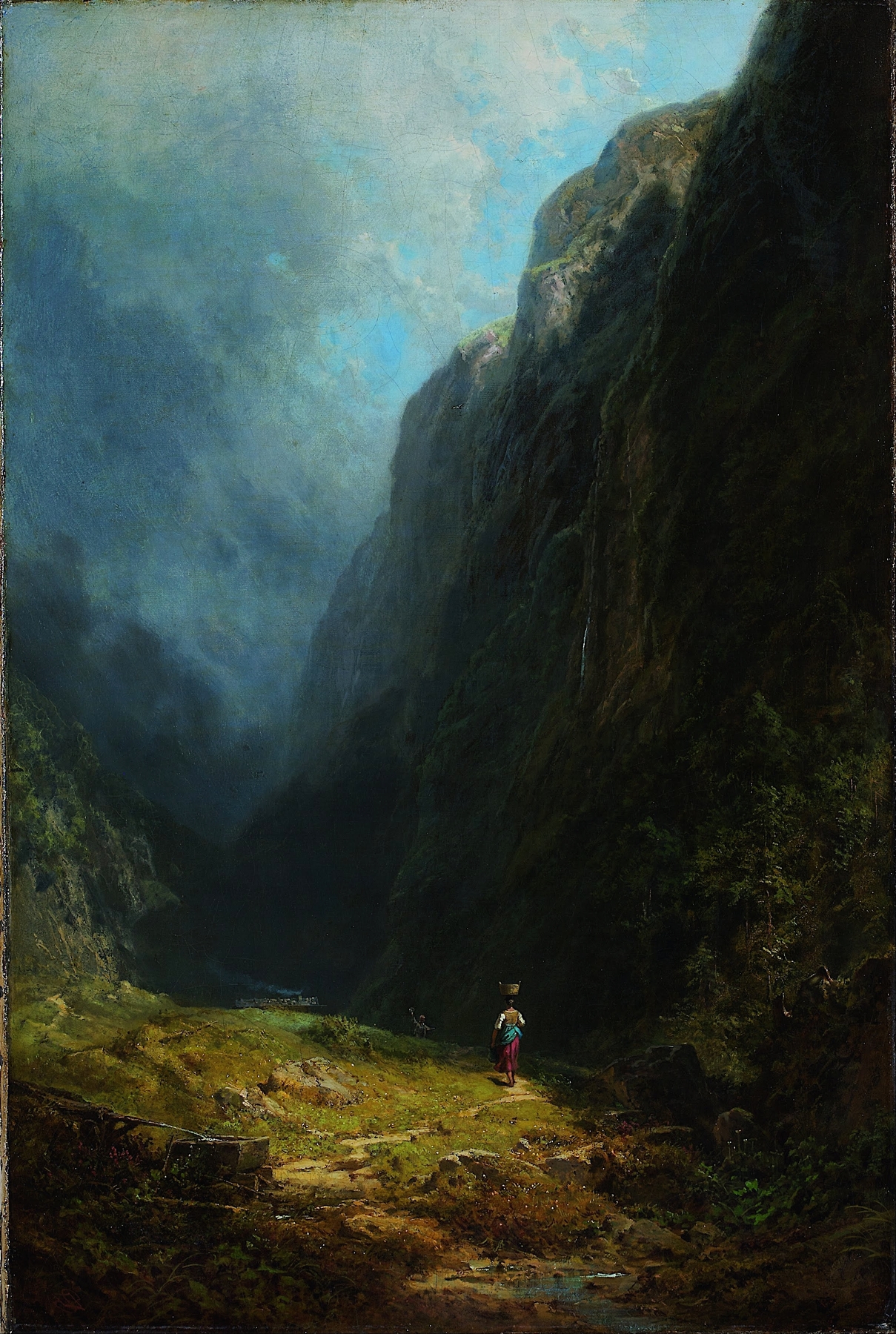
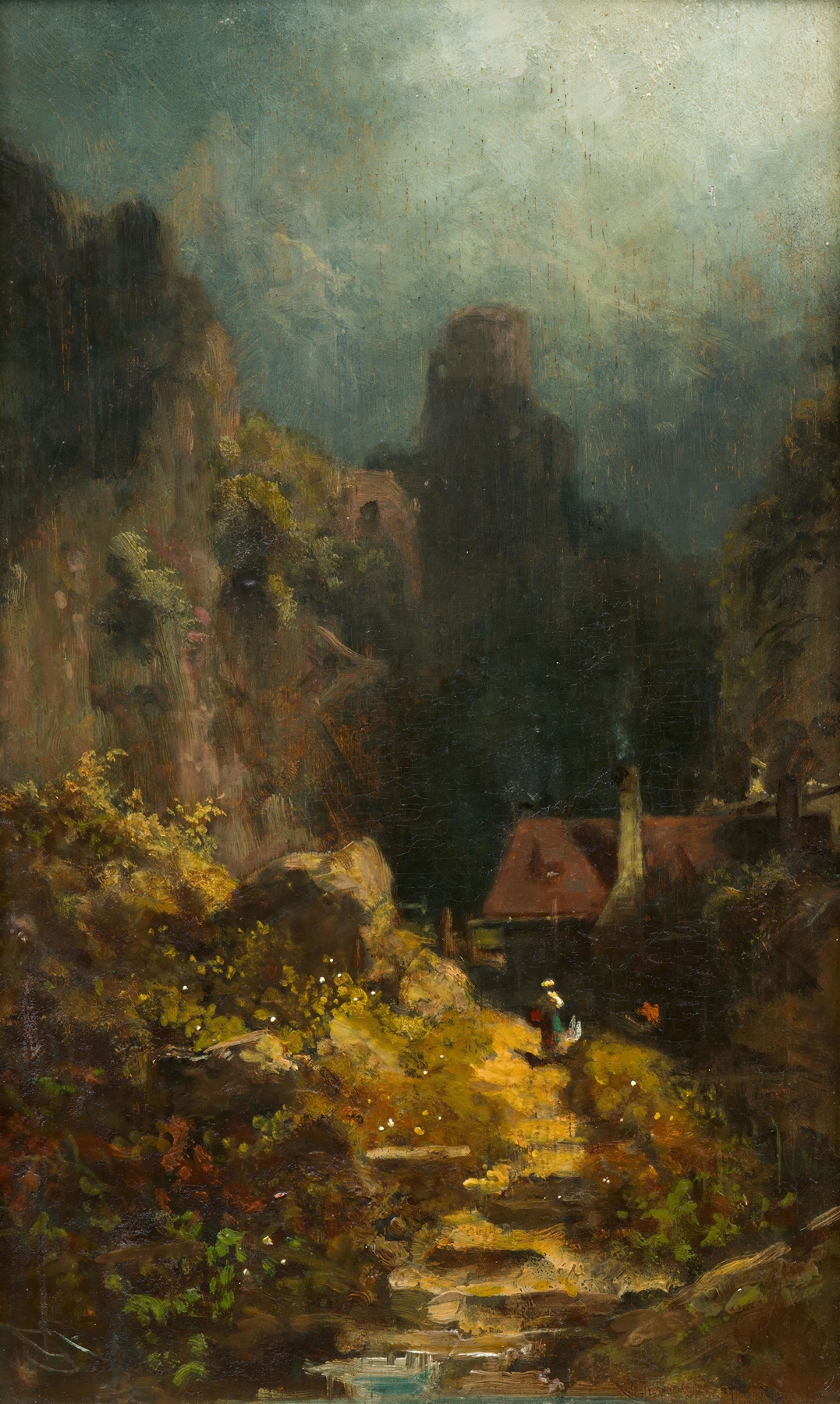
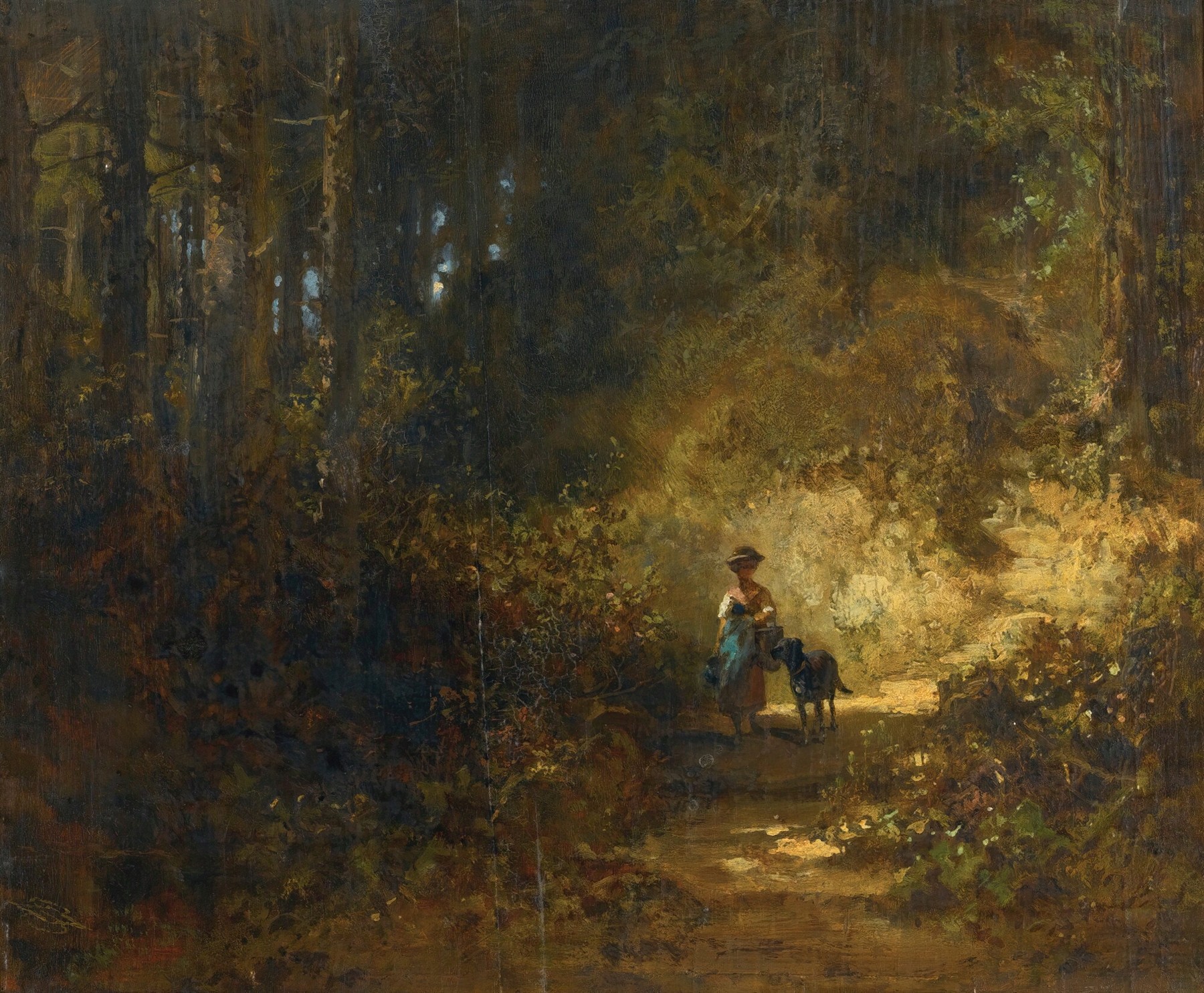
“Loneliness often wears the guise of silence, inviting the introspective to linger.” In Bäuerin vor einer Almhütte, the artist captures a moment that transcends the physical landscape, evoking the deep solitude that resides within the heart of humanity. Look to the left at the solitary figure of the peasant woman, her posture a blend of weariness and contemplation. The delicate brushwork renders her clothing in rich earth tones, harmonizing with the rustic hues of the alpine hut behind her. Notice how the gentle light filters through the clouds, casting a soft glow that highlights the textures of her surroundings—the rough timber of the hut, the lush green grass, and the distant, majestic mountains.
Each stroke invites you into her world, the composition drawing the eye toward her silent reflection. The contrast between the woman's quiet presence and the vastness of the landscape speaks to the tension of isolation versus community. The mountains, both beautiful and intimidating, seem to cradle her loneliness while also accentuating her solitude. The wildflowers at her feet, vibrant yet distant from her, symbolize fleeting moments of joy that may never be fully reached.
This conflict plays out in the way her gaze drifts beyond the viewer, suggesting a yearning for connection yet acceptance of her solitude. Carl Spitzweg painted this piece in 1870, during a period marked by a fascination with Romanticism and a growing interest in the lives of ordinary individuals. Living in Munich, he was influenced by the burgeoning art movement that celebrated the beauty of everyday moments. This work reflects both the artist's personal experiences and the broader themes of isolation in an increasingly modernizing world.