Gebirgsmühle — History & Analysis
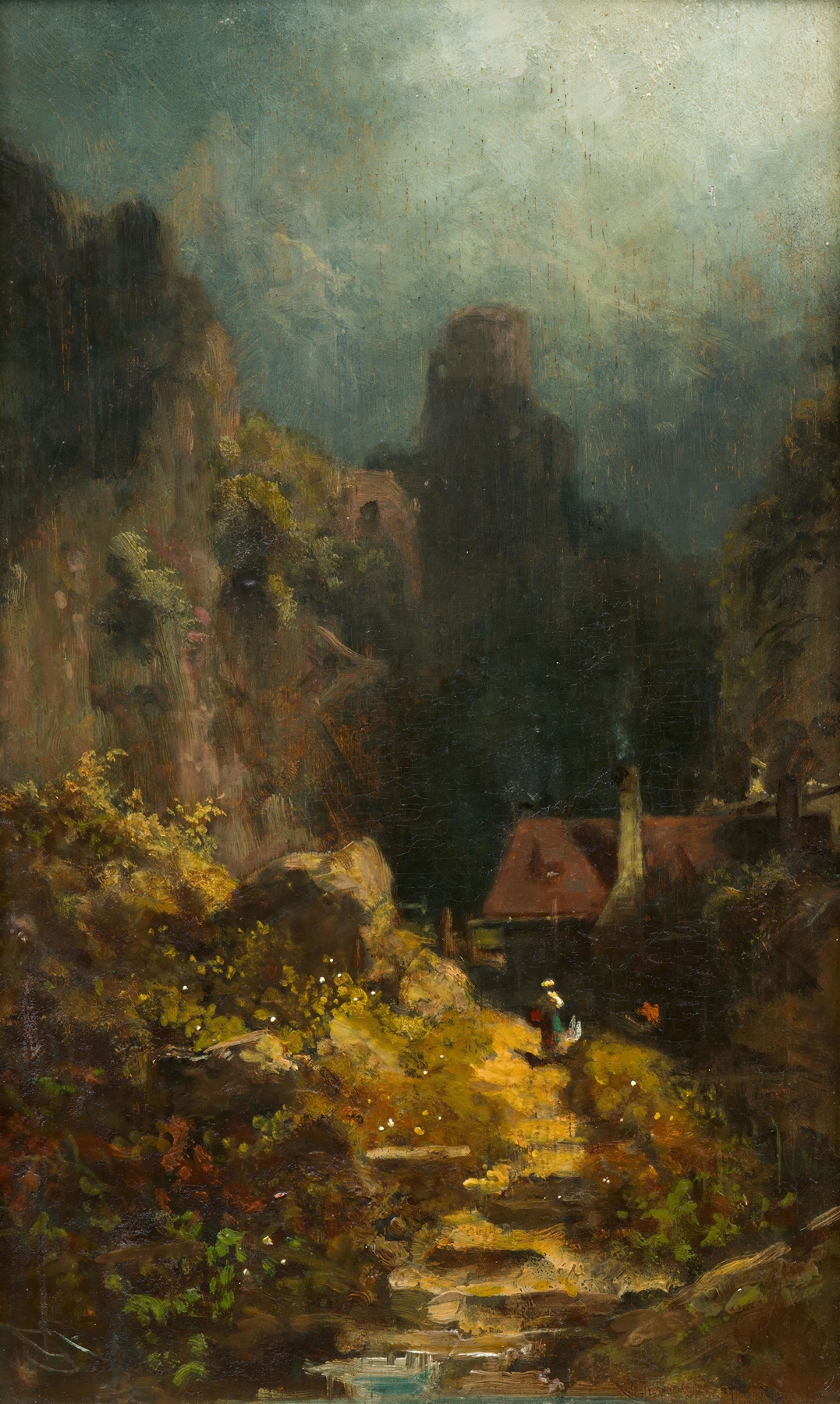
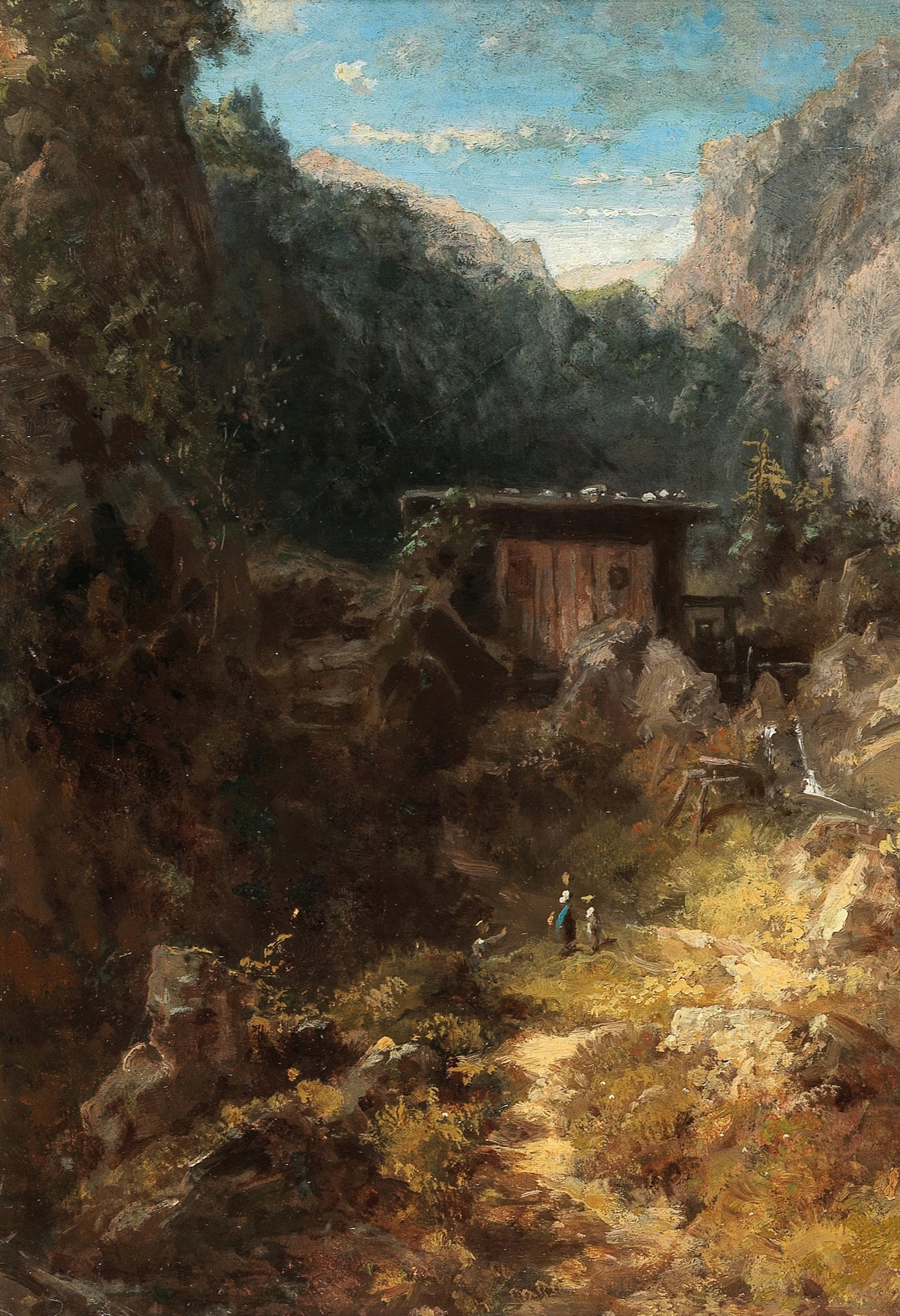
Can paint confess what words never could? In Gebirgsmühle, the beauty of a mountain mill whispers secrets of simplicity and harmony, inviting contemplation in every brushstroke. Look at the left side of the canvas, where the mill’s sturdy structure emerges from the verdant hillside, bathed in soft, golden light. Notice how the delicate interplay of greens and browns captures the essence of the landscape, each stroke of the brush rendering life into the wooden beams and the flowing water below.
The composition guides the eye upwards toward the towering peaks, their majestic forms contrasting against the tranquility of the scene, creating a dialogue between nature’s grandeur and human craftsmanship. Peering closer, the interplay of light and shadow reveals the emotional depth within this picturesque setting. The gentle flow of the stream can symbolize the passage of time, while the mill itself stands as a testament to perseverance amid nature’s splendor. The quietude of the scene may evoke a sense of nostalgia, suggesting a yearning for simpler days where human endeavor seamlessly intertwined with the natural world.
Carl Spitzweg created this work during the mid-19th century, a time when Romanticism was asserting itself in German art. Living in Munich, he often drew inspiration from the idyllic Bavarian countryside, reflecting a longing for harmony between humanity and nature. This painting encapsulates that ideal, serving as a poignant reminder of beauty found in the everyday, yet often overlooked, elements of life.