In der Schlucht — History & Analysis
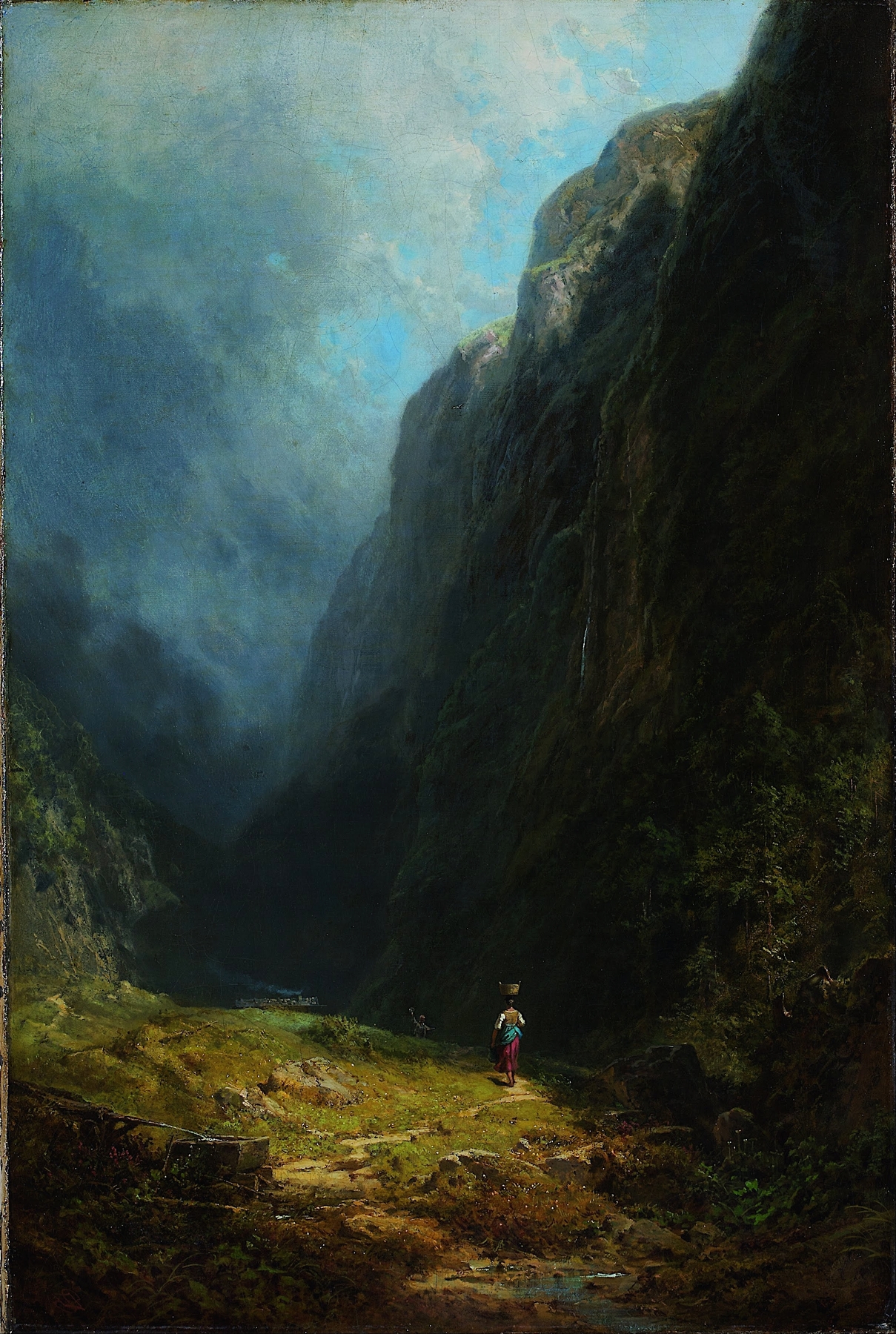
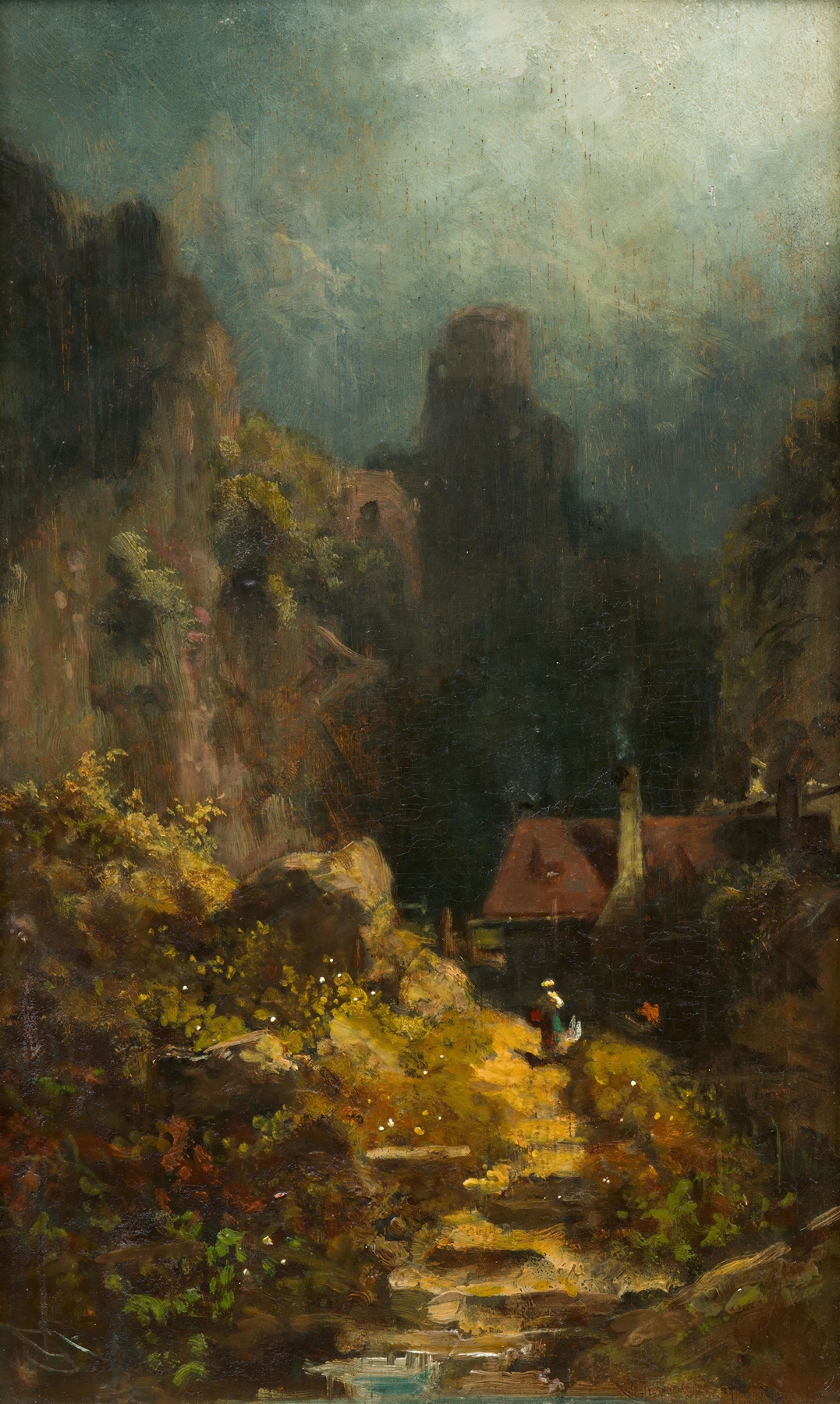
“Between color and silence, truth hides.” In a realm where innocence flutters like a delicate leaf, the heart yearns to uncover the beauty within simplicity. Look to the left at the gentle curves of the hills, soft and inviting, embracing the quaint house nestled within their arms. The chimney puffs a faint plume of smoke, a whisper of warmth—an invitation to the viewer. Notice how the muted earth tones of the landscape contrast with the brighter hues of the house’s façade, each brushstroke revealing a delicate balance between nature and humanity.
The composition leads your gaze through the scene, wrapping you in a cozy embrace of nostalgia and tranquility. As you delve deeper, observe the interplay between light and shadow that creates a sense of depth and perspective. The sunlight filters through the trees, casting dappled patterns onto the ground, while the tranquility of the scene evokes a sense of solace. The presence of the smoke hints at life within the home, fostering a connection between the inhabitants and their surroundings.
This subtle contrast between solitude and the warmth of domesticity embodies a yearning for innocence, untouched by the chaos of the outside world. In the mid-19th century, Spitzweg painted this piece while residing in Munich, a time when Romanticism was influential, inspiring a retreat into the idyllic. The artist's focus on nature and simplicity reflected his own desire for peace amidst a rapidly industrializing Europe. This painting, like many of his works, captures the essence of rural life, celebrating a profound connection to the landscape and a nostalgic longing for a simpler, more innocent existence.