Lagernde Karrner (Rast der Streuner) — History & Analysis
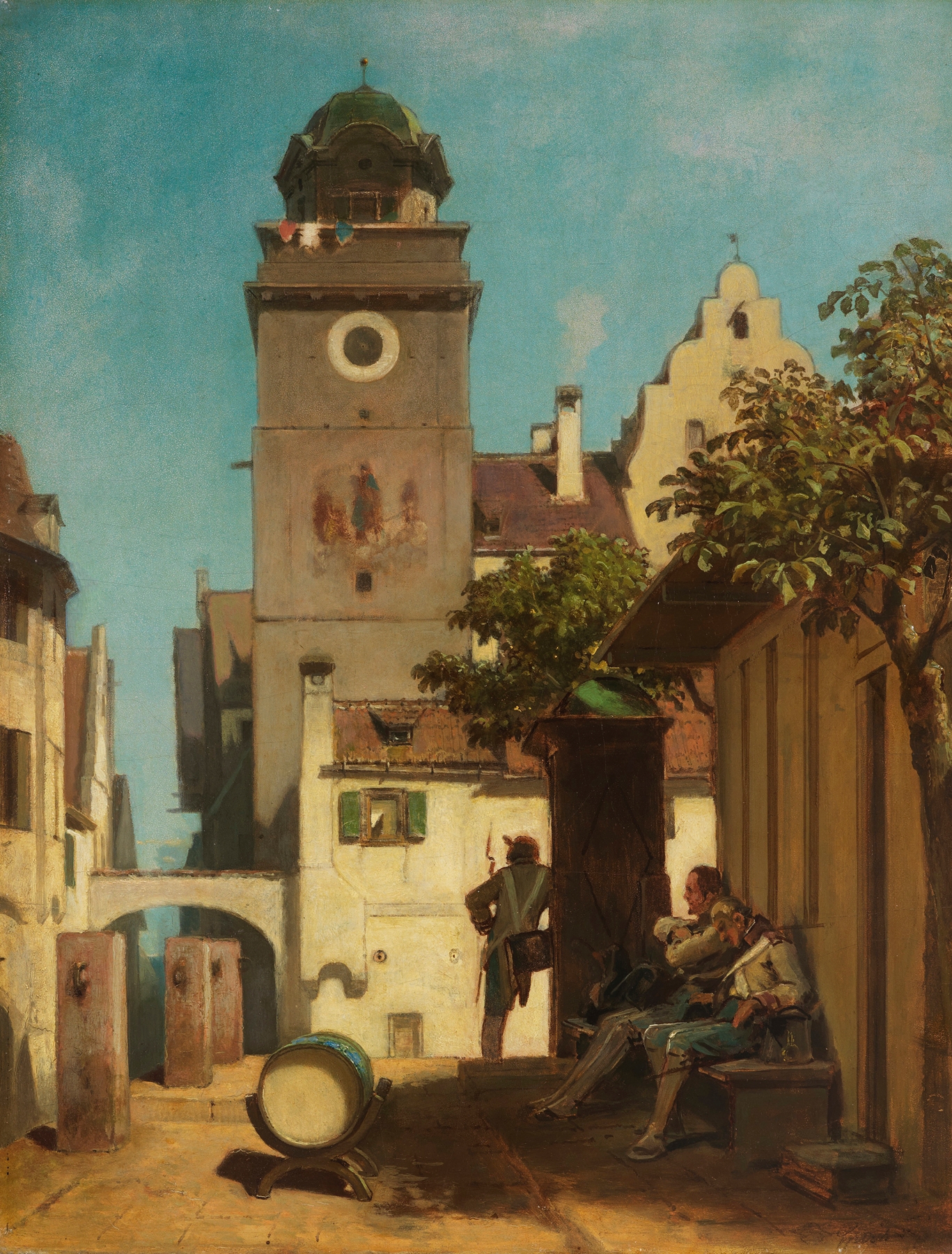
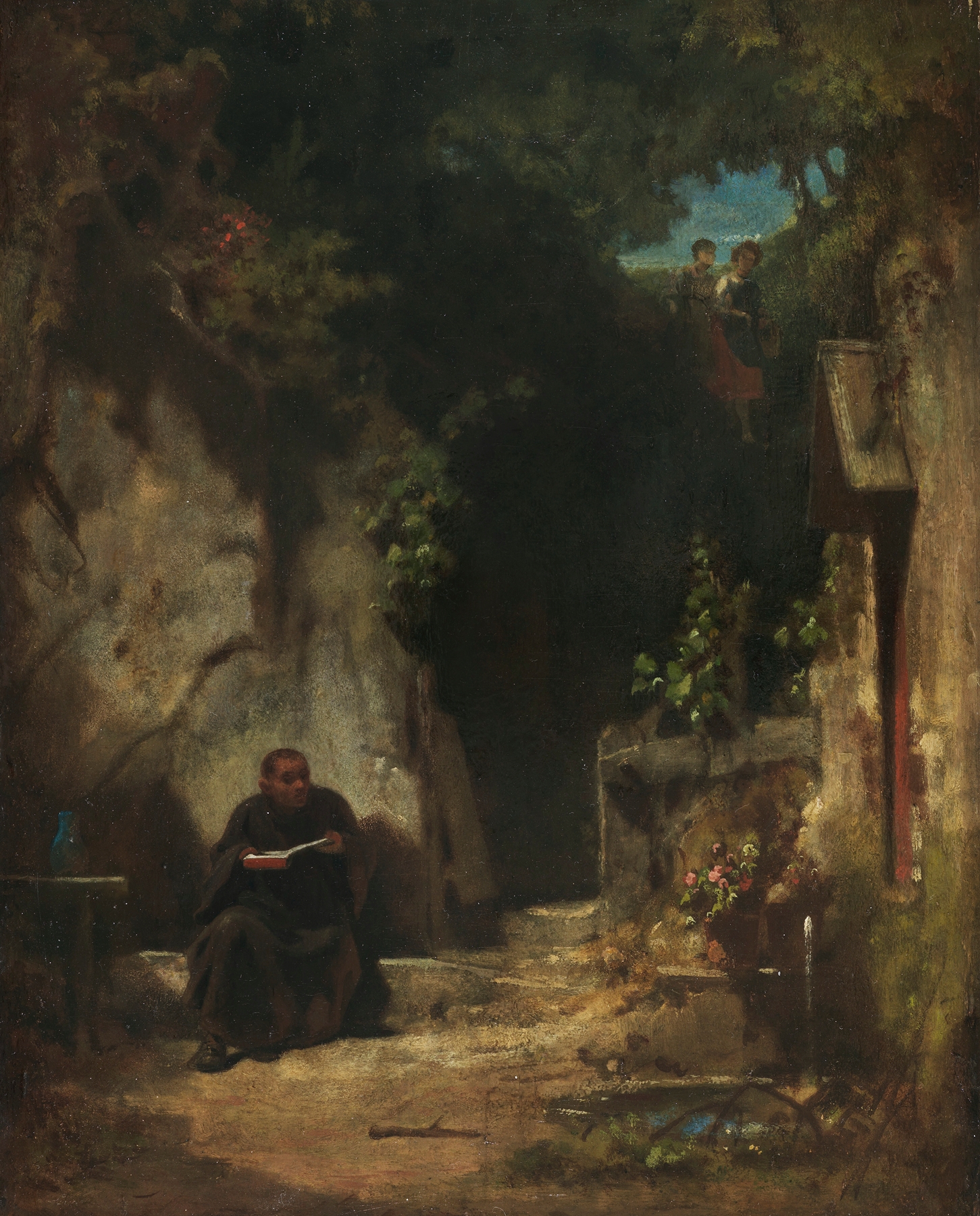
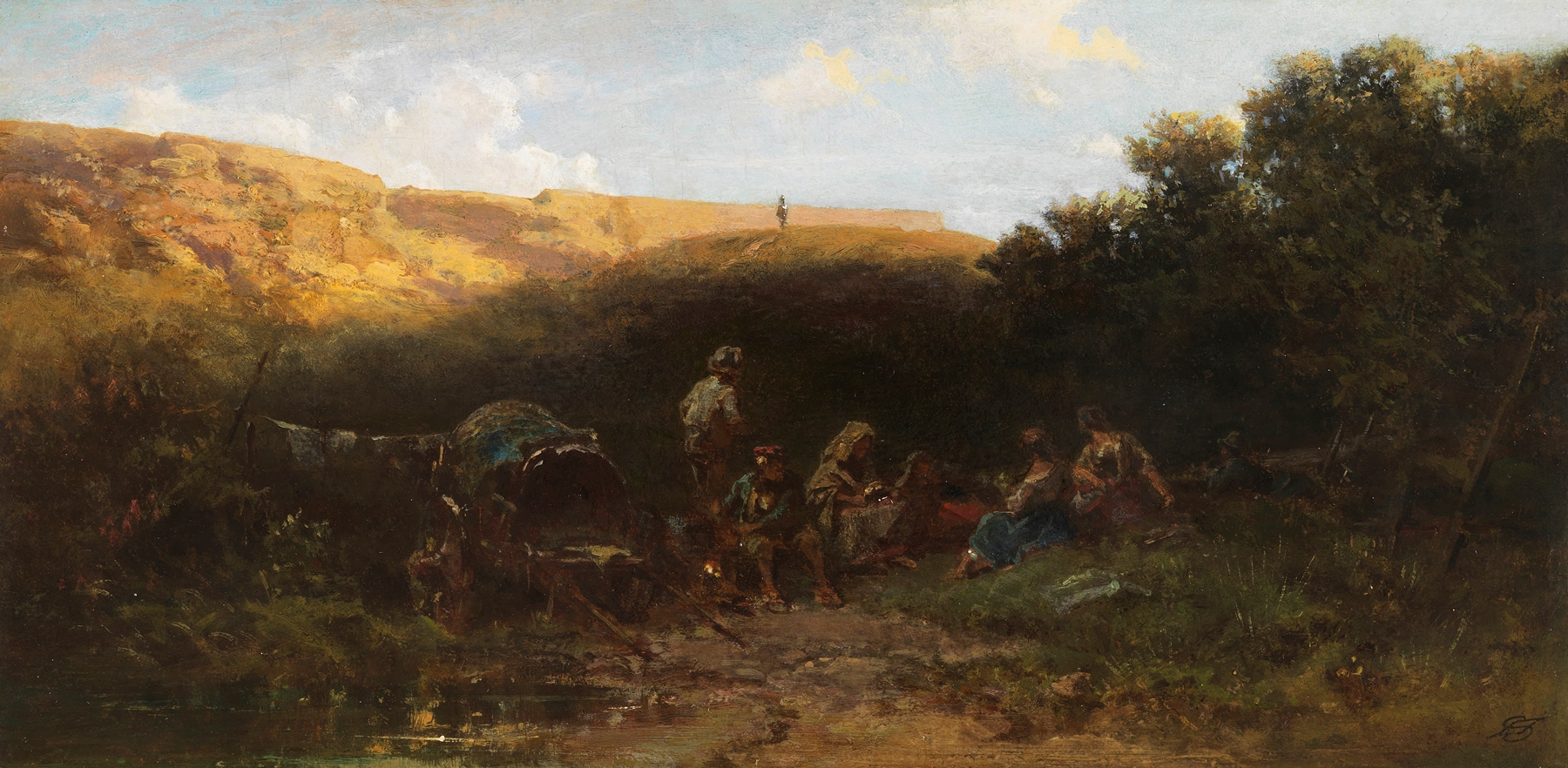
“Art reveals the soul when the world turns away.” In Lagernde Karrner (Rast der Streuner), a moment of divine tranquility unfolds in a world that often overlooks the sacredness of simplicity. Here, the essence of humanity lies in the subtle interplay between struggle and solace, captured exquisitely by the brush of its creator. To truly appreciate the painting, look to the center where a weary traveler rests, his posture suggesting both fatigue and peace. Notice how the rich earth tones of his clothing harmonize with the muted greens and browns of the surrounding landscape, evoking a sense of oneness with nature.
The gentle play of light enhances the contours of his face, revealing a quiet determination, while the lush foliage encircles him like a protective embrace, inviting viewers into this serene moment. Beneath its tranquil surface, the painting explores profound contrasts: the weariness of travel versus the stillness of nature, the burdens of life juxtaposed against the respite found in stillness. The traveler’s closed eyes hint at introspection, perhaps a fleeting communion with the divine, as if the artist invites us to ponder what it means to find peace amidst life’s chaos. Each brushstroke resonates with an unspoken prayer, suggesting that even in our most wearied states, we can encounter moments of grace.
Carl Spitzweg painted this work in 1870, a period marked by a growing fascination with Romanticism and everyday life. Living in Munich, he sought to capture the everyday experiences of ordinary people, reflecting a shift in the art world toward realism and emotional depth. This piece stands as a testament to his ability to find beauty in the mundane, elevating a simple pause into a moment of profound reflection and divine connection.