Moonlit Scene with Castle Ruins — History & Analysis
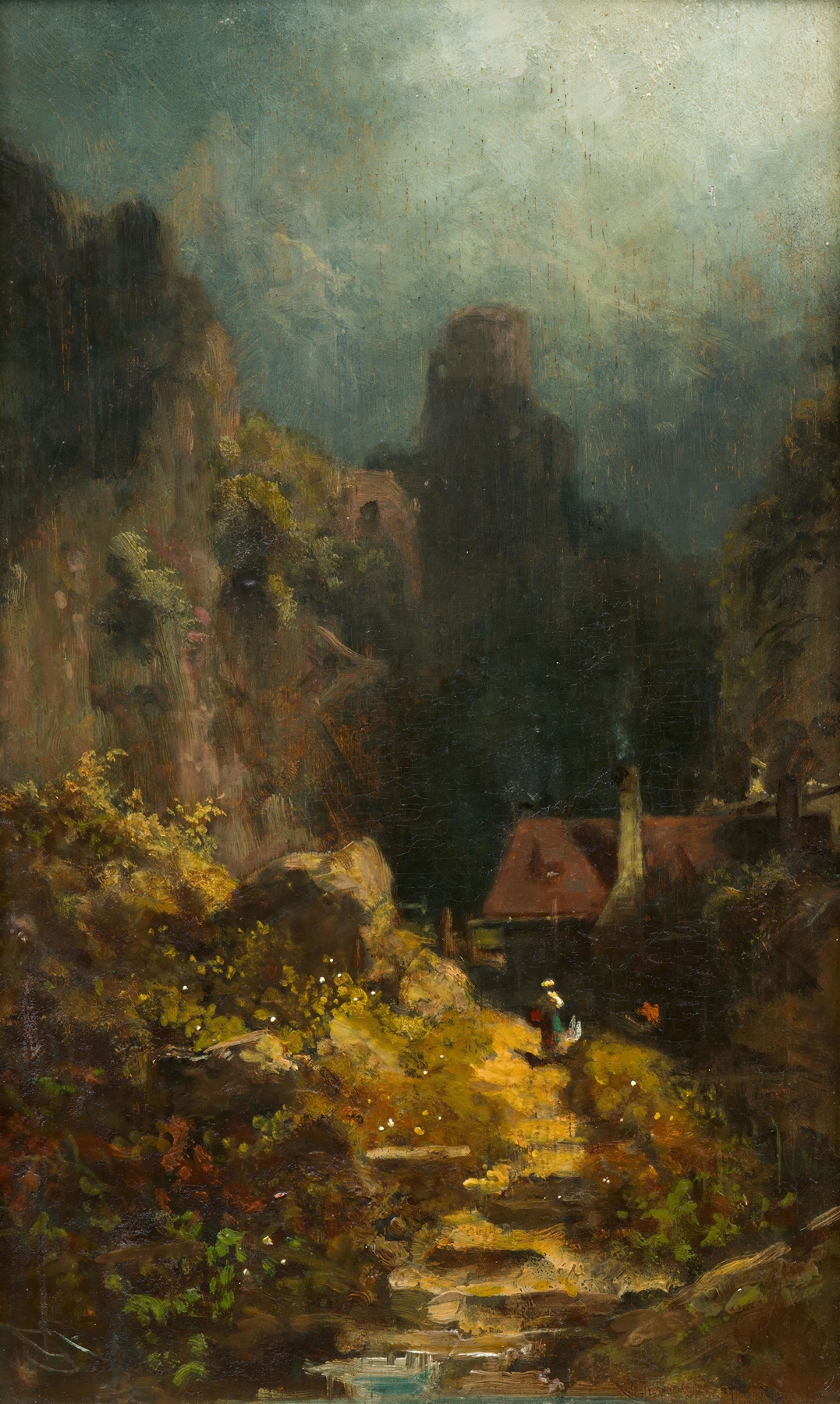
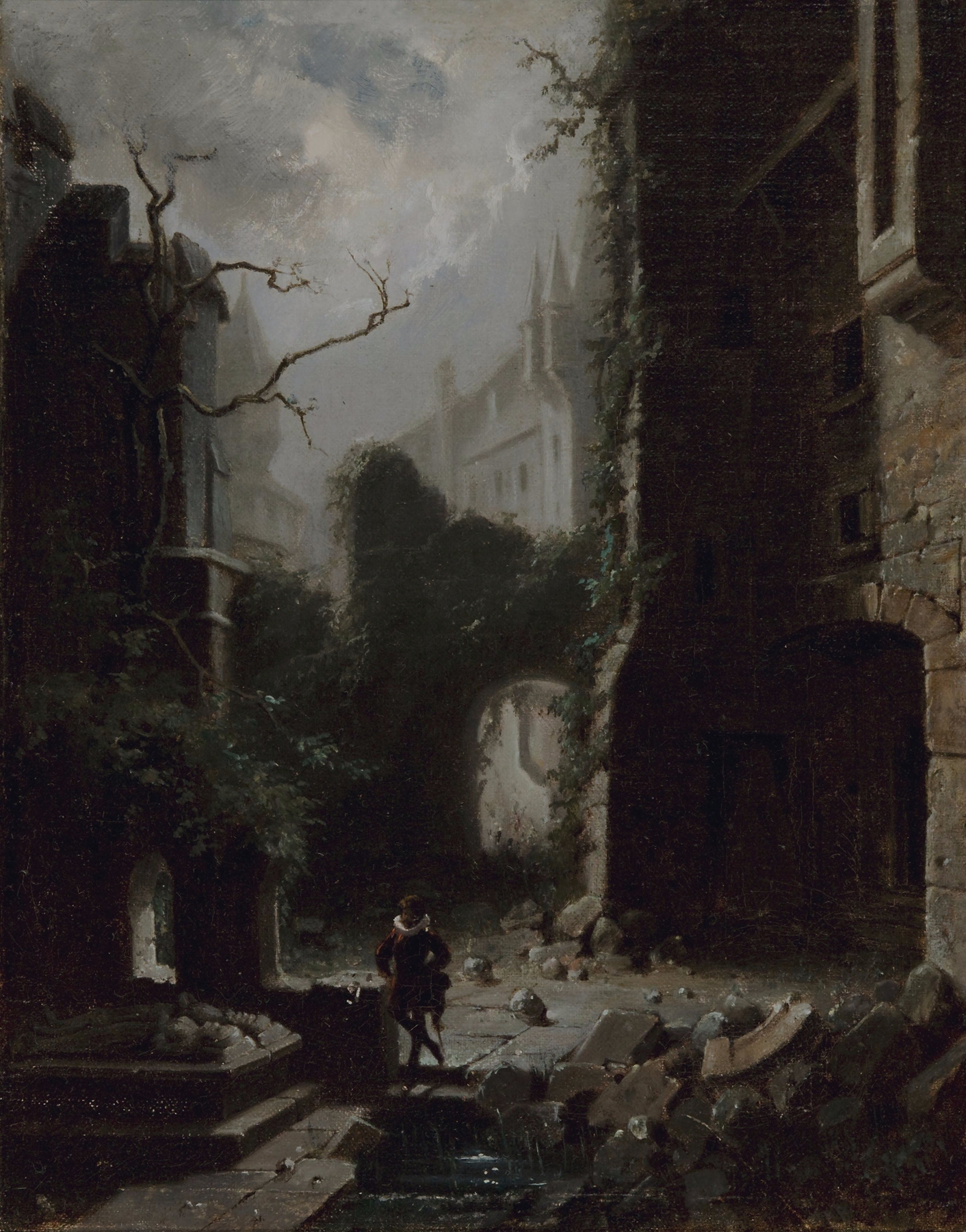
Could beauty survive in a century of chaos? The delicate interplay of light and shadow in Moonlit Scene with Castle Ruins invites us to consider the remnants of what once was — a legacy forged through time. Look to the left at the ruins of the castle, silhouetted against the radiant moonlight. Its crumbling stones, tenderly illuminated, echo a history steeped in grandeur and loss. Notice how the cool hues of blue and silver envelop the scene, evoking a sense of tranquility amidst decay.
The careful brushwork brings an almost dreamlike quality to the landscape, as the shimmering moon hangs low in the sky, casting a serene glow over the desolation. The tension between light and dark in this painting reflects emotional layers that resonate with the viewer. The moonlight serves as a fleeting reminder of beauty that persists, even in the face of ruin. The surrounding nature, rich with foliage and shadows, hints at the encroachment of time — a contrast between the timeless sky and the fragile remains of human endeavor.
Each element, from the tranquil water to the distant trees, plays a role in the narrative of legacy, underscoring the enduring spirit of a place once vibrant. Spitzweg painted this piece during a tumultuous period in Europe, likely in the mid-19th century. As a Romantic artist known for his depictions of the melancholic beauty of nature and ruins, he sought solace in landscapes that echoed the uncertainties of his time. The art world was experiencing profound changes, yet through his work, the artist found a way to immortalize the ephemeral, revealing a poignant connection to the past.