Im Walde — History & Analysis
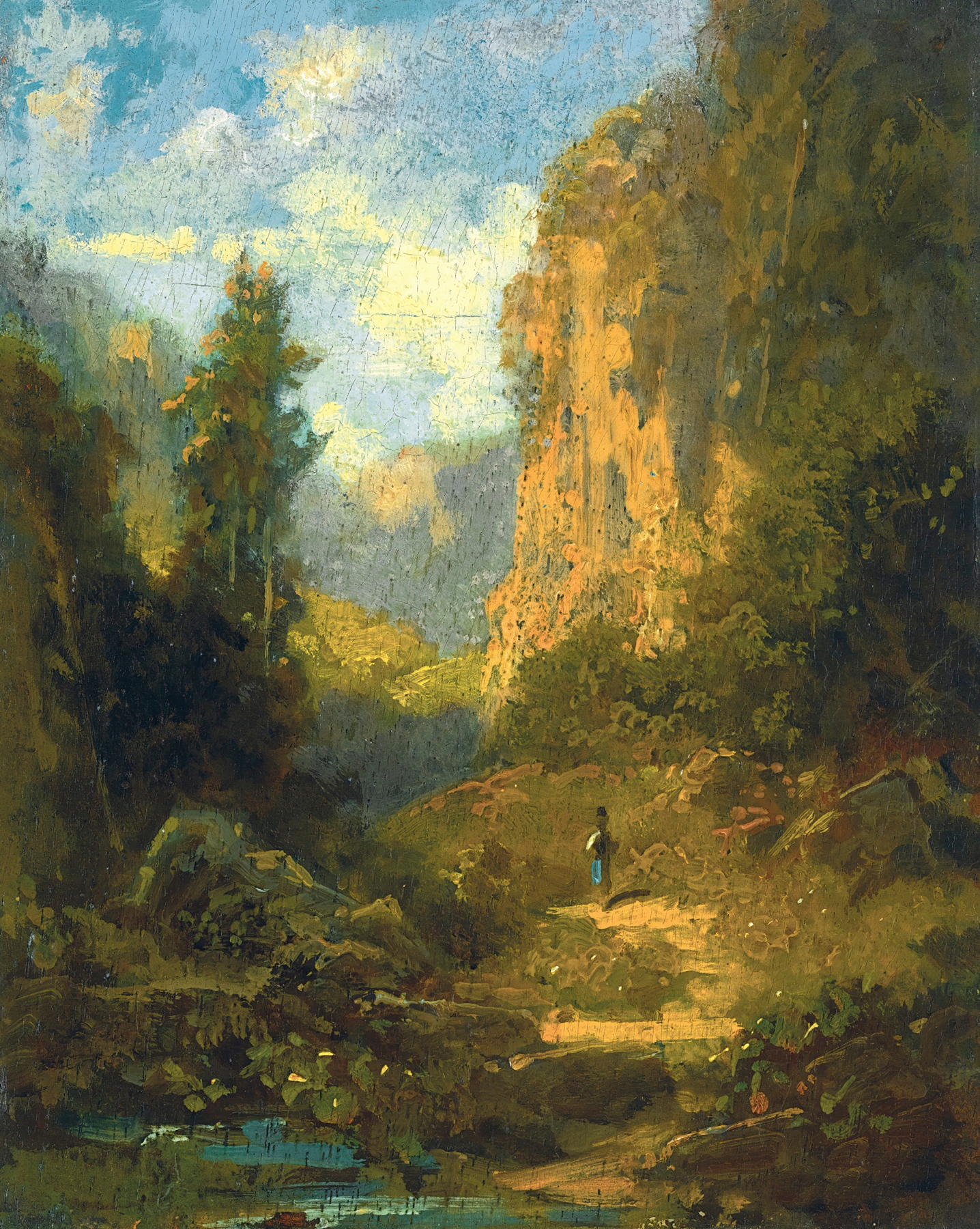
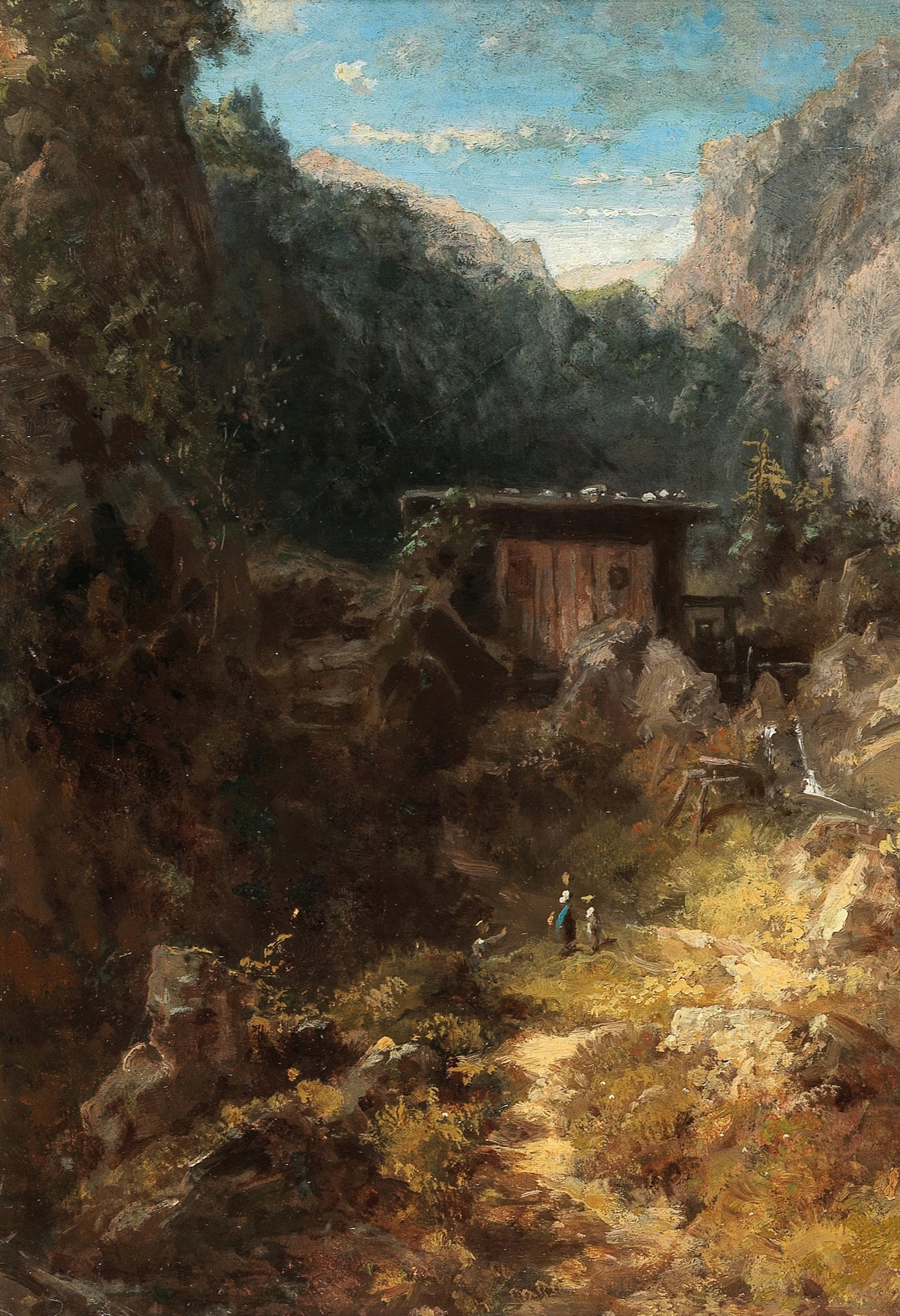
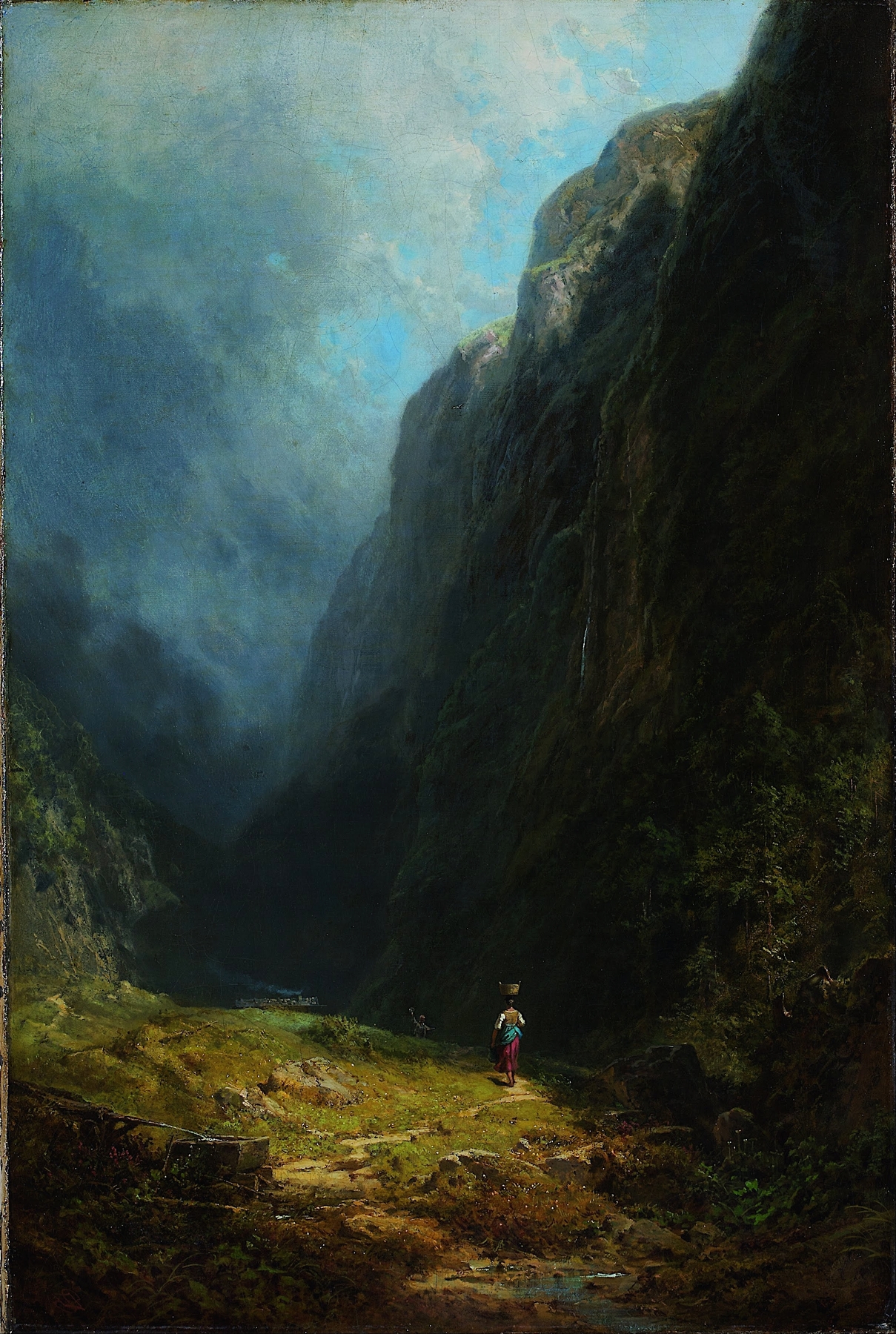
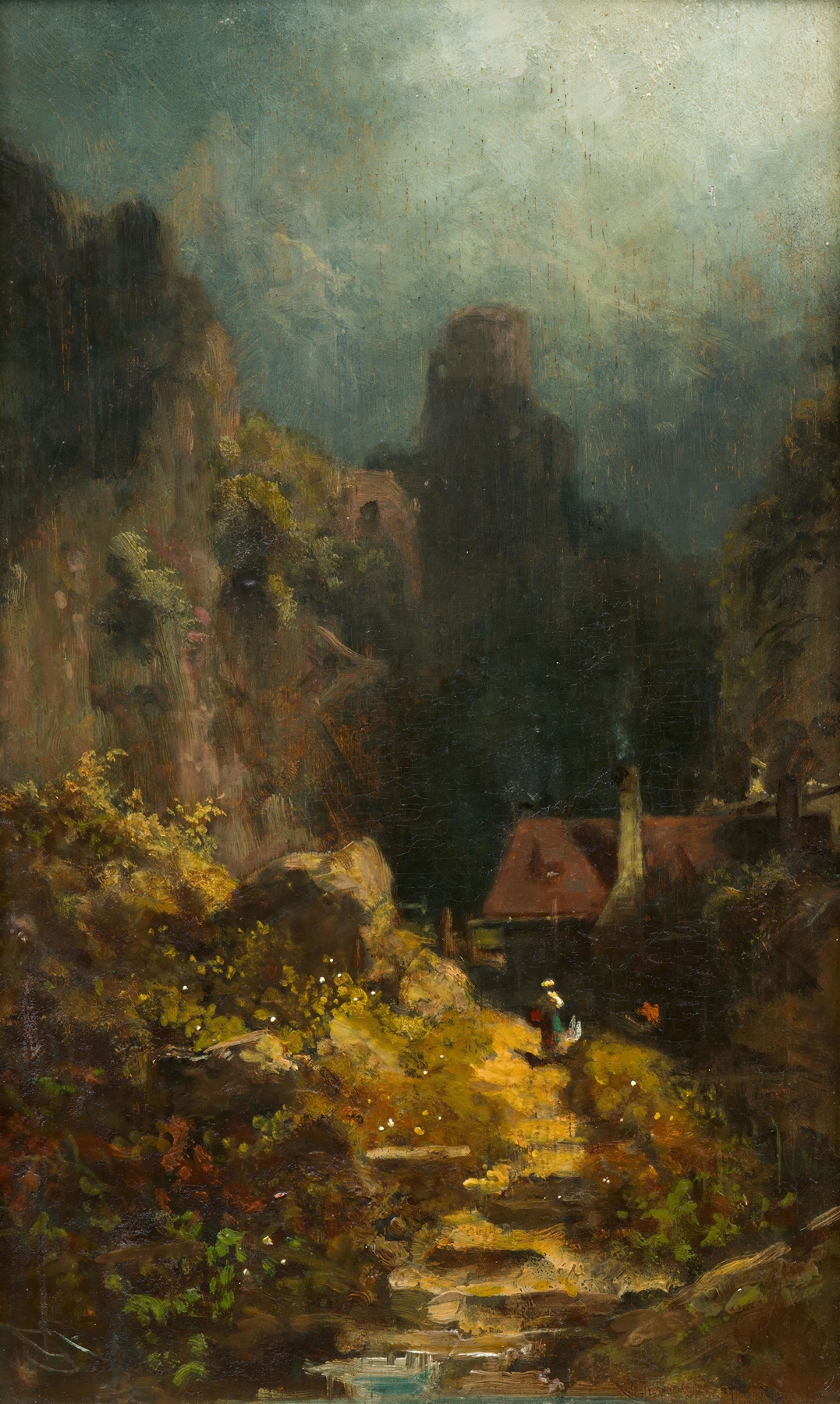
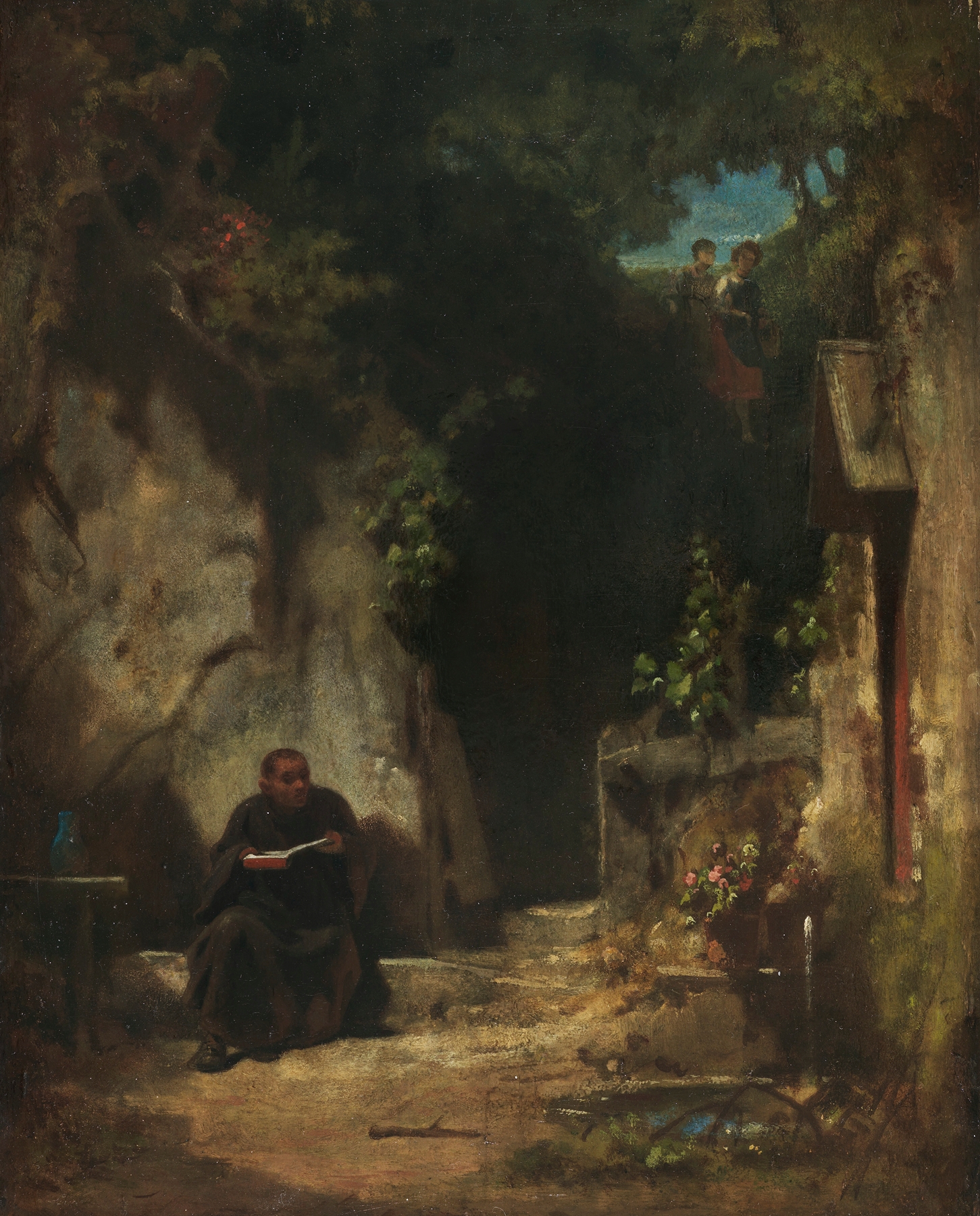
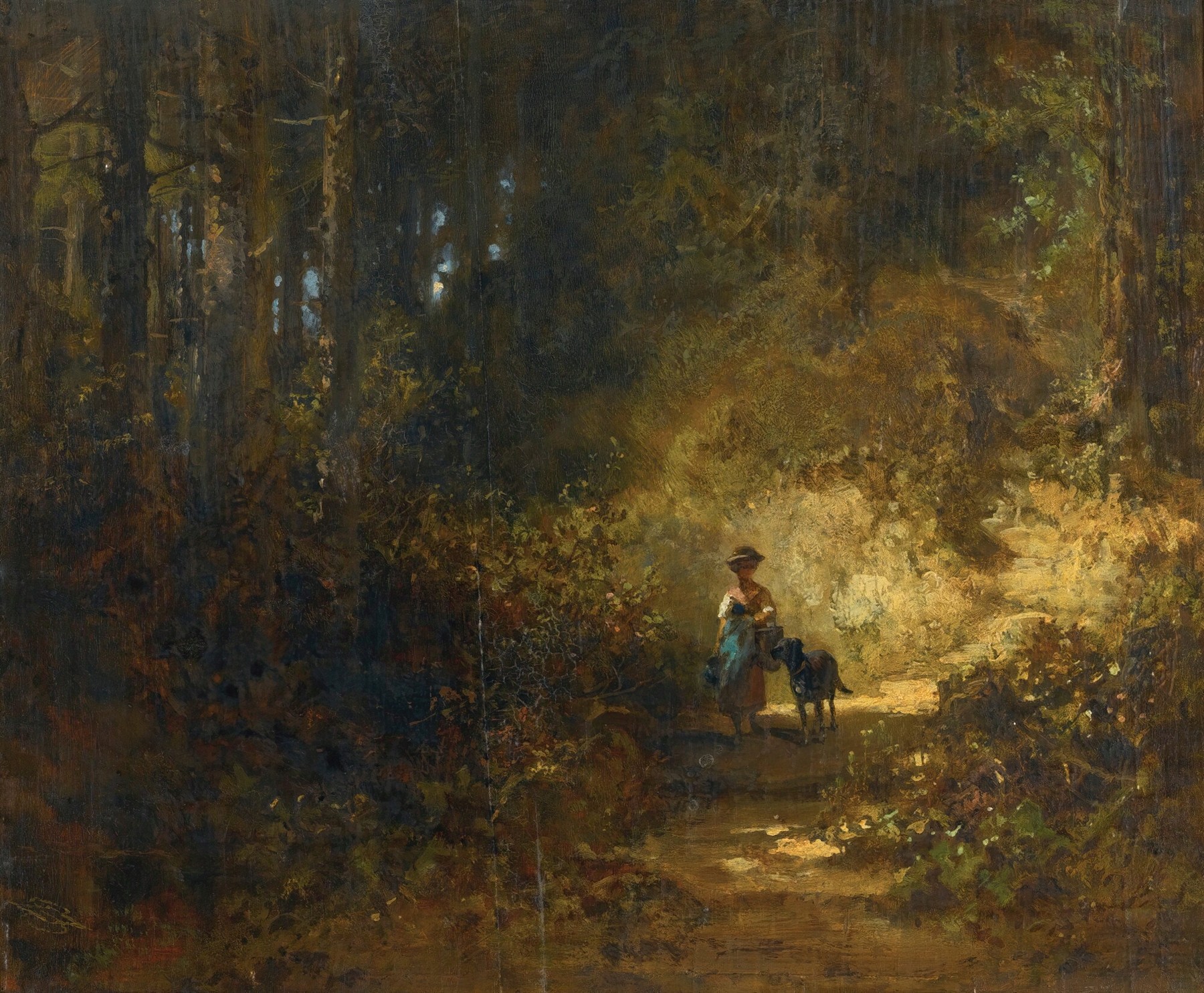
“Sometimes beauty is just pain, disguised in gold.” In the heart of solitude, longing seeps through layers of nature's tranquil facade, whispering of unfulfilled desires and the search for solace. Focus on the serene figure standing amidst the lush greens, nearly camouflaged by the surrounding foliage. The artist employs a range of earthy tones — rich browns and soft greens — to evoke a sense of harmony with nature. The light filters delicately through the canopy, illuminating the figure’s pensive expression, as if time has paused, captured in a moment of introspection.
Each brushstroke conveys the intricate details of leaves and shadows, drawing the viewer's eye into the depths of the forest, where tranquility reigns yet holds an undercurrent of melancholy. Beneath this serene exterior lies a deeper narrative of solitude and yearning. The figure’s body language speaks volumes — the slight tilt of the head and the distant gaze suggest a yearning for something beyond the immediate world, perhaps a connection or an escape. The stark contrast between the vibrant life of the forest and the solitary figure reinforces the theme of isolation, encapsulating the tension between nature’s beauty and the human condition.
Carl Spitzweg painted Im Walde in the mid-19th century, during a time when Romanticism was flourishing in Germany. His exploration of nature as a backdrop for human emotion coincided with his own experiences of wandering through the landscapes of Bavaria. Amidst a booming art scene, Spitzweg captured the essence of longing that resonates deeply with the viewer, reflecting both personal and collective struggles of finding peace in a chaotic world.