Die Stadtwache — History & Analysis
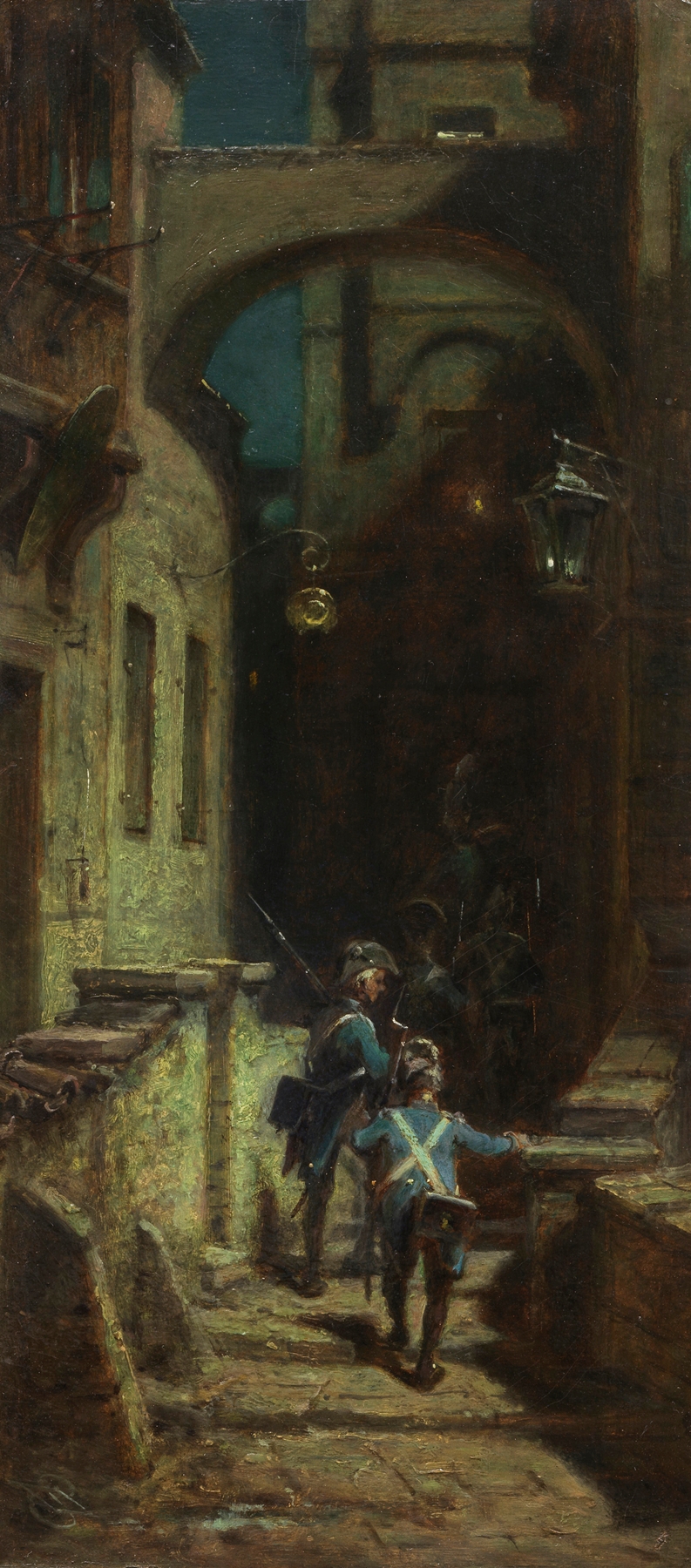
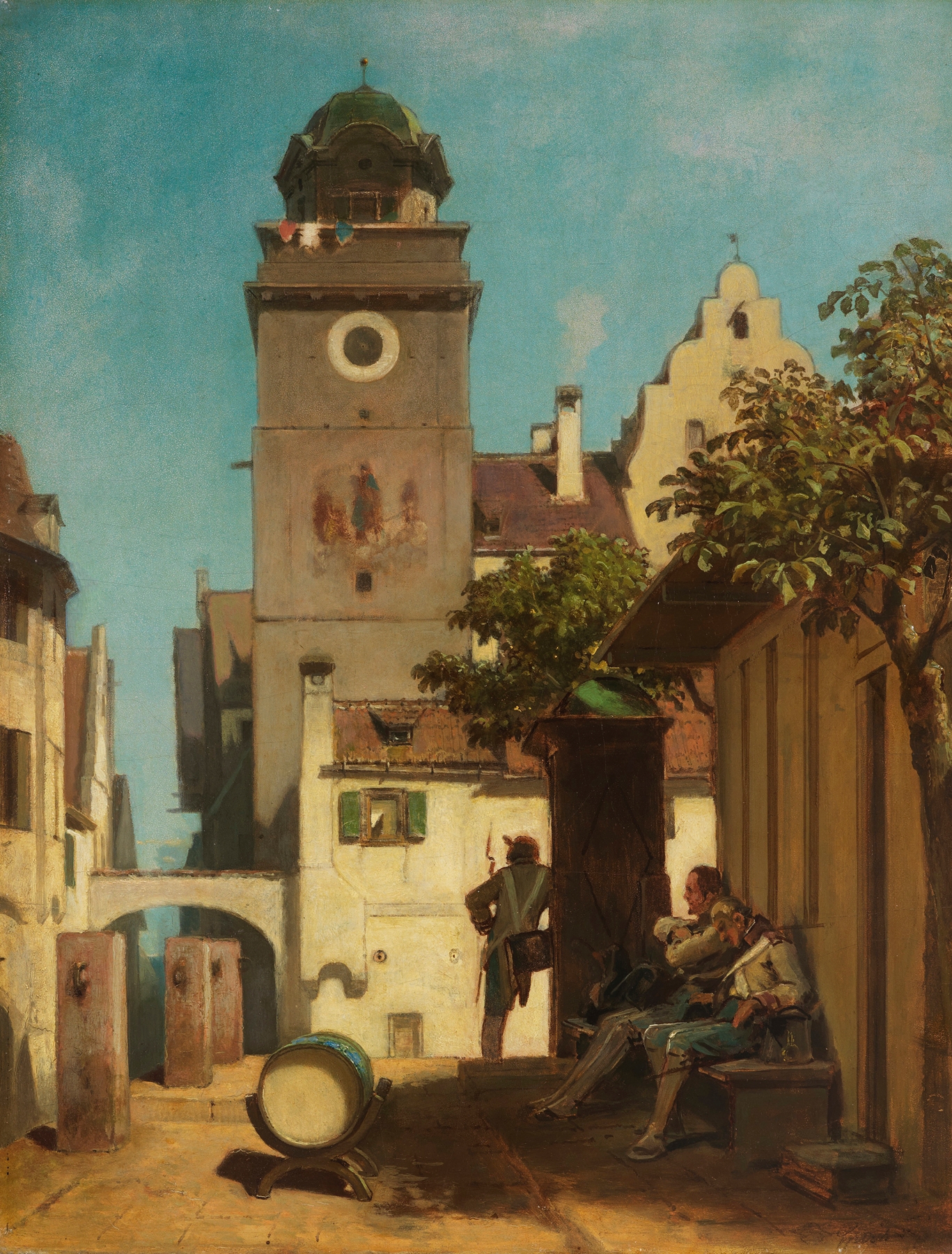
Could a single brushstroke hold eternity? In Die Stadtwache, Carl Spitzweg captures a moment of innocent watchfulness, inviting us into a world where tranquility and duty intertwine. Look to the left at the young watchman, his posture relaxed yet alert, a testament to his responsibilities. The soft, golden hues of the evening light illuminate his face, creating a striking contrast against the somber tones of the surrounding architecture. Notice how the delicately painted details of the cobblestone street draw your eye toward the beckoning shadows, suggesting an unfolding narrative that lurks just beyond the canvas.
The gentle curves of the buildings cradle the scene, enhancing the feeling of both safety and vigilance. Delve deeper into the emotional landscape of this artwork, where innocence clashes with the weight of duty. The watchman's youthful face, imbued with sincerity, hints at the burdens he carries and the sacrifices made in the name of service. In contrast, the serene environment around him begs the viewer to question the nature of vigilance—does it protect or confine?
Each brushstroke serves to highlight the tension between the watchman's role and the idyllic city life, evoking a nostalgia for simpler times now obscured by responsibility. Around 1850-55, when this piece was created, Spitzweg was living in Munich, a city experiencing rapid industrialization and urban change. The artist's focus on everyday life and character studies marked his style, as he sought to illuminate the warmth of human experiences amid the societal transformations of his time. This painting is reflective of a broader movement within German art, emphasizing individual narratives and the charm of ordinary moments.