Die Scharwache — History & Analysis
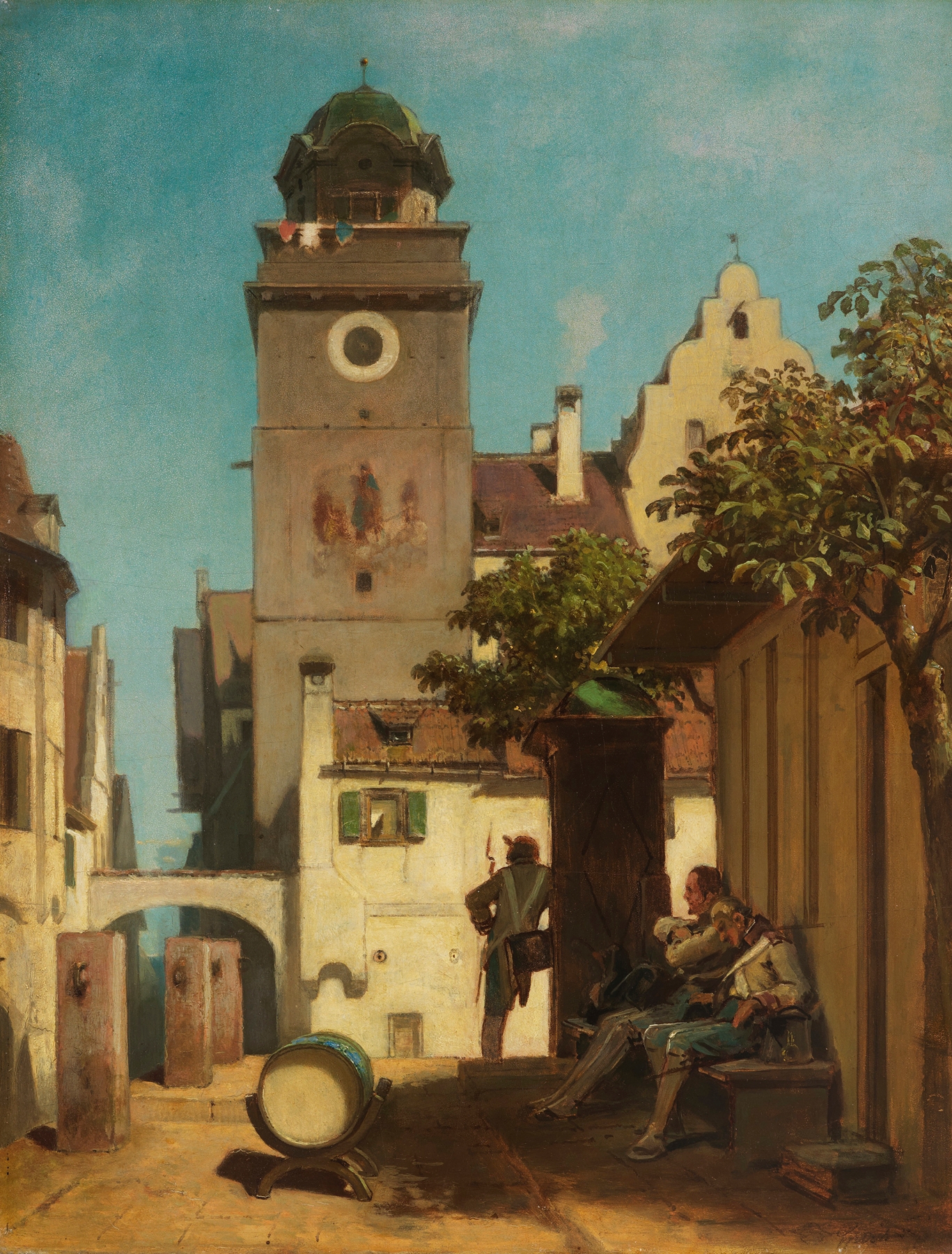
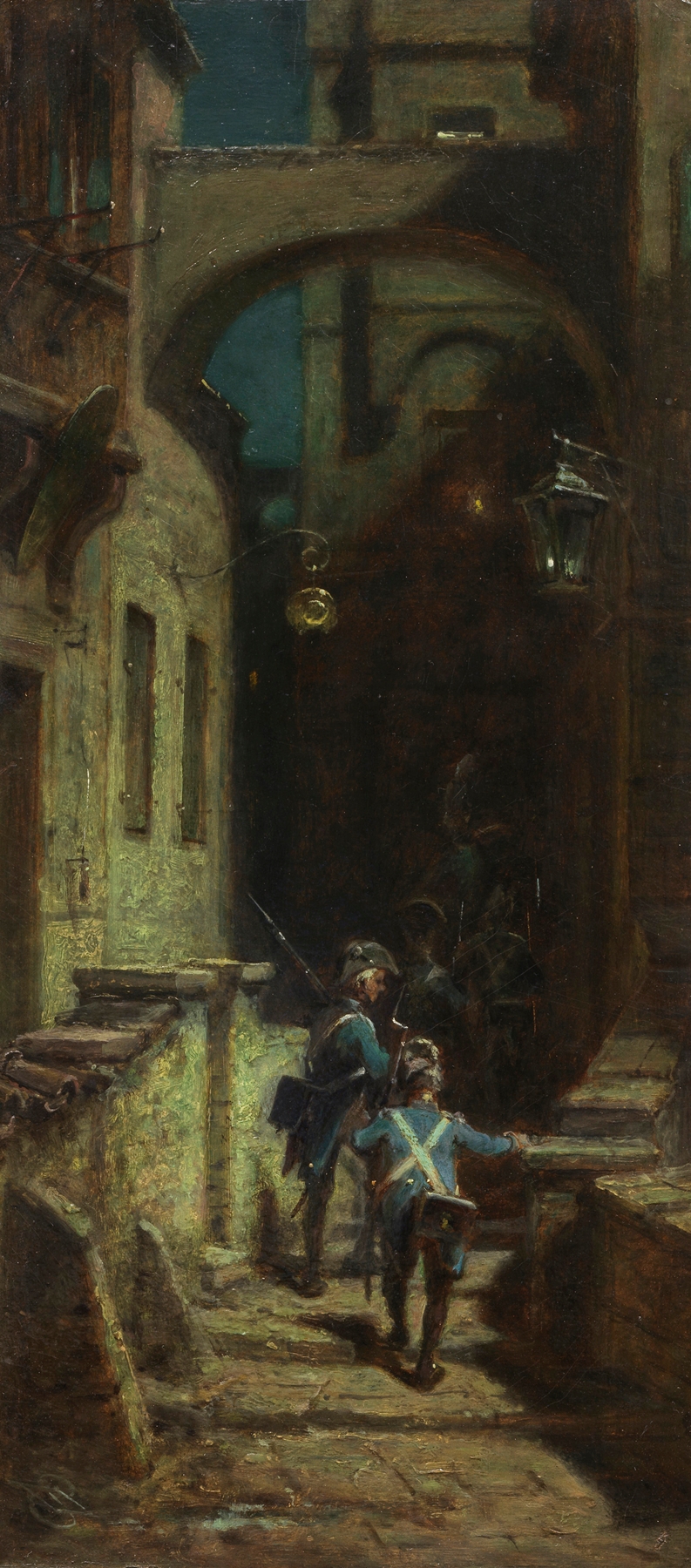
What secret hides in the quiet of the canvas? In Die Scharwache, a palpable tension lingers, cloaked in the shadows of a seemingly serene moment, where the mundane meets the uncanny. Look to the right at the sentinel figure, a solitary guard poised at attention. The soft, muted tones of the background contrast sharply with the guard’s dark uniform, emphasizing his isolation. Notice how the flickering light spills from a nearby lantern, catching the edges of his face, illuminating a mix of duty and vulnerability.
The composition draws the eye to his rigid posture, while the surrounding darkness hints at unseen dangers lurking beyond the edges of the frame. Upon deeper observation, one can sense the emotional weight of fear embodied within this scene. The guard's steadfastness belies a nagging anxiety—his stance suggests vigilance, yet his gaze hints at uncertainty. The cool, dim palette conjures an atmosphere where the ordinary transforms into the ominous, suggesting that even the most unassuming night can harbor hidden threats.
This duality mirrors the ever-present tension between duty and dread, solitude and vigilance. Created between 1875 and 1880, Die Scharwache reflects Carl Spitzweg’s exploration of everyday life interwoven with an underlying sense of anxiety. At this time, Spitzweg was deeply engaged in capturing the nuances of 19th-century German society, often focusing on the lives of common people. His style, characterized by warmth and humor, takes a dark turn here, reflecting the societal fears of an era marked by rapid change and uncertainty.