Burial of Sarah — History & Analysis
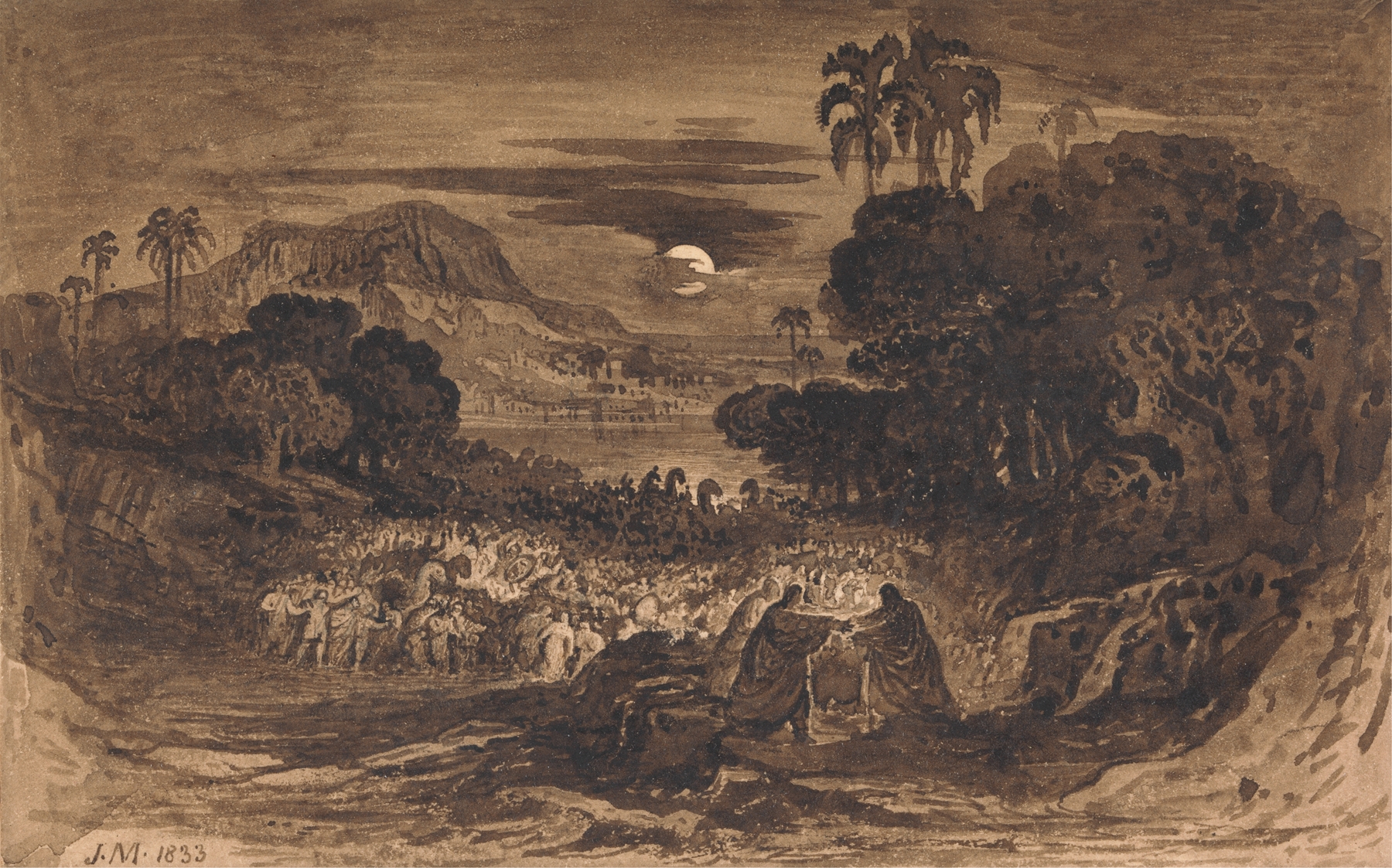
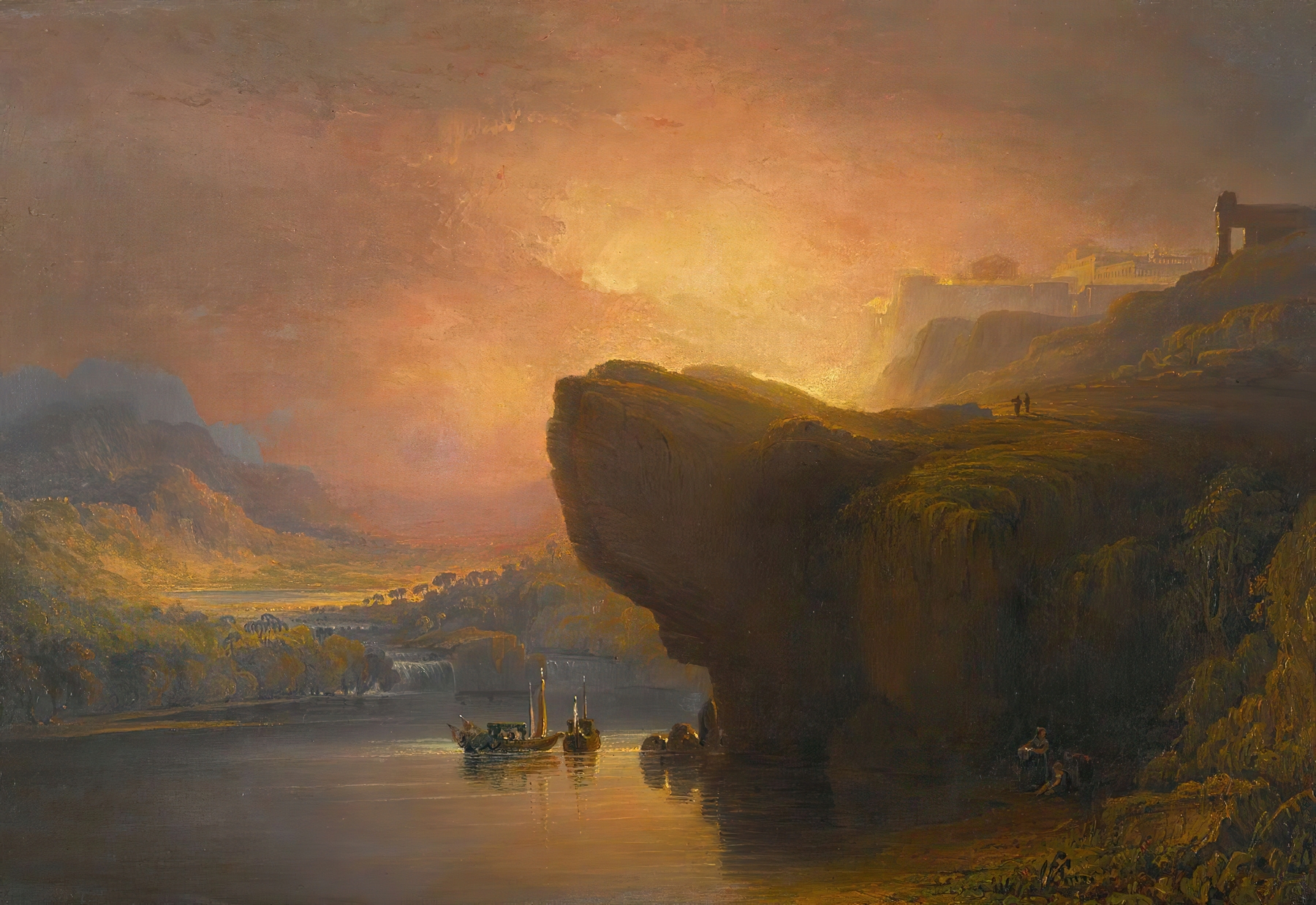
Could a single brushstroke hold eternity? In John Martin's Burial of Sarah, truth is etched not just on the canvas, but on the soul of the viewer, inviting them to ponder the weight of existence and the finality of life. Begin your exploration by focusing on the foreground, where a solemn procession unfolds. Notice how the figures, draped in rich, dark tones, are contrasted against the luminous glow of the expansive sky. The ethereal light spills down, illuminating the scene with a divine grace, guiding your gaze toward Sarah's resting place, a stark mound of earth marked by deep shadows.
The use of chiaroscuro amplifies the emotional gravity, creating a tension between the brightness of the heavens and the somber earthiness of the moment. As you delve deeper, observe the juxtaposition of stillness and movement. The mourners, caught in a moment of grief, embody a universal sorrow, while the sweeping landscape around them suggests the continuity of nature in the face of personal loss. This interplay reflects the inevitable passage of time, wherein the cycle of life and death becomes evident.
Each figure's posture and expression convey a unique narrative, drawing you into their shared experience of mourning, yet also hinting at a sense of hope that transcends despair. In 1833, John Martin painted Burial of Sarah during a time of great change and emotional turmoil within the art world, as Romanticism took root in England. Artists were increasingly drawn to themes of drama, emotion, and the sublime, seeking to explore human experiences against monumental landscapes. Martin, known for his grandiose visions, was at the forefront of this movement, and his works often reflected a society grappling with the implications of industrialization and the human condition.