Burning the Grasses — History & Analysis
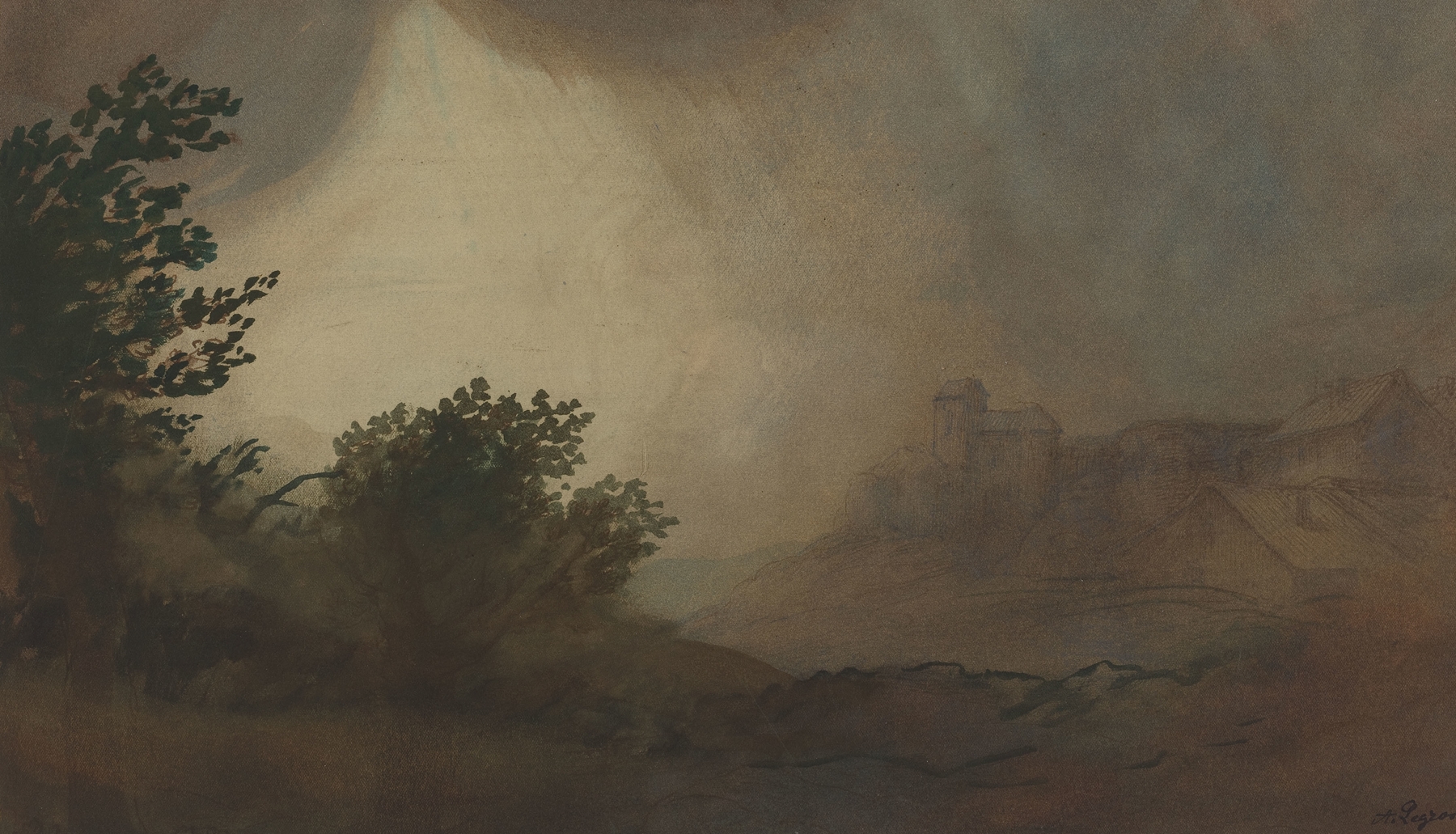
Where does light end, and longing begin? In Alphonse Legros' work, the ethereal quality of fading hues draws us into a realm where silence speaks louder than any shout. Look to the center, where the figures stand poised against the horizon; their silhouettes are sharply defined by the golden glow of the setting sun. The contrast between the warm, vibrant yellows and the cool, somber blues hints at a transformation—an inevitable change.
Notice how the gentle swirls of smoke rise from the grasses, curling upwards as if they are harboring unspoken memories, while the surrounding landscape fades into a misty obscurity, inviting contemplation. The emotional tension within this piece lies in its interplay between destruction and rebirth. The act of burning the grasses symbolizes not only the harshness of nature but also the cleansing that follows. The figures, seemingly stoic, embody a complex relationship with their environment—are they guardians of this ritual or mere spectators?
Their silence reinforces a haunting stillness, emphasizing the gravity of their actions and the transient beauty around them. In 1872, while living in England, Legros painted Burning the Grasses, a piece that reflects both his fascination with rural life and the broader exploration of nature's cycles. At this time, the artist was solidifying his reputation within the art community, navigating between Impressionism and a more academic approach. The painting embodies the tension of his era, capturing a moment that straddles the line between decay and renewal, resonating with the changing tides of the art world.