De geboorte van Adonis uit de in een boom veranderde Myrrha — History & Analysis
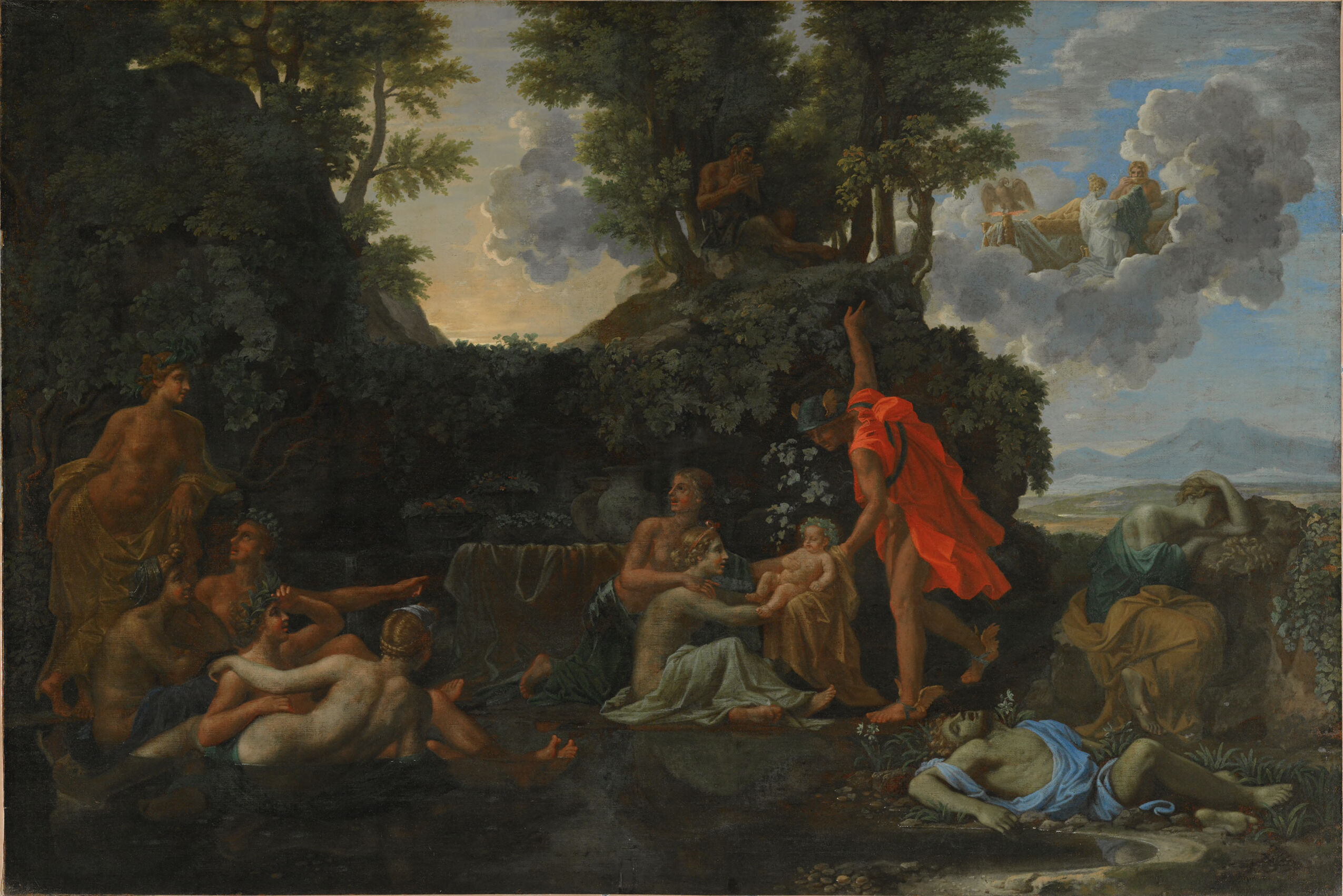
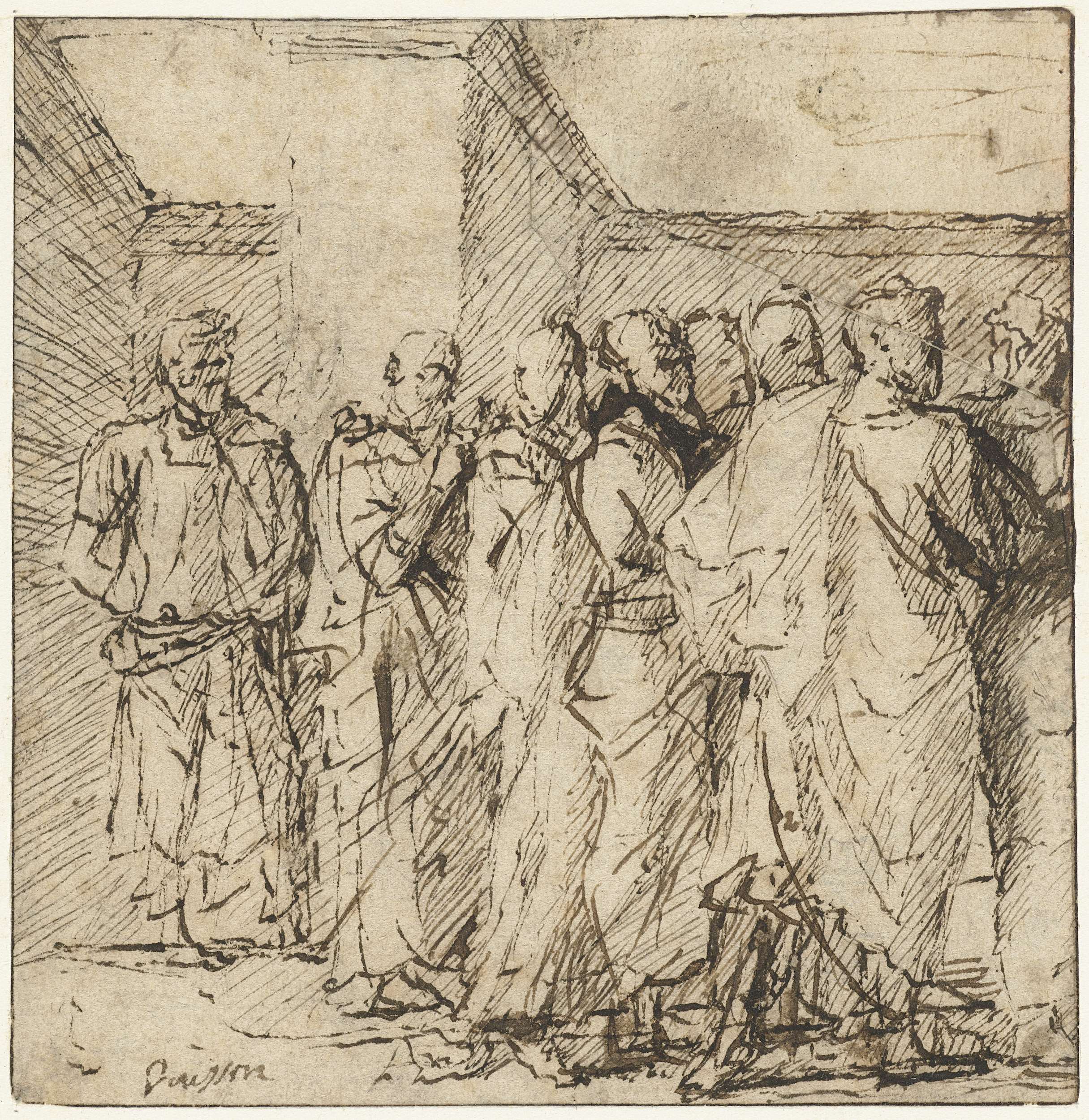
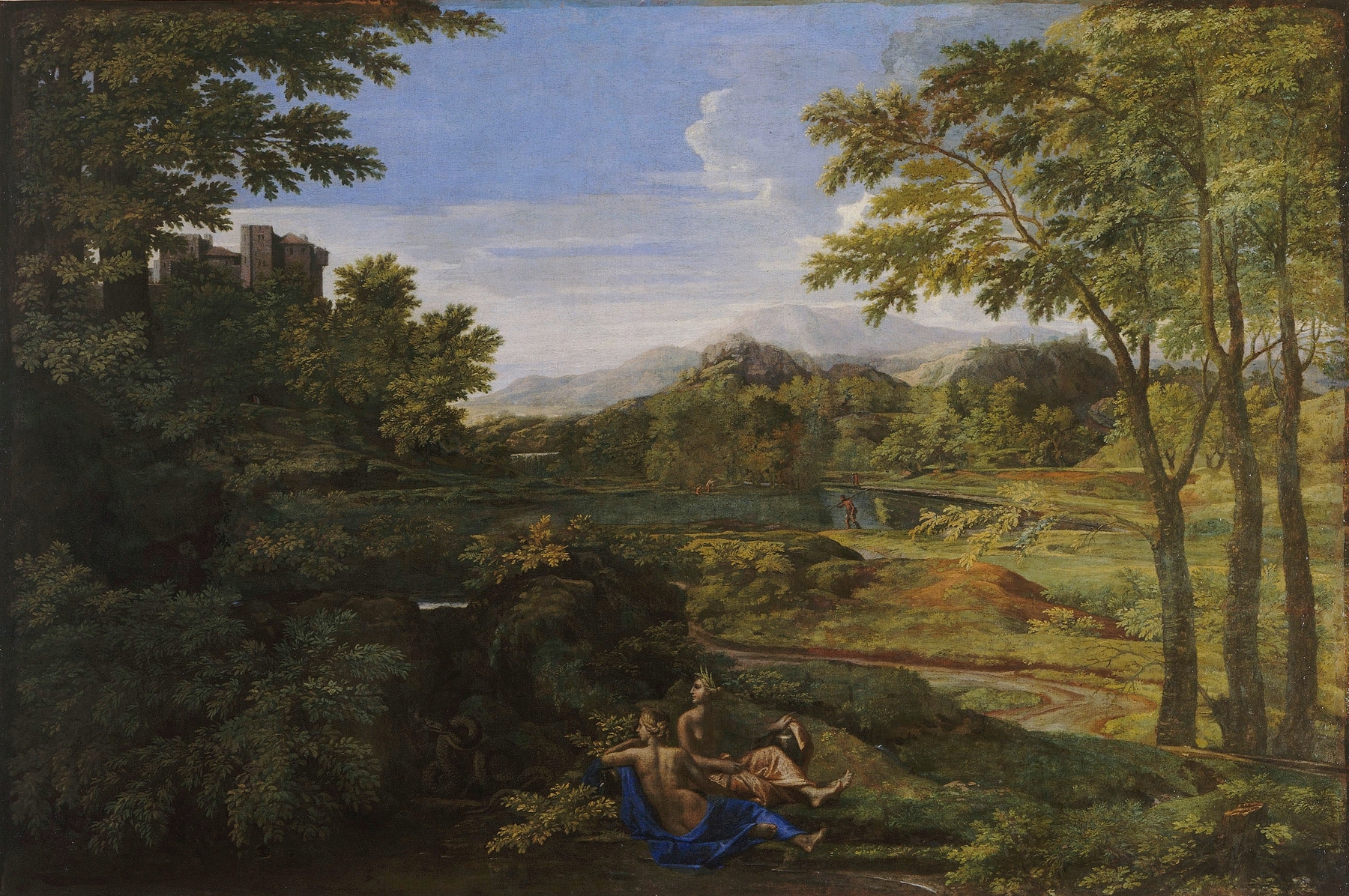
Where does light end, and longing begin? In the delicate interplay of illumination and form, the moment of birth becomes a silent revolution, a transition from shadow to radiance, from despair to hope. Focus on the luminous figure at the center, Adonis, emerging from the tree. His flesh glows with a soft, ethereal light, contrasting against the dark, gnarled bark that encases Myrrha.
Notice how the artist employs chiaroscuro to draw your gaze toward this pivotal figure, while the surrounding characters, awash in muted earth tones, seem to fade into the background. The dynamic movement of flowing drapery and the gentle curvature of limbs enhance the sense of birth, enveloping the scene in a tender yet powerful embrace. Deeper meanings resonate in the tension between Myrrha’s transformation and her child’s emergence. The tree, a vessel of both suffering and renewal, symbolizes the complexities of motherhood, intermingling joy and pain.
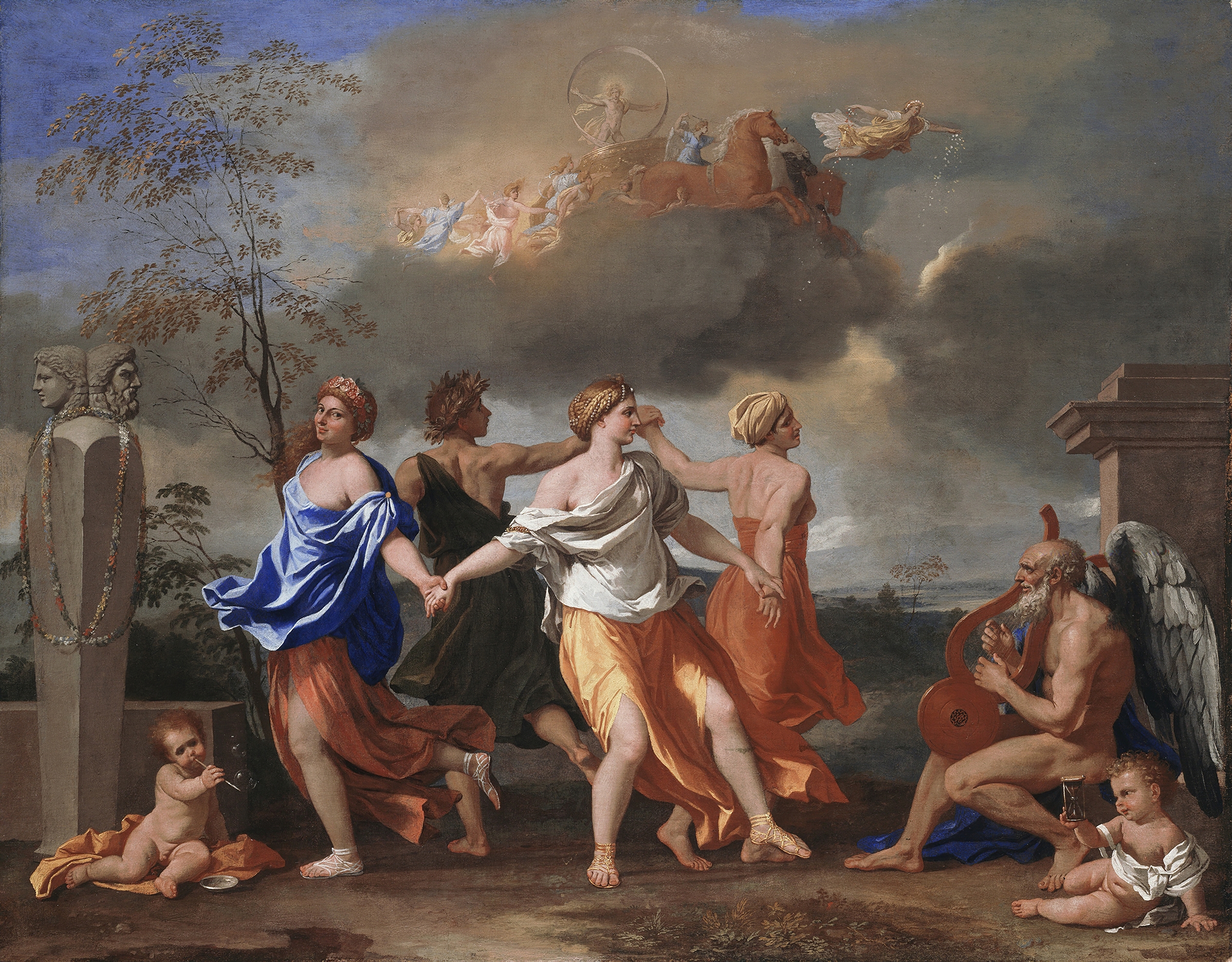
The expressions of the onlookers—a mix of reverence and disbelief—capture the transformative act of creation and the way it disrupts the status quo, echoing the revolutionary spirit of the era. Painted in 1650, this work emerged during a time of significant transition for Poussin, as he navigated the shifting currents of Baroque and Classicism. Living in Rome, his engagement with the ideals of beauty and clarity reflected the broader artistic discourse of the period. At this point in his career, he sought to harmonize emotion with structure, paving the way for future generations of artists while responding to the tumultuous socio-political landscape of Europe.