
De Keignaertkreek in Zandvoorde — History & Analysis
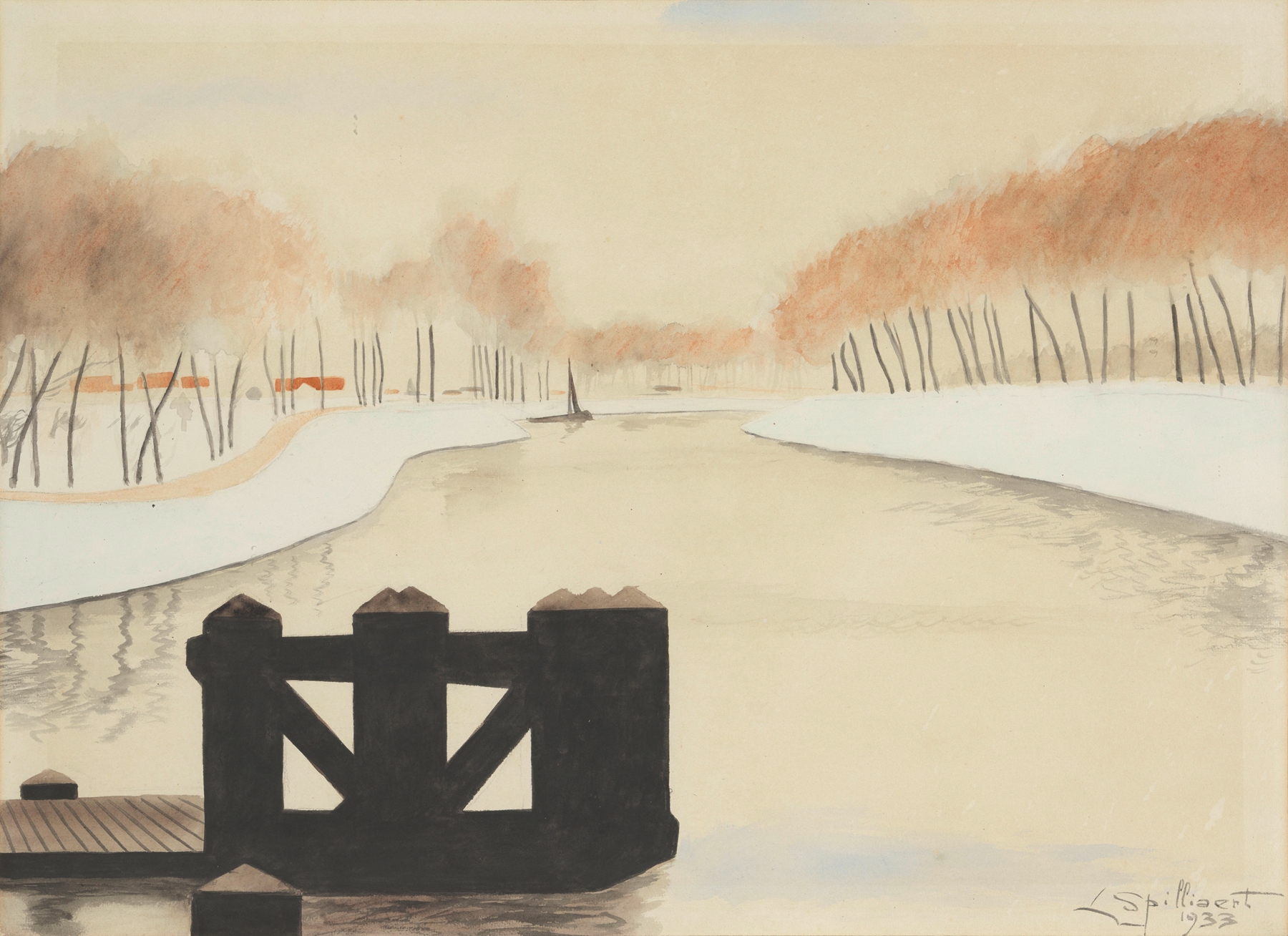
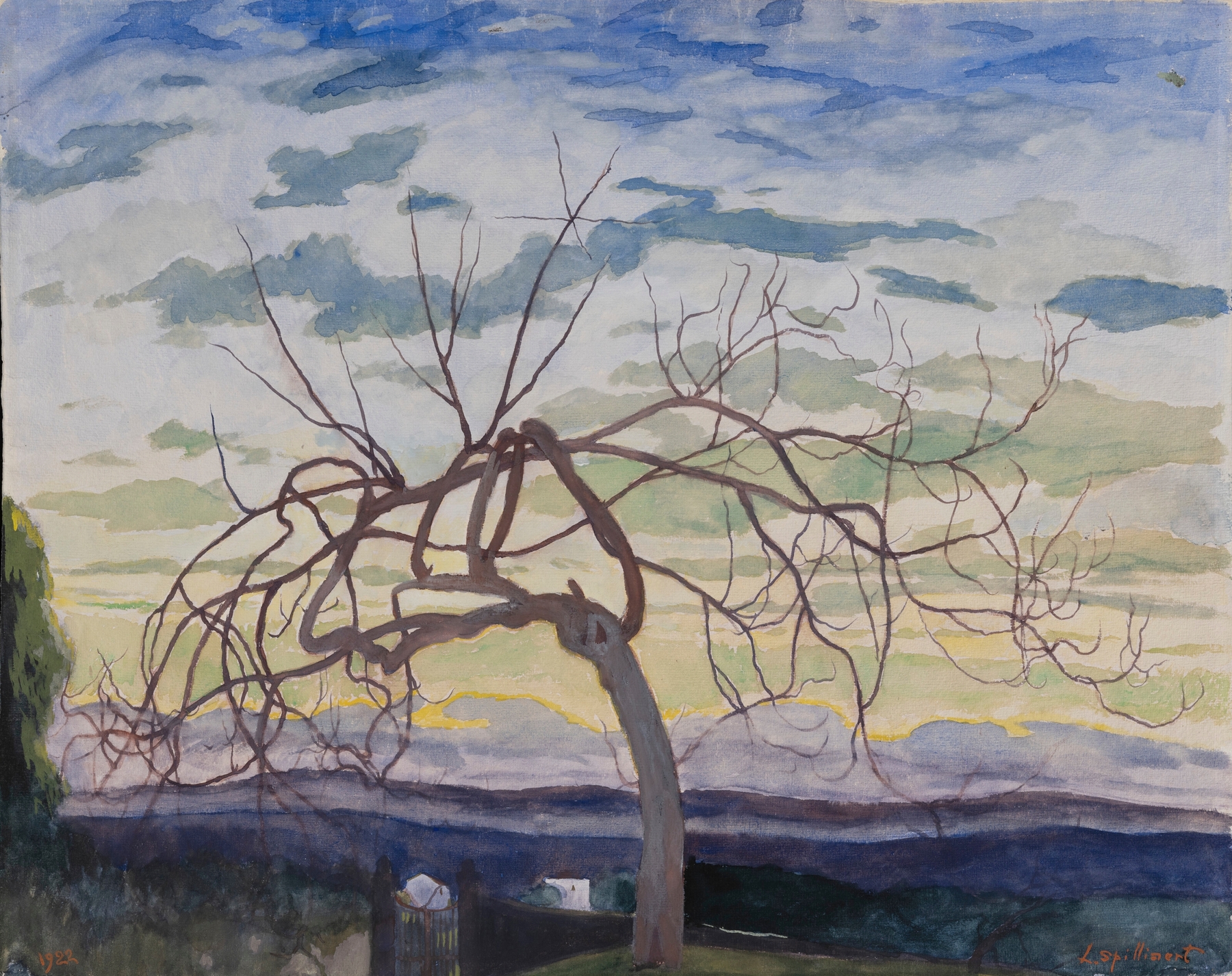
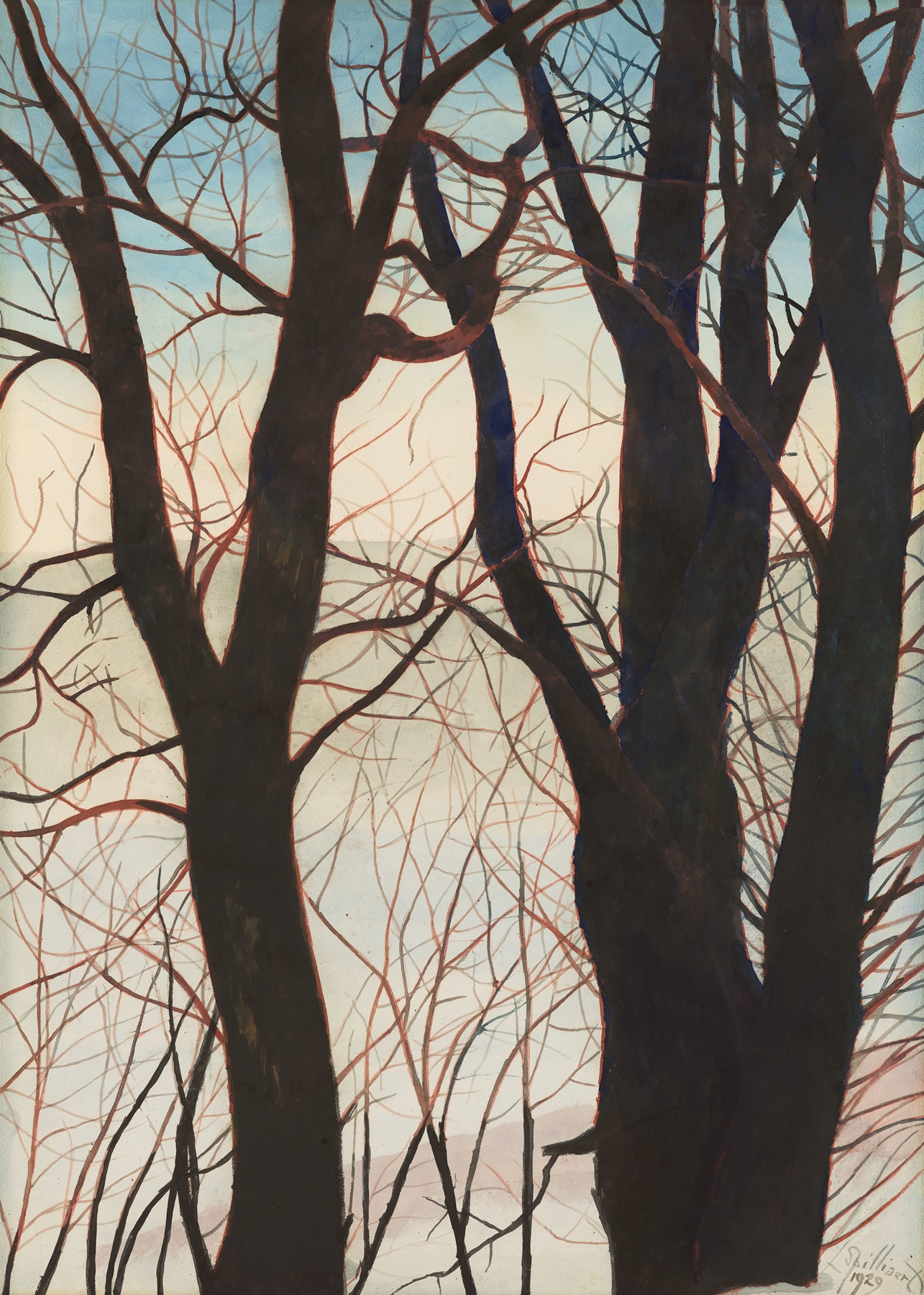
What secret hides in the quiet of the canvas? In De Keignaertkreek in Zandvoorde, Léon Spilliaert masterfully reveals a world steeped in stillness, urging us to pause and consider the delicate balance of nature and emotion. Look to the left at the soft, almost ethereal blues rippling across the water's surface. The gentle gradient transitions from deep navy to silvery hues, reflecting a cloudy sky. Notice the subtle brushwork that captures the lapping water, each stroke contributing to an overall sense of tranquility.
The horizon, where the land meets the sky, is painted in soft, muted tones, creating a harmonious interplay that draws the viewer's eye inward, towards the serene creek. Beneath the tranquil facade lies a tension between solitude and connection. The quiet waters suggest a moment frozen in time, evoking feelings of introspection and contemplation. A lone tree stands watchfully at the edge, its gnarled branches reaching out as if yearning for interaction with the world beyond the edge of the canvas.
This juxtaposition of isolation against the vastness of nature invites us to ponder our own connections to both the environment and each other. In 1933, during a period of personal exploration and artistic maturation, Spilliaert worked primarily in Belgium, navigating the intersection of Symbolism and Surrealism. The art world was shifting, and he was reflecting on emotional landscapes that paralleled his own tumultuous experiences. The painting, rich in both color and meaning, embodies his quest for balance in a changing society, a moment of quiet reflection amidst the noise of existence.
![Le Phare aux signaux [De vuurtoren], by Léon Spilliaert, public domain](https://froigstrpvutwqtqikzt.supabase.co/storage/v1/object/public/art-images/artworks/15c64ea88267bb2176f857ee48f253129140e660e1928d47acf6cab808d0226d.jpg)