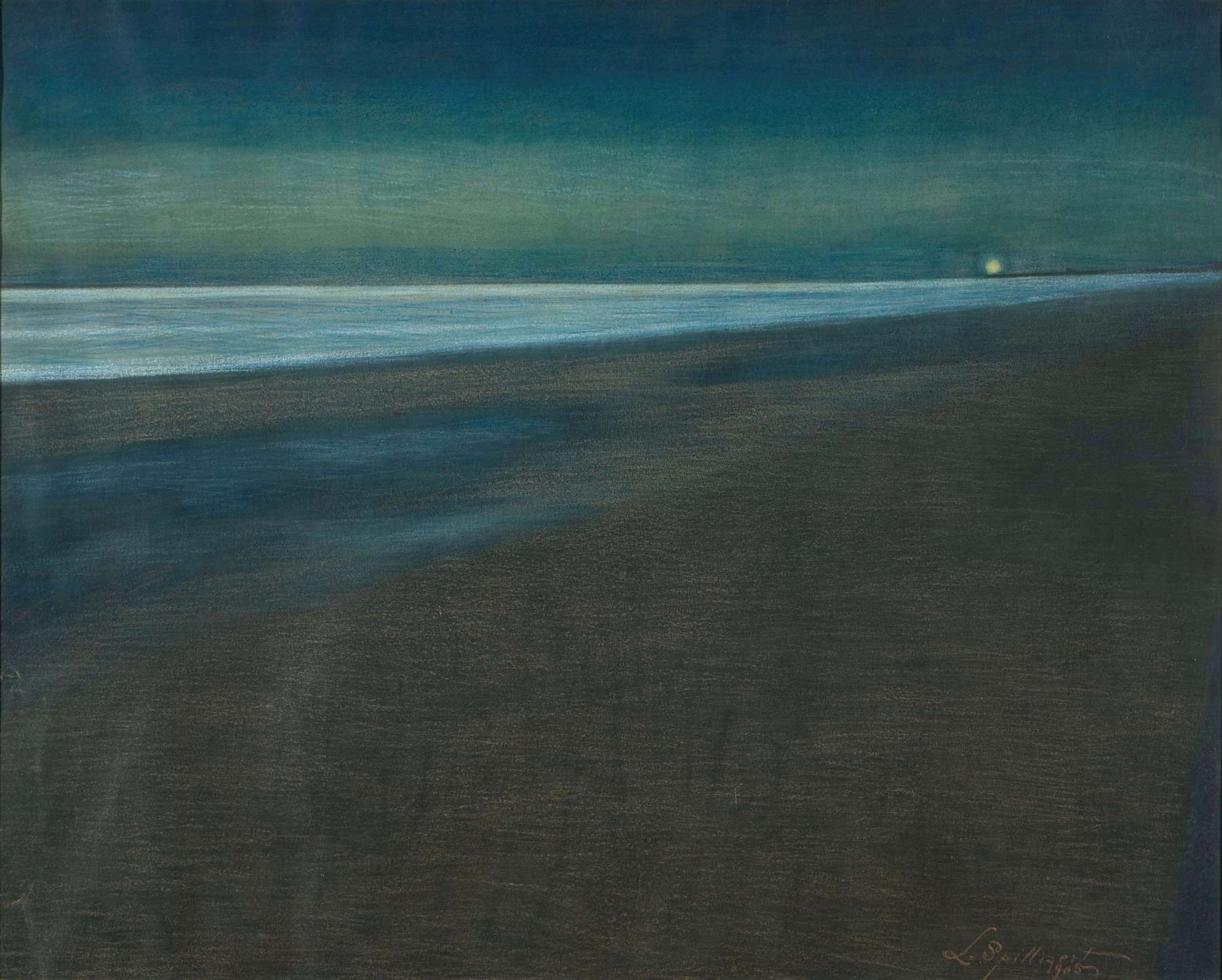
Strand met maan — History & Analysis
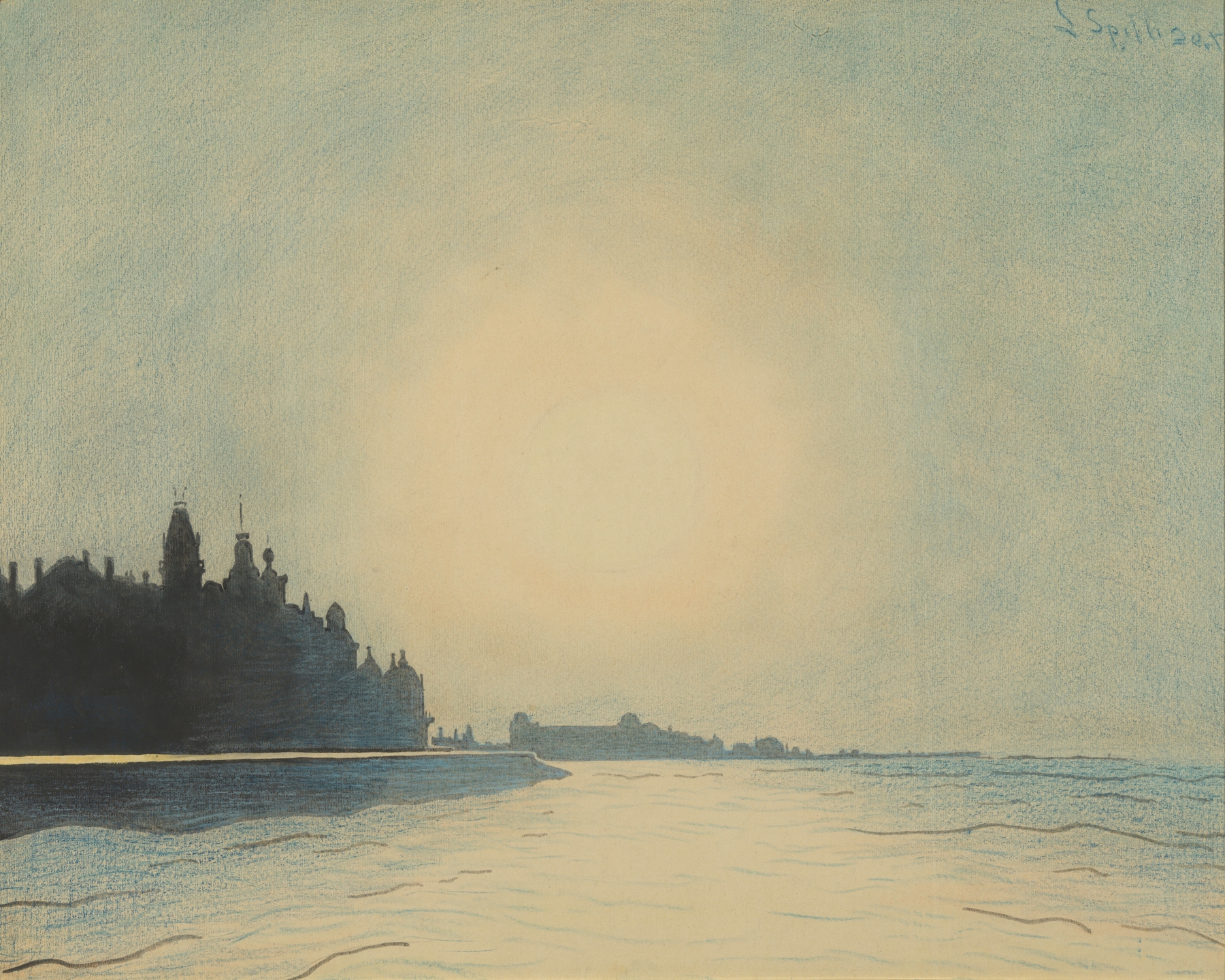
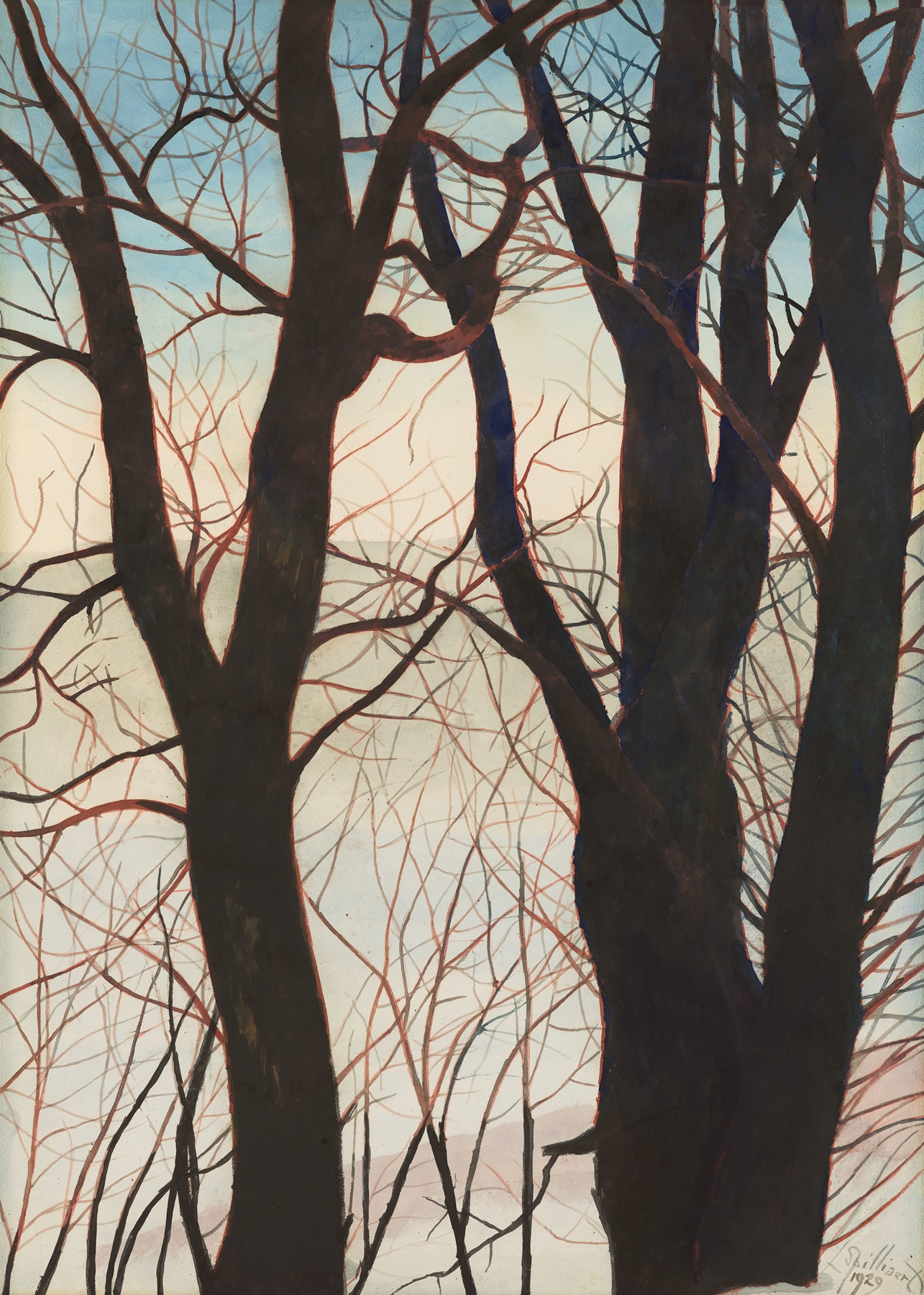
“Under the brush, chaos becomes grace.” Shadows dance across the canvas, revealing the delicate interplay of light and darkness, inviting introspection into the hidden depths of the soul. Look to the center of the painting, where the luminous moon hangs low, casting a gentle glow over the shoreline. Its silvery light shimmers on the water’s surface, creating a striking contrast against the darker hues of the sky and land. Notice how the waves, depicted in subtle strokes, seem to pulse with life while the surrounding shadows evoke a sense of melancholy.
The depth of the blacks and blues pulls the eye in, suggesting a world of secrets just below the surface. In this piece, Spilliaert captures the essence of solitude, the moon representing both illumination and isolation. The juxtaposition of light and shadow speaks to the duality of human experience—how brightness can coexist with the darker facets of emotion. Each brushstroke carries the weight of introspection, revealing the artist’s inner turmoil as they navigate the delicate balance between hope and despair.
In 1908, Spilliaert was living in Oostende, Belgium, a period marked by personal strife and artistic exploration. Amid the rise of Symbolism in art, he sought to convey deeper psychological truths through his work. This piece reflects his fascination with the night and the solitary journeys of the mind, establishing him as a unique voice in the early 20th century art scene.
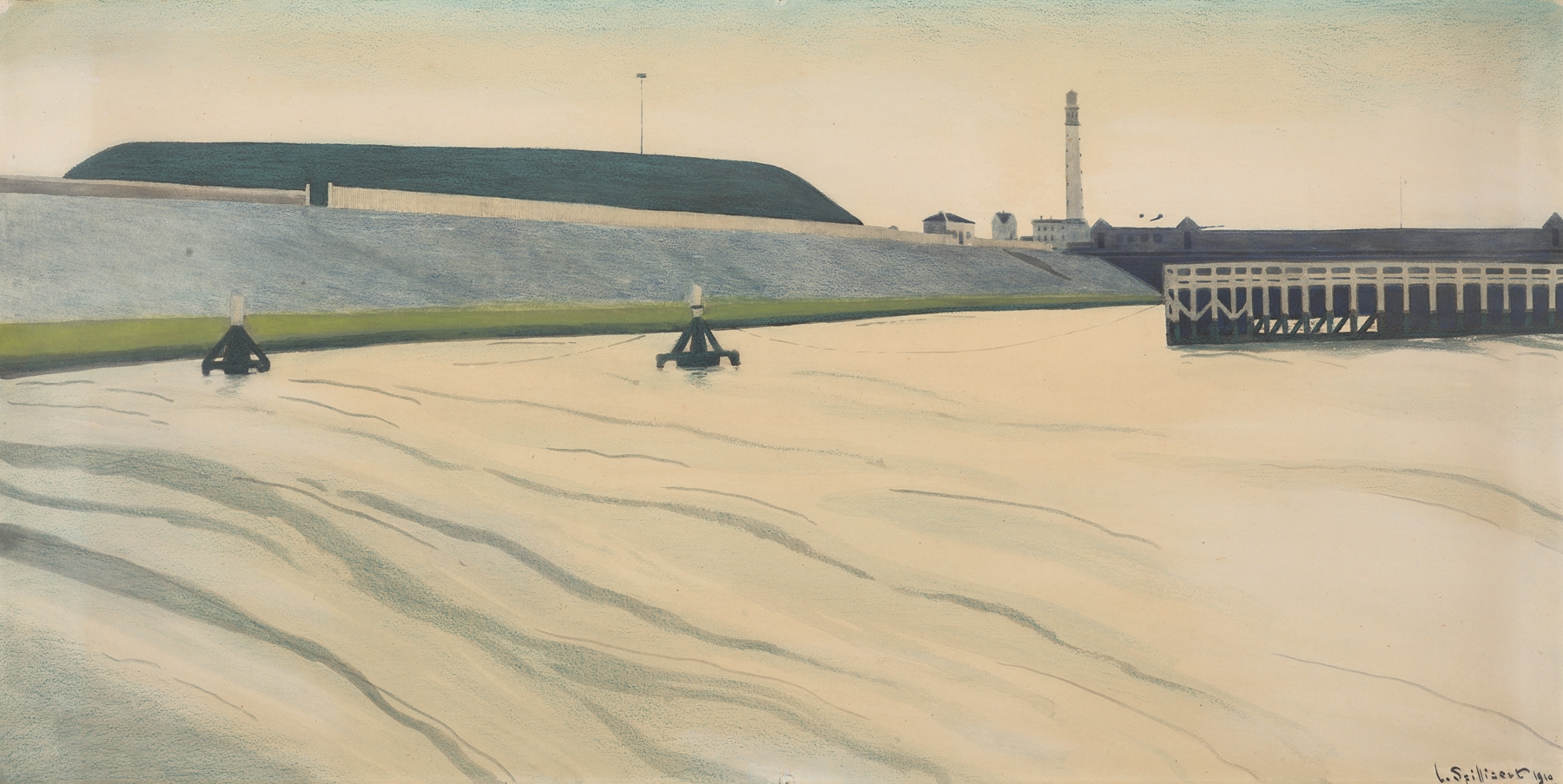
![Le Phare aux signaux [De vuurtoren], by Léon Spilliaert, public domain](https://froigstrpvutwqtqikzt.supabase.co/storage/v1/object/public/art-images/artworks/15c64ea88267bb2176f857ee48f253129140e660e1928d47acf6cab808d0226d.jpg)