Die Sennerin auf dem Waldsteg — History & Analysis
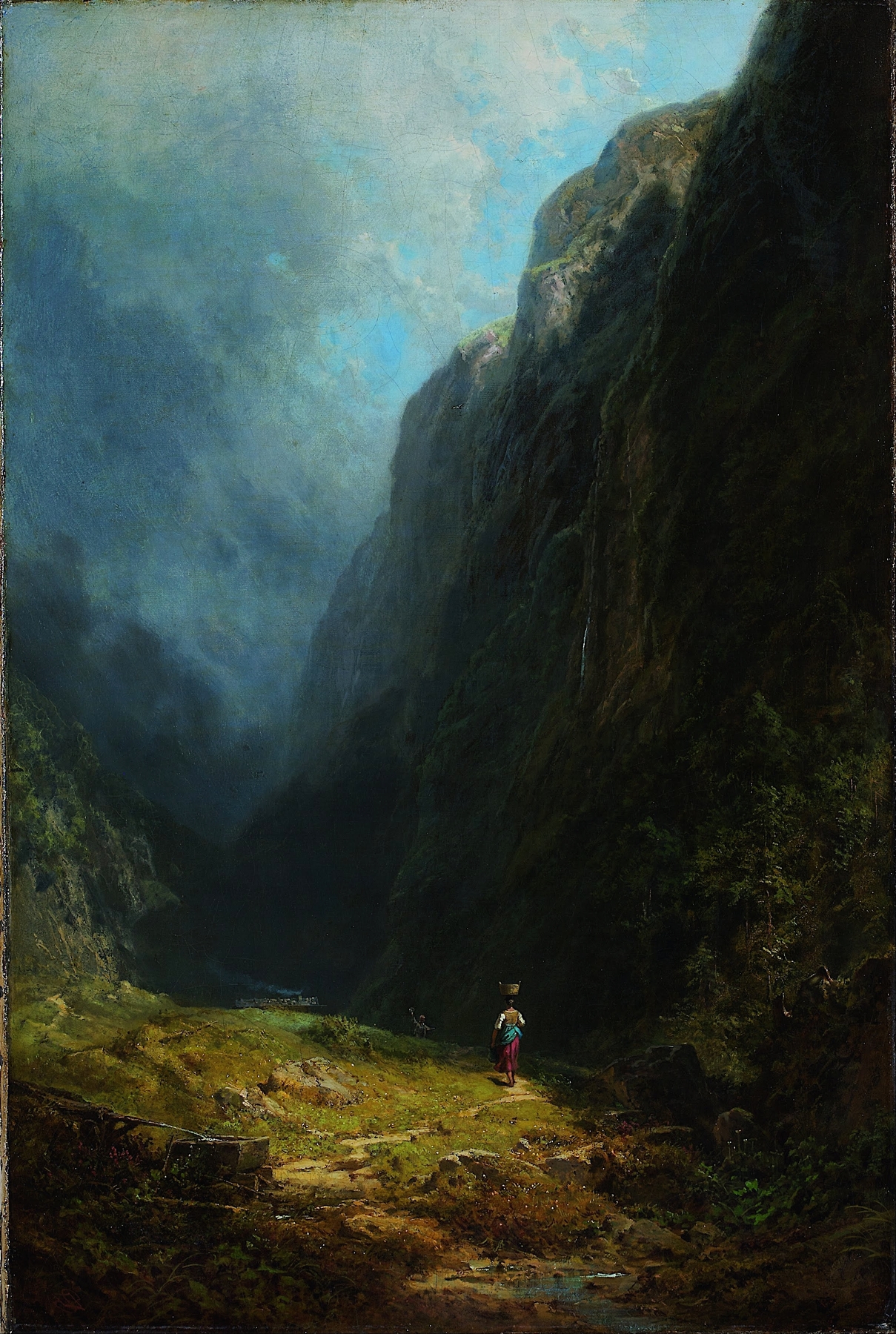
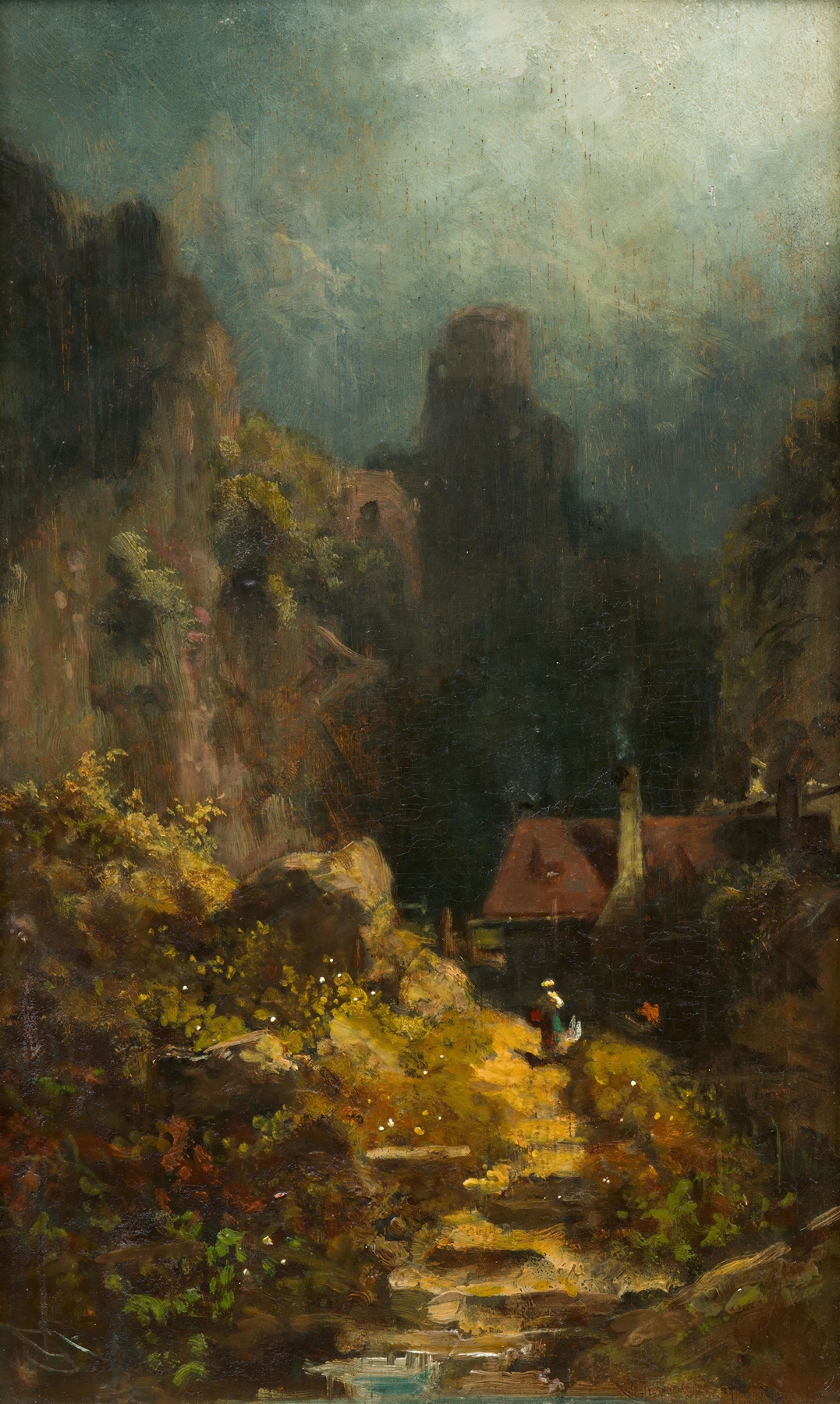
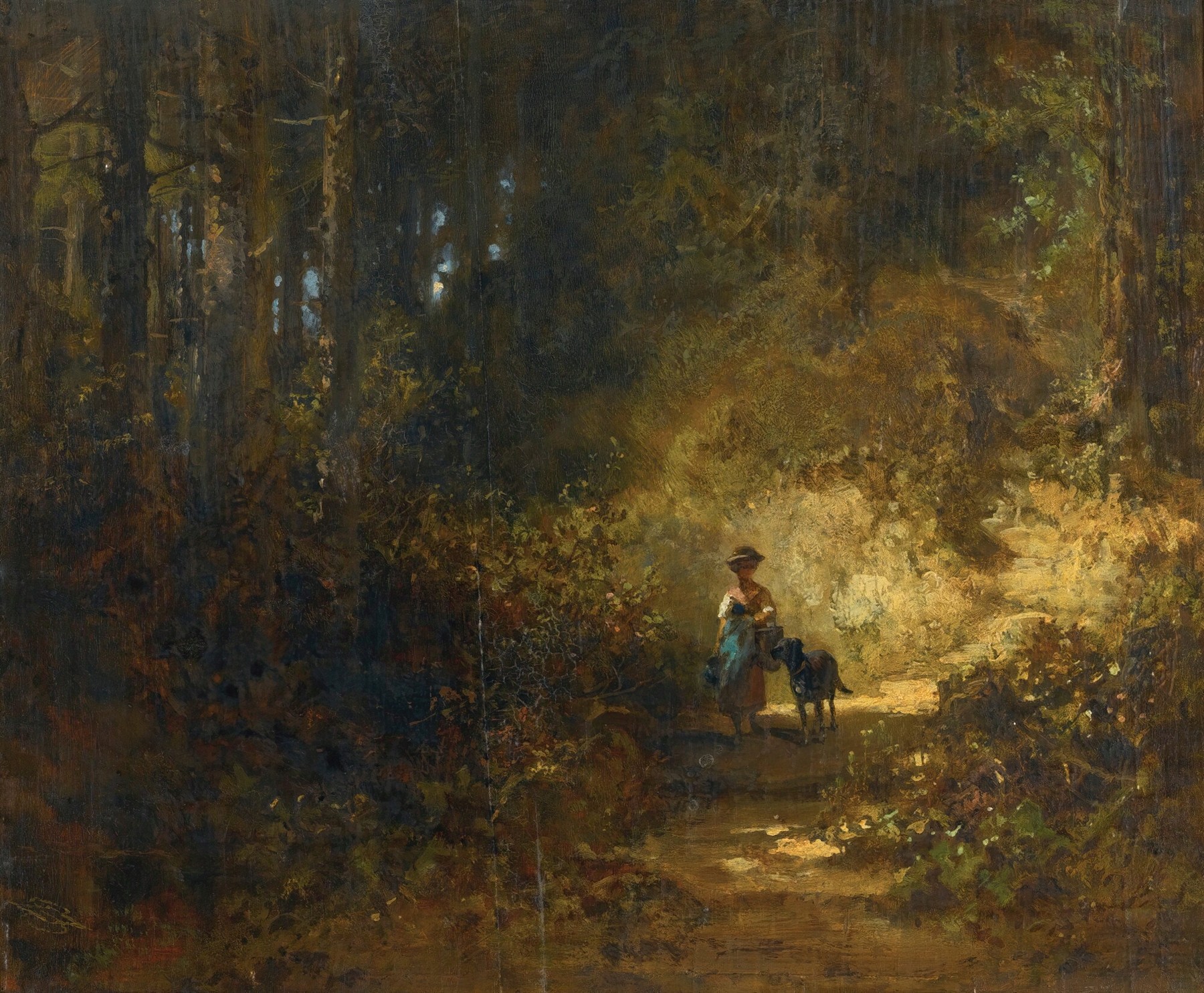
What if beauty was never meant to be finished? In Die Sennerin auf dem Waldsteg, a fleeting moment of grace captures the essence of nature intertwined with human presence, inviting us to ponder this very question. Look to the left at the serene figure of the young woman, poised elegantly on a bridge, her gaze tenderly cast towards the lush landscape that envelops her. The delicate brushstrokes of greens and browns juxtapose against her light attire, creating a harmonious balance that draws the eye while evoking a sense of tranquility.
Notice how the dappled sunlight filters through the trees, casting intricate patterns that dance across her figure, enhancing both her beauty and the ethereal quality of the scene. Delve deeper into the emotional undertones woven within this composition. The woman’s posture, slightly slouched but contemplative, suggests a moment of introspection, hinting at the weight of her thoughts amidst the natural splendor. The bridge she stands upon becomes a metaphorical threshold — a space where the human spirit touches the wild, untamed beauty of nature, yet remains distinctly separate.
This juxtaposition of solitude against the backdrop of a vibrant world raises questions about connection, purpose, and the elusive nature of fulfillment. Created in 1875 while living in Munich, the artist found inspiration in the German Romantic movement, which sought to celebrate nature and humanity's role within it. At that time, societal shifts were redefining the landscape of art, moving away from strict realism towards a more emotive and subjective interpretation. Through this work, the artist conveys not just a scene but a philosophy, encapsulating a moment of beauty that resonates with the viewer long after the canvas is put aside.