Echtpaar met de Dood — History & Analysis
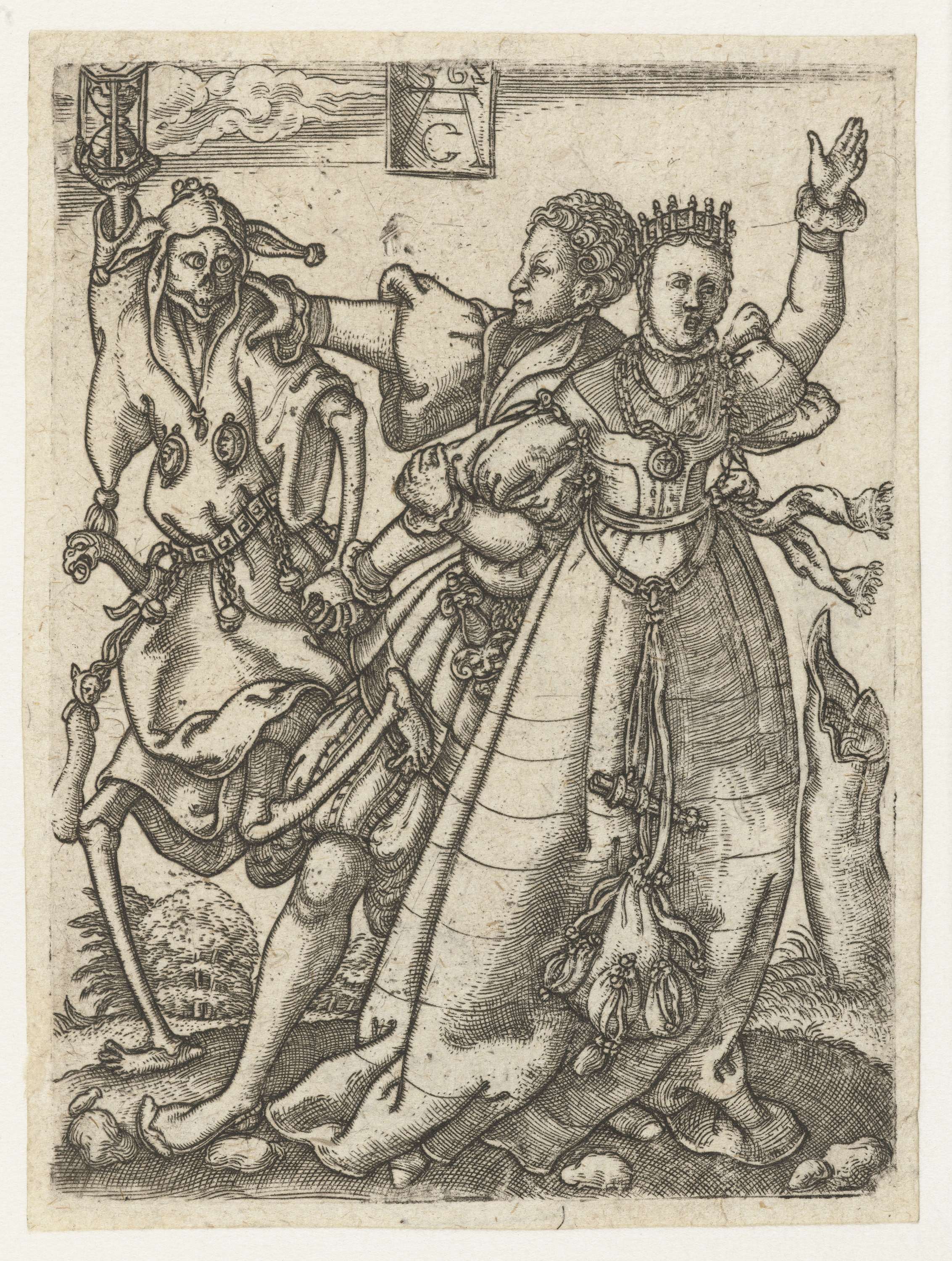
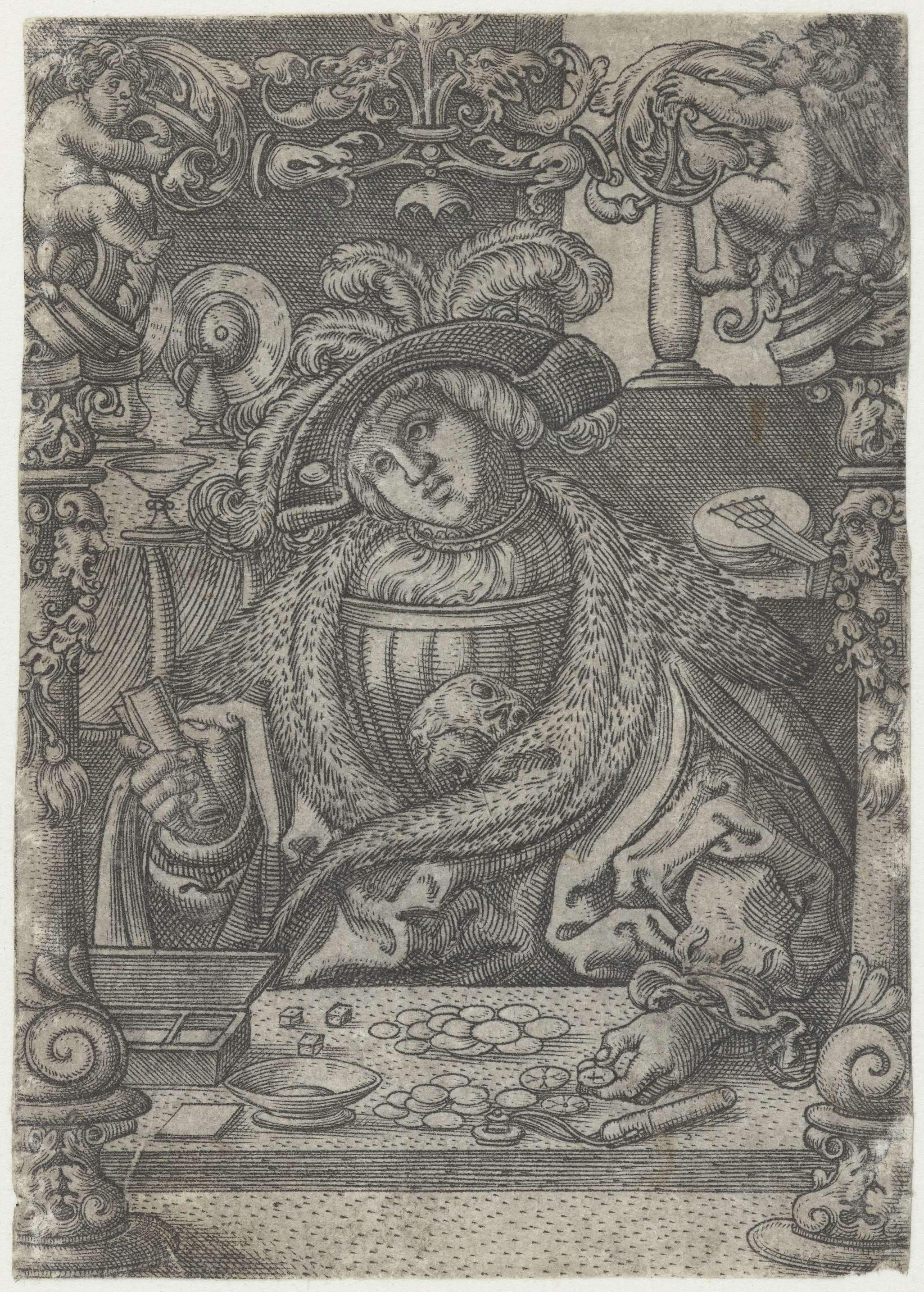
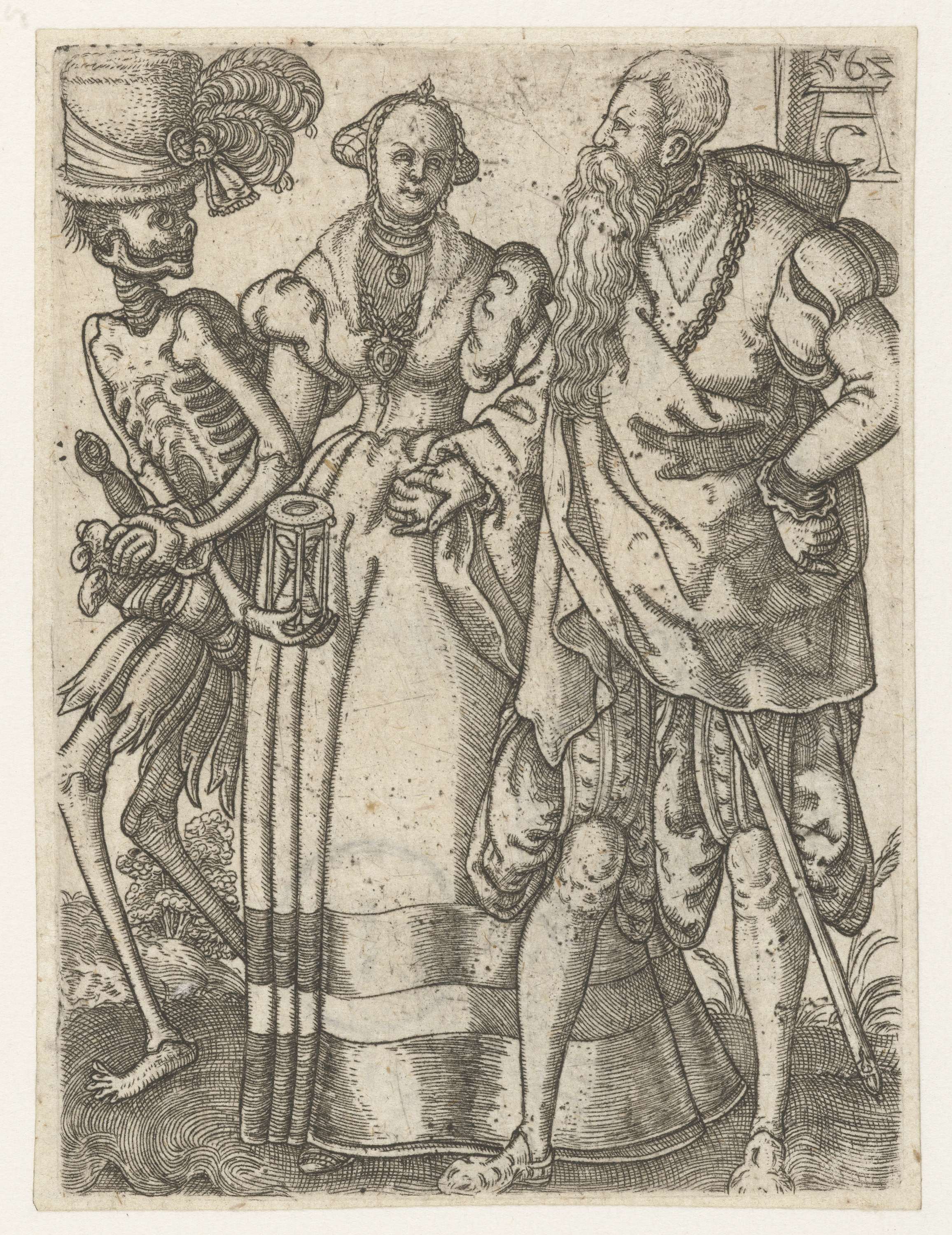
“Every brushstroke is a heartbeat remembered.” In a world where the fleeting nature of life collides with the permanence of art, the illusion of existence and mortality dances on the canvas of Echtpaar met de Dood. Look closely at the center of the painting, where the couple stands in an intimate embrace, their expressions a blend of serenity and contemplation. The rich, deep colors envelop their forms, while the shadowy figure of Death hovers just beyond, a stark contrast in pale tones. The artist's meticulous attention to detail in the lace of the woman's dress speaks to both beauty and transience, inviting the viewer to explore the elements of life that are simultaneously cherished and inevitable.
The juxtaposition of the couple's joyous unity against the looming presence of Death creates a profound emotional tension. One can sense the bittersweet nature of their connection, as if the very fabric of their love is woven with the threads of mortality. The delicate play of light creates an ethereal quality, suggesting the fragile boundary between life and the afterlife while revealing the artist’s commentary on the illusion of permanence in relationships.
Created in 1562, this work emerged during a time when Northern Europe was grappling with profound religious and social change. The Monogrammist AC, likely a Flemish painter, captured the anxieties of a society facing the realities of mortality through allegorical representation. In this era, art became a means to confront life's ephemeral nature, with works like this serving as both a reflection and a challenge to the viewer’s perceptions of love, death, and the ultimate illusion of human existence.