Heilige Martha en de draak — History & Analysis
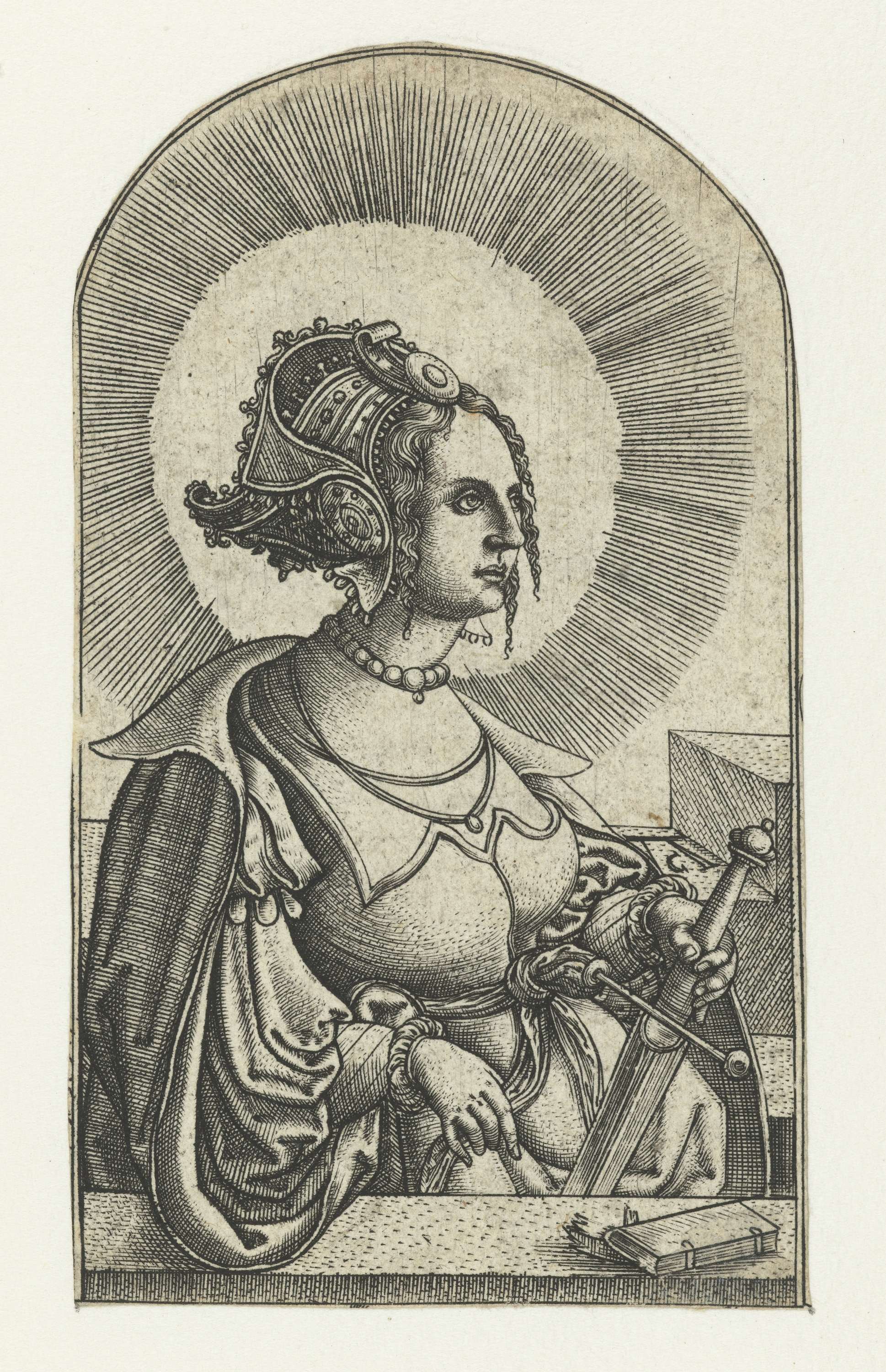
“Between color and silence, truth hides.” In the vibrancy of the 16th century, a moment of pure ecstasy unfolds across a canvas, where faith and bravery intertwine. Look to the left, where the figure of St. Martha stands resolute, her vibrant robes commanding attention with their rich hues. The texture of the fabric seems to pulsate with life, suggesting a fervent spirit ready to confront the formidable dragon beneath her feet.
Notice how the light illuminates her face, capturing a profound determination that contrasts sharply with the dark, coiled menace of the creature, whose scales glisten ominously in shadow. This striking interplay of light and dark enhances the narrative tension, drawing the viewer deeper into the composition. Delve into the details—the delicate grasp of the saint's hand upon the dragon, symbolizing an intimate struggle between faith and fear. The dragon’s defeated demeanor speaks to a duality of strength and vulnerability, revealing the tension of conquest over internal demons.
These small yet potent elements serve as reminders of the eternal battle between good and evil, encapsulating a moment of triumph that transcends time. Created in 1553, this work emerges from a period of rich artistic transformation in the Northern Renaissance. The monogrammist behind this piece found inspiration in the prevailing themes of spirituality and morality in art, as well as the burgeoning movement of humanism. While Europe was facing significant social and religious upheaval, this painting became a testament to both personal and communal faith, encapsulating a moment of divine victory amidst the chaos of the world.