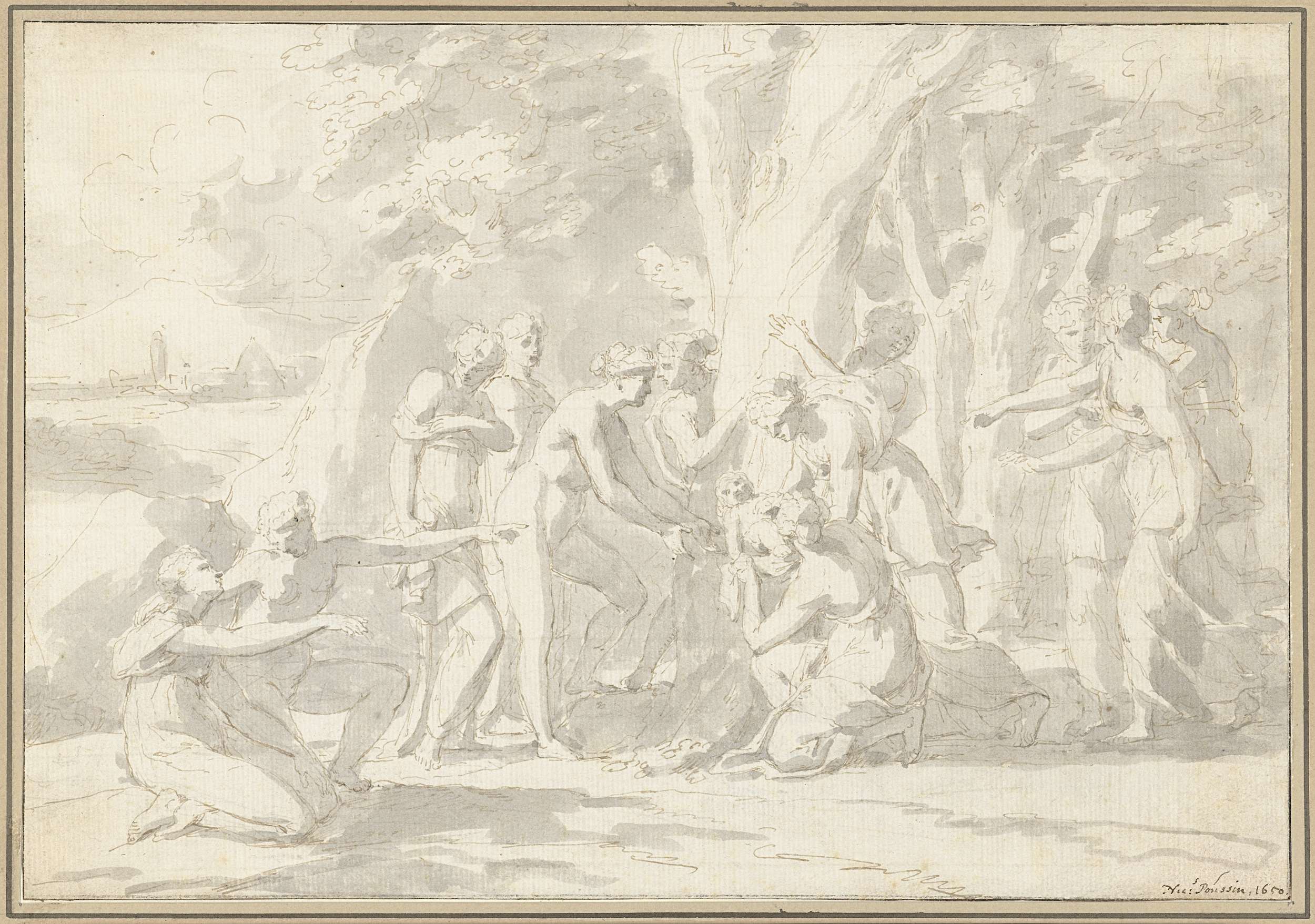
Flora Farnese, van voren gezien — History & Analysis
Who listens when art speaks of silence? In Flora Farnese, a stillness envelops the figure, capturing a moment where sorrow and beauty intertwine, resonating with deep emotional echoes. Look to the center of the composition, where the sumptuous figure of Flora emerges, draped in soft, flowing fabrics that seem to breathe with her. Notice how the delicate interplay of light and shadow caresses her visage, illuminating her serene expression while the darker hues surrounding her suggest a world in turmoil.
The meticulous brushwork enhances the textures of her garments and the flowers she holds, inviting the eye to linger on the exquisite details that define her presence. Within this serene portrayal lies a poignant contrast — the vibrancy of Flora’s floral adornments speaks of life and beauty, juxtaposed with the underlying sense of loss that permeates the scene. The way she gazes skyward, with a hint of melancholy, evokes the duality of joy in creation and sorrow in remembrance. Each petal seems to whisper the fragility of existence, urging the viewer to reflect on the weight of grief and the transient nature of beauty.
Created between 1625 and 1630, during a period when Nicolas Poussin was establishing his reputation in Rome, Flora Farnese was a testament to his mastery of the classical style. This period was marked by a rich engagement with themes of myth and beauty, as well as Poussin's personal exploration of loss, following the death of his parents. The painting stands as a quiet reflection of both his artistic evolution and the broader currents of Baroque art, where emotion was conveyed through the elegance of form and the poignancy of silence.