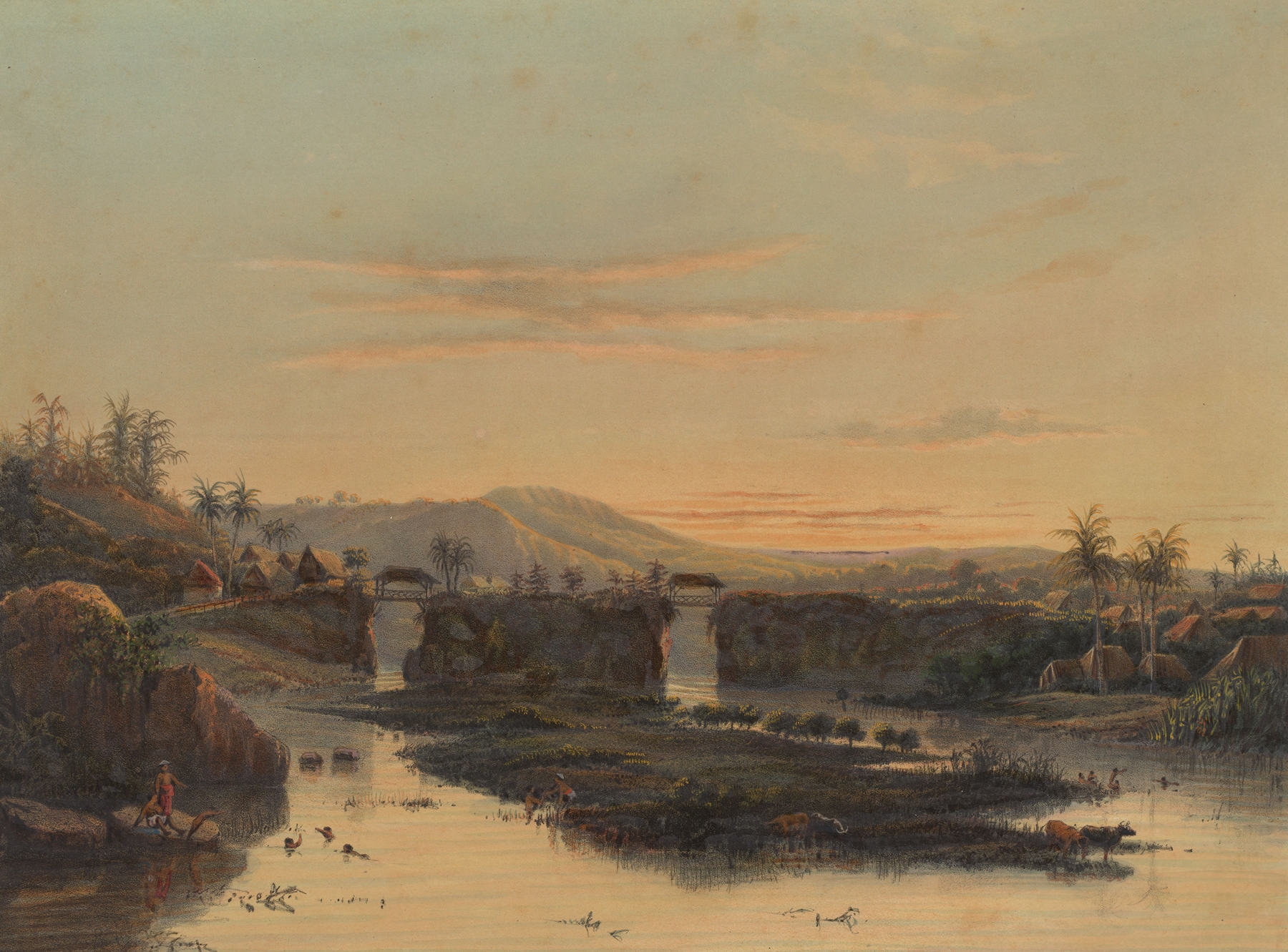
Gezicht op een landschap in Java. Landschap in de residentie Bantam — History & Analysis
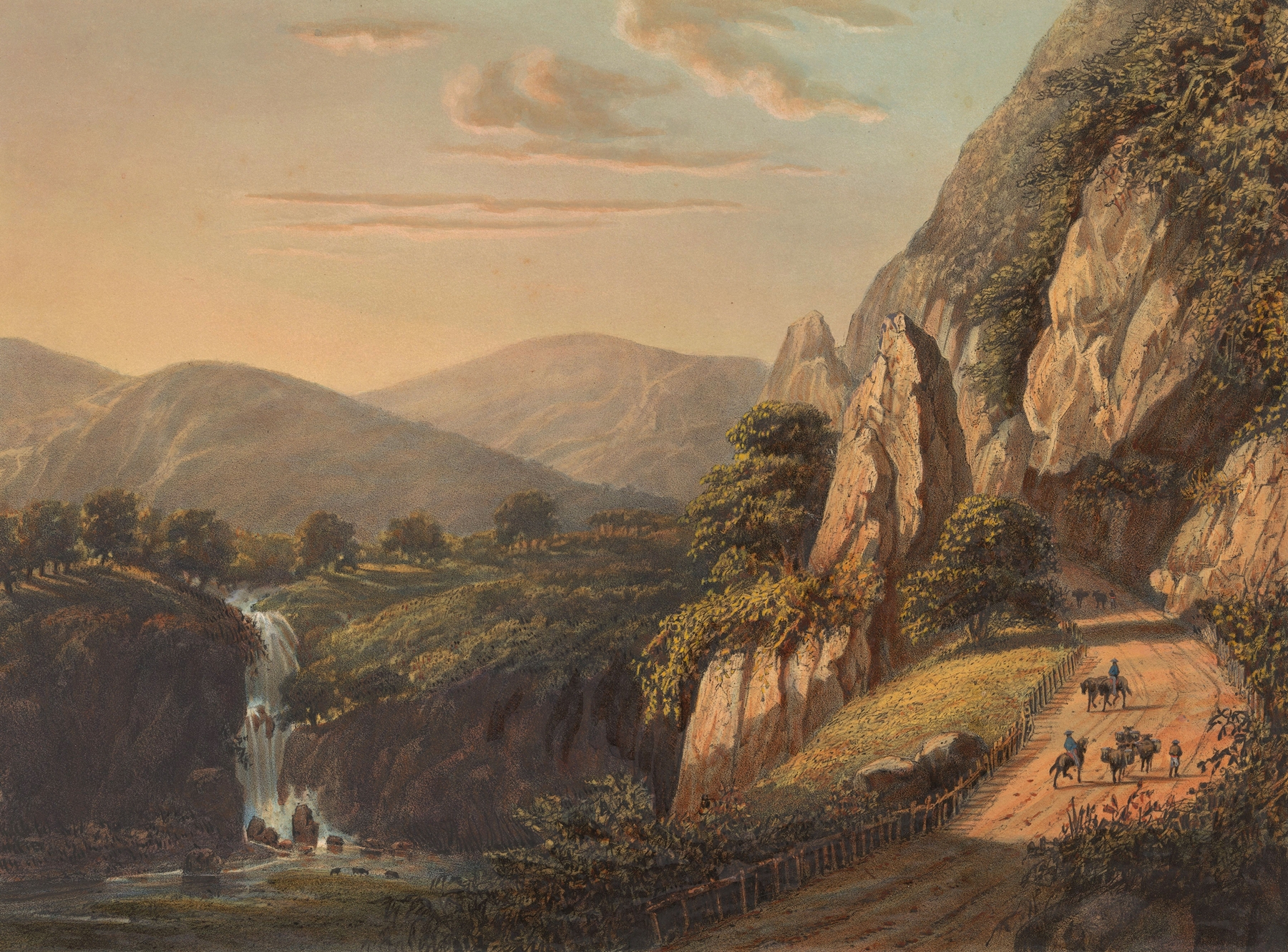
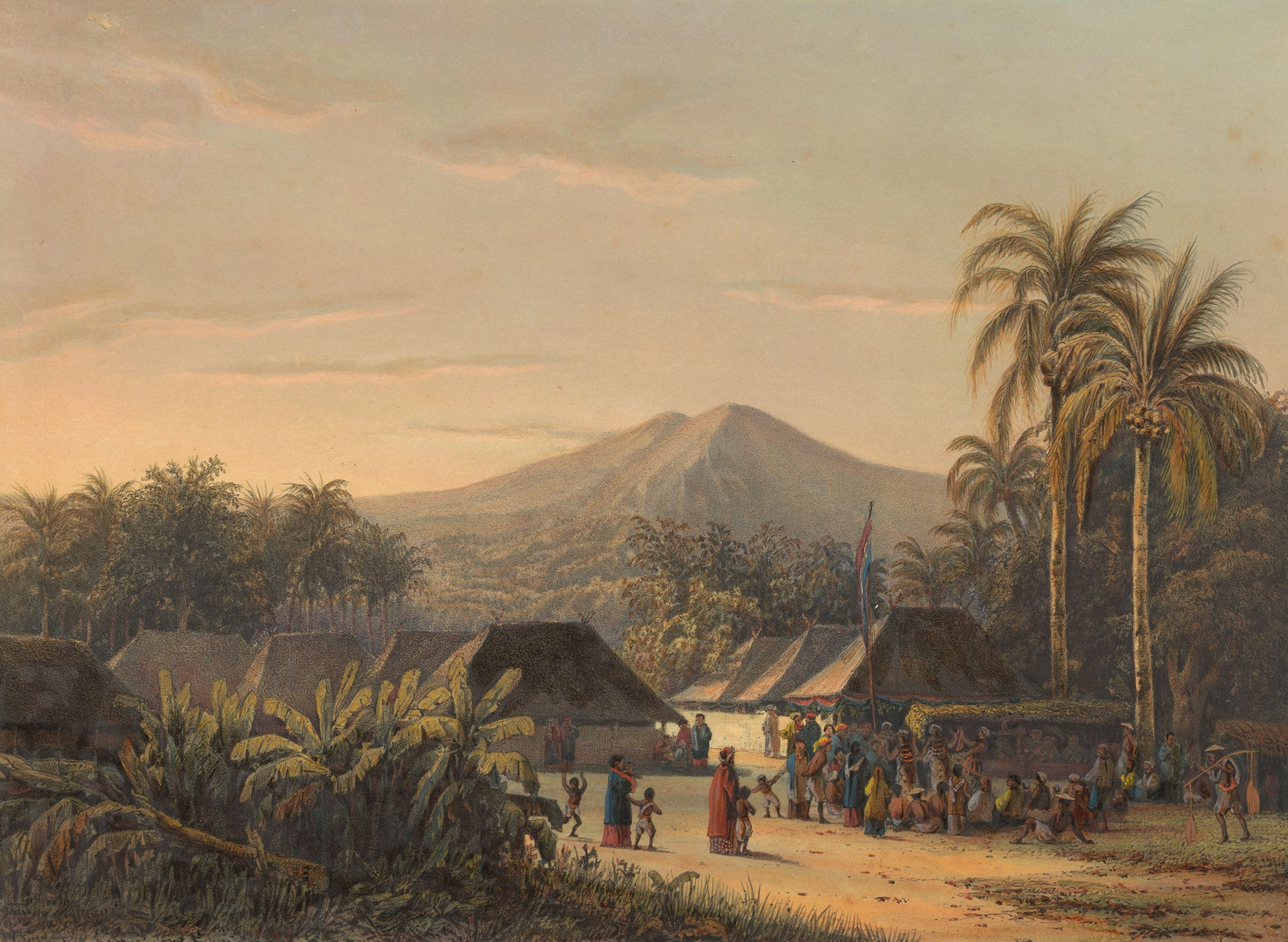
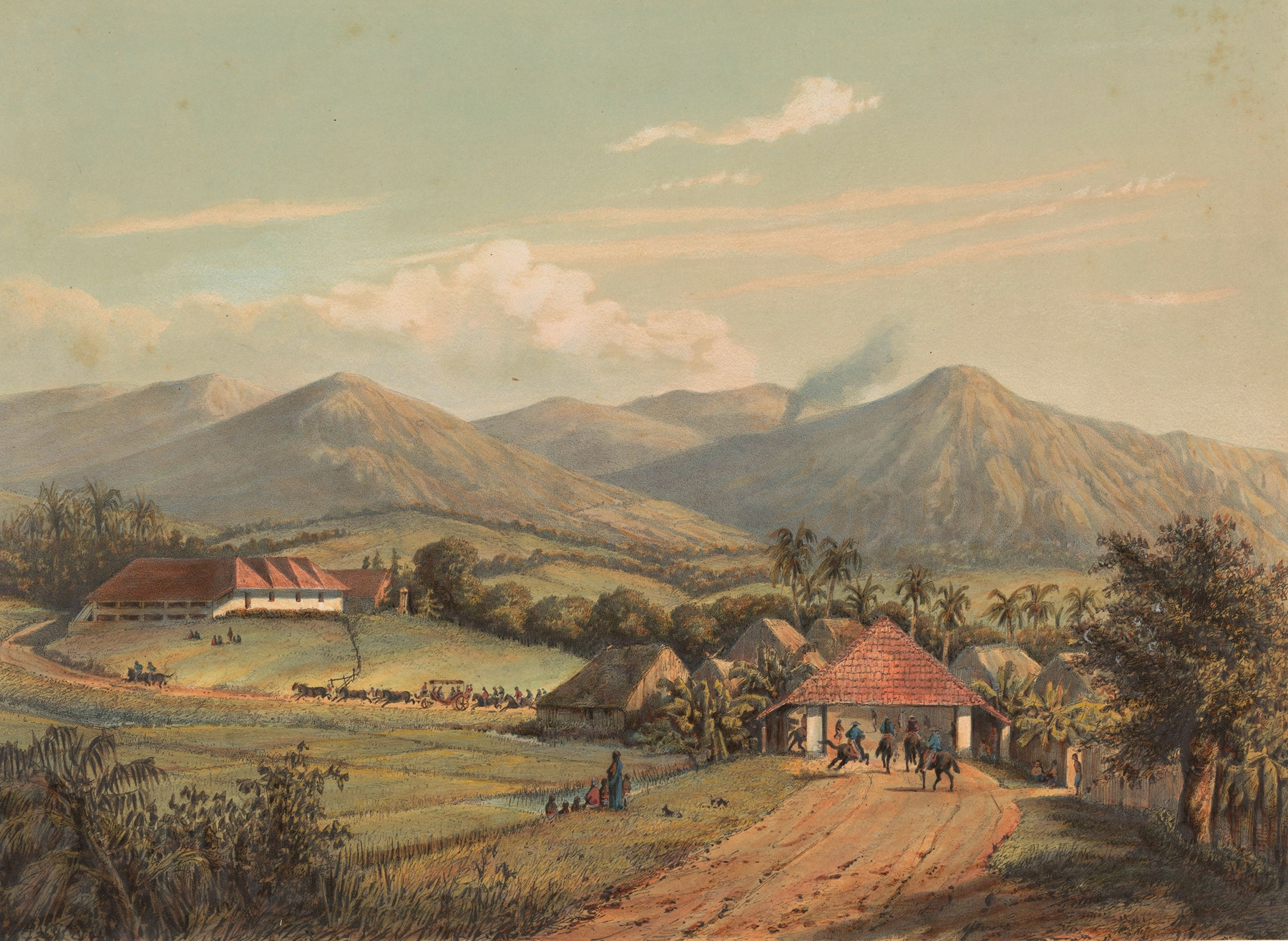
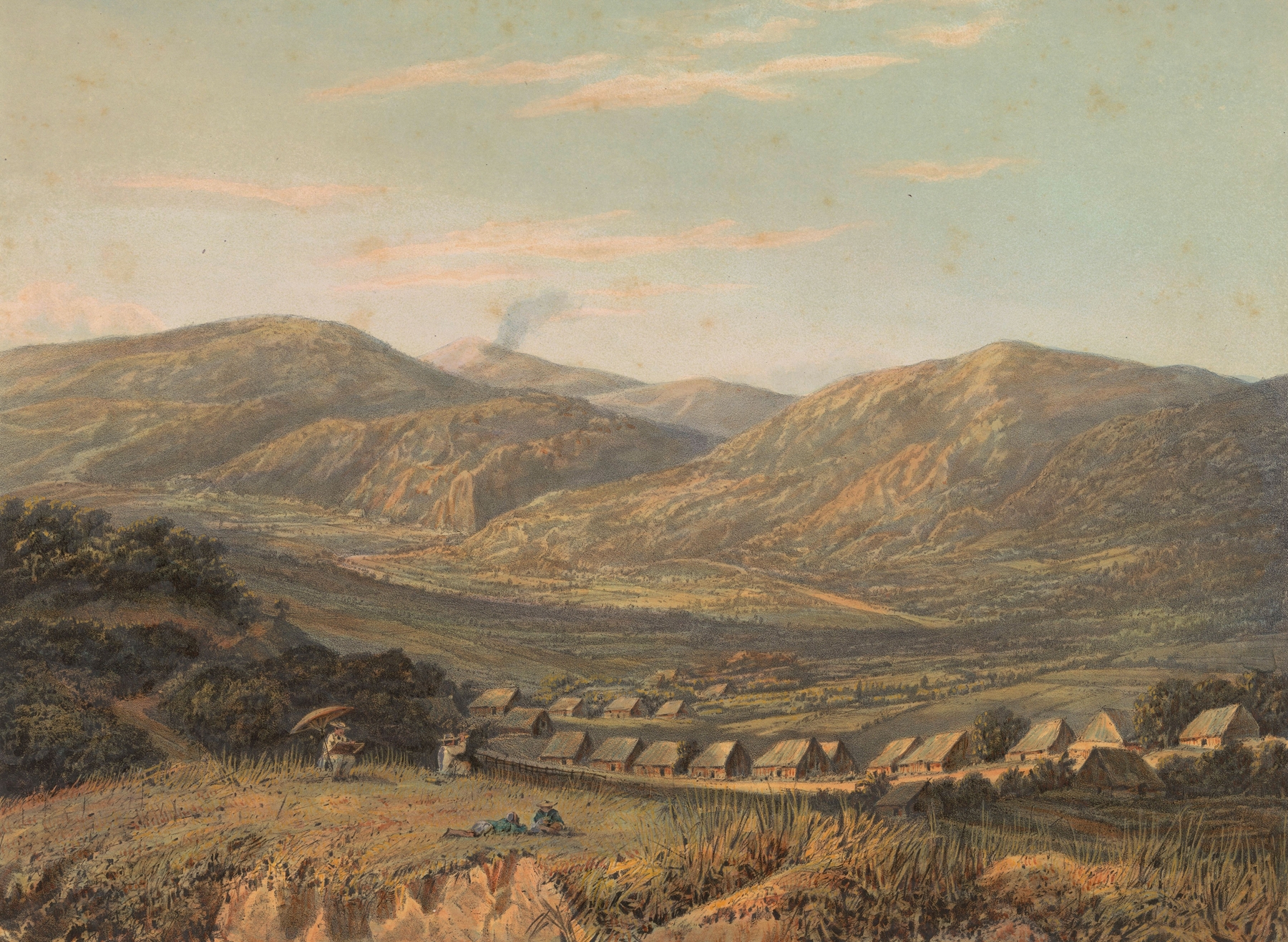
Where does light end, and longing begin? In the tender dance of color and shadow, longing becomes palpable, woven intricately into the landscape. Look to the horizon in Gezicht op een landschap in Java. The soft, golden light bathes the undulating hills, creating a gentle warmth that contrasts with the cool, shadowy valleys below. Notice how the trees stand sentinel against the sky, their dark forms outlined by the luminous glow.
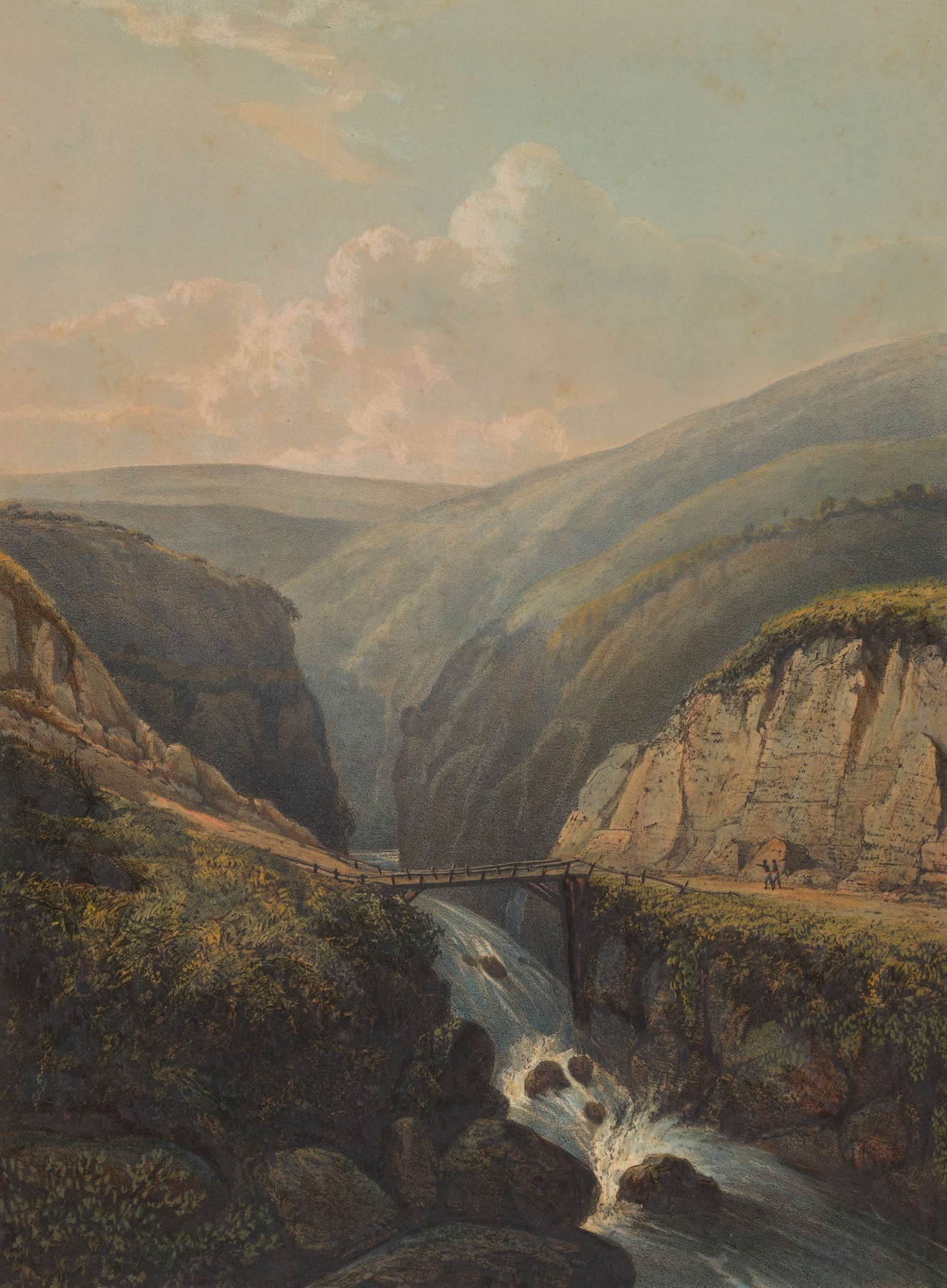
The artist’s brushwork captures the subtle nuances of nature, with delicate strokes giving life to the foliage and a serene river that winds through the scene, inviting the viewer’s gaze to wander and explore. Delve deeper into the composition, and you’ll find an emotional undercurrent. The juxtaposition between the vibrant sky and the muted earth evokes a sense of nostalgia, whispering of memories lost to time. The serene river, flowing steadily, symbolizes the passage of life, while the distant mountains seem to guard unspoken secrets of the past.
This quiet dialogue between light and shadow stirs a melancholic yearning, as if the landscape itself mourns the fleeting moments it has witnessed. In 1869, Johan Conrad Greive created this evocative piece during a period of artistic exploration in the Netherlands, where Romanticism was deeply influencing the portrayal of nature. As he painted in Java, Greive sought to capture the essence of the lush landscape surrounding Bantam, infusing both personal and cultural reflections into his work. The painting stands as a testament to his ability to translate the emotional landscape of his experiences into brushstrokes, connecting viewers to a profound sense of place and memory.