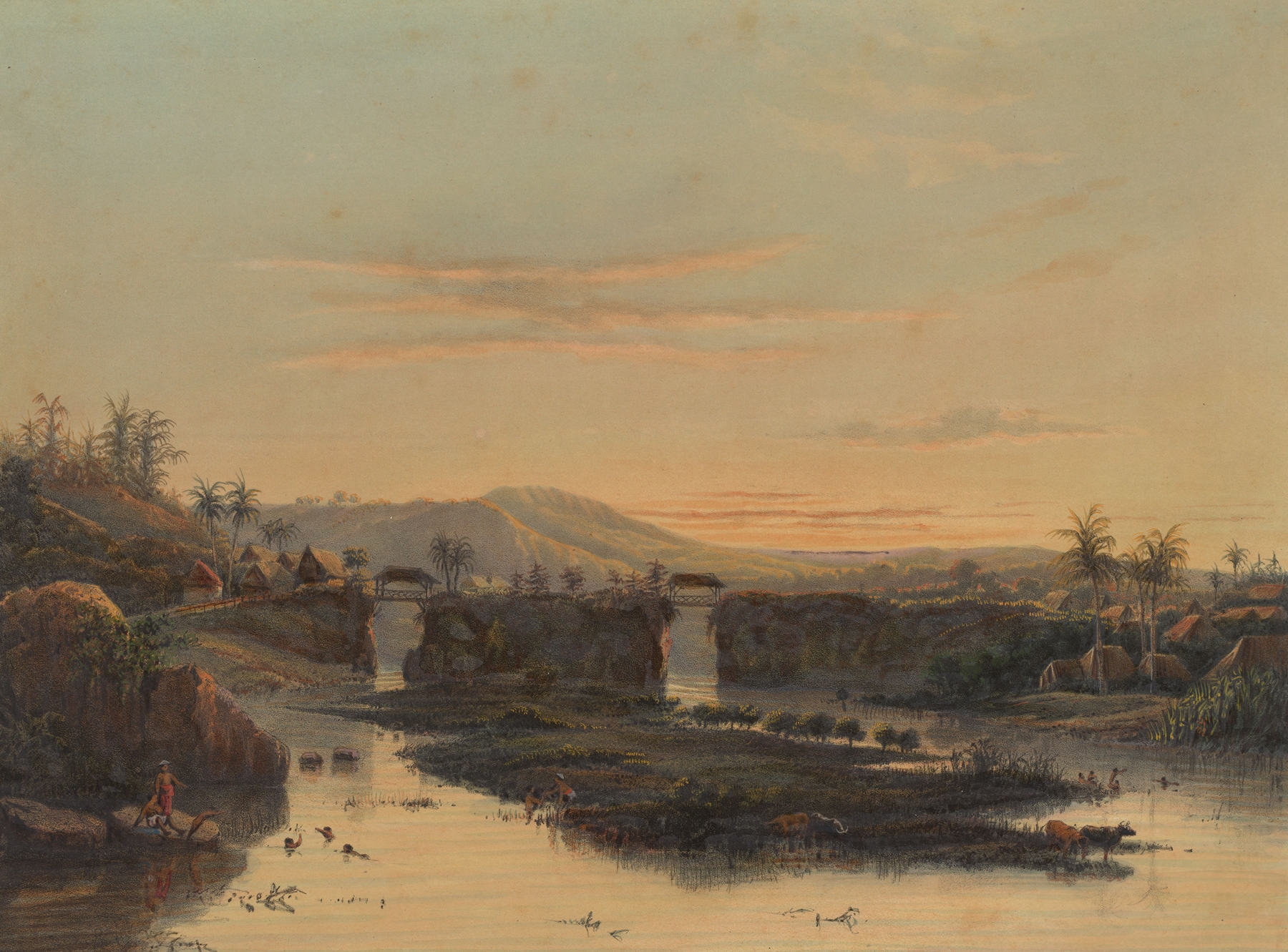
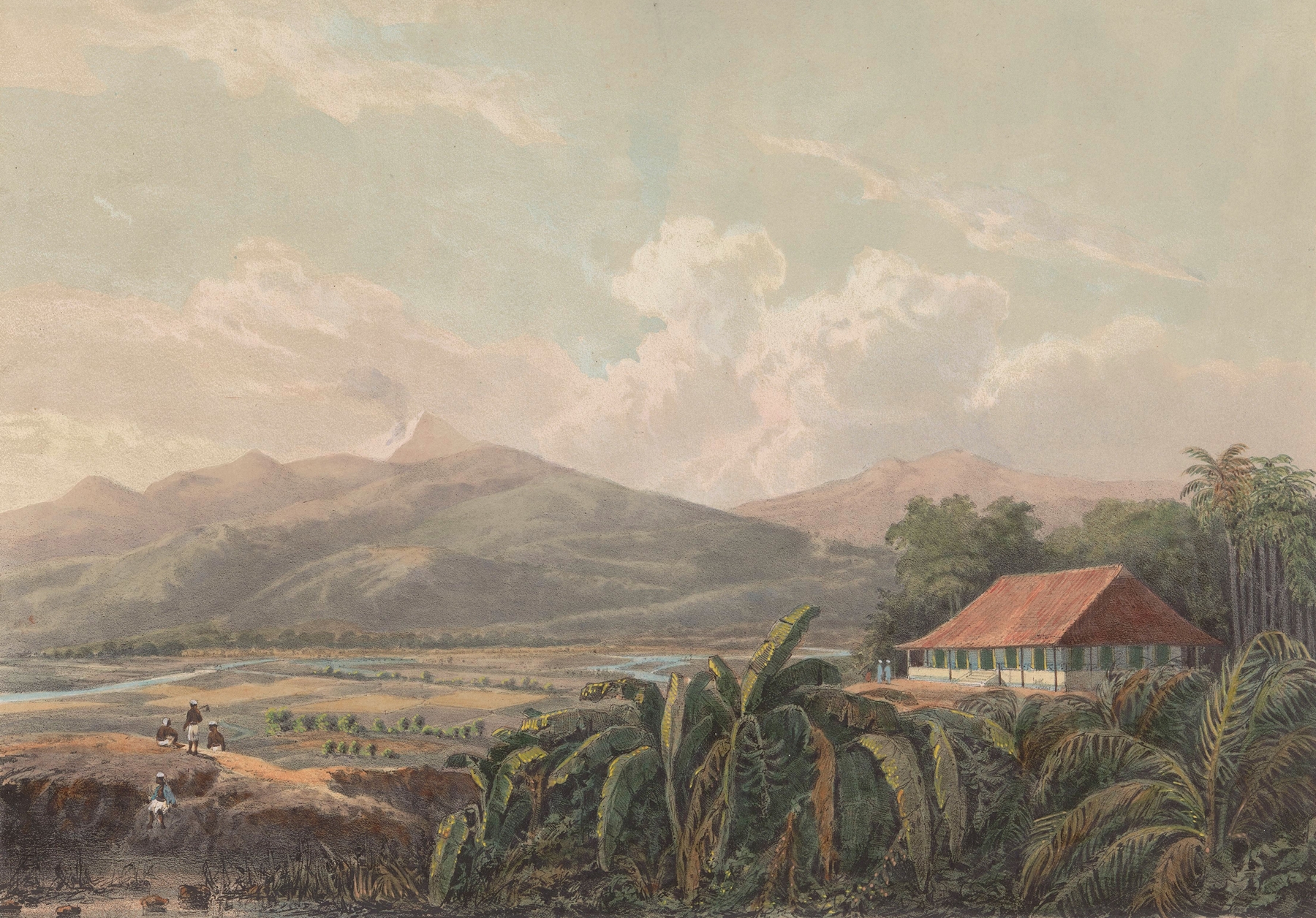
Dorpsfeest in de buurt van de berg Ardjoeno. Dorpsfeest in de omstreken der Ardjoeno — History & Analysis
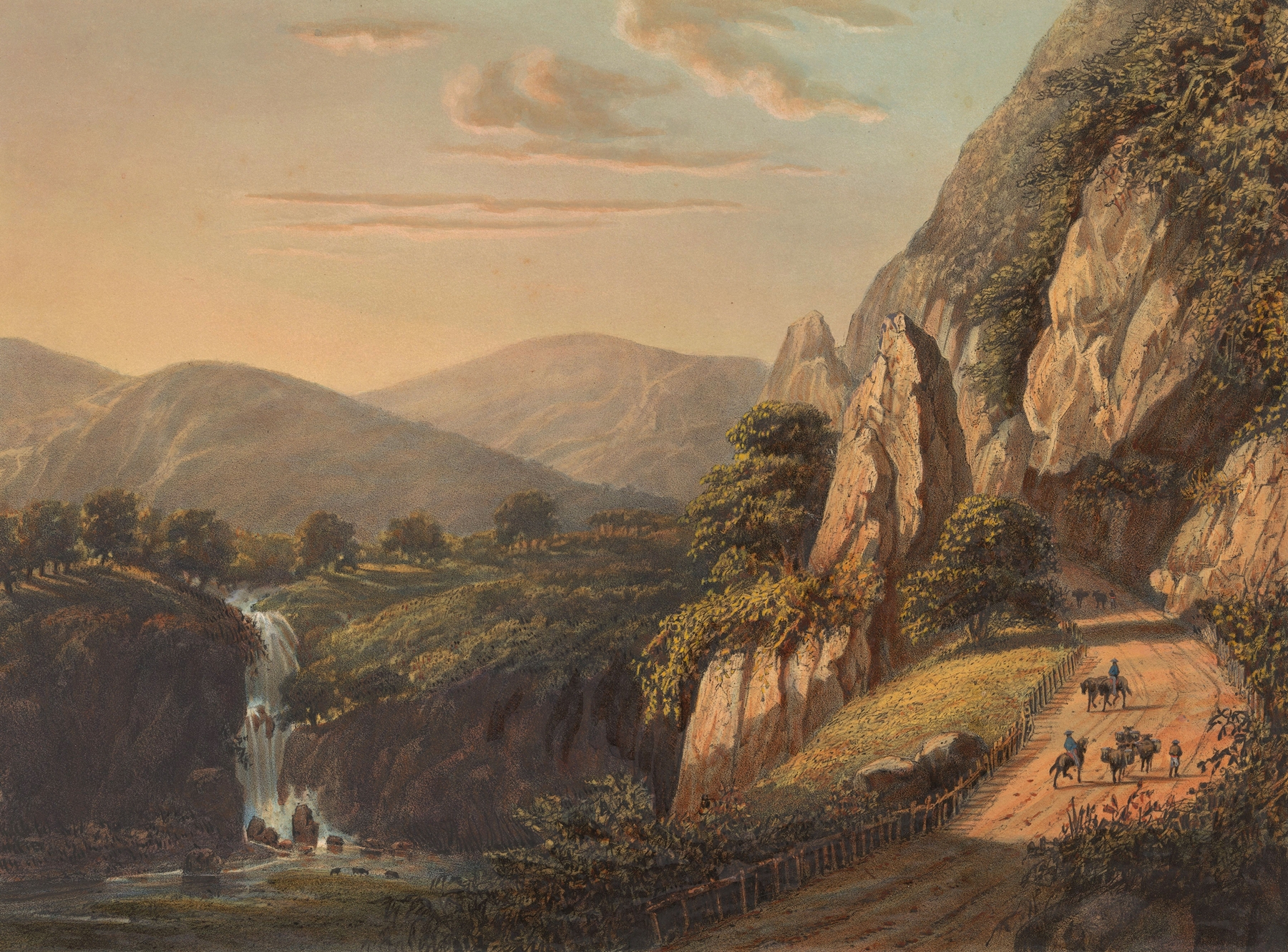
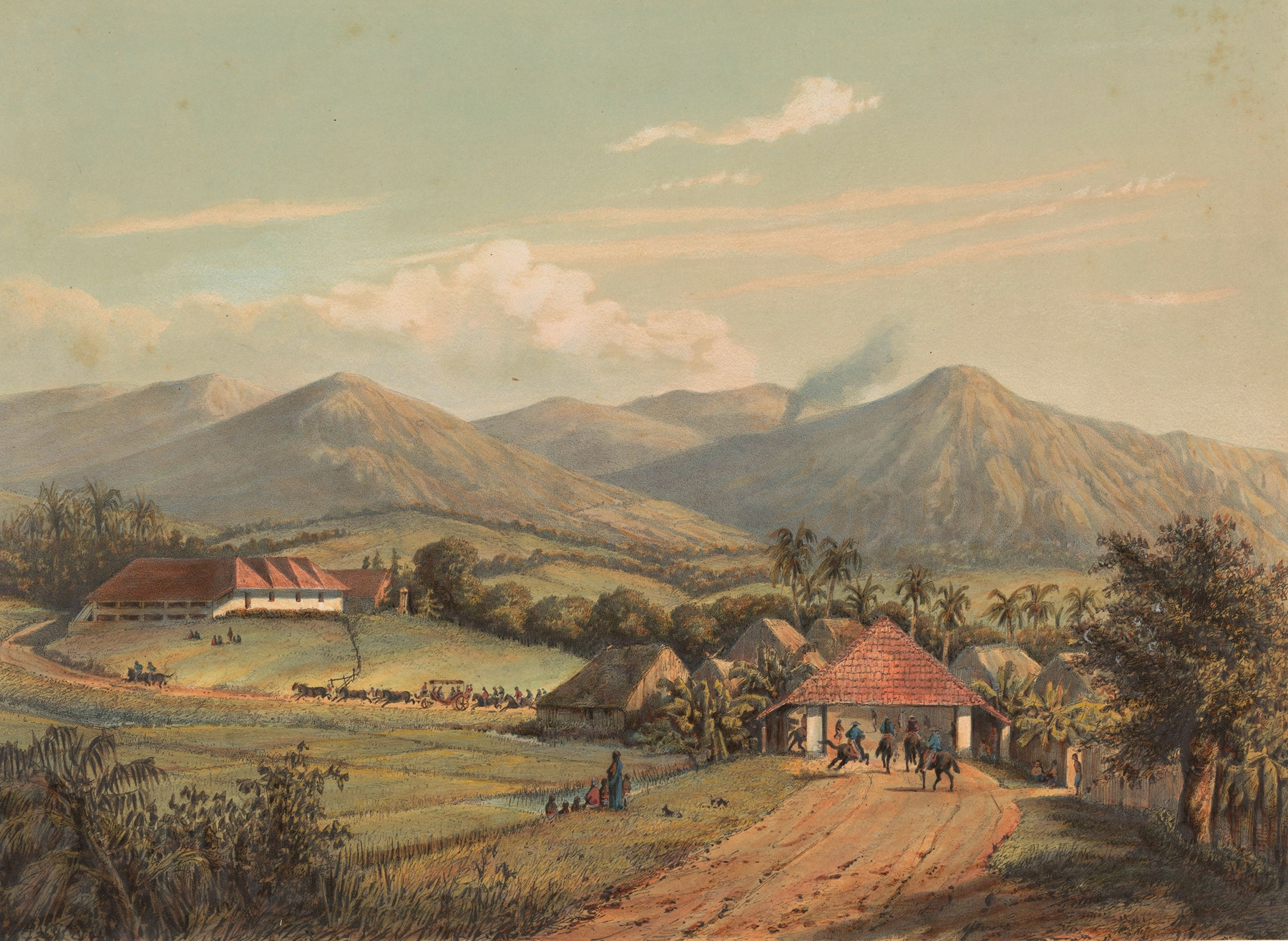
Could a single brushstroke hold eternity? In Dorpsfeest in de buurt van de berg Ardjoeno, the vibrant celebration encapsulates a fleeting moment, inviting the viewer to reflect on the nature of life and its transience. Look to the left, where clusters of villagers are captured in dynamic poses, their expressions radiating joy amidst the festivities. The warm hues of the sun-drenched landscape contrast beautifully with the cooler shadows that linger at the edges of the canvas, guiding your eye toward the heart of the celebration.
Notice how Greive’s skillful brushwork intertwines with the rhythmic patterns of the dancers’ garments, creating a sense of movement that pulses through the scene, instilling it with life. Within this festive tableau, the delicate balance between joy and the underlying sense of mortality is palpable. The villagers, seemingly lost in their revelry, are at once timeless and fleeting, their laughter echoing against the majestic backdrop of Mount Ardjoeno. The way the light cascades down the mountainside suggests both the warmth of community and the inevitability of change, reminding us that every celebration is a moment suspended before the passage of time claims it.
In 1869, Greive created this piece during a period marked by the rise of regionalism in art, as artists began to explore local themes and traditions. Living in the Netherlands, he was influenced by the burgeoning romanticism that sought to highlight the beauty of everyday life. This painting was not only a representation of a local festival but also a commentary on the broader human experience, reflecting both social dynamics and the universal quest for connection.