Gloucester Harbor — History & Analysis
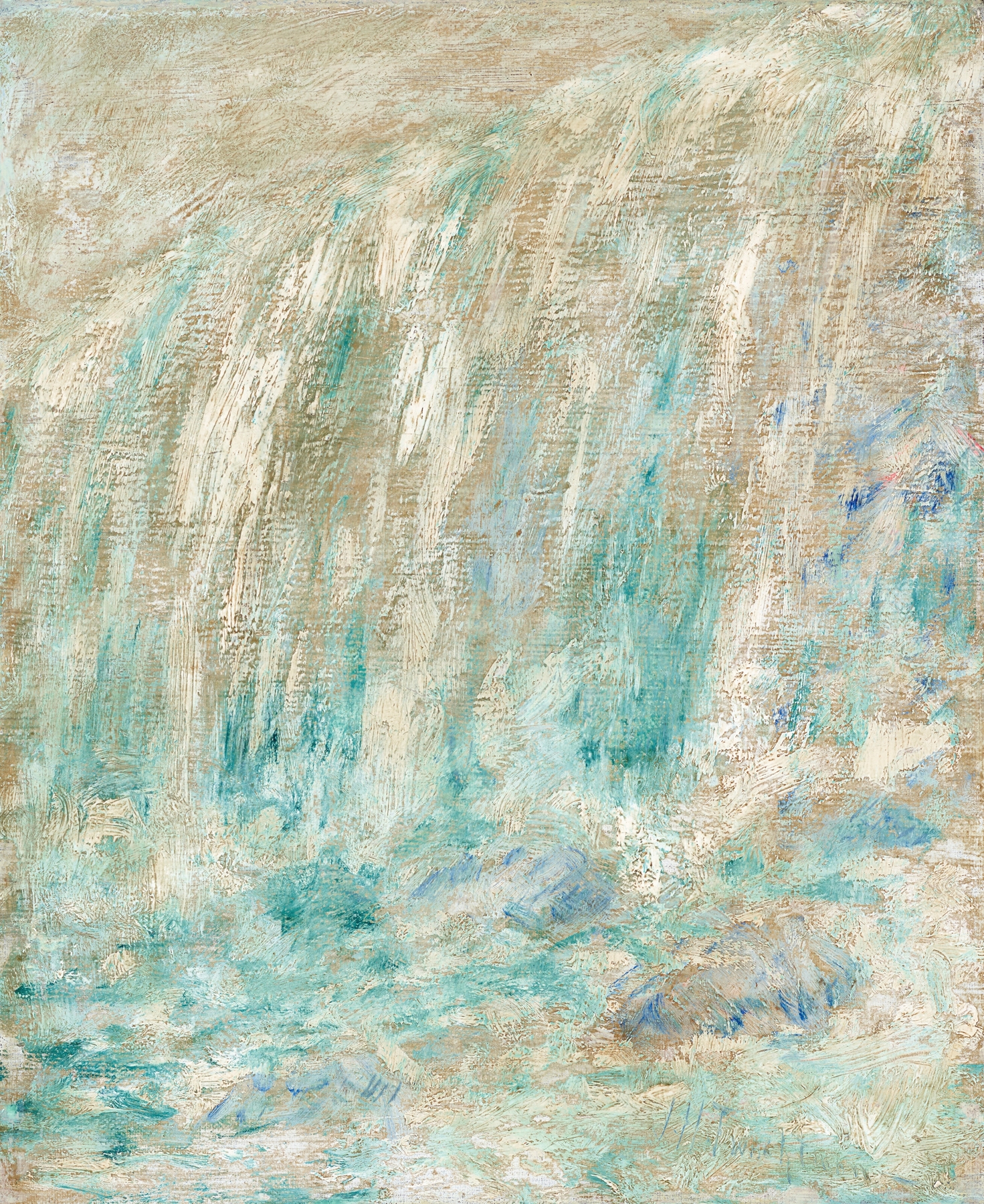
“Art reveals the soul when the world turns away.” It is a powerful reminder of the quiet revolutions that unfold in the stillness of life, captured with extraordinary sensitivity by John Henry Twachtman in Gloucester Harbor. Look closely at the gentle undulations of water in the foreground, where dappled reflections shimmer beneath the caress of soft light. The muted palette of blues, greens, and greys blends seamlessly, invoking an atmosphere of serene contemplation. Notice how the brushwork becomes increasingly dense as it moves toward the shoreline, guiding your gaze toward the small boats bobbing gently on the surface, each a whisper of activity in an otherwise tranquil scene.
Delving deeper, the painting reveals a tension between nature and humanity. The boats, symbols of both industriousness and fragility, suggest the ever-changing relationship between man and the environment. Twachtman’s swirling brushstrokes evoke the rhythm of the water, while the sky, heavy with clouds, implies a moment suspended in time—a possible storm brewing, representing the unpredictability of life itself. The harmonious coexistence of calm and chaos invites viewers to reflect on their own experiences of stillness amidst turmoil.
In the late 19th century, Twachtman created this work while immersed in the American Impressionist movement, which sought to capture fleeting moments of light and atmosphere. Living in a time when industrialization dramatically altered landscapes and communities, he found solace and inspiration in the natural beauty of Gloucester, Massachusetts. This painting not only reflects his artistic evolution but also serves as a testament to the transformative power of nature in an era of profound change.