Harlech Castle and Snowdon — History & Analysis
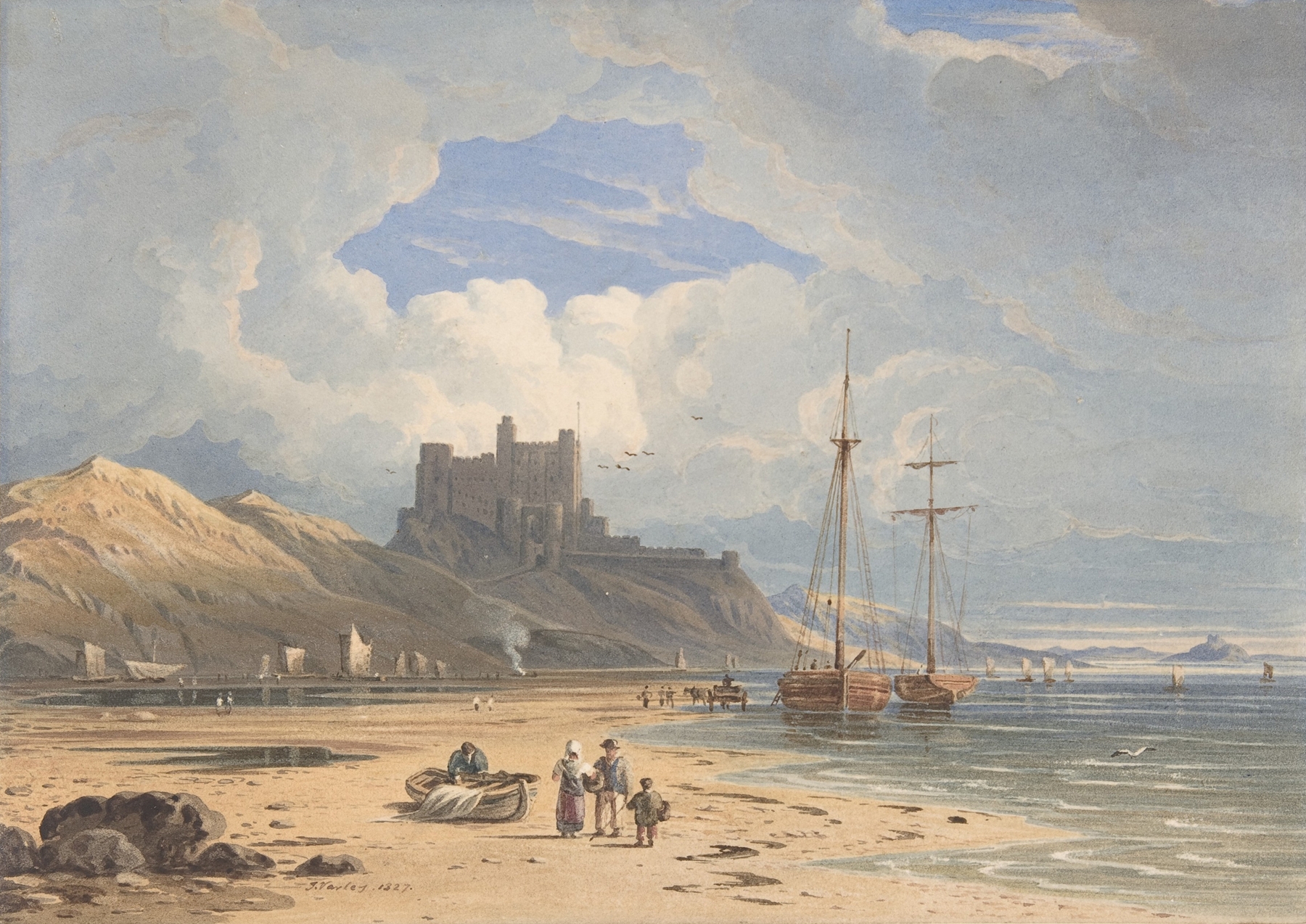
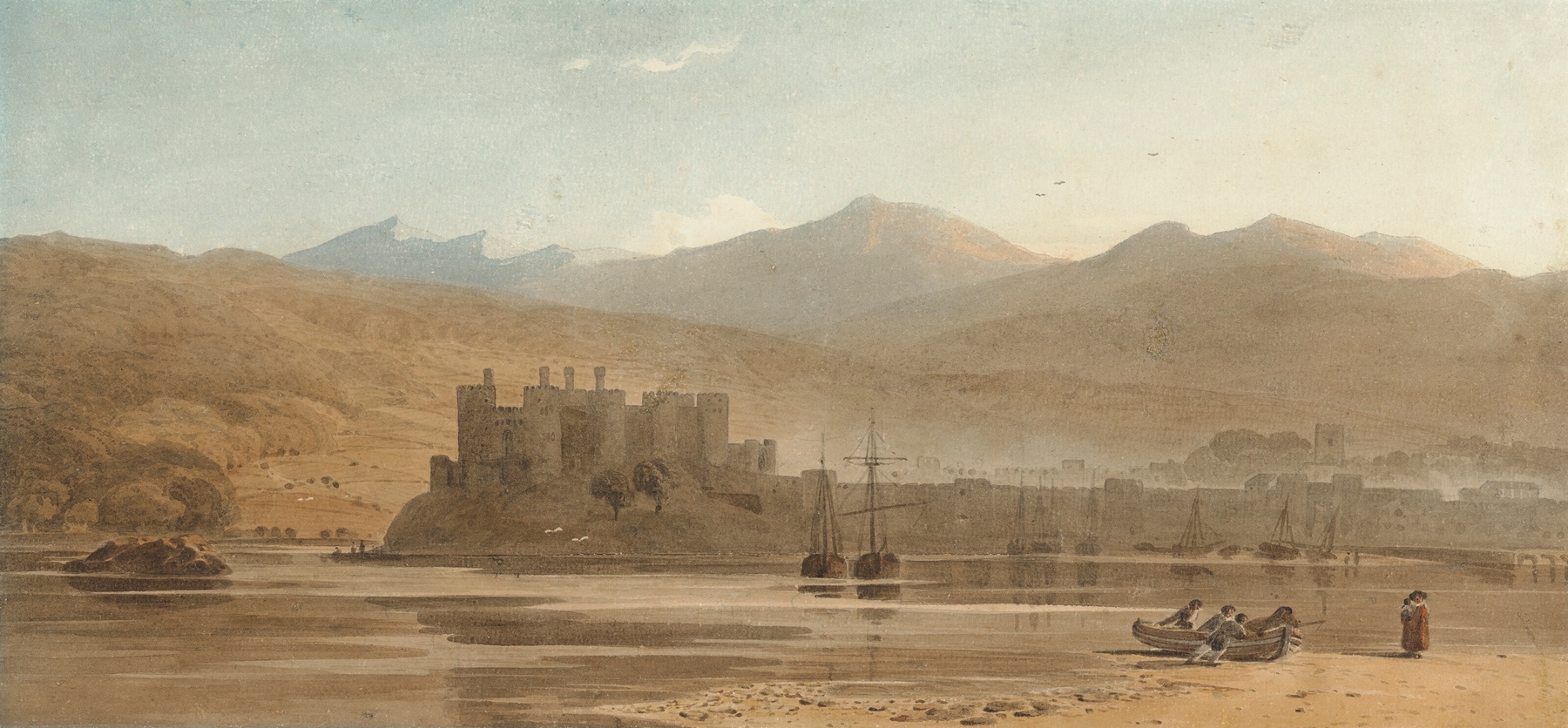
Can paint confess what words never could? In Harlech Castle and Snowdon, Varley translates the tumult of a changing world into a landscape that resonates with both stability and turbulence. Look to the foreground where the ancient stone walls of Harlech Castle rise defiantly against the sweeping backdrop of Snowdon's majestic peaks. The artist employs a palette of rich greens and earthy browns, contrasting with softer blues and grays that envelop the mountains, evoking a sense of permanence amidst nature's grandeur.
Notice how the light dances across the castle's weathered facade, illuminating its historical significance against the ephemeral sky, creating a delicate balance between the past and the present. As you delve deeper, examine the interplay between the fortress and the landscape—a metaphor for resilience in the face of upheaval. The castle, a remnant of history, stands as a bulwark against the encroaching modernity symbolized by the distant mountains, laden with secrets and stories.
This juxtaposition captures the tension of an era marked by revolution and change, suggesting that even in stillness, there is a profound narrative of conflict and endurance. In the early 19th century, when this work was painted, Varley was navigating a transition in his own artistic journey, influenced by the Romantic movement's emphasis on nature and emotion. Working in England, amidst the backdrop of political and social upheaval, he sought to encapsulate not only the physical landscape but also the spirit of an age on the brink of transformation, rendering both history and aspiration in one frame.