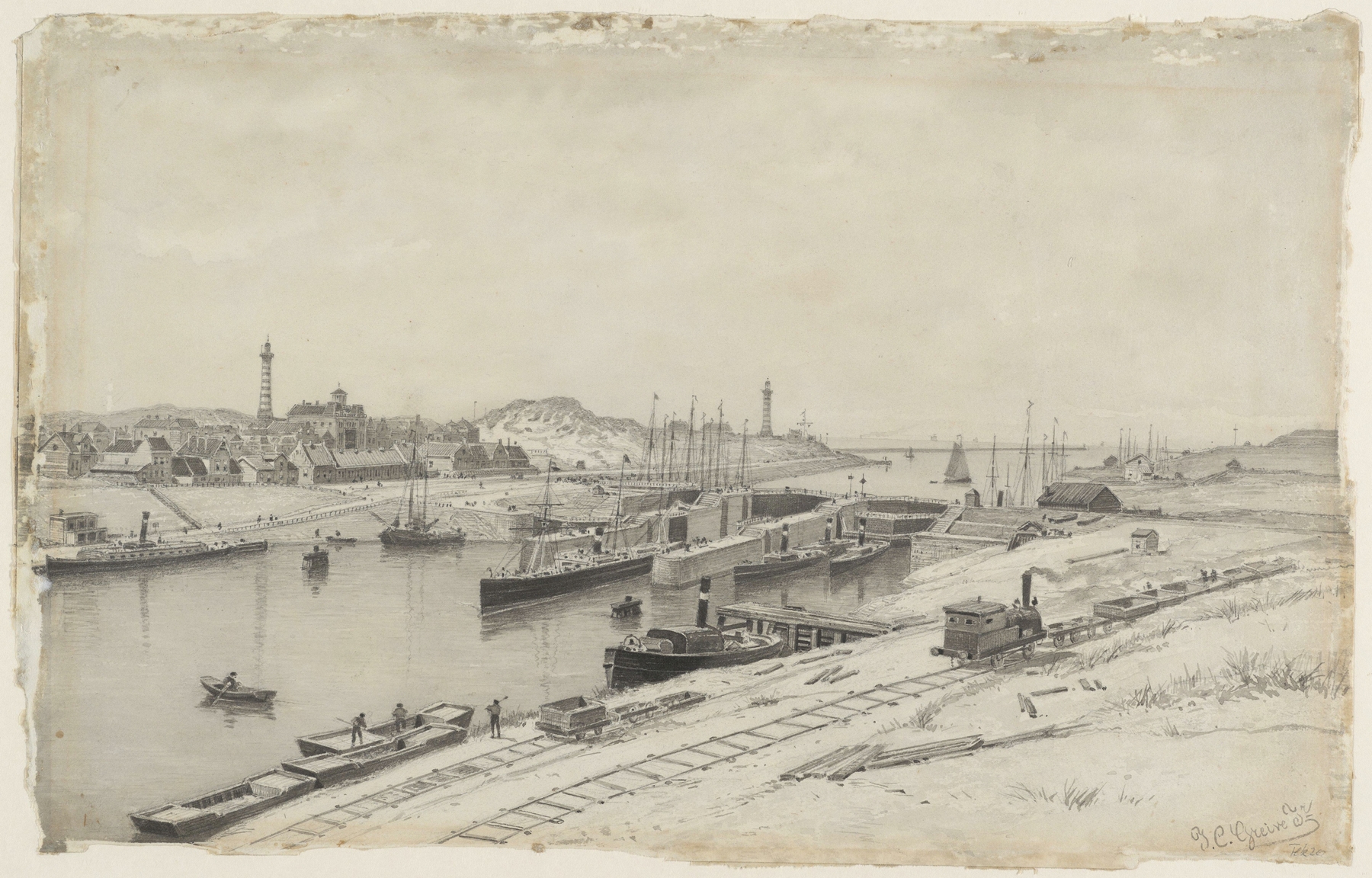
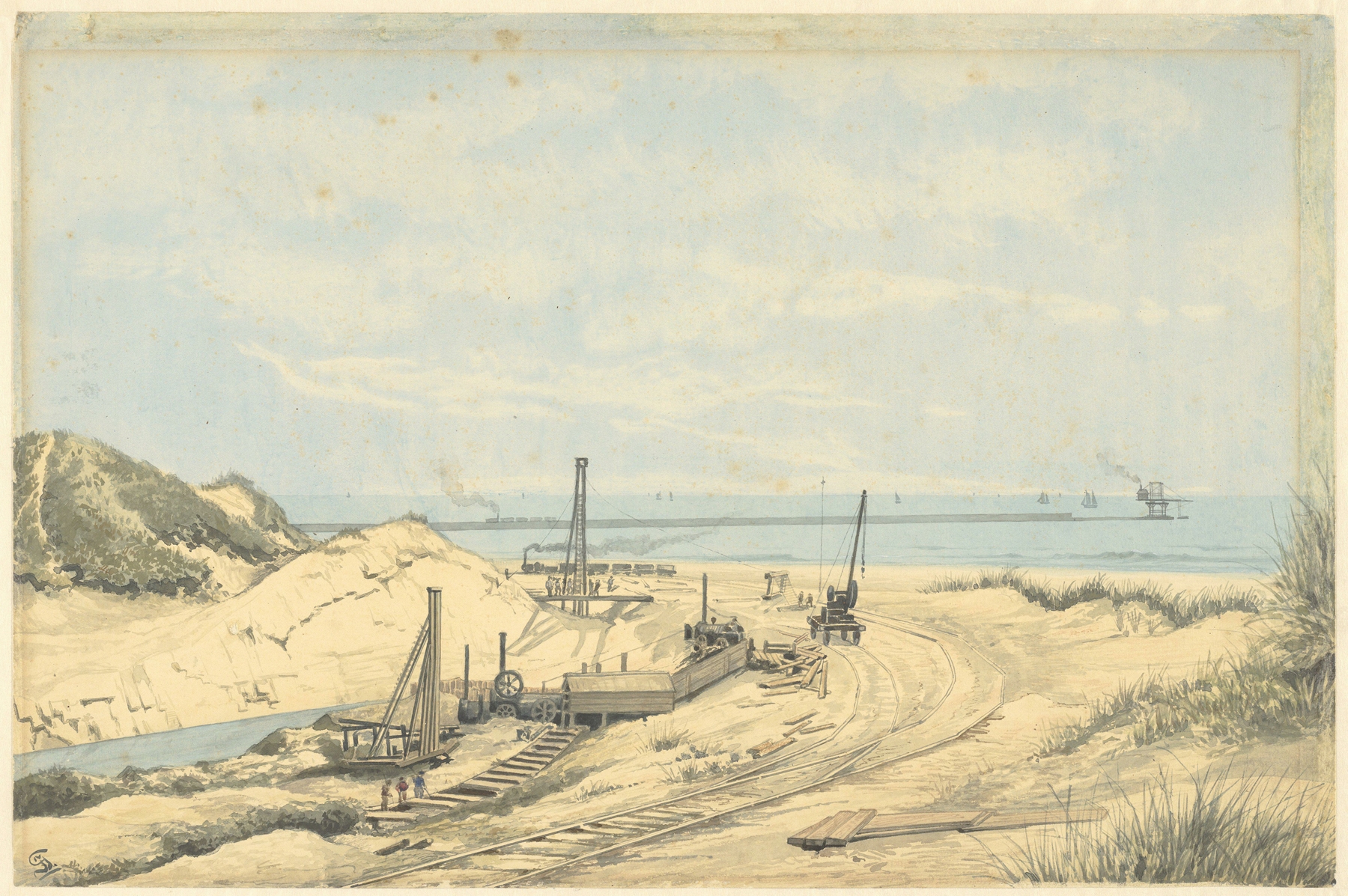
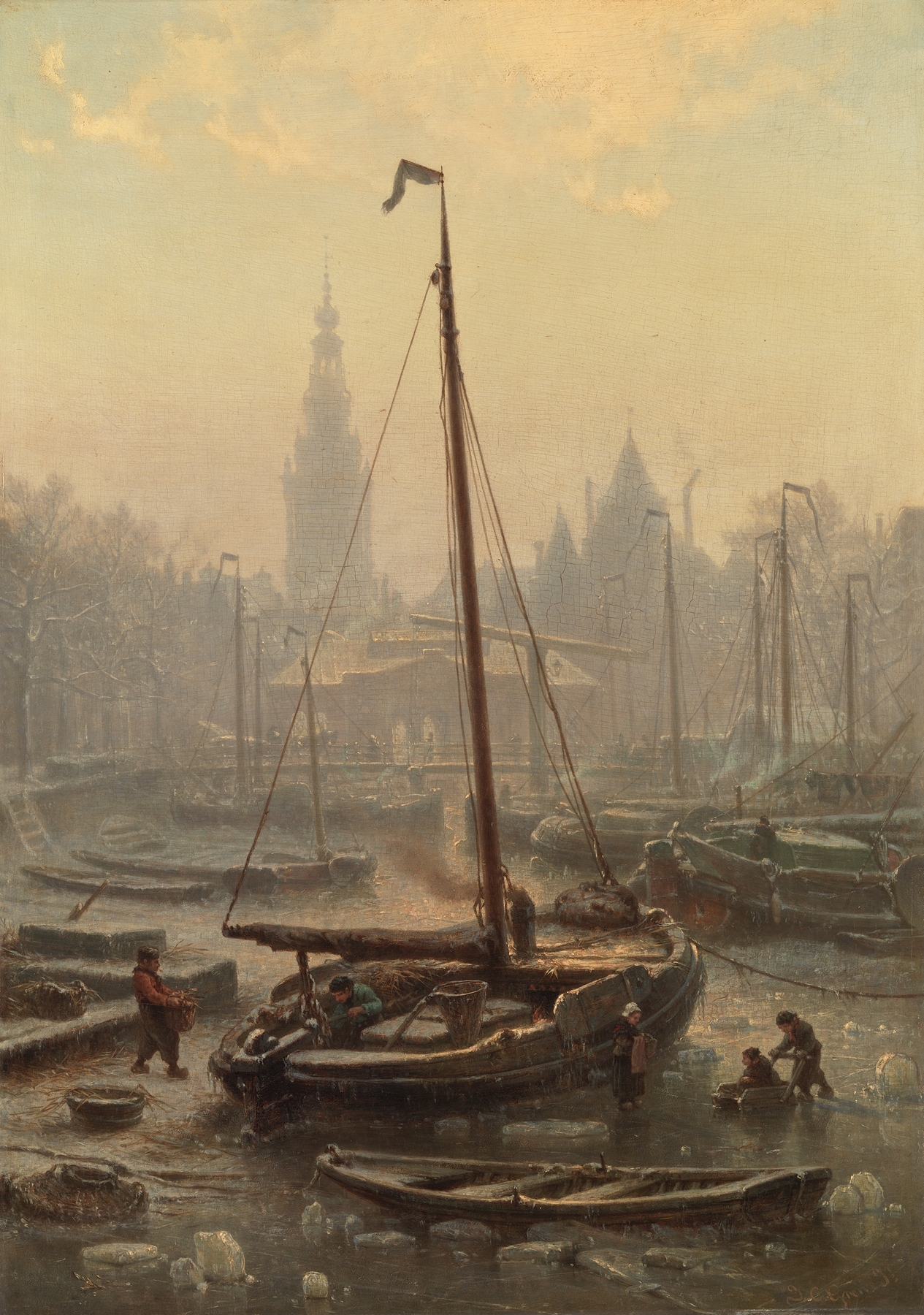
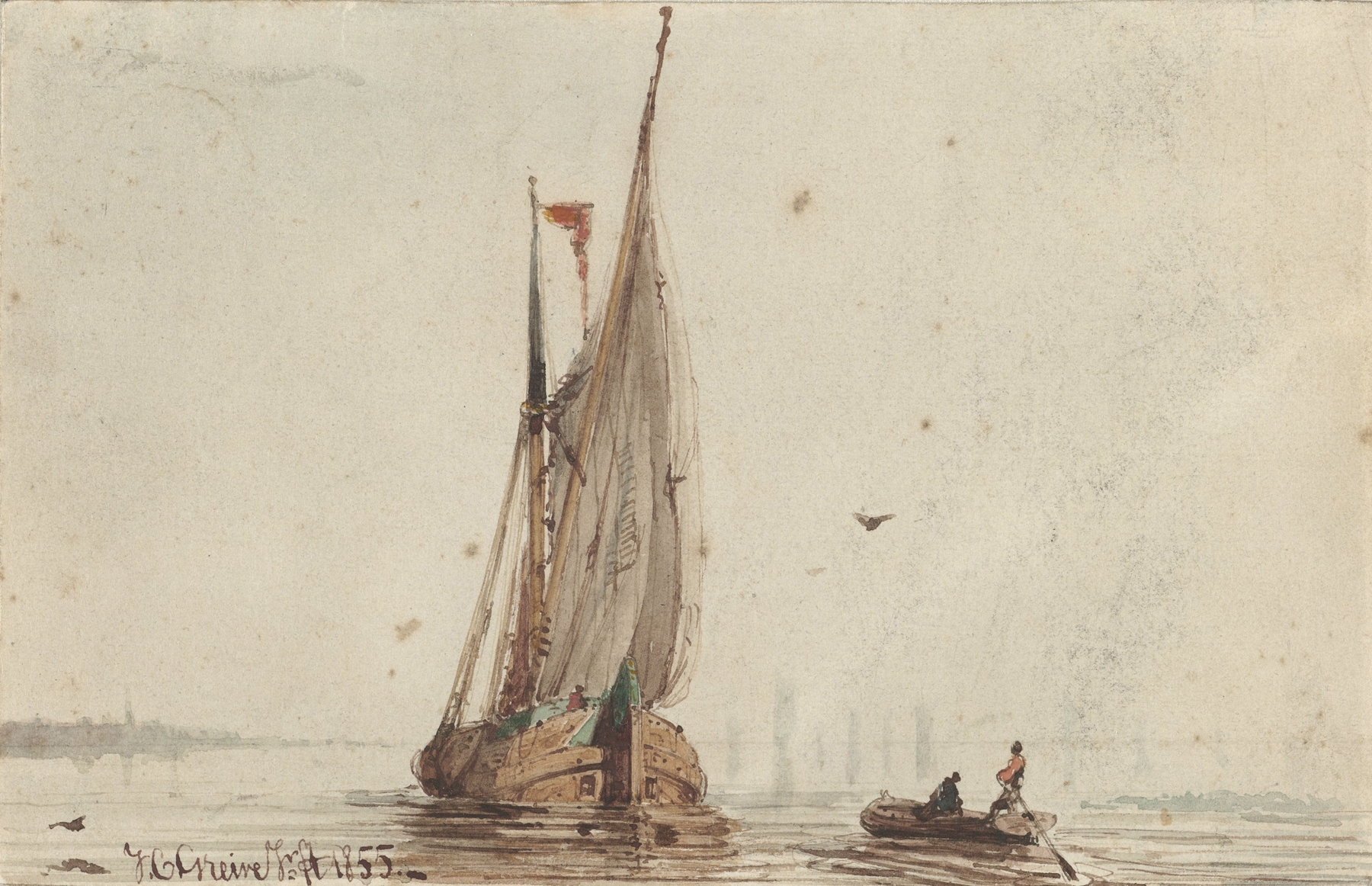
Het Noordzeekanaal te IJmuiden met vissersboten; op de achtergrond in het m. een fabrieksschoorsteen — History & Analysis
“Between color and silence, truth hides.” In a world where beauty intertwines with the mundane, we find moments that stir the soul and awaken the senses. Johan Conrad Greive’s painting captures this essence, navigating the delicate balance between industry and nature along the Noordzeekanaal. Look to the left at the rhythmic arrangement of fishing boats, their hulls gently bobbing against the water’s surface, painted in soft blues and grays. The serene water mirrors the sky, while wisps of white clouds drift lazily overhead. Notice how the smokestack in the distance looms, a stark contrast of dark against the otherwise tranquil palette, grounding the scene in its industrial reality.
Each stroke is deliberate, revealing Greive's mastery in blending the calm of the canal with the encroaching presence of human endeavor. Upon closer inspection, the juxtaposition of the boats and the factory chimney reveals a profound narrative. While the fishermen represent a timeless connection to the sea, the chimney symbolizes progress and the relentless march of modernity. The light dances across the water, hinting at hope and continuity, even as the backdrop of industry suggests a looming change.
This tension reflects the artist's contemplation on the beauty of simple life amid encroaching industrialization. In 1872, Greive painted this work in the Netherlands during a period marked by rapid industrial growth. As the country grappled with the changing landscape, both socially and economically, the artist sought to document the coexistence of heritage and modernization. The canvas stands as a testament to a moment when nature and industry met, capturing the spirit of its time while inviting reflection on the beauty that persists amidst transformation.