High Bridge, Early Moon — History & Analysis
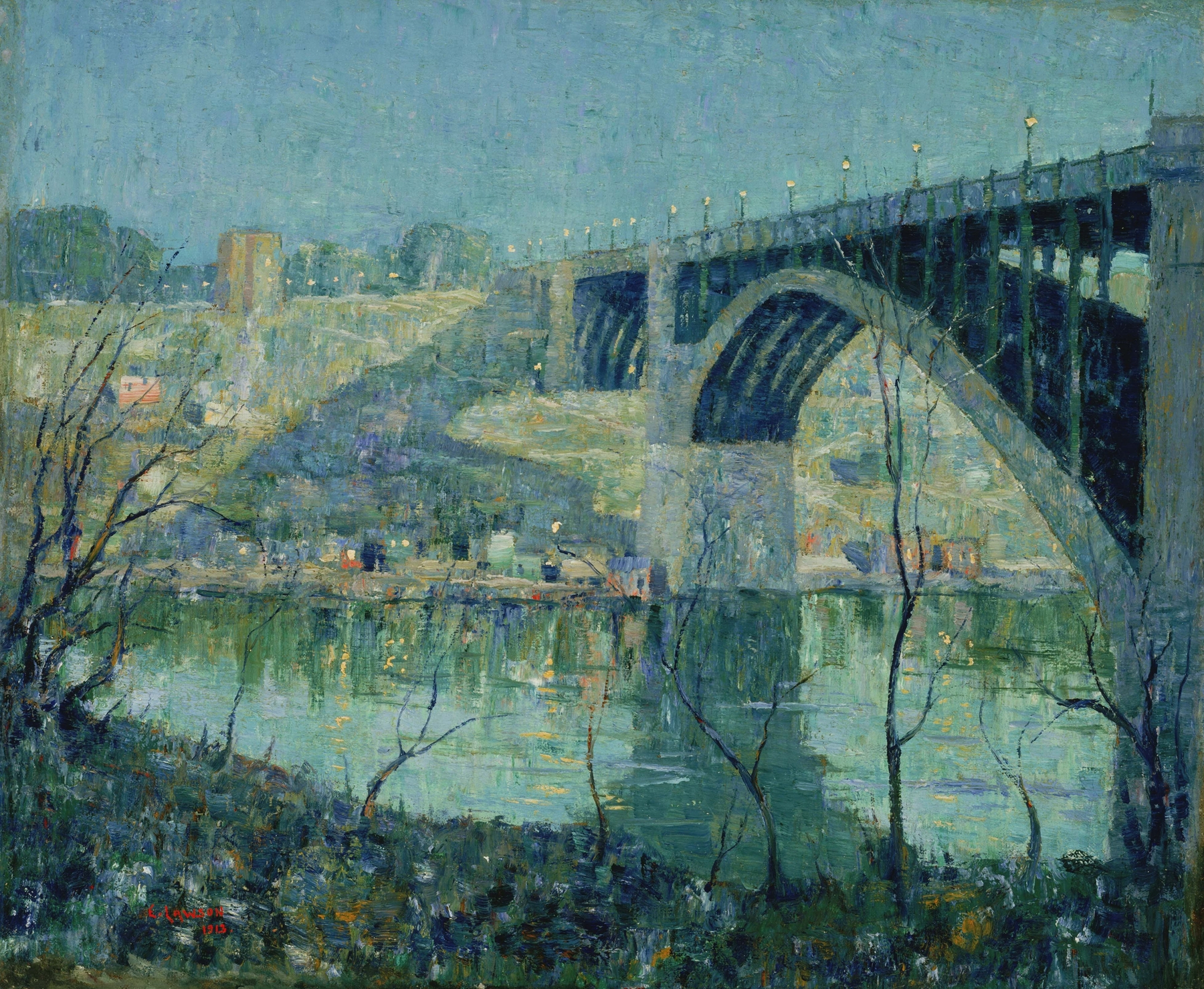
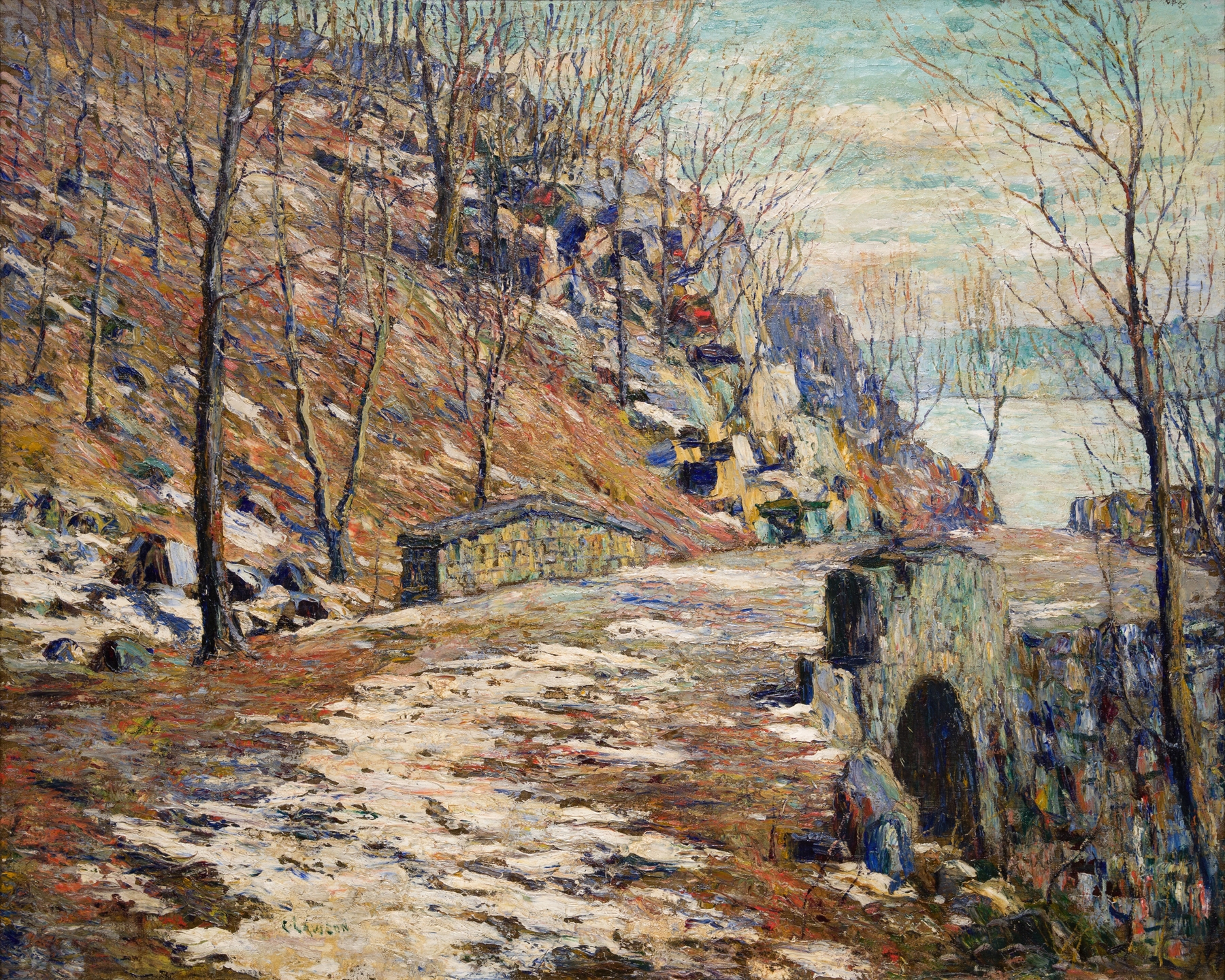
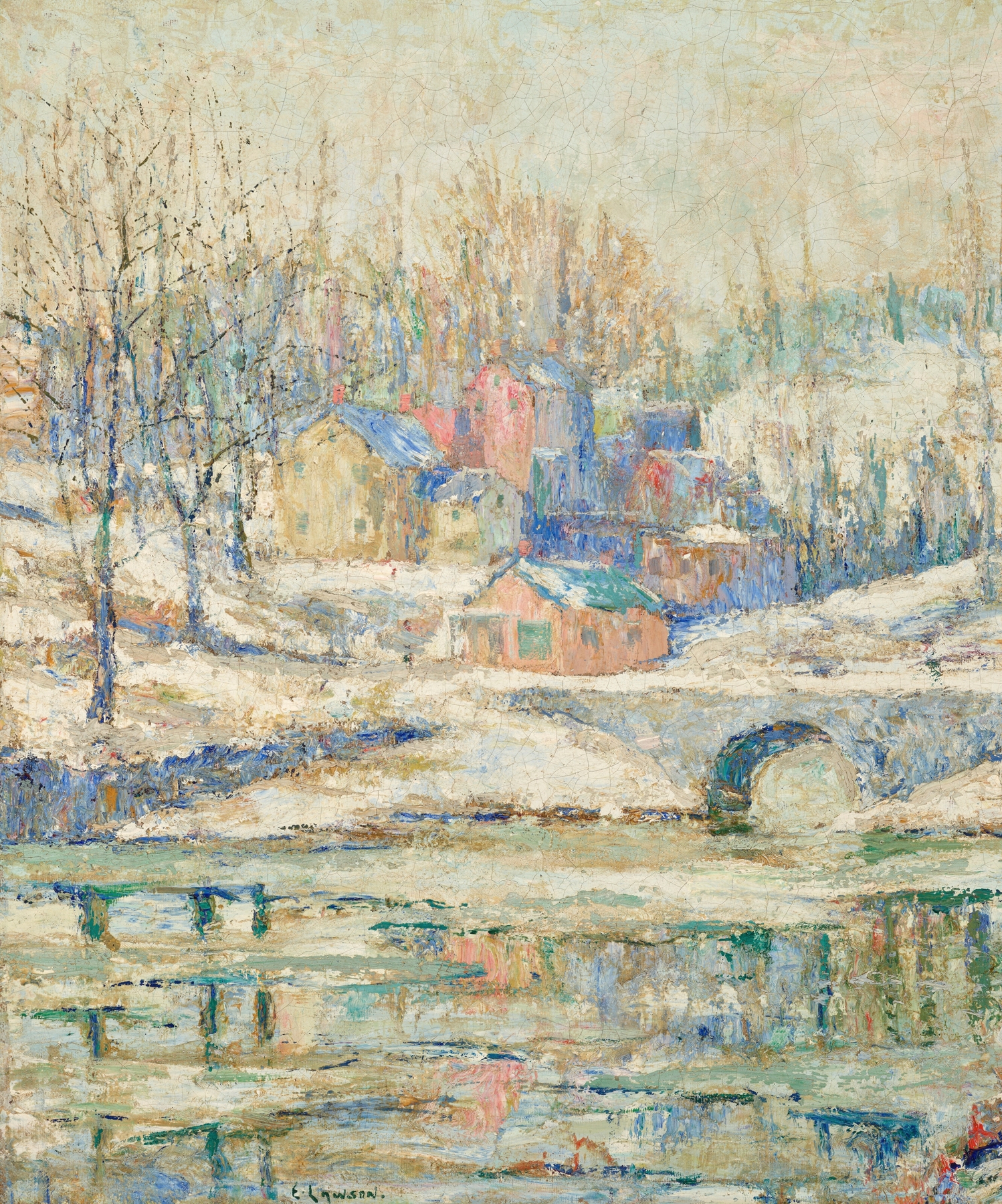
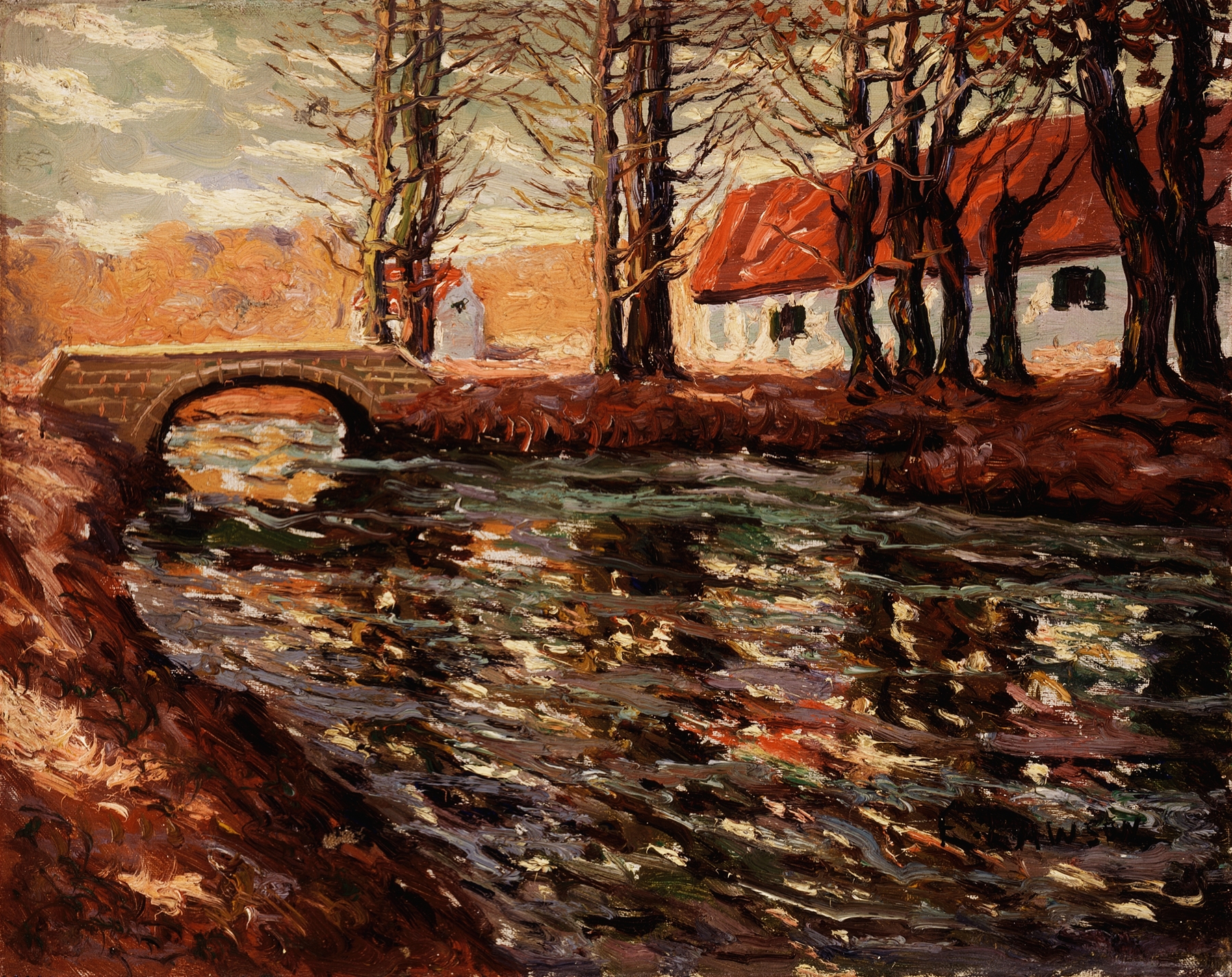
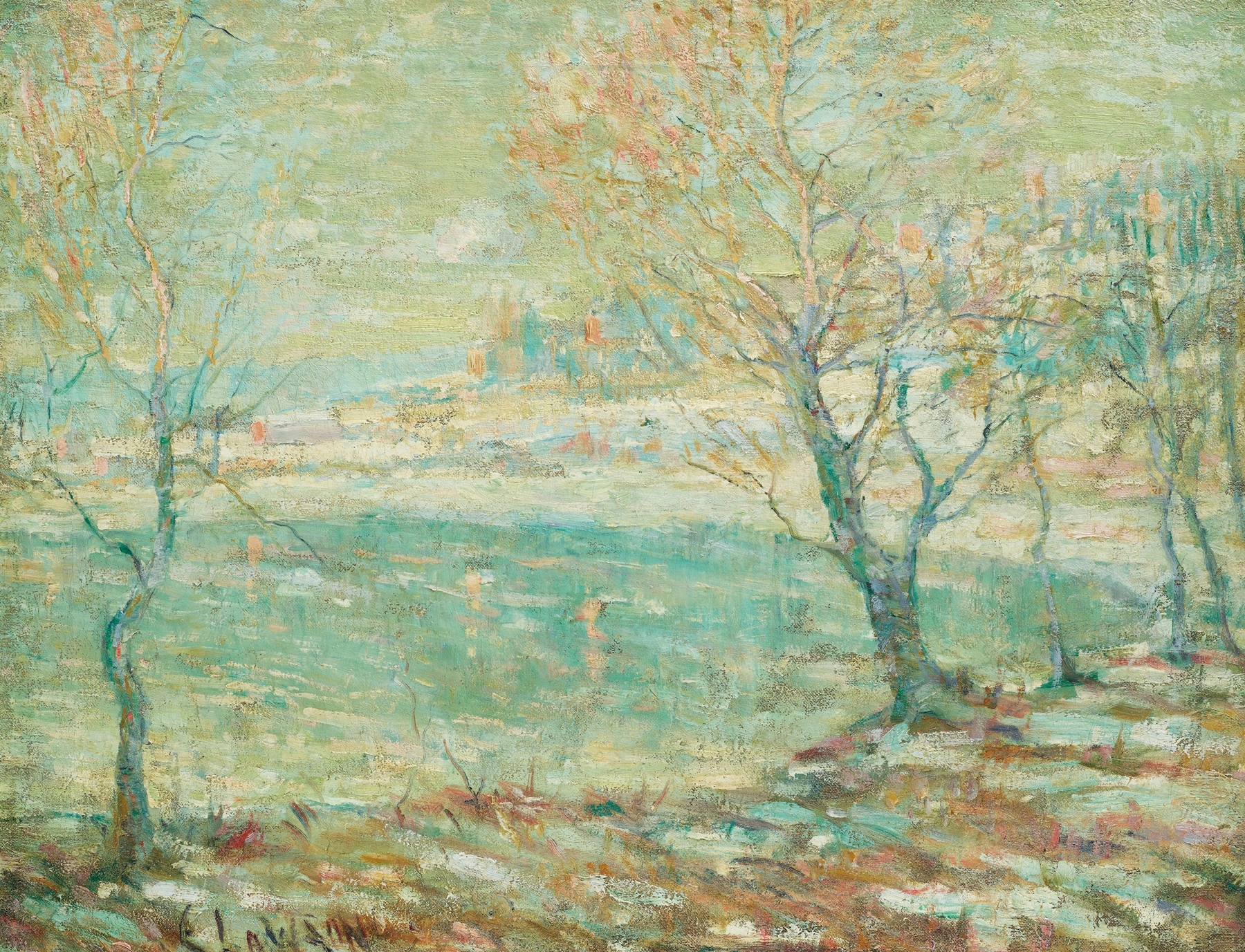
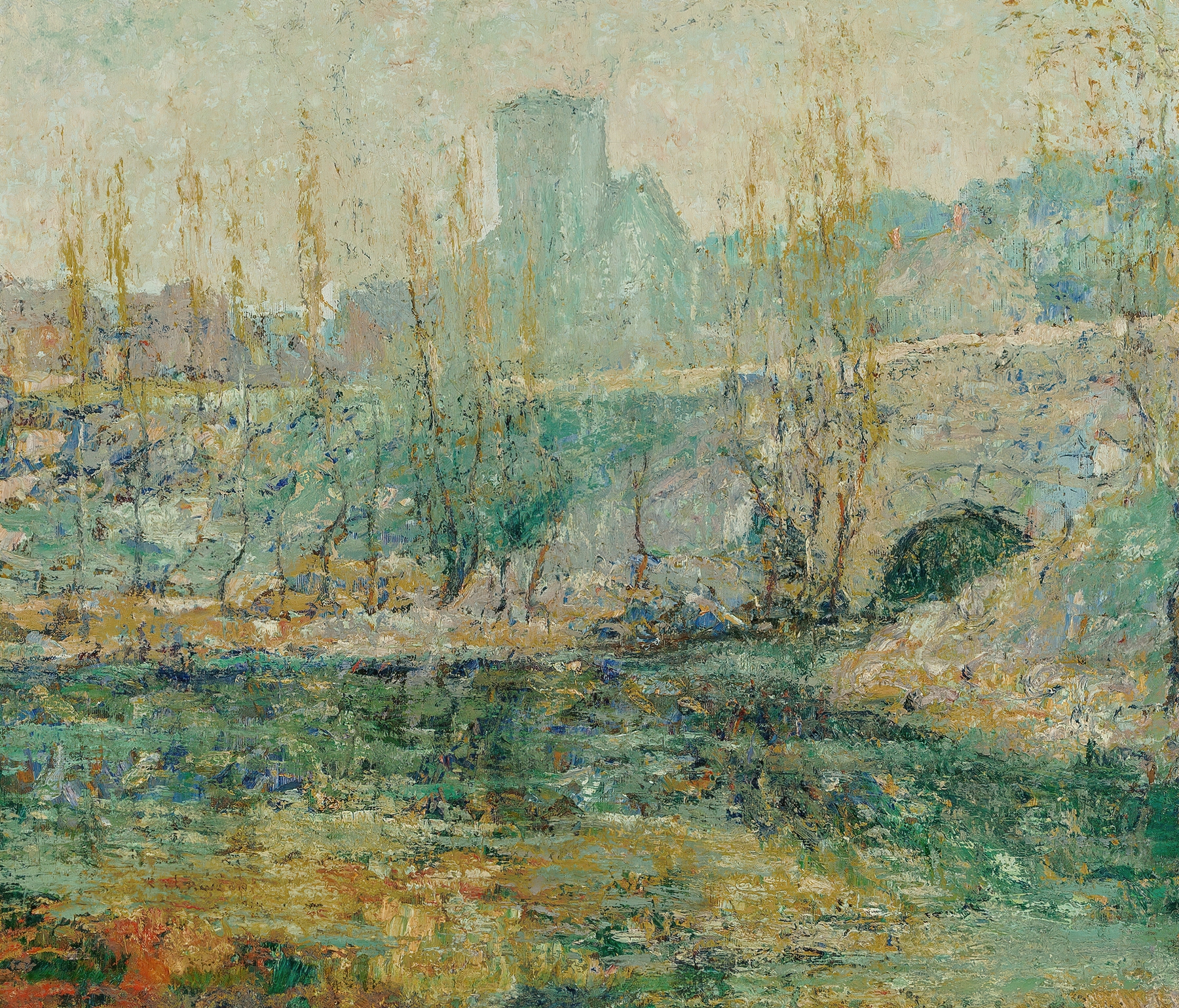
Can beauty exist without sorrow? In the quiet twilight, where the moon hangs like a silver pendant over a bridge, one feels the delicate balance between light and shadow, joy and melancholy. Look to the left at the luminous orb, its gentle glow spilling onto the water’s surface, transforming the mundane into ethereal. The bridge, a sturdy structure, arcs gracefully across the canvas, inviting the viewer’s gaze to wander along its path.
Notice how the cool blues and soft grays of the night sky contrast with the warm golden tones of the bridge, illuminating the intricate details of the architecture while hinting at the life that stirs beneath its span. This piece brims with emotional tension, capturing a moment that feels both serene and charged. Each brushstroke whispers of longing — the moon’s reflection rippling in the water suggests an unseen depth, while the stillness of the scene speaks to the silence of unexpressed feelings.
The juxtaposition of the solid bridge and the ephemeral light encapsulates the theme of divine beauty interwoven with the poignant reality of existence. Created during a time when American Impressionism was gaining momentum, the work reflects the artist's exploration of urban landscapes infused with nature. It is likely that Lawson painted this piece in the early 20th century, when he was deeply engaged with capturing the interplay of light in his surroundings, seeking to evoke a sense of place enriched by the passage of time.