Harlem River Winter Scene — History & Analysis
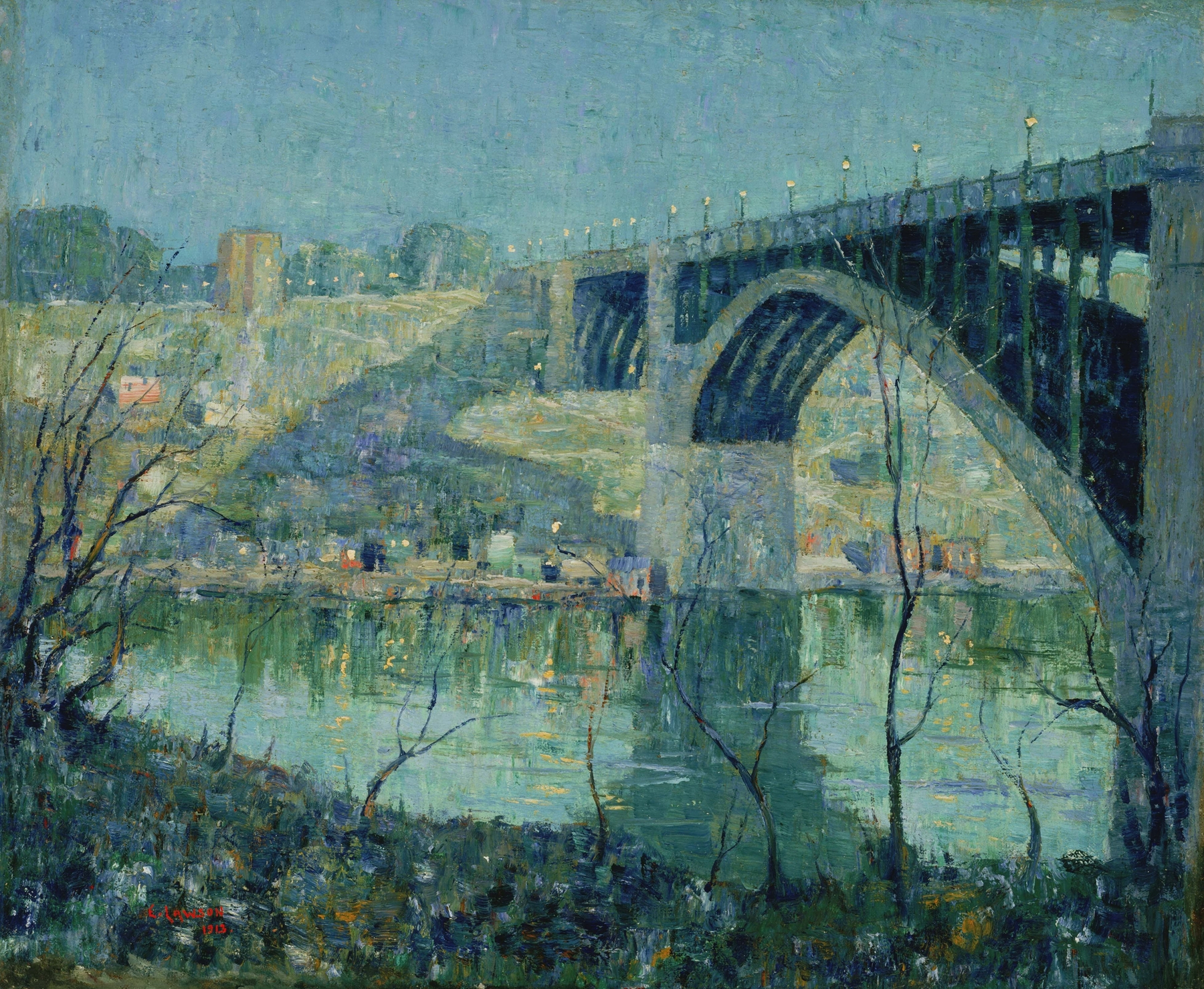
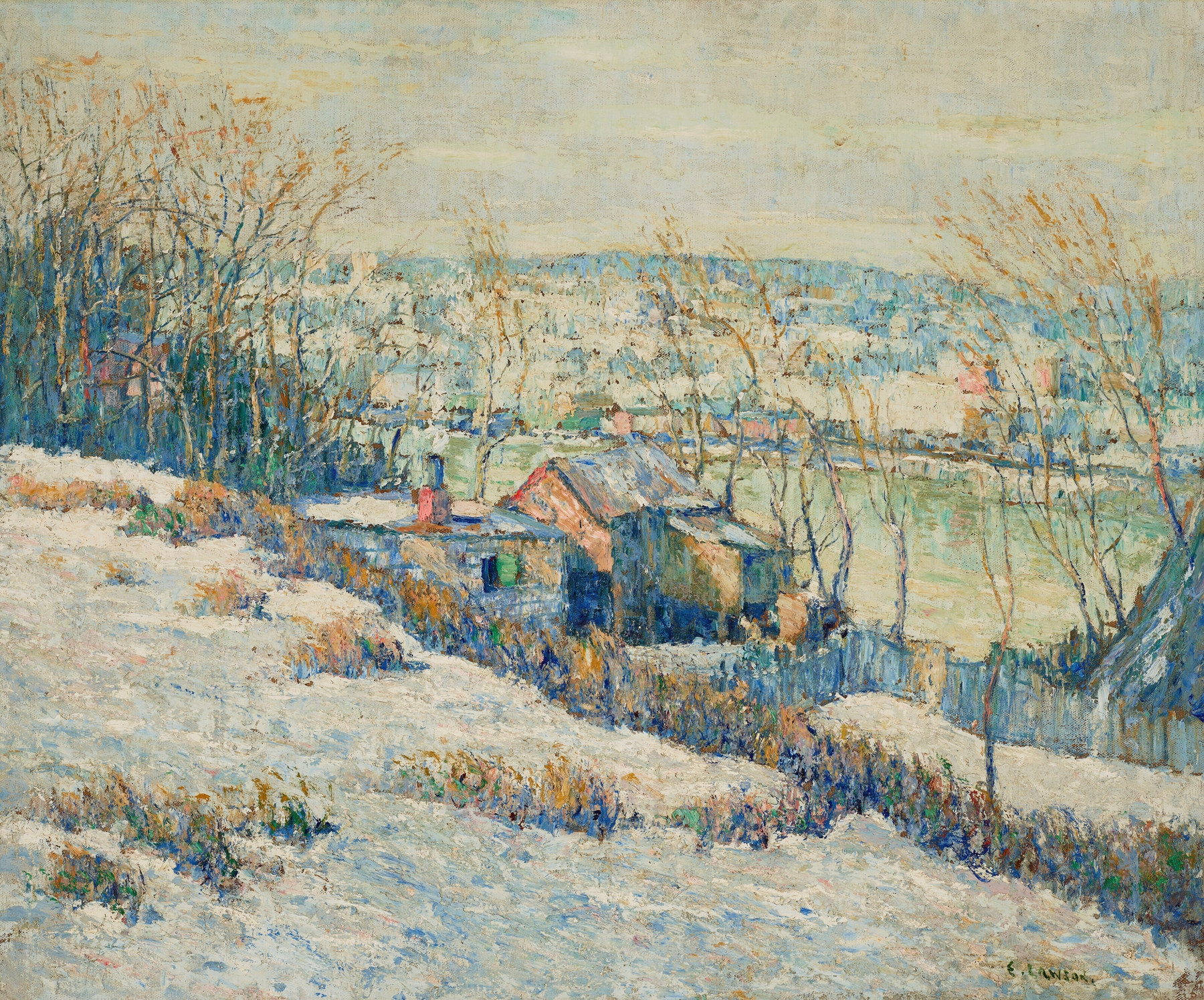
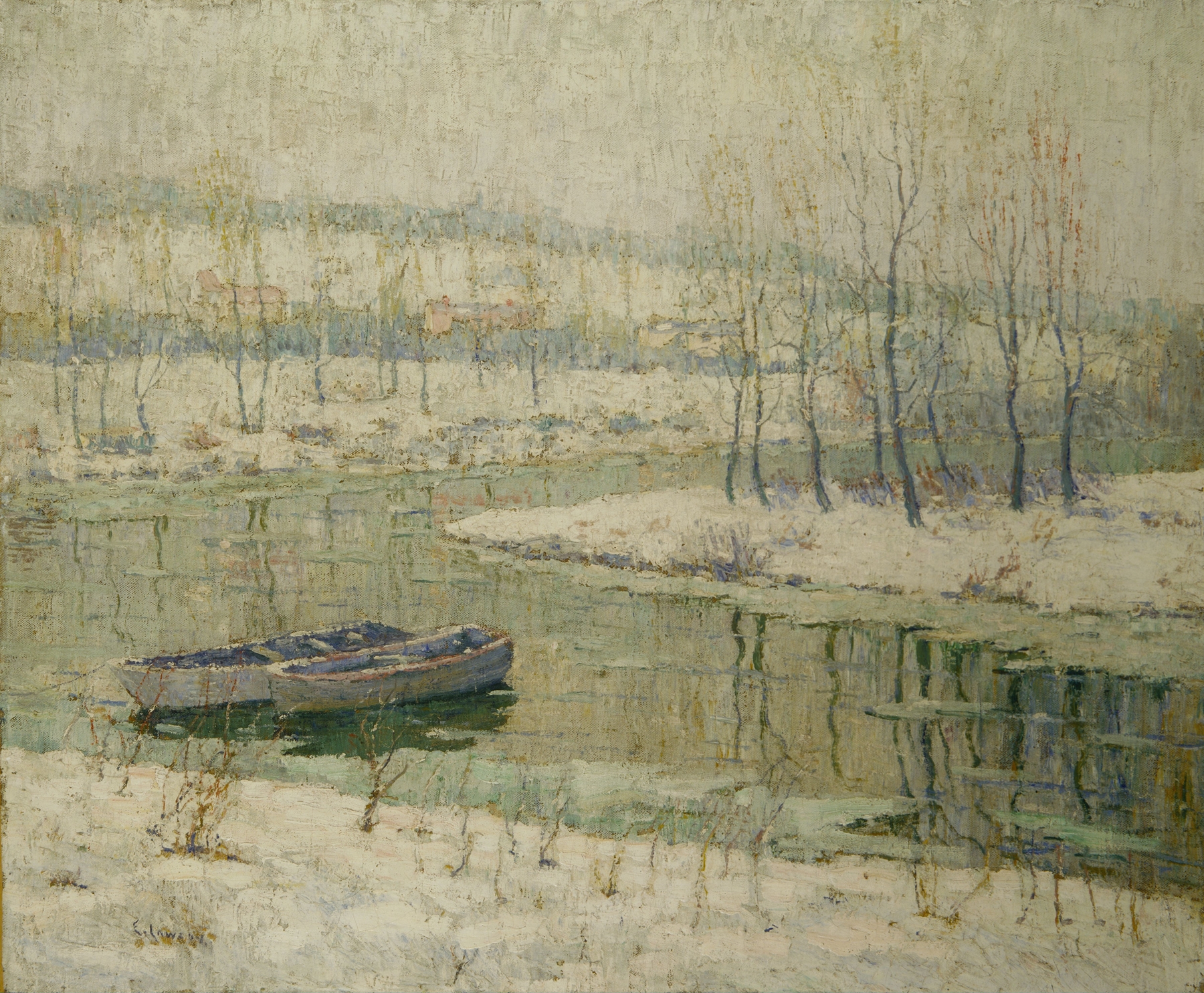
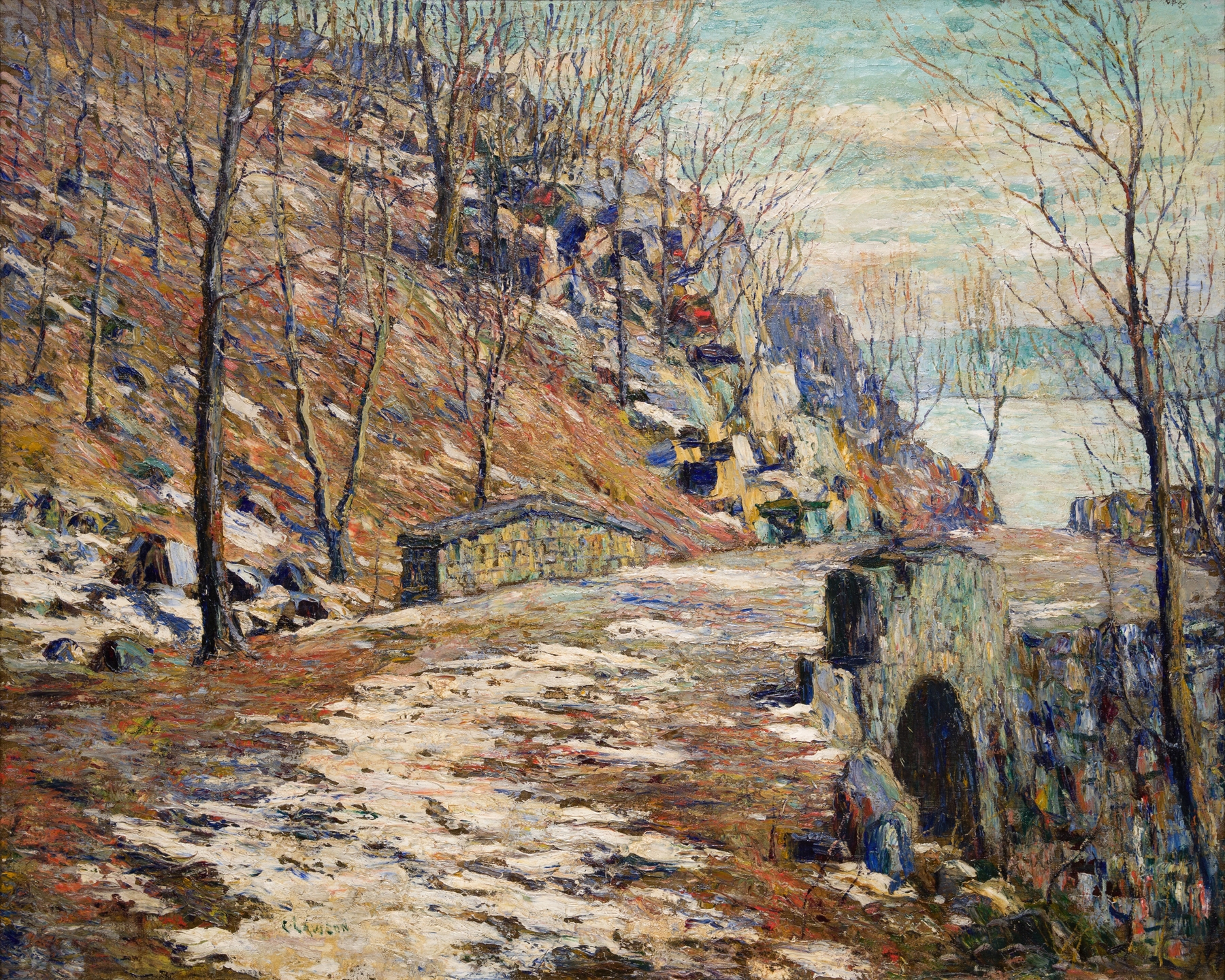
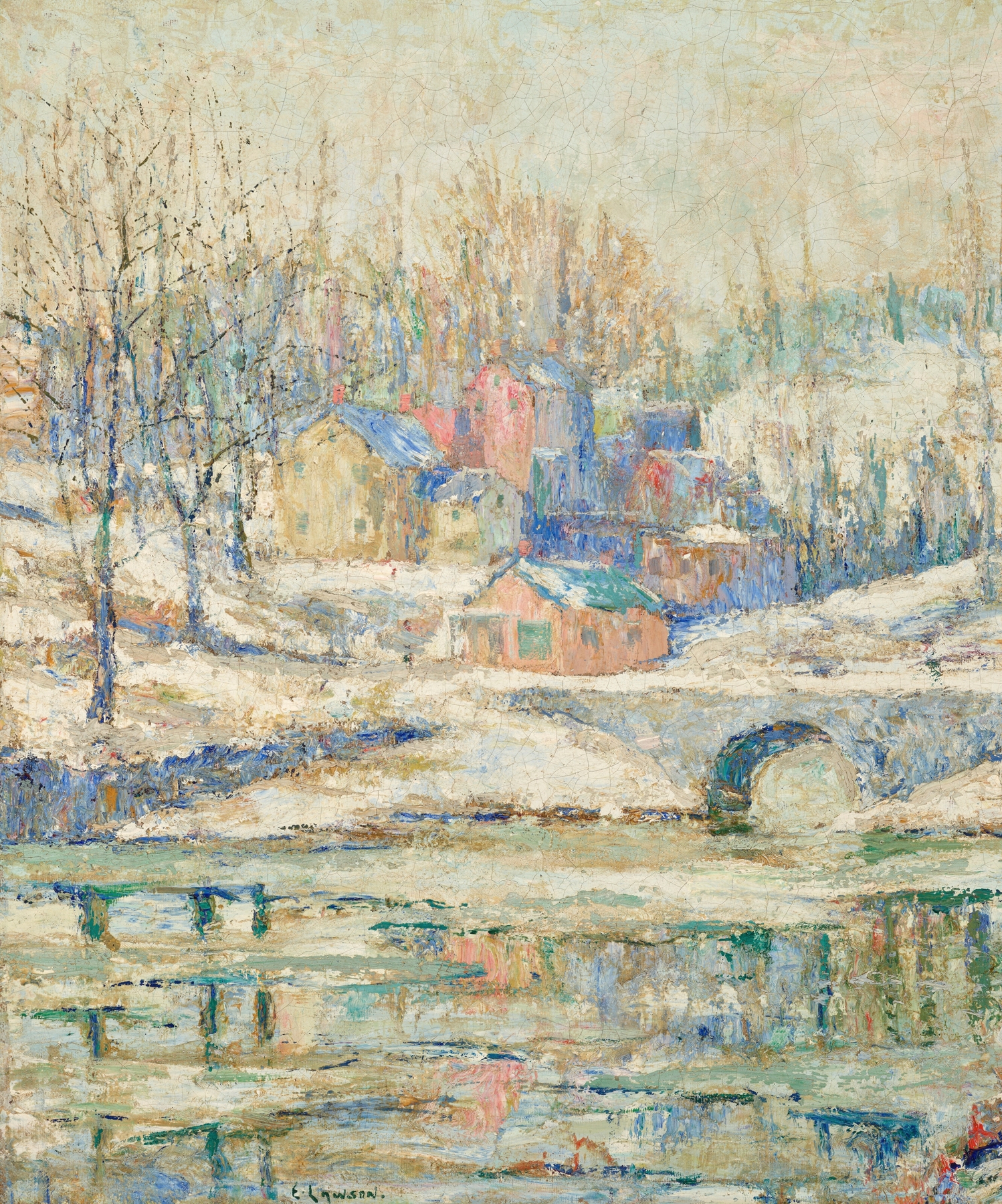
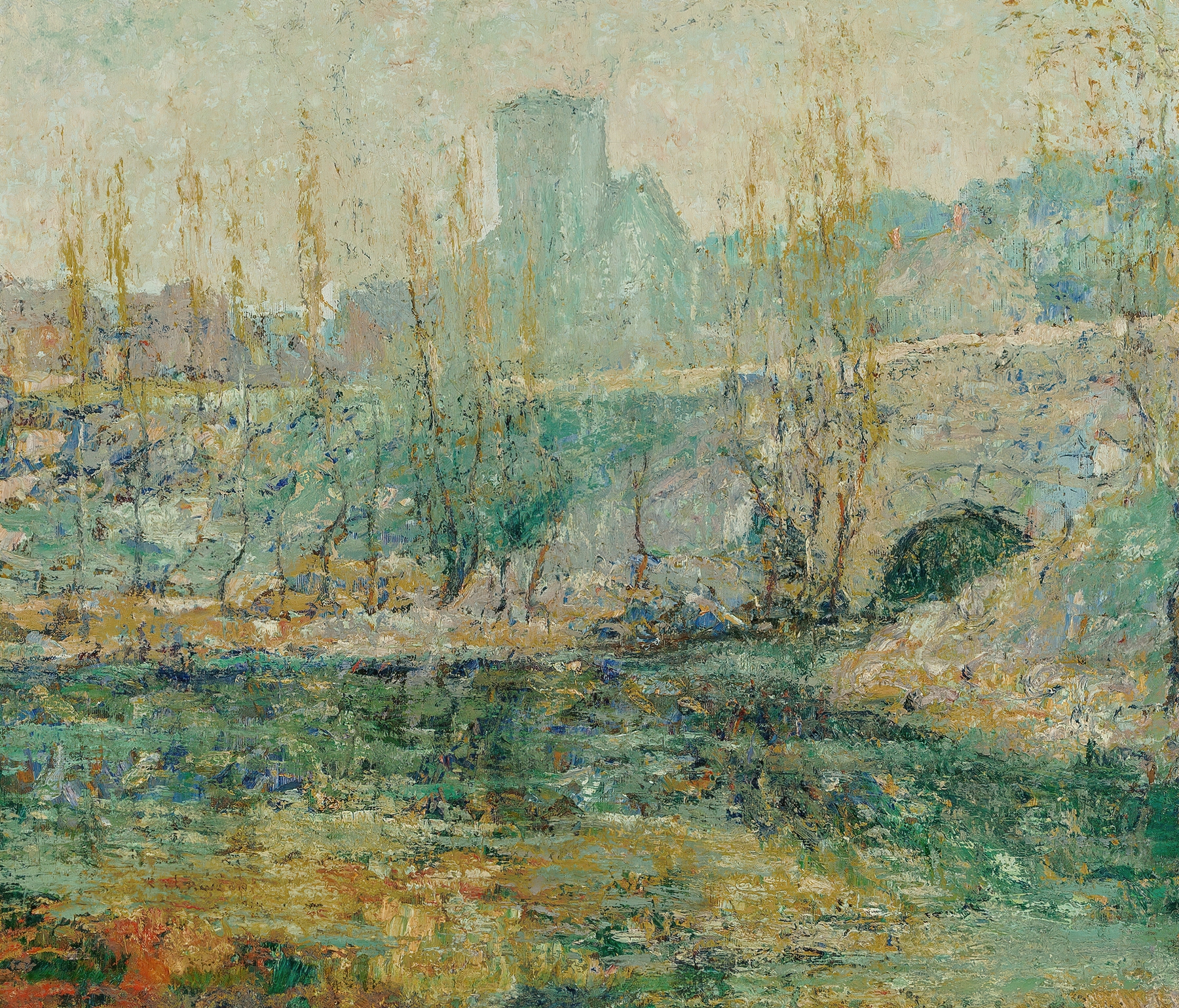
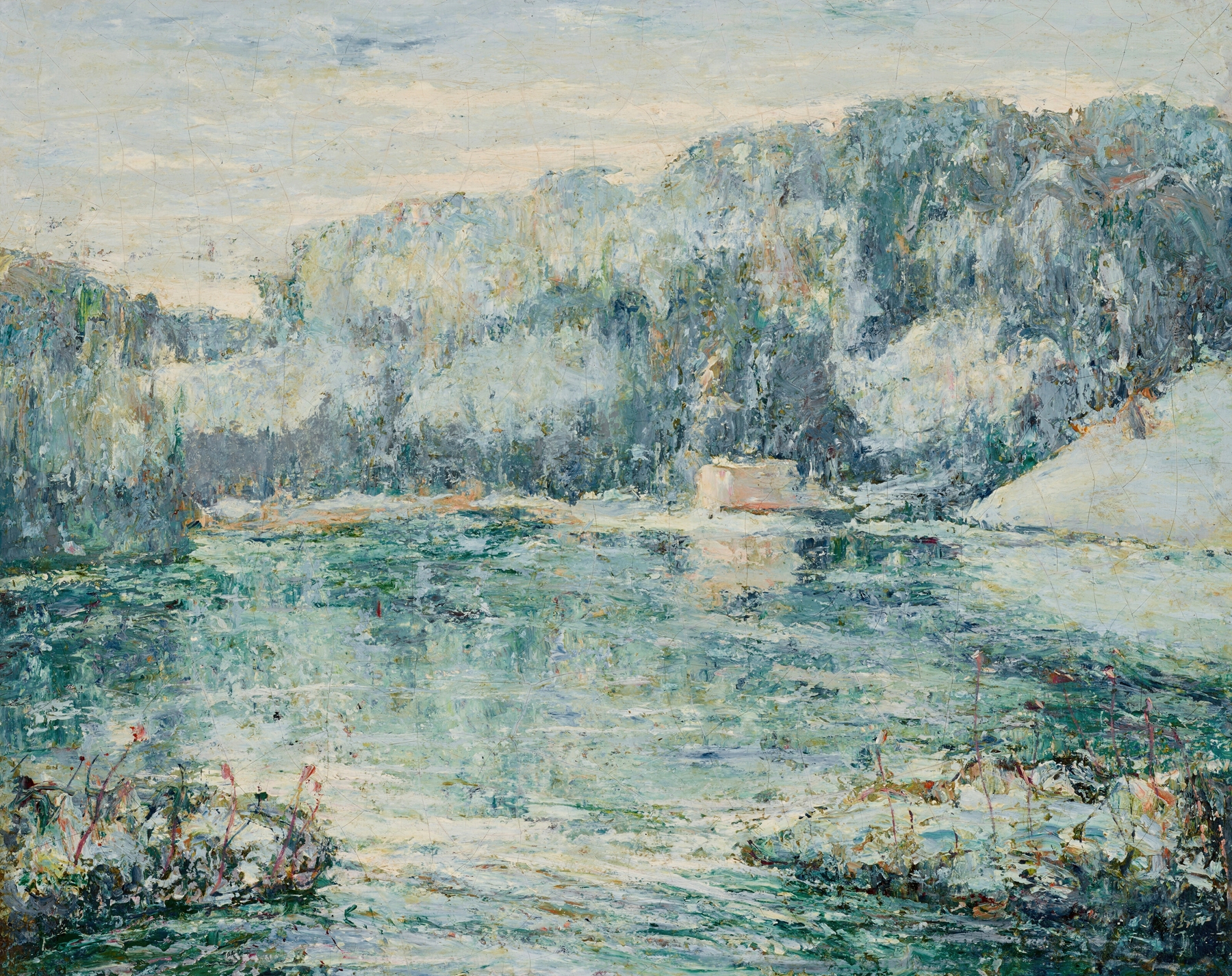
Where does light end, and longing begin? In the stillness of Harlem River Winter Scene, the gentle interplay of light and shadow suggests a world caught between seasons, where the chill of winter wraps the landscape in a dreamlike melancholy. Look to the left at the frosted banks of the river, where soft blues and whites meld into one another, creating a serene yet haunting atmosphere. The brushstrokes mimic the texture of snow, while the subtle highlights on the water's surface reflect an ethereal glow.
Notice how the distant buildings rise against the horizon, their muted colors standing in contrast to the vibrant hues of the sky, which hints at the warmth of a sun that seems just out of reach. Beneath the tranquil surface lies a tension—a juxtaposition of stillness and the undercurrents of life waiting to emerge. The sparse figures dotting the scene evoke a sense of isolation, each lost in their own thoughts, hinting at stories of longing and connection. The coldness of the river suggests a barrier, yet the light teasingly dances upon it, symbolizing hope and the possibility of warmth, both physically and emotionally.
In 1910, Lawson was immersed in the vibrant art scene of New York, influenced by the burgeoning American Impressionist movement. It was a time of transition for the artist, who sought to capture the beauty of urban landscapes while grappling with the realities of life around him. This work embodies the essence of his exploration, reflecting both the external world and his innermost feelings, a duality that defined much of his career.