Tibbett’s Creek—Winter — History & Analysis
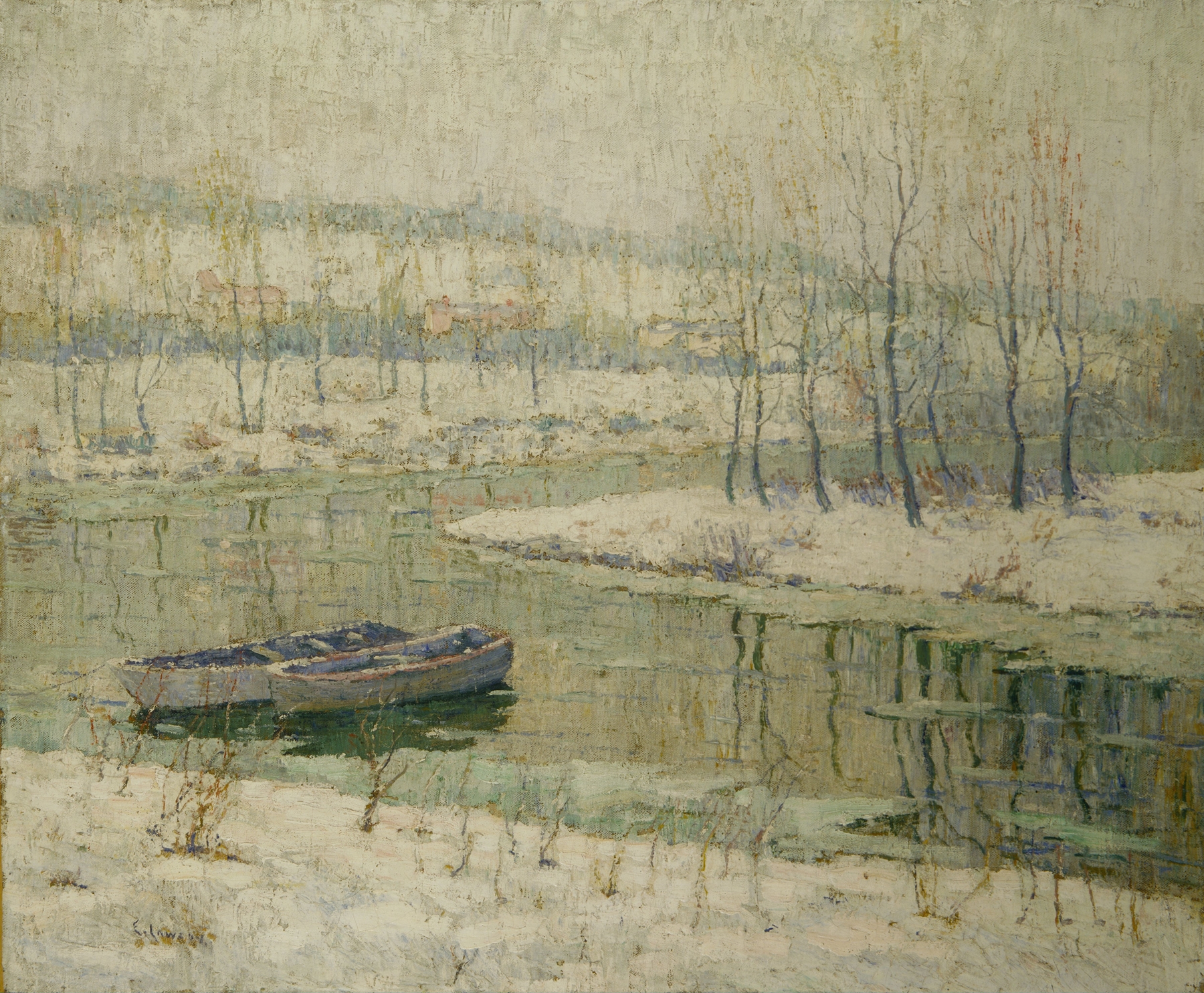
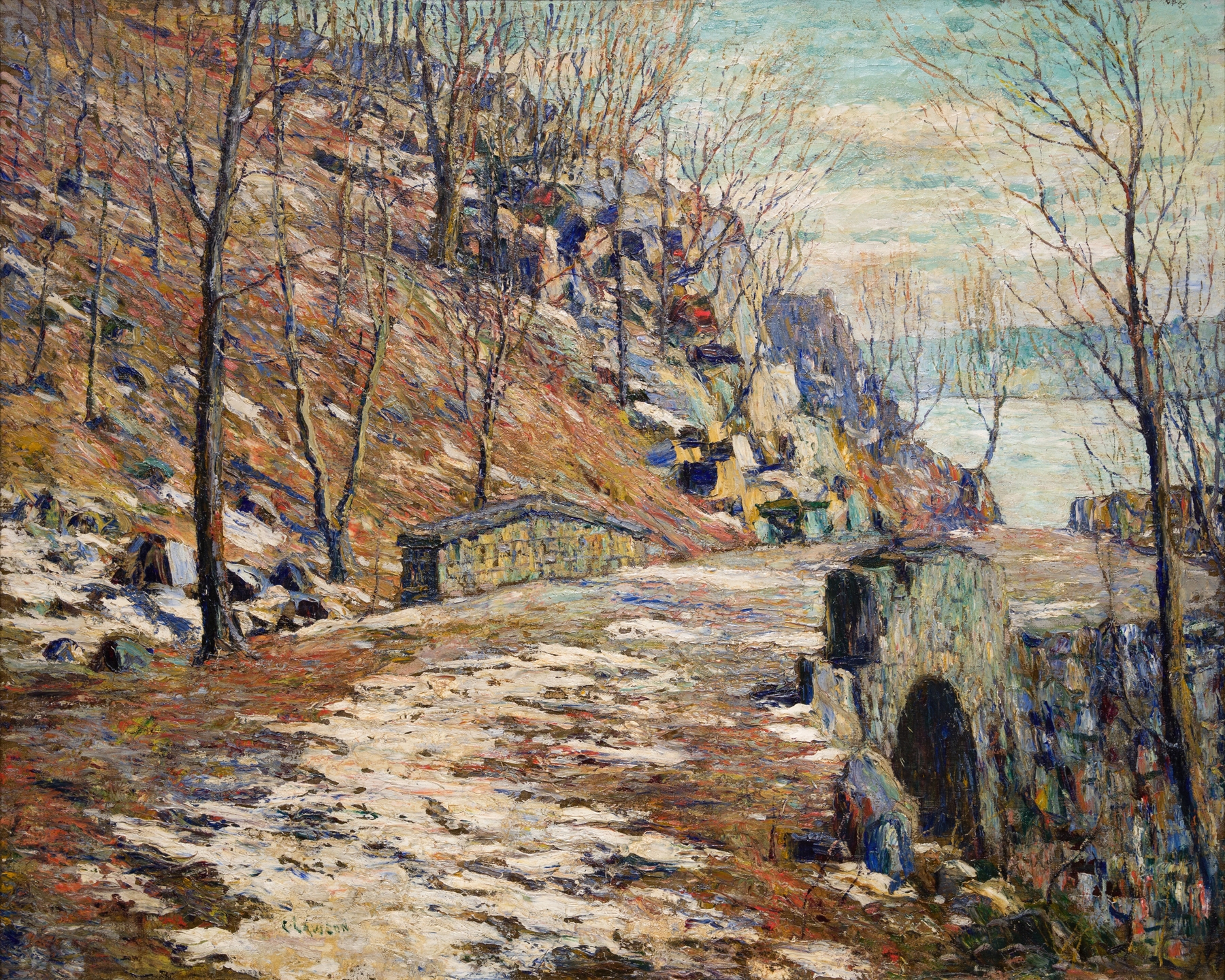
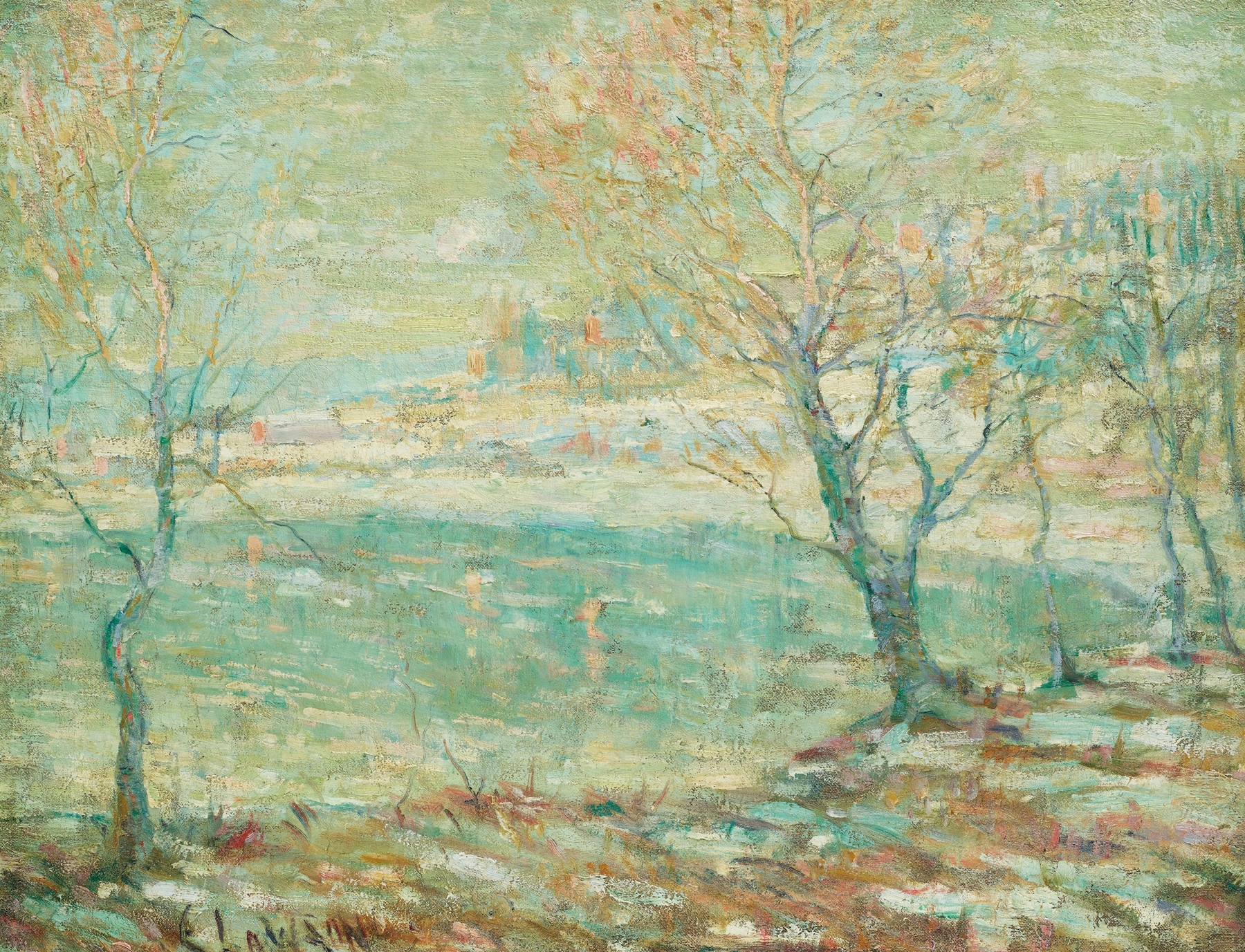
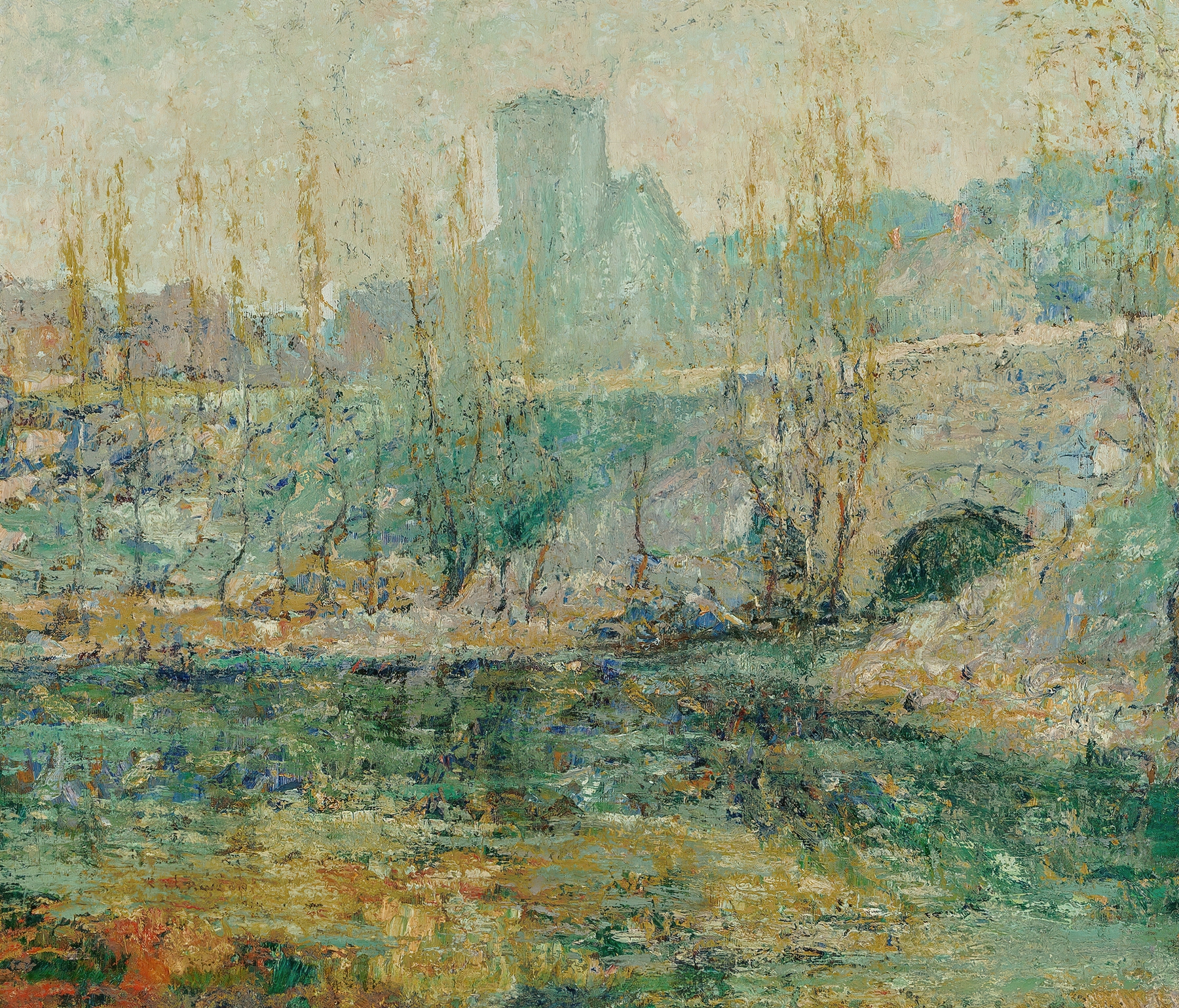
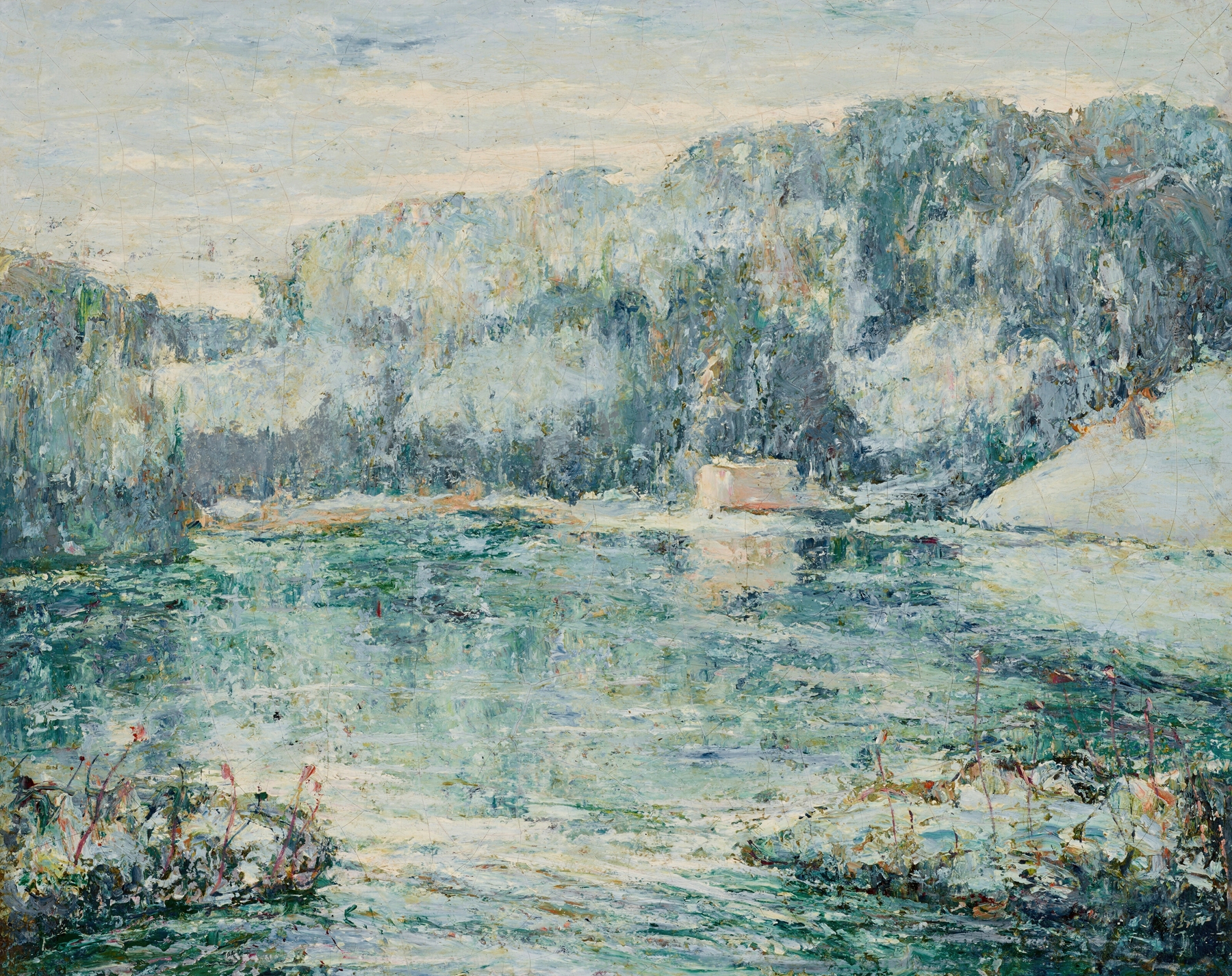
Can paint confess what words never could? In the subtle embrace of winter's chill, a landscape unfolds—a silent witness to nature’s quiet transcendence. Here, the interplay of brush and color whispers secrets held close by the earth, inviting us to surrender to its serene beauty. Look to the center of the canvas, where the meandering creek flows like a silver ribbon, its surface shimmering softly. Notice how the artist has captured the delicate frost that blankets the banks, each stroke evoking the coolness of the season.
The muted palette of soft blues and whites creates a dreamlike atmosphere, while hints of earthy browns ground the scene in reality. This juxtaposition of cool and warm tones invites the viewer to linger, to feel the contrast that breathes life into the stillness. Beneath the surface, the painting reveals the tension between stillness and motion. The icy reflections in the water suggest a world that is at once frozen and alive, inviting contemplation of what lies beneath. The bare trees, stripped of their leaves, stand stark against the sky—a reminder of nature's cycle and the resilience that accompanies change.
Each element weaves together a narrative of solitude and peace, hinting at the inner dialogue that winter inspires within us. Ernest Lawson painted this piece during an era marked by the rise of American Impressionism, a movement that sought to capture the fleeting effects of light and atmosphere. Working in the early 20th century, he found inspiration in the landscapes of rural America, particularly in winter scenes that showcased both quietude and depth. This period was significant for the artist, as he explored new techniques, blending traditional methods with a fresh, emotive approach to the natural world.