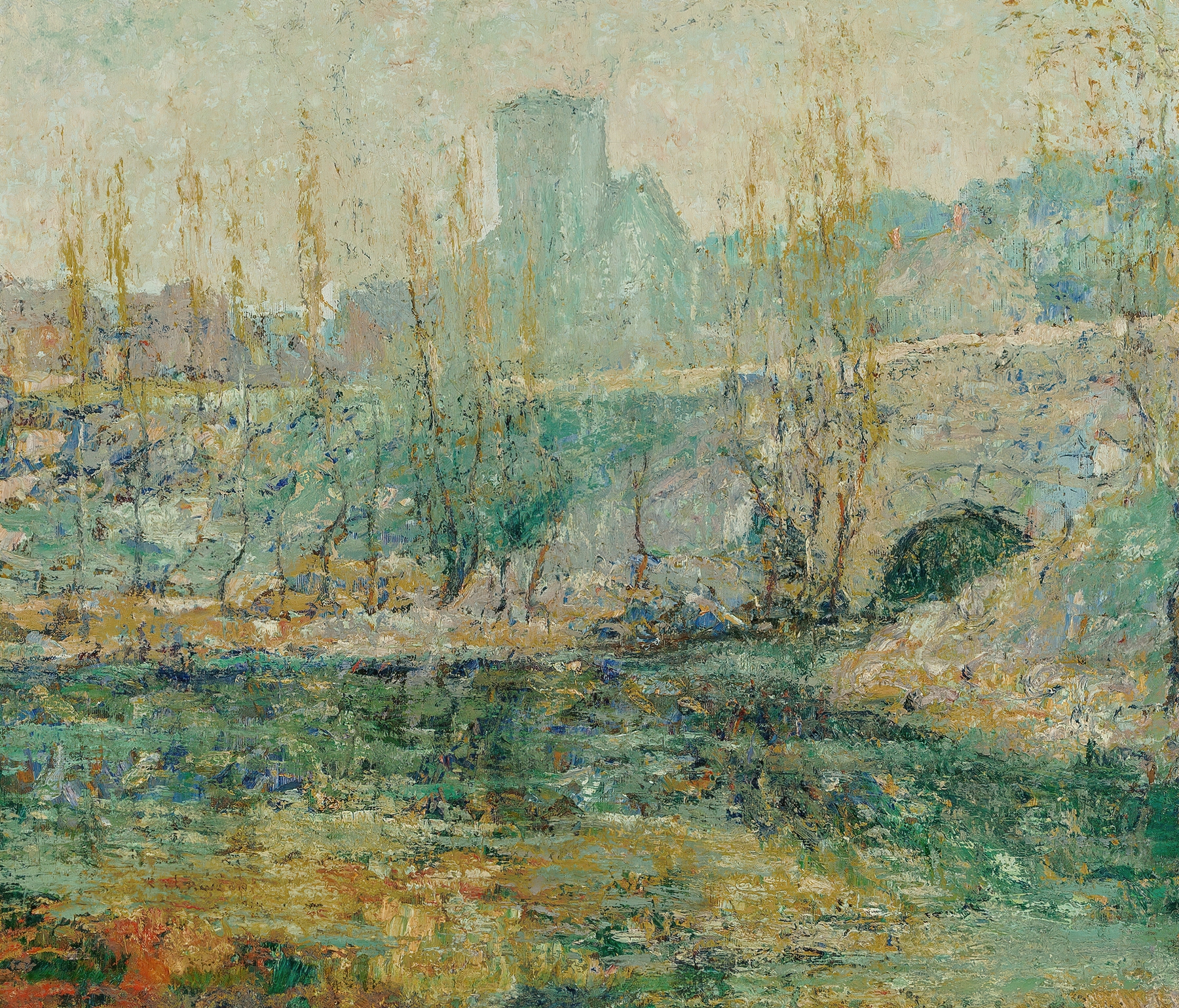
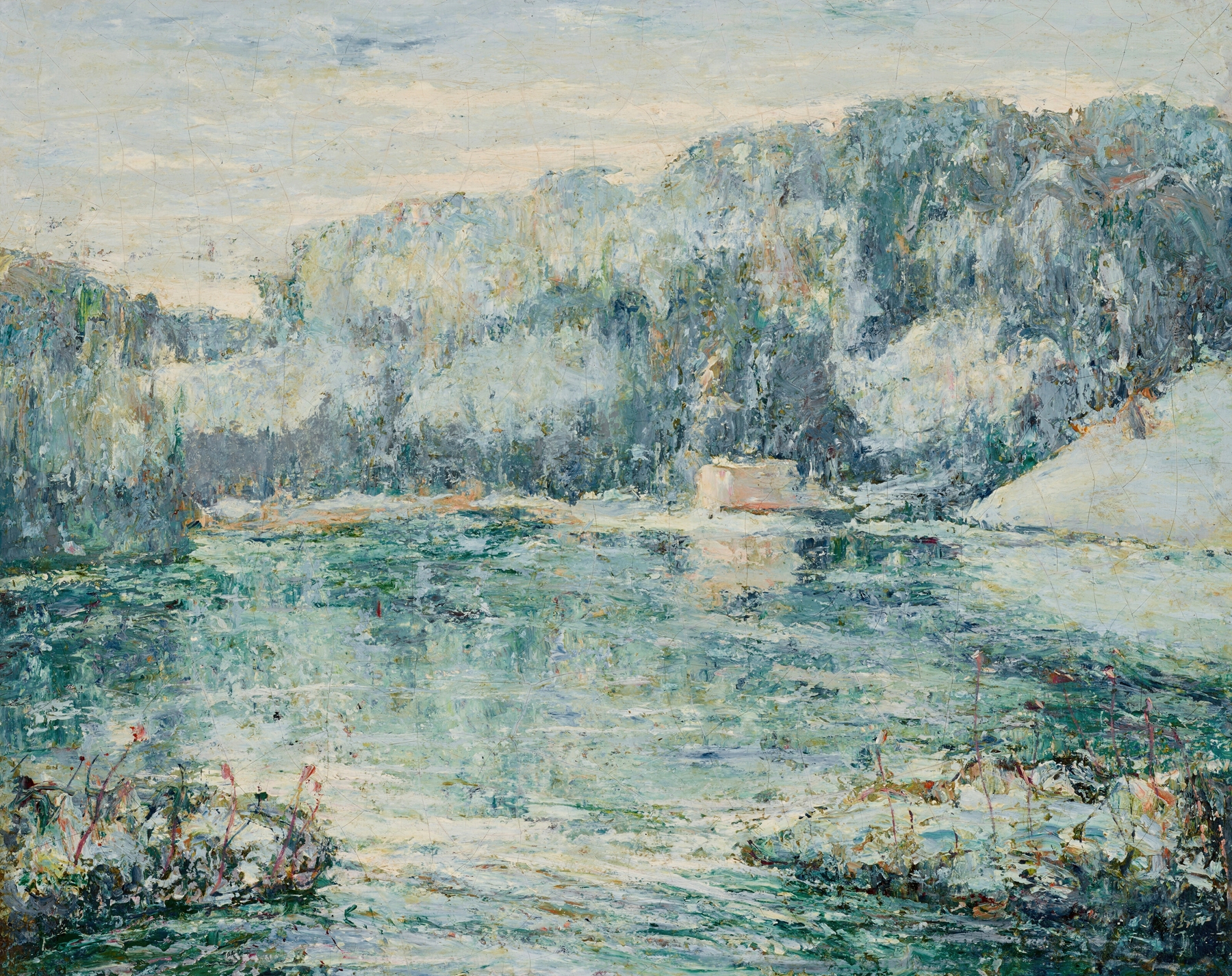
Upper Harlem River—Winter — History & Analysis
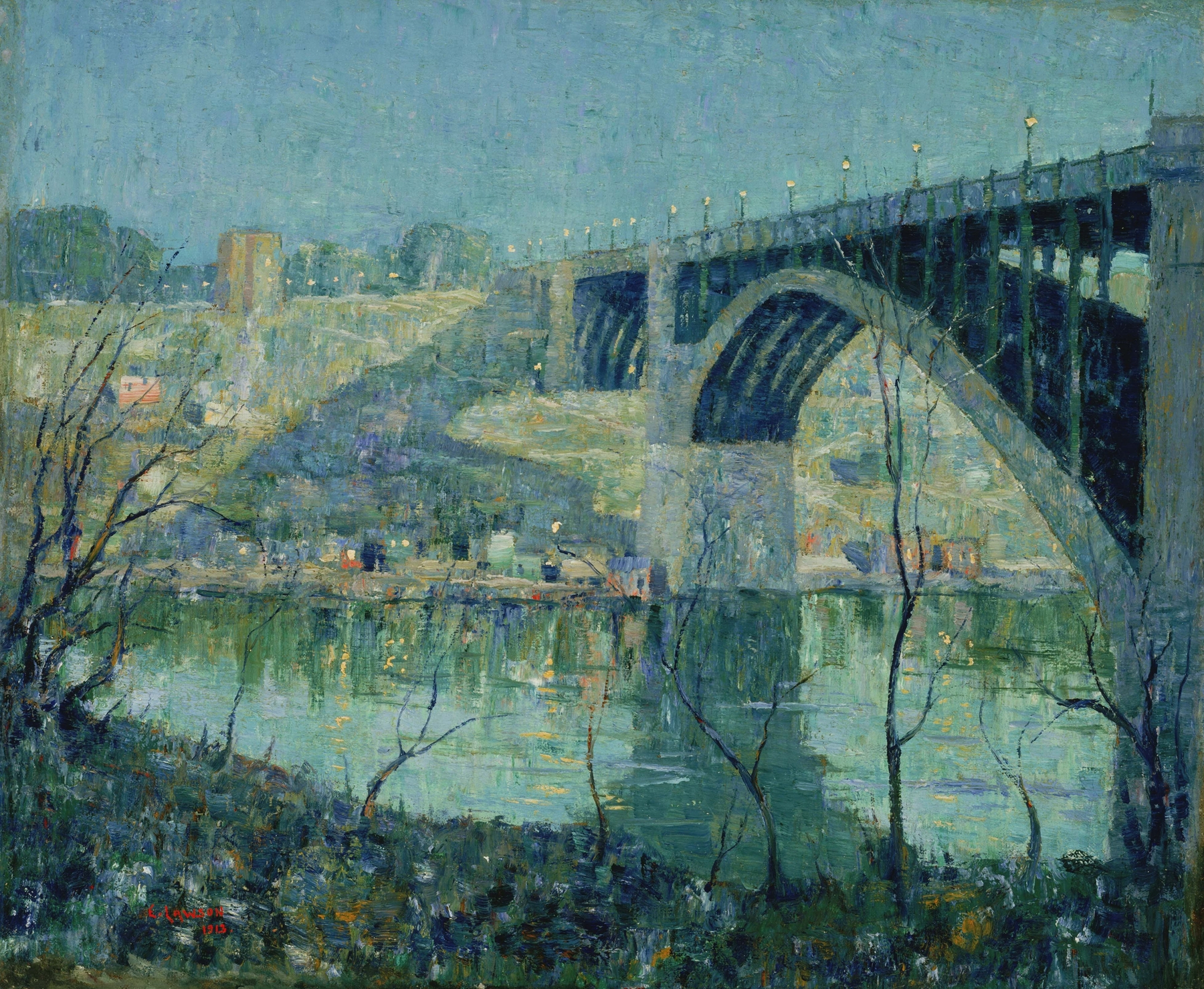
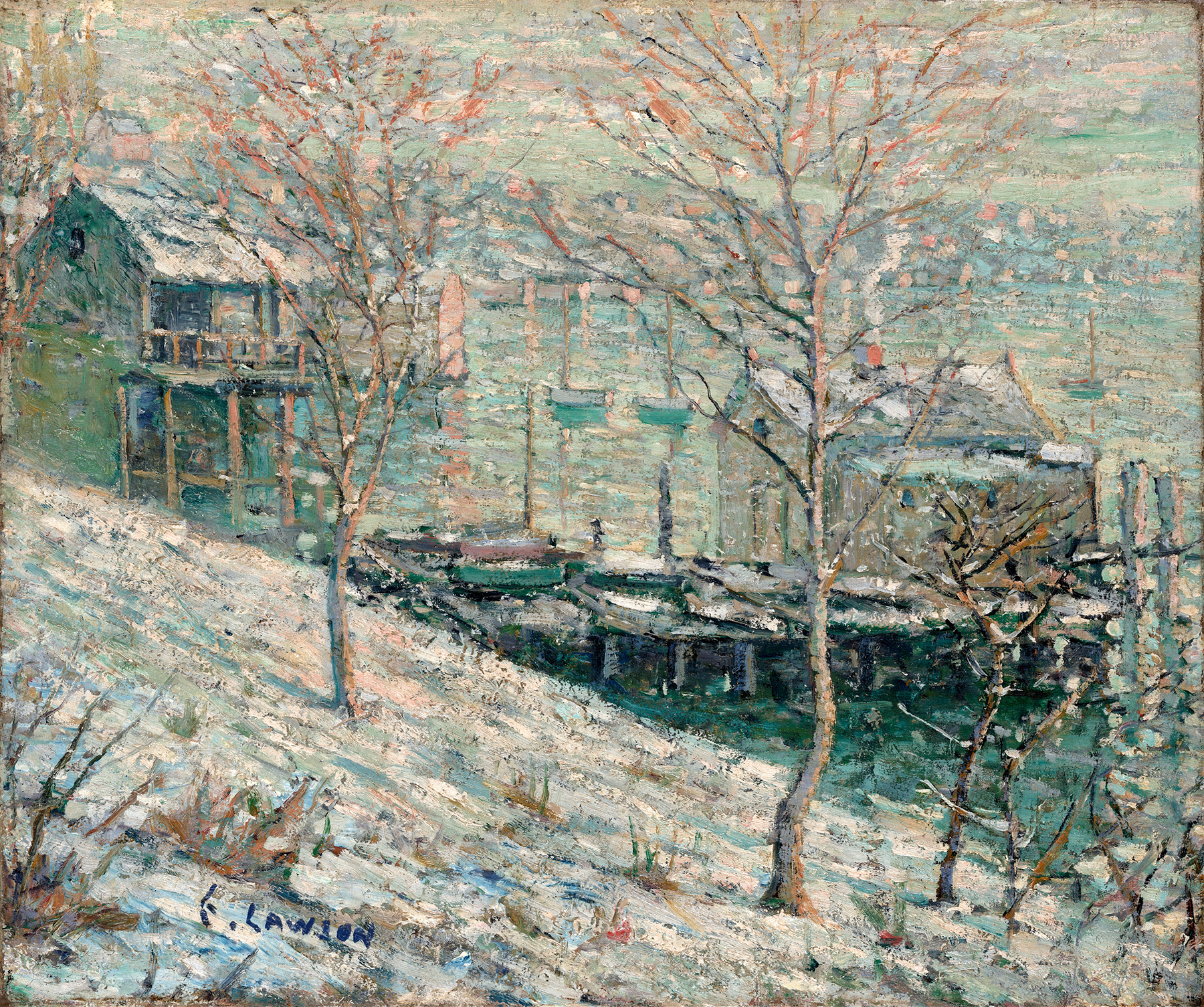
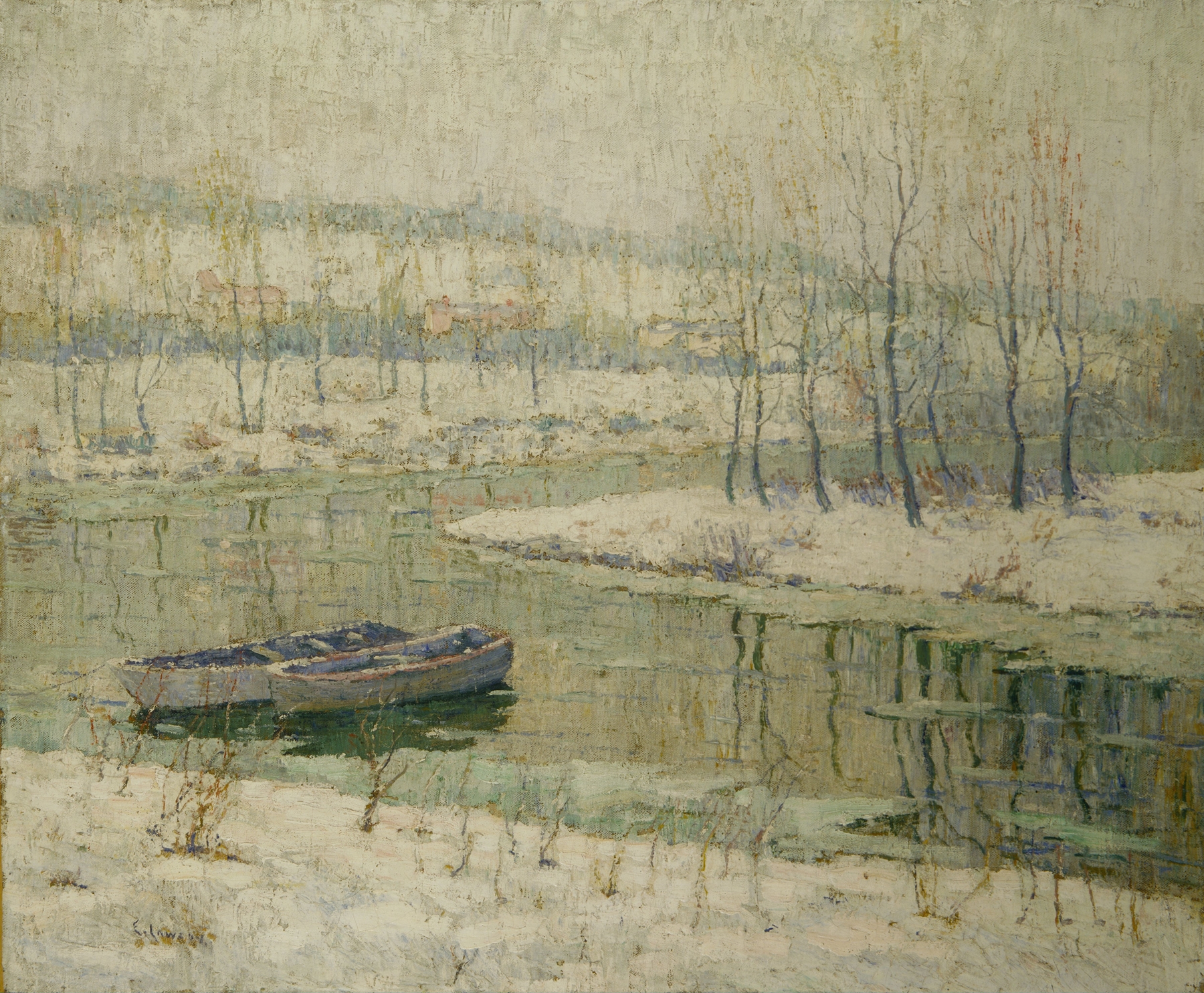
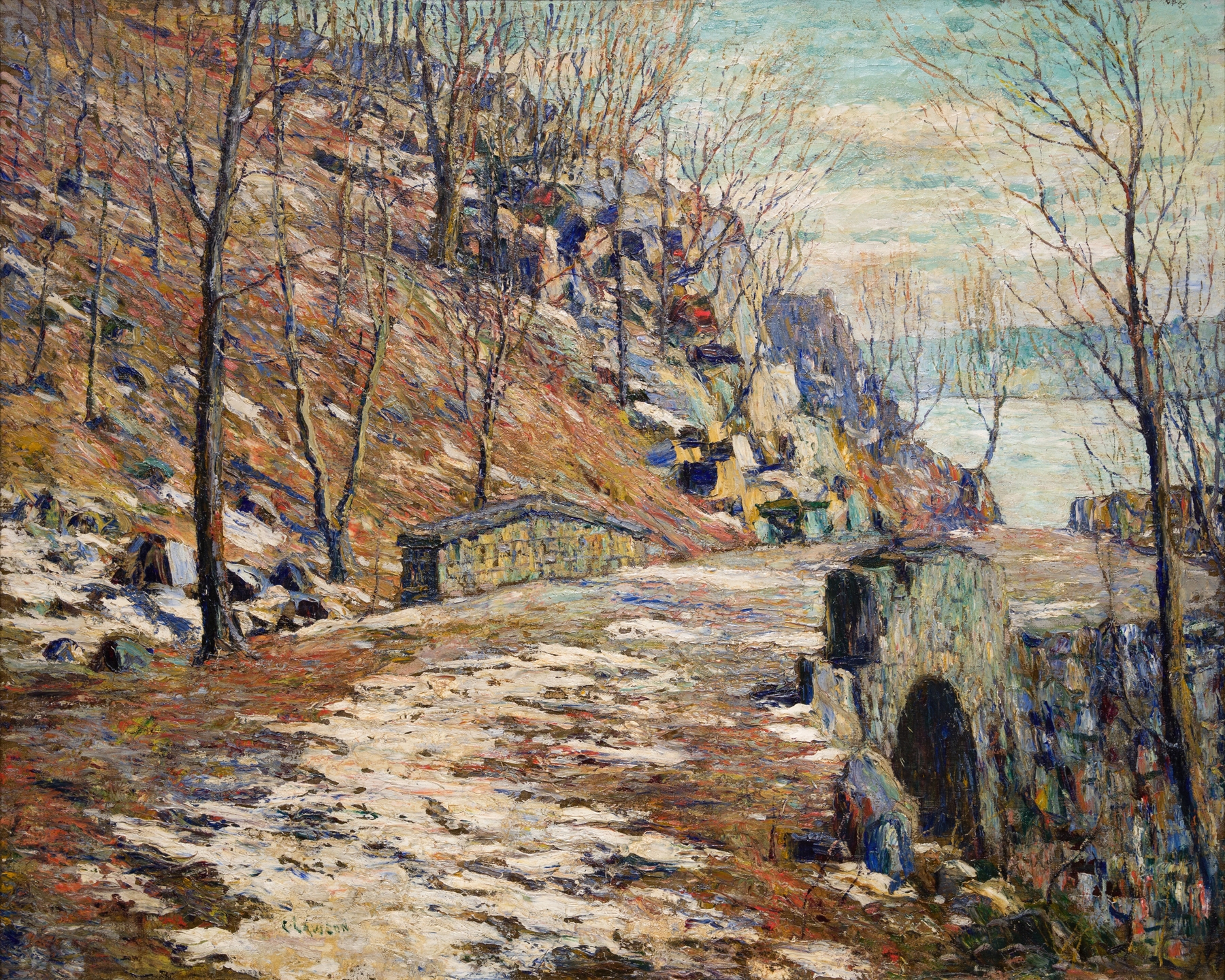
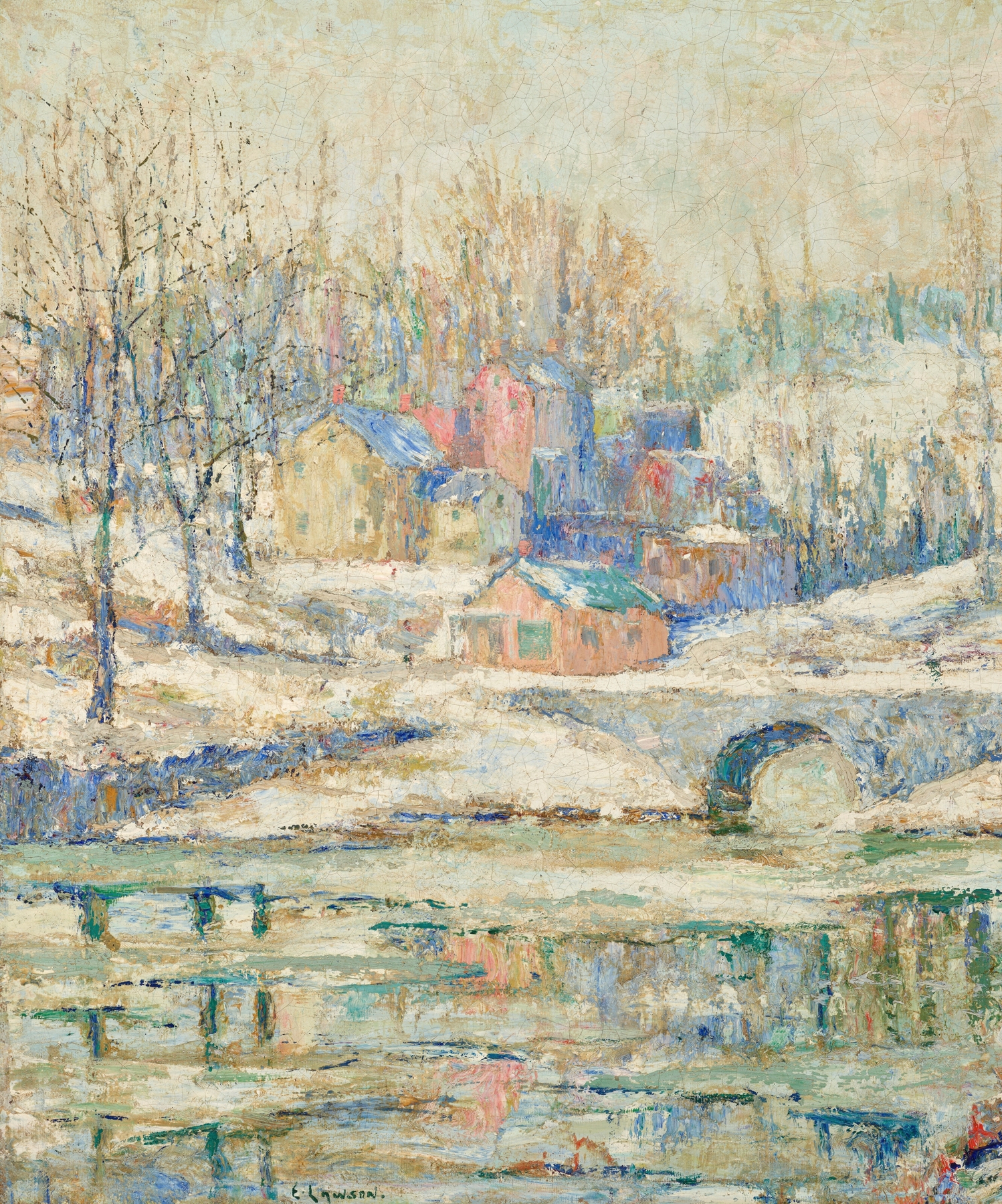
“Art reveals the soul when the world turns away.” In the chill of winter, the landscape breathes a longing that echoes through the cold air, inviting us to pause and reflect. Look to the horizon where the soft murmur of the Upper Harlem River meets the white-draped banks, casting a serene yet poignant mood. Notice how the artist captures the essence of winter with a palette dominated by soft blues and muted whites, lending an ethereal quality to the scene.
The strokes are both deliberate and spontaneous, revealing the rhythm of nature as it intertwines with the artist's own emotions. Beyond the surface, the icy terrain juxtaposes the warmth of undisturbed nature, creating a tension between solitude and tranquility. The scattered trees, their bare branches reaching out like longing arms, suggest a yearning for connection amidst the starkness.
The stillness of the water reflects the inner world of the observer, a mirror to the quiet thoughts stirred by the season. In 1915, Lawson painted this piece during a time of personal introspection, while he was grappling with the transition from impressionism to a more personal expression in his work. Living in New York amidst an evolving art scene, he sought to capture not just the physical beauty of the landscape but also its emotional resonance, pushing the boundaries of how nature could express the human experience.