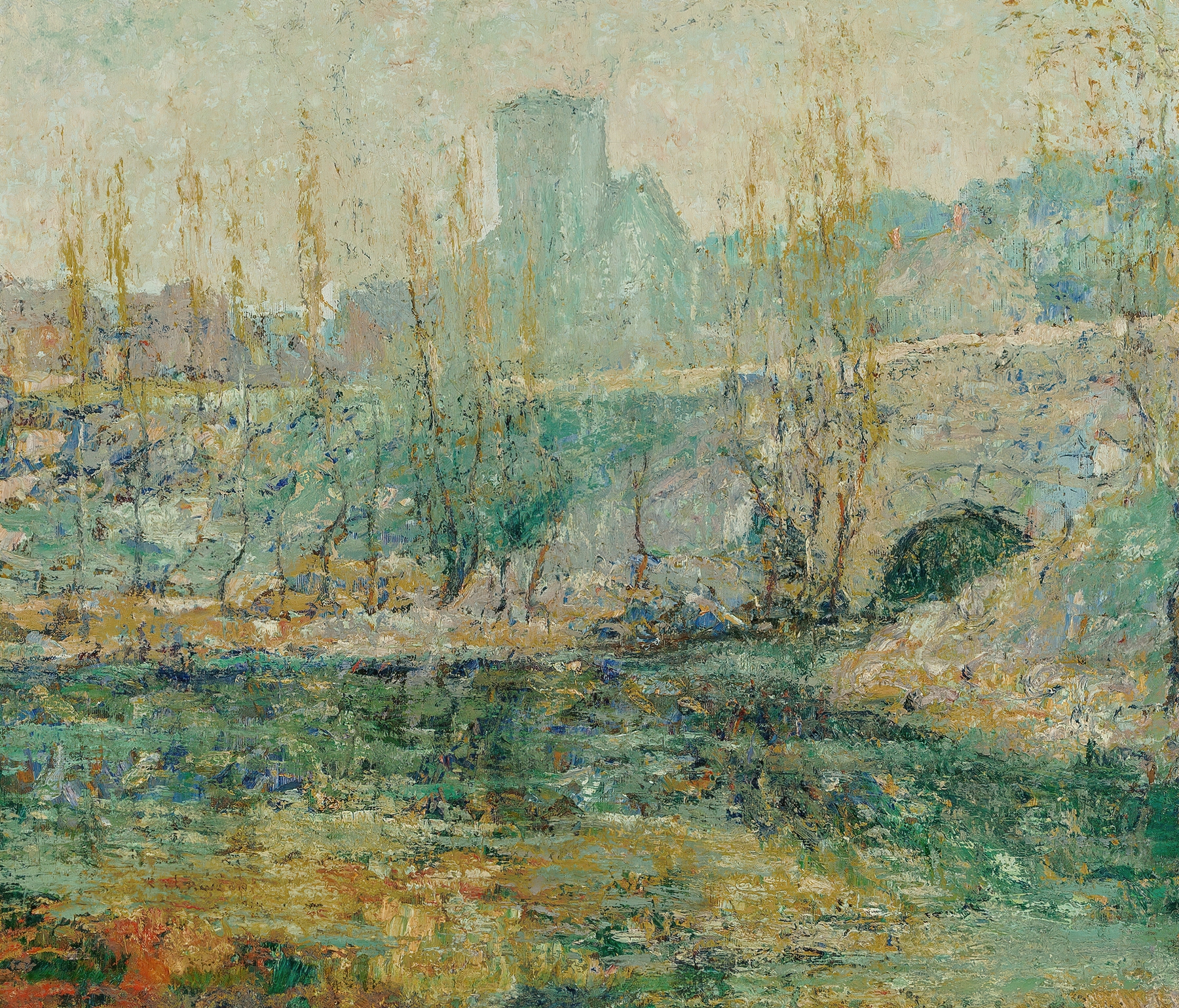
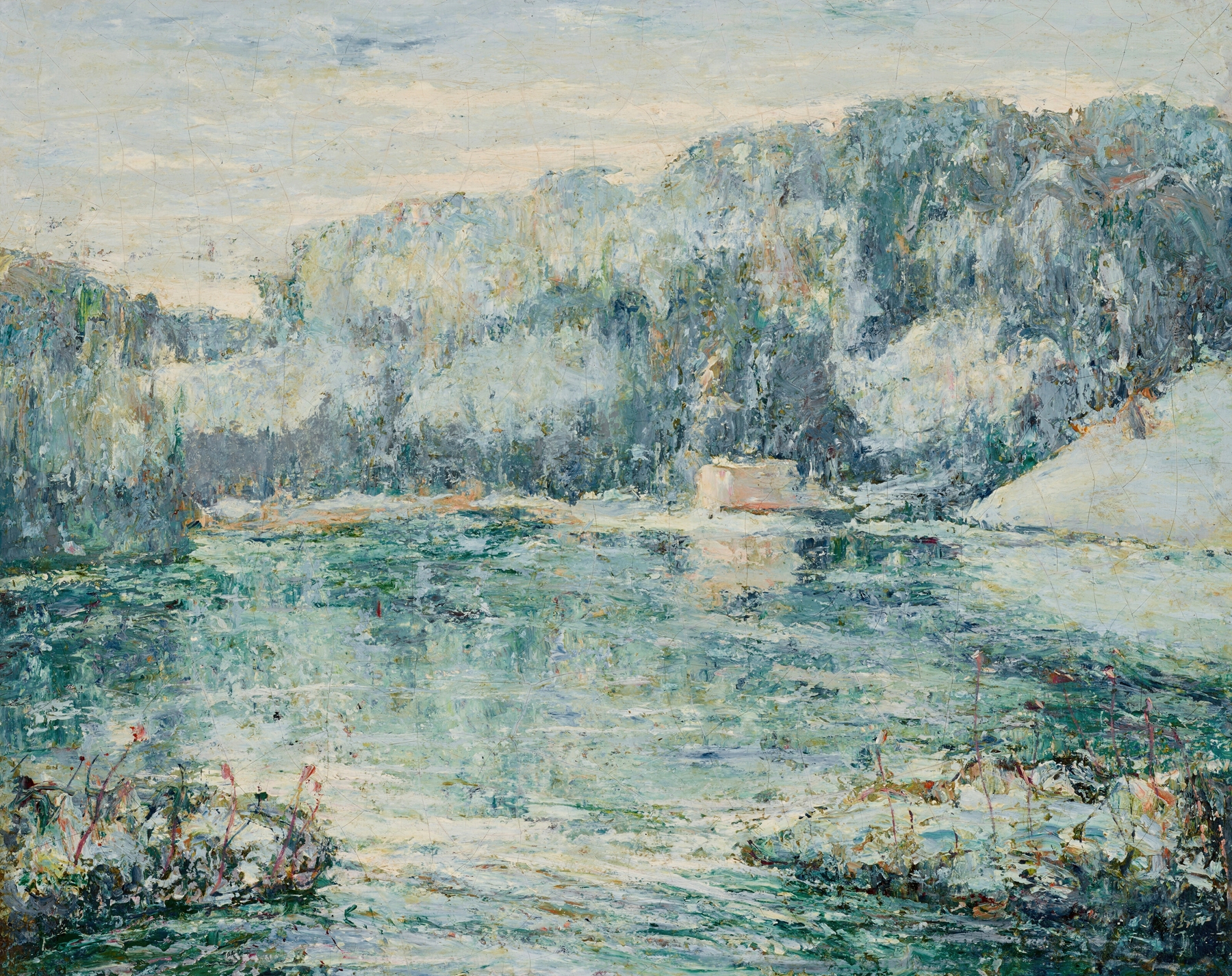
Inwood on the Hudson, In the Snow — History & Analysis
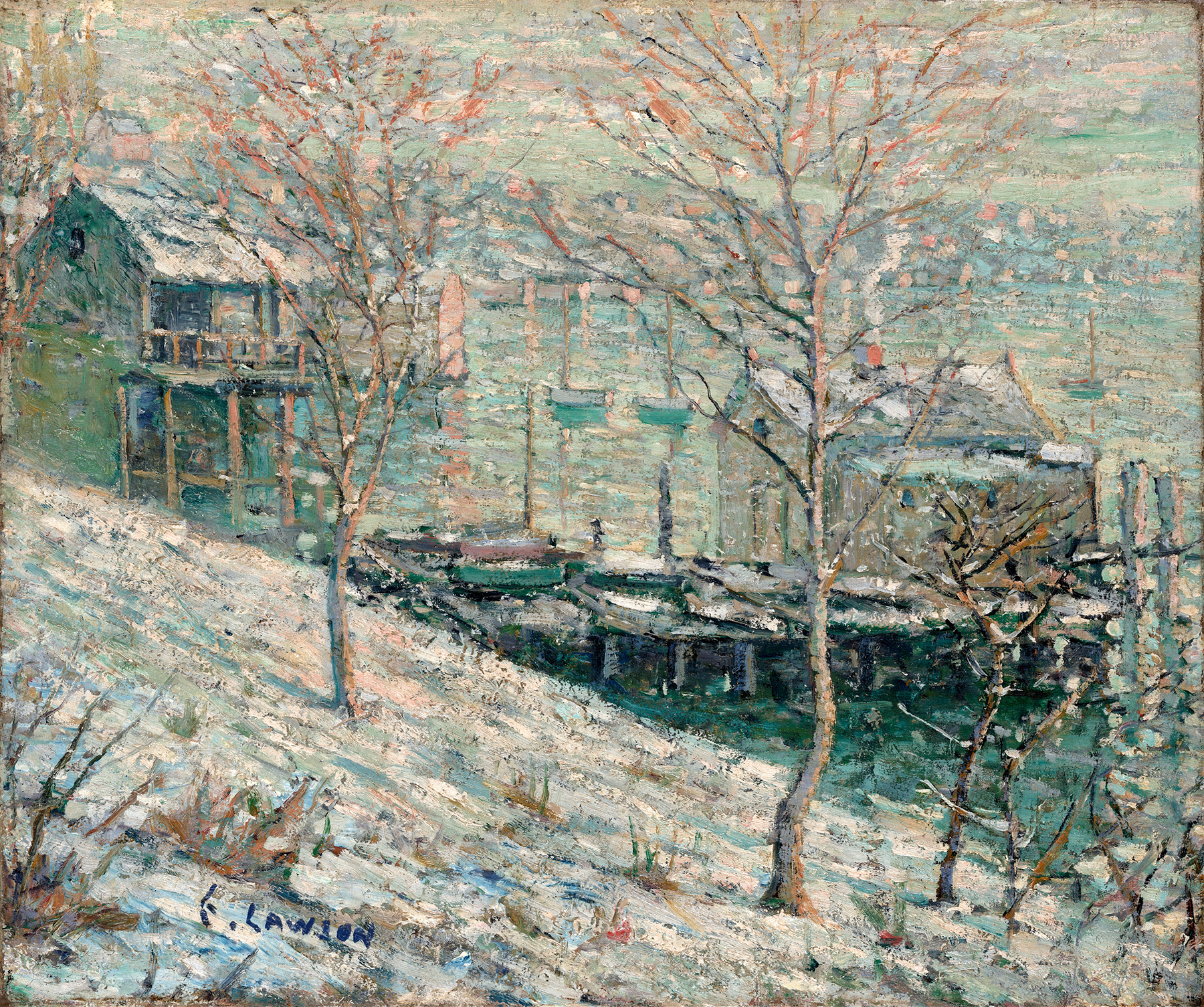
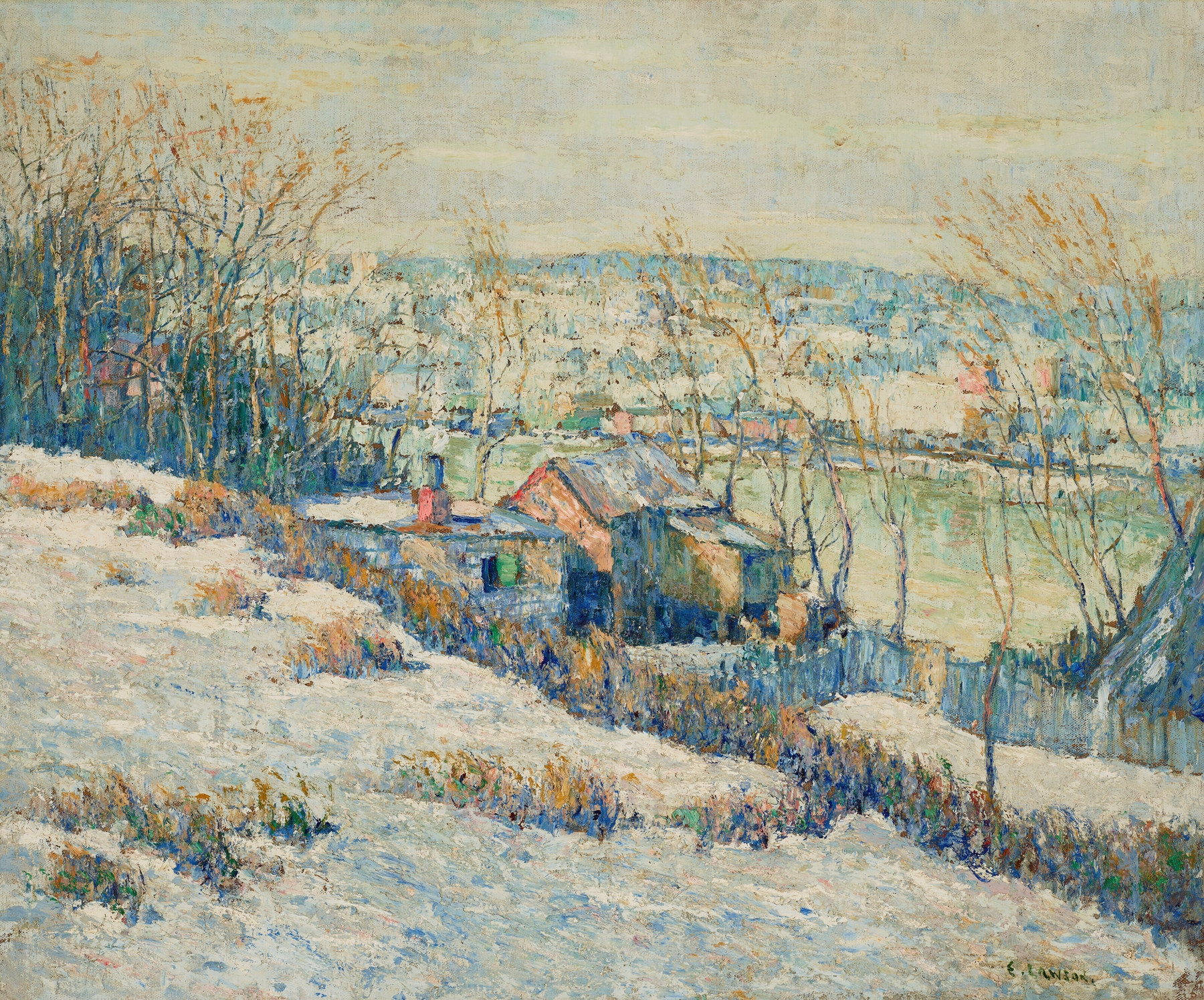
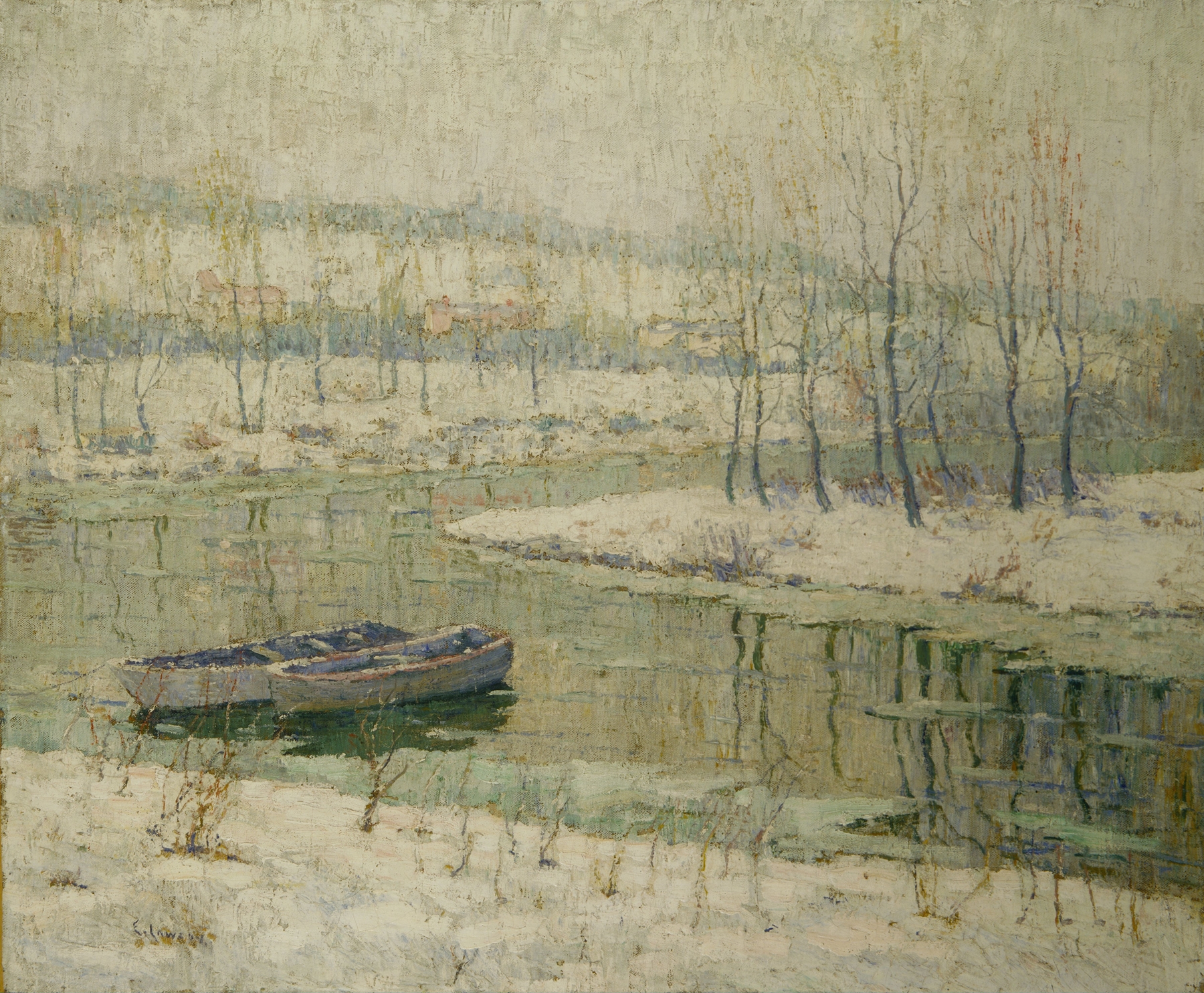
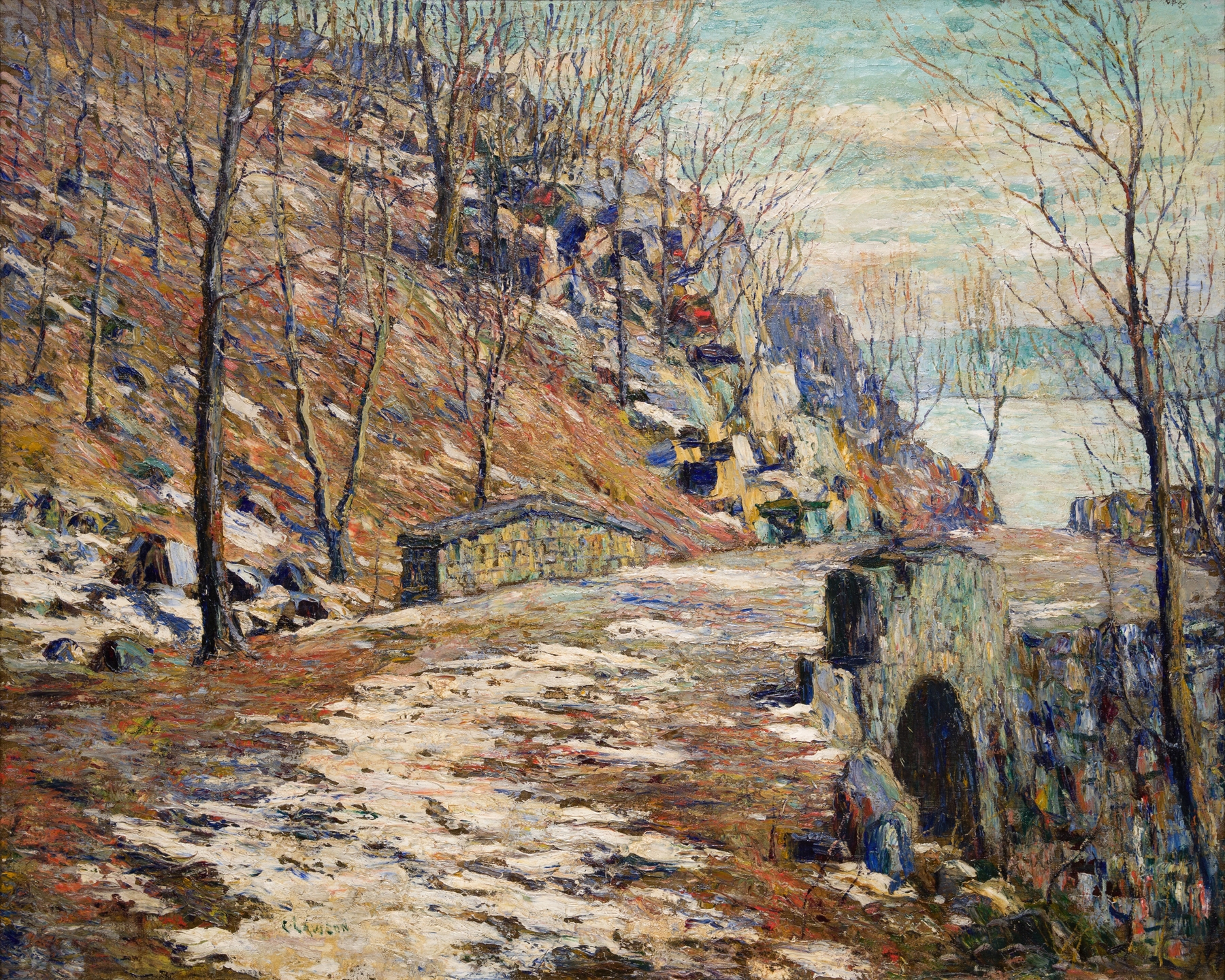
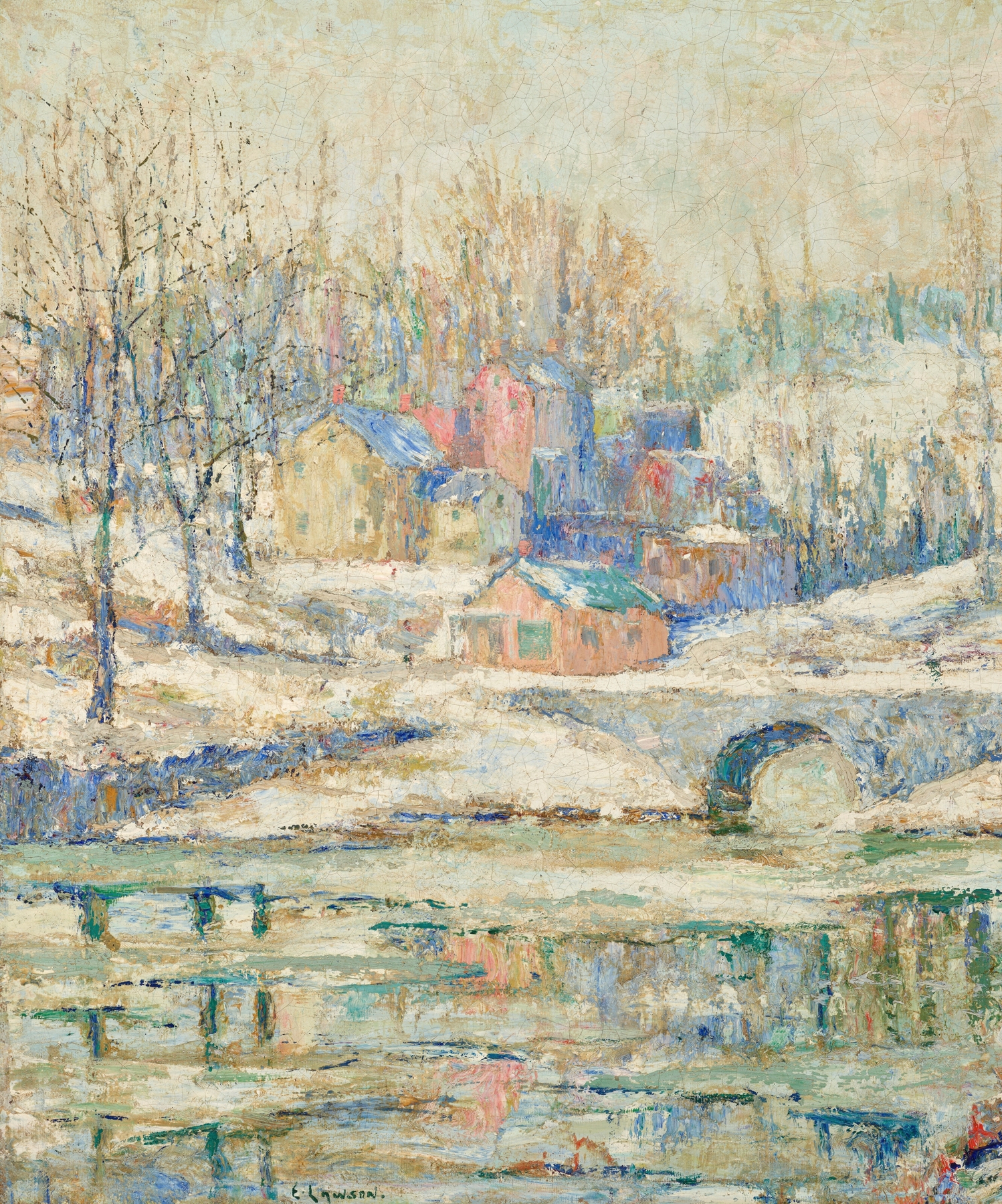
Can paint confess what words never could? In Inwood on the Hudson, In the Snow, the canvas speaks of an icy stillness that holds an unspoken tension, a kind of violence lurking beneath the surface of tranquility. The landscape, drenched in soft whites and muted blues, invites the viewer into a realm where nature appears serene, yet hints at deeper storms beneath the ice. Look to the center, where the Hudson River sits like a frozen artery, winding through a snow-blanketed landscape. The foreground is dotted with graceful forms of trees, their branches draped in snow, while the distant hills rise gently against an expansive sky.
Notice how the light subtly glows against the snow, illuminating the scene with a deceptive warmth that contrasts with the biting chill of winter. The painter's brushwork reveals textures that seem to echo the cold, a delicate interplay of color that draws the eye and stirs the heart. Yet, beneath this idyllic facade, a sense of violence simmers. The sharp lines of the trees juxtapose with the soft curves of the hills, evoking a conflict between the serene and the tumultuous. The vast expanse of snow, while beautiful, hints at isolation and desolation, suggesting the weight of the cold can be as suffocating as it is picturesque.
The subtle brushstrokes convey both movement and stillness, capturing a moment where nature's beauty conceals its harsher realities. In 1905, Lawson was part of the American Impressionist movement, painting from his studio in New York during a time of great artistic exploration. The turn of the century saw a shift in how artists approached nature, focusing on light and color over traditional representation. His work reflects a response to the urban environment, juxtaposing the hustle of city life with the quietude of the Hudson Valley, creating a landscape that feels both personal and universally resonant.