Indian Encampment — History & Analysis
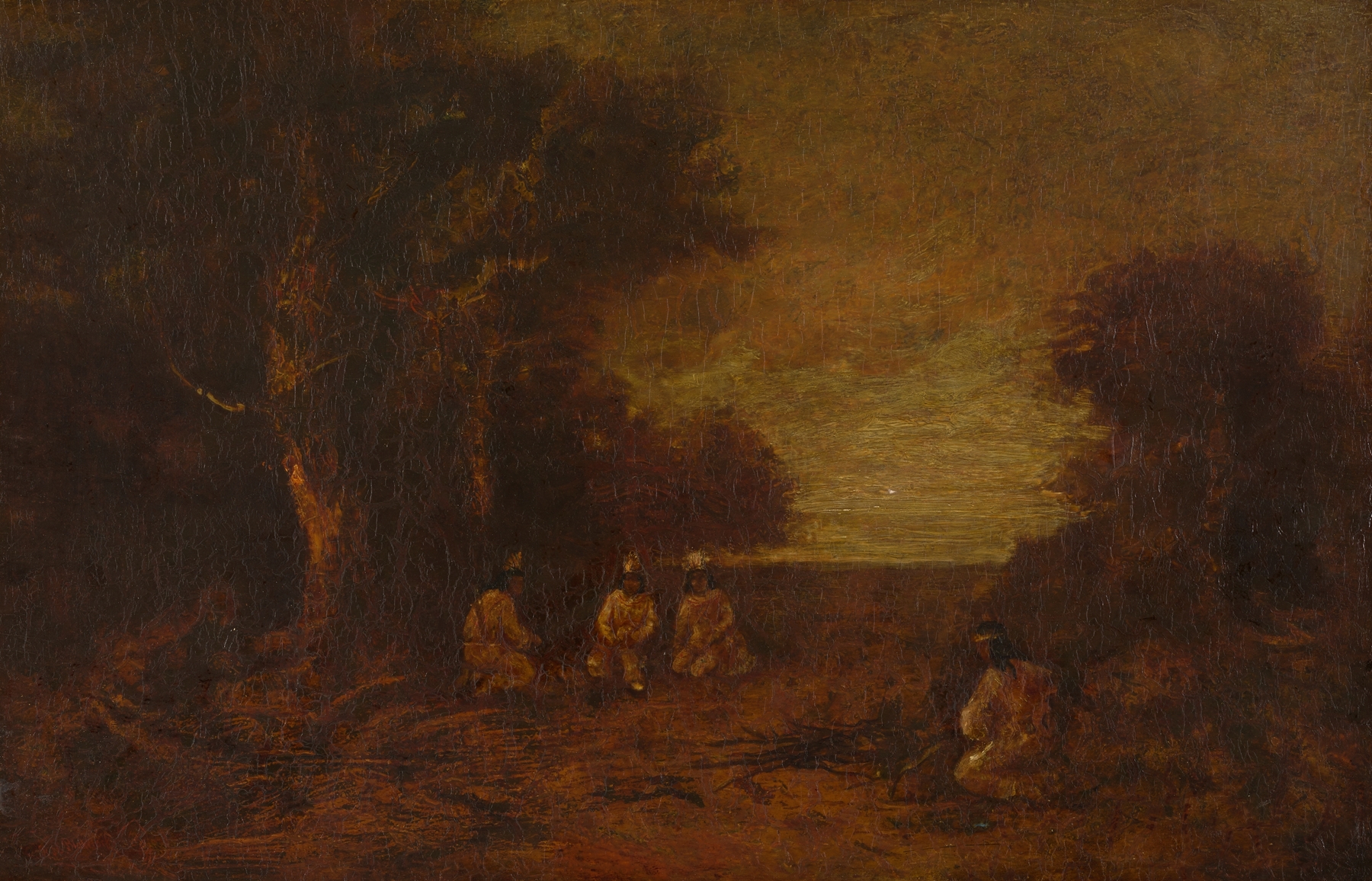
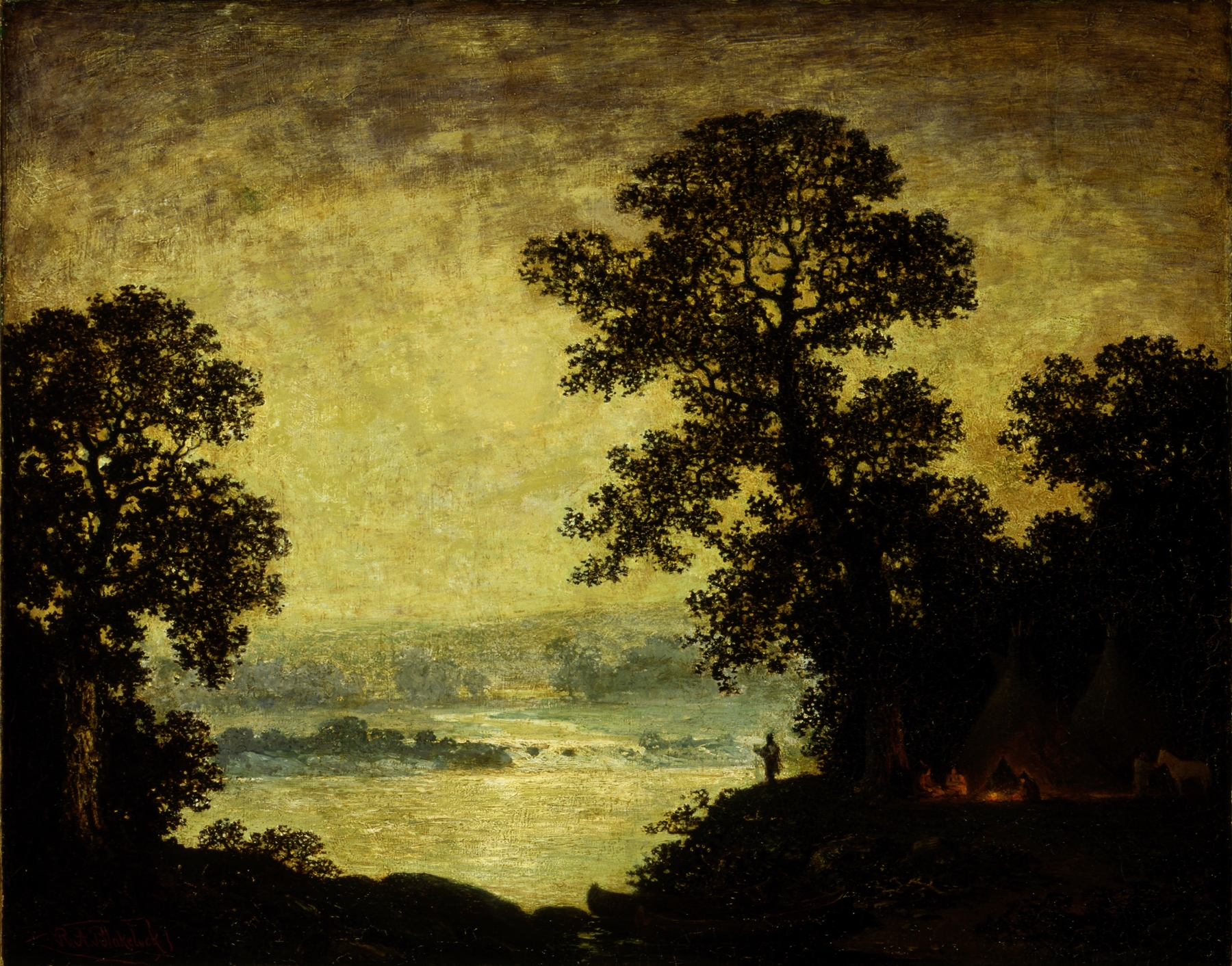
“Under the brush, chaos becomes grace.” In the stillness of an Indian encampment, whispers entwine with the rustle of leaves, revealing the fragile ties of trust and betrayal. Figures sit around a flickering fire, their expressions a tapestry of resolve and uncertainty, each shadow cast by the flames hinting at unspoken secrets layered within the night. Look to the left, where the soft glow of the fire illuminates the faces of the figures, their features etched with the weight of history. Notice how the brushstrokes blend earthy browns and deep greens, creating a rich tapestry that reflects the natural surroundings and evokes a sense of unity with the land.
The composition draws the eye towards the central flames, inviting the viewer to feel the warmth and tension as flickers of light dance across the canvas, symbolizing both comfort and the flickering trust among the encamped souls. Within this serene yet charged moment lies the tension of betrayal, visible in the lingering gazes and undercurrents of uncertainty. The contrast between the vibrant fire and the encroaching darkness around speaks to the fragility of alliances and the inevitable conflicts that arise from differing aspirations. Each small detail, from the posture of the figures to the gently swirling smoke, amplifies the emotional landscape, hinting at a deeper narrative of loss and loyalty amidst the beauty of the wilderness.
Created during the late 19th century, this work emerged as Ralph Albert Blakelock found himself immersed in a tumultuous period of artistic exploration. Painting during a time of growing interest in American landscapes and indigenous cultures, he faced personal struggles, including financial difficulties and mental health challenges. This canvas reflects both his longing for connection with nature and the poignant recognition of the complexities inherent in human relationships.