Institutsspaziergang — History & Analysis
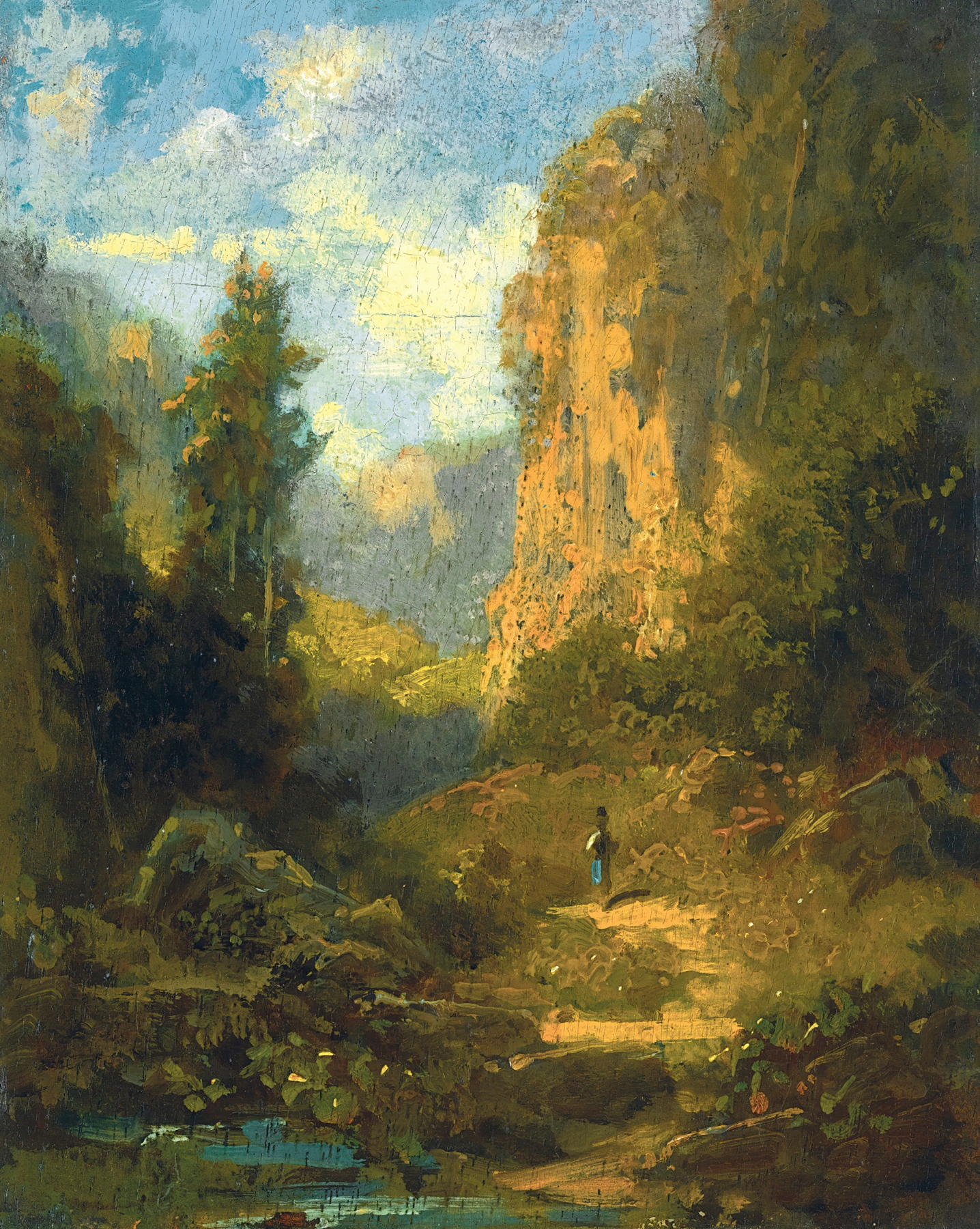
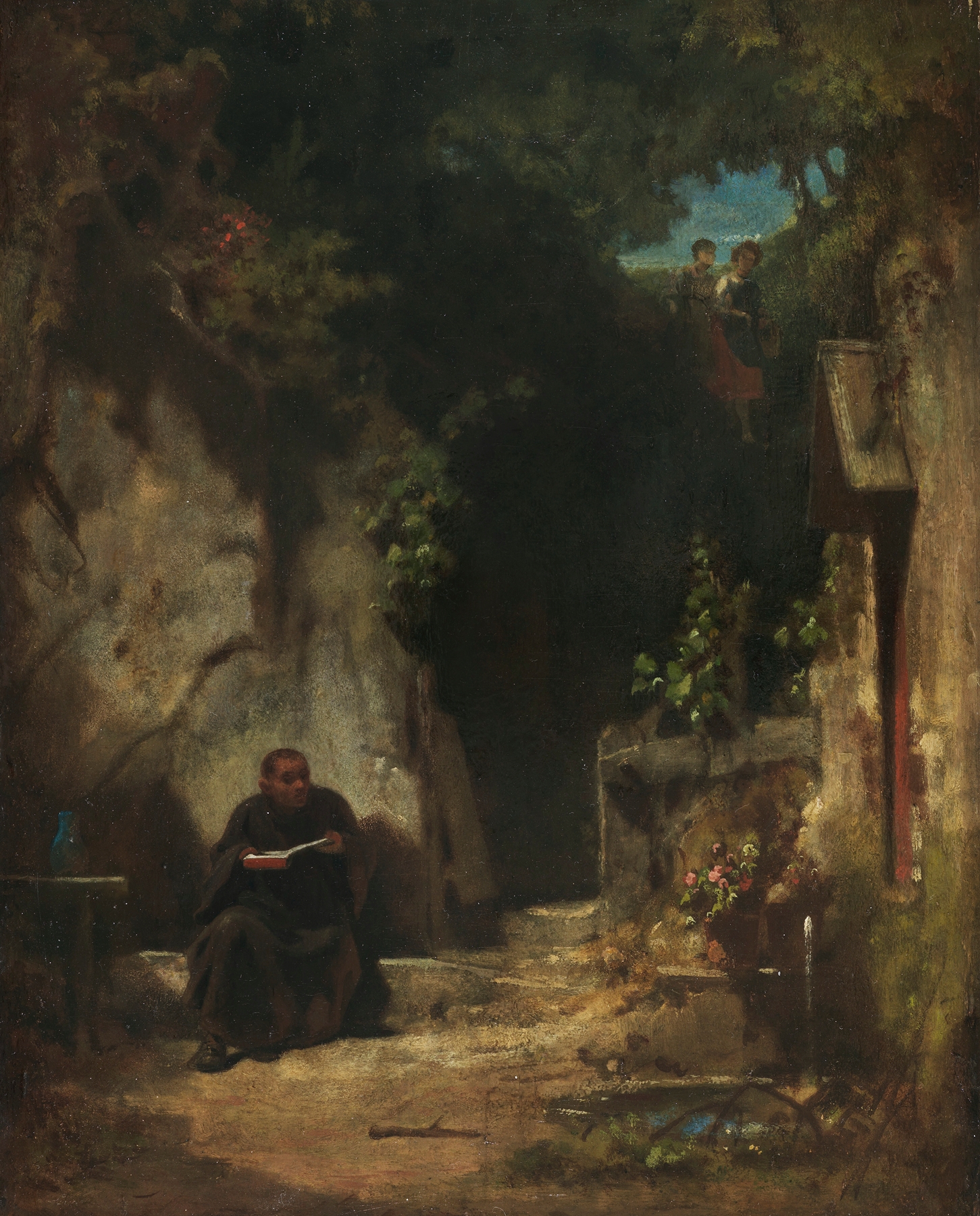
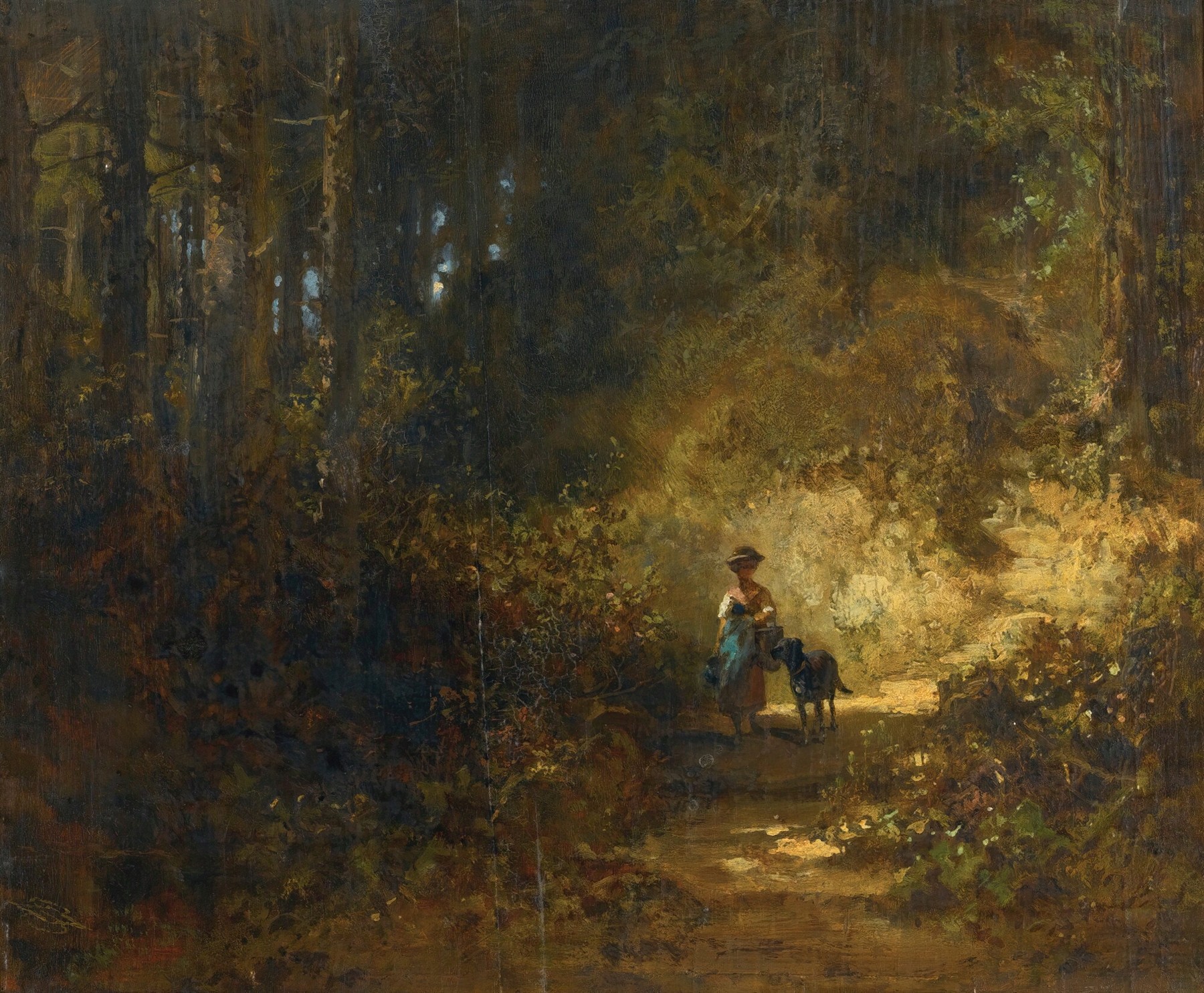
“Art reveals the soul when the world turns away.” In a moment where creation meets contemplation, an artist captures the intimate dialogue between nature and human introspection. This painting invites us to consider the profound impact of art on our existence, offering a portal into both the artist's mind and our own. Look to the left at the solitary figure, a man enveloped in a sea of lush greenery, lost in thought. His posture, slightly hunched, suggests a deep engagement with the natural world surrounding him. The play of light filtering through the leaves creates a dappled effect on the ground, inviting the viewer’s eye to follow the path leading into the heart of the scene.
The color palette—earthy greens and soft browns—evokes a sense of calm and serenity, drawing the viewer deeper into this tranquil moment. Hidden beneath the surface of this scene lies a rich tapestry of emotions and contrasts. The juxtaposition of the solitary figure against the exuberance of nature speaks to the tension between isolation and connection. The verdant surroundings seem to cradle him, suggesting that in solitude, there is a wealth of discovery and creativity waiting to be embraced.
This tension invites contemplation on the relationship between the artist and the world, as well as the internal journeys that lead to artistic creation. In the late 1870s, Spitzweg painted Institutsspaziergang during a time when he was fully engaged in the Romantic movement, exploring themes of solitude and nature. Residing in Germany, he sought solace in landscape painting while grappling with the allure of poetic imagery. The world around him was marked by rapid industrialization, yet his work remained a refuge for those yearning for a connection to the simplicity and beauty of life.