Kołodziej przed domem — History & Analysis
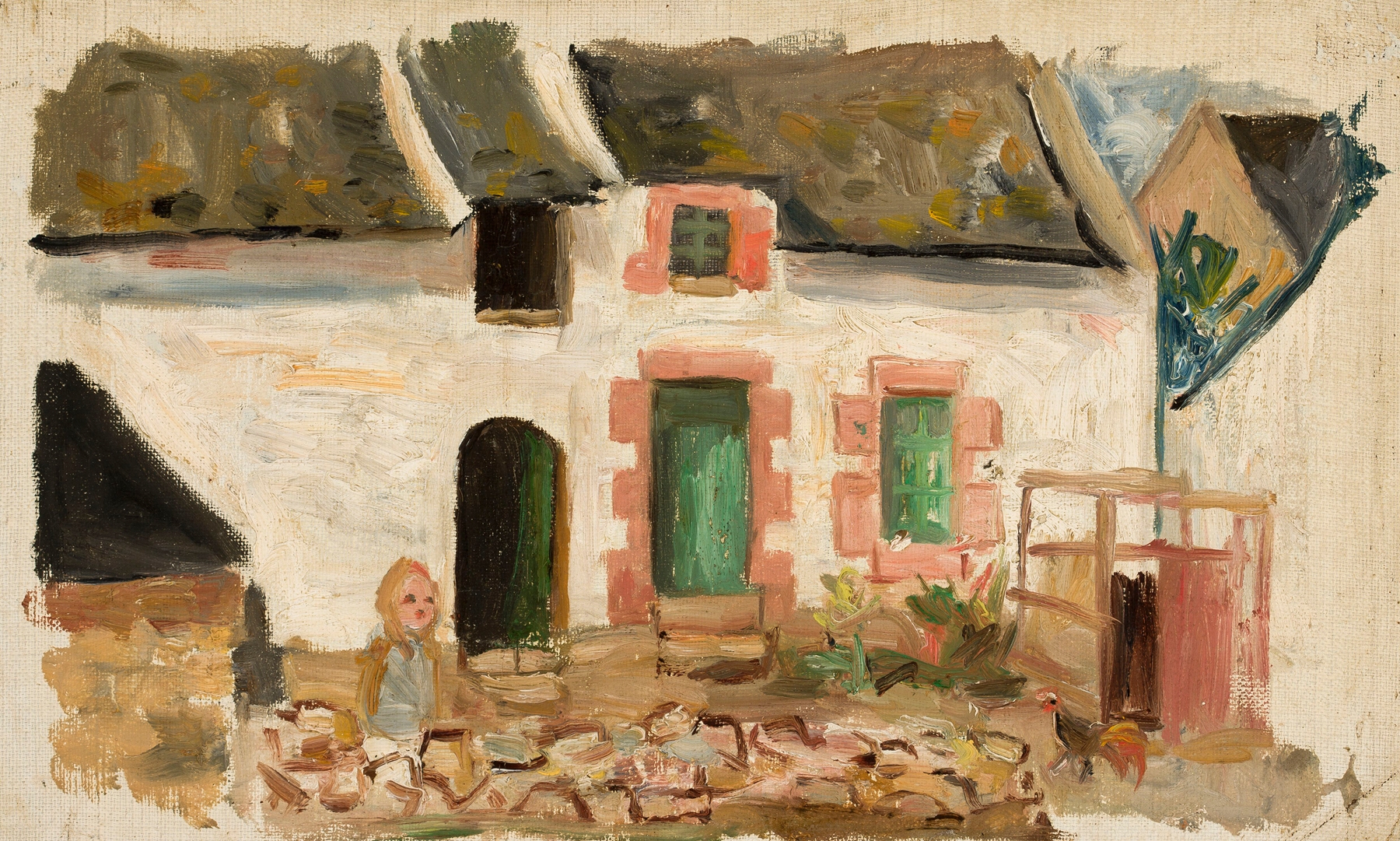
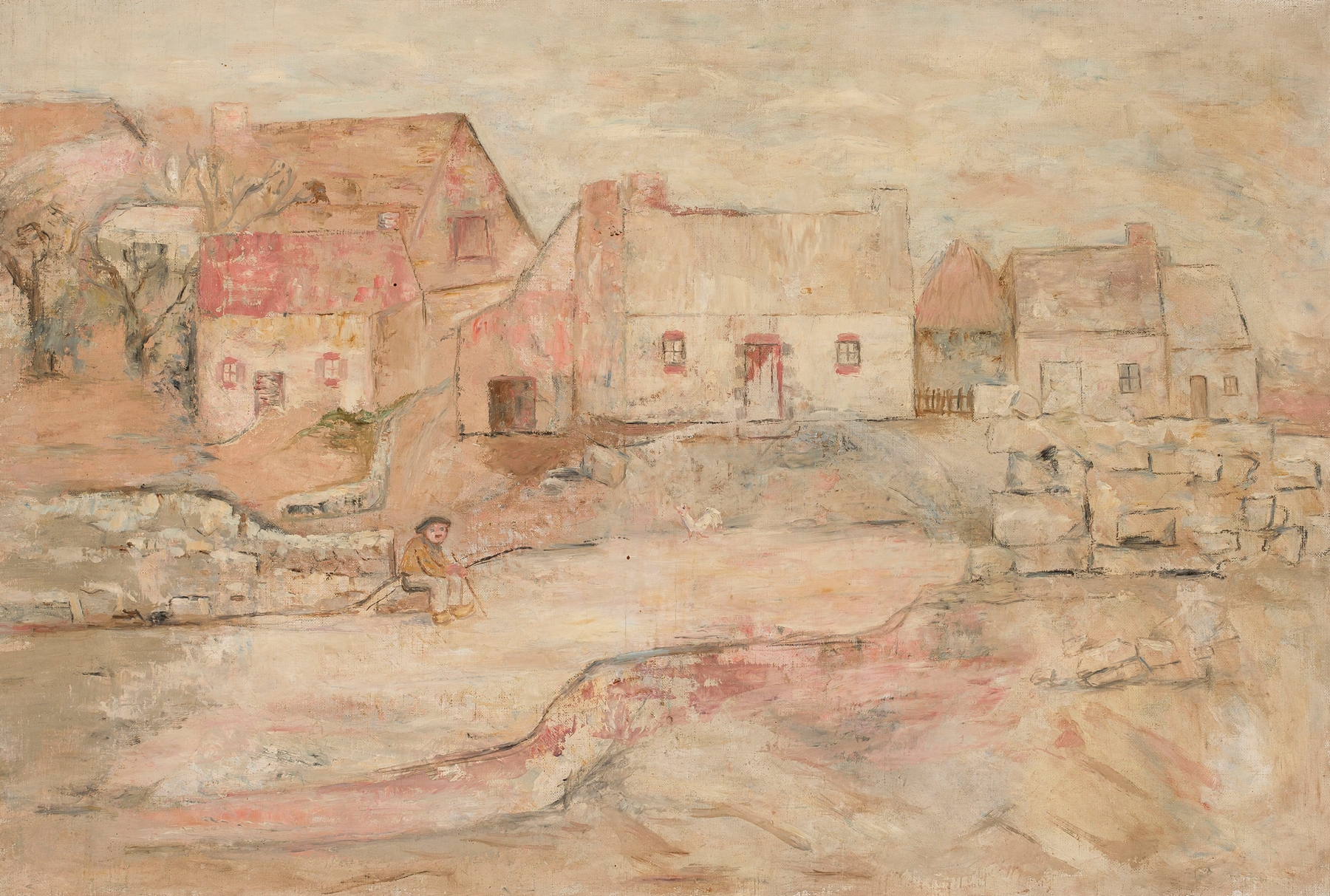
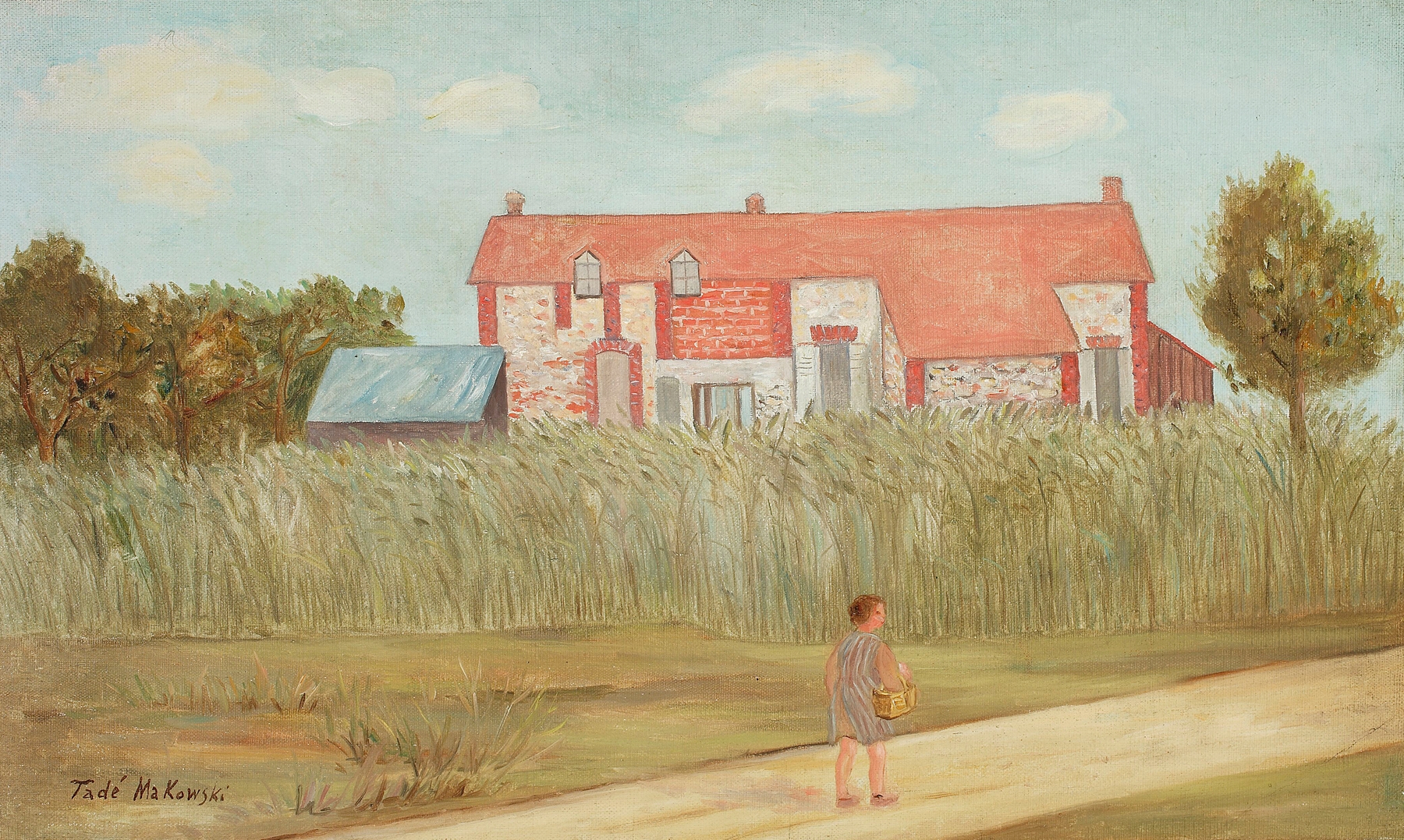
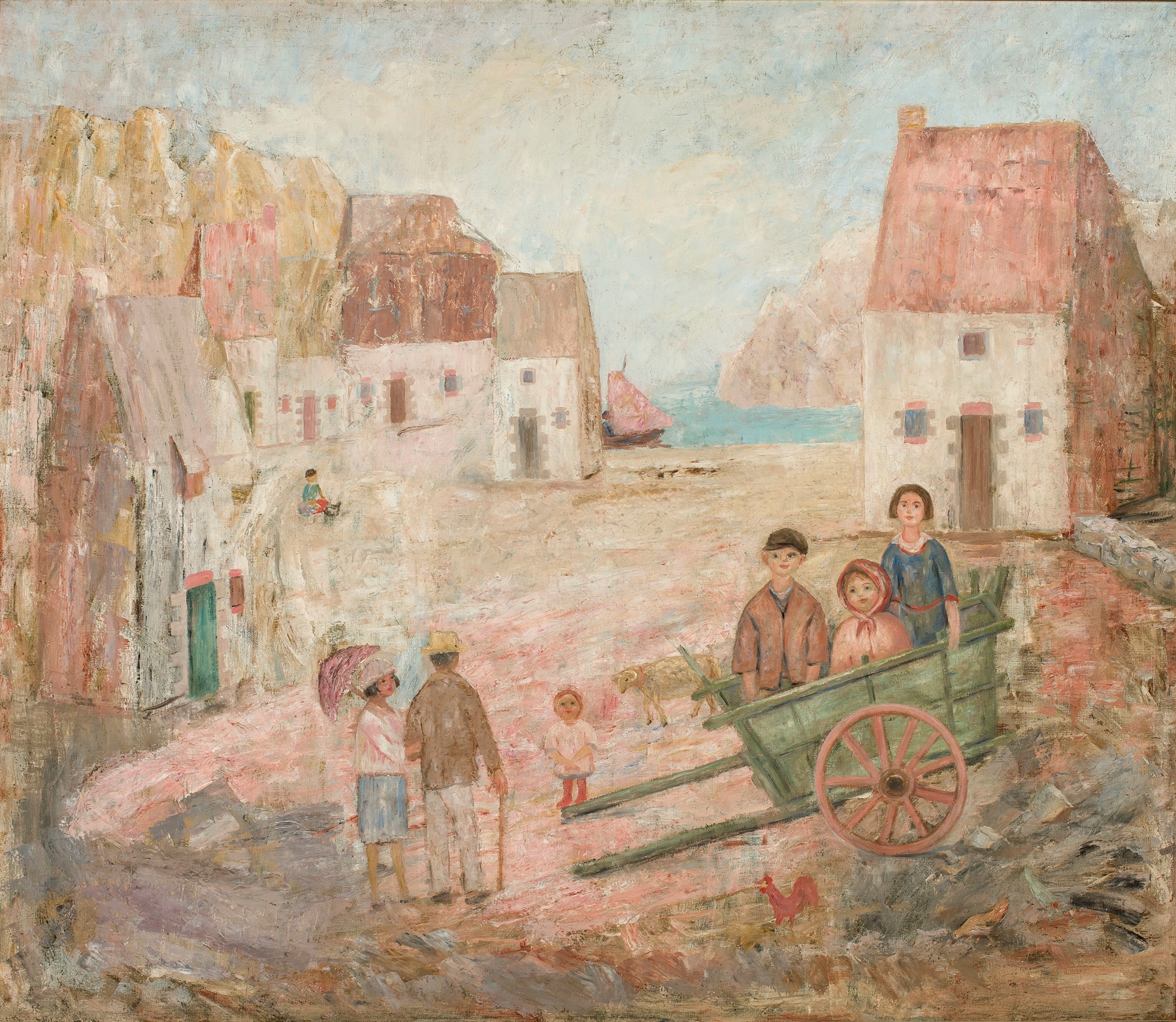
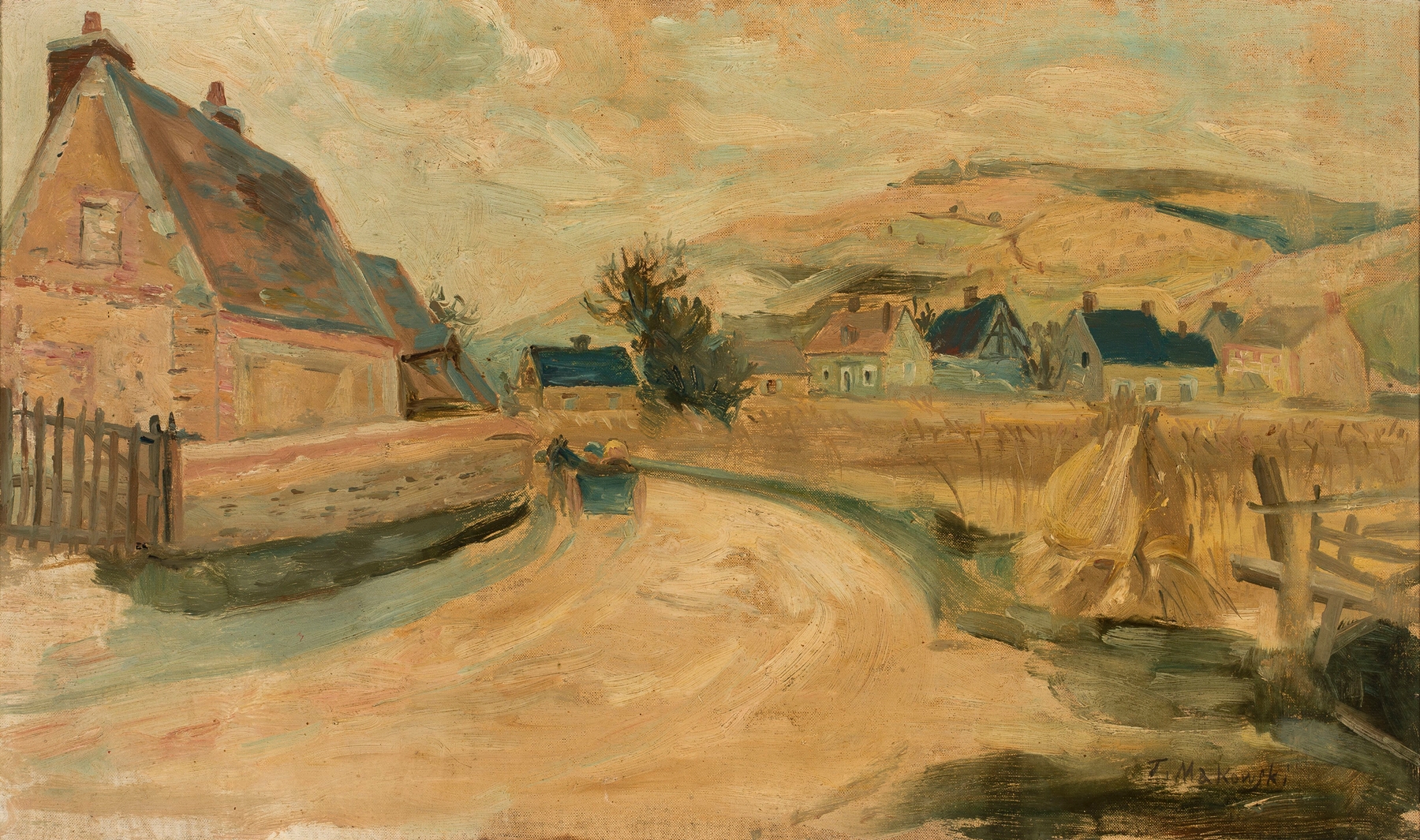
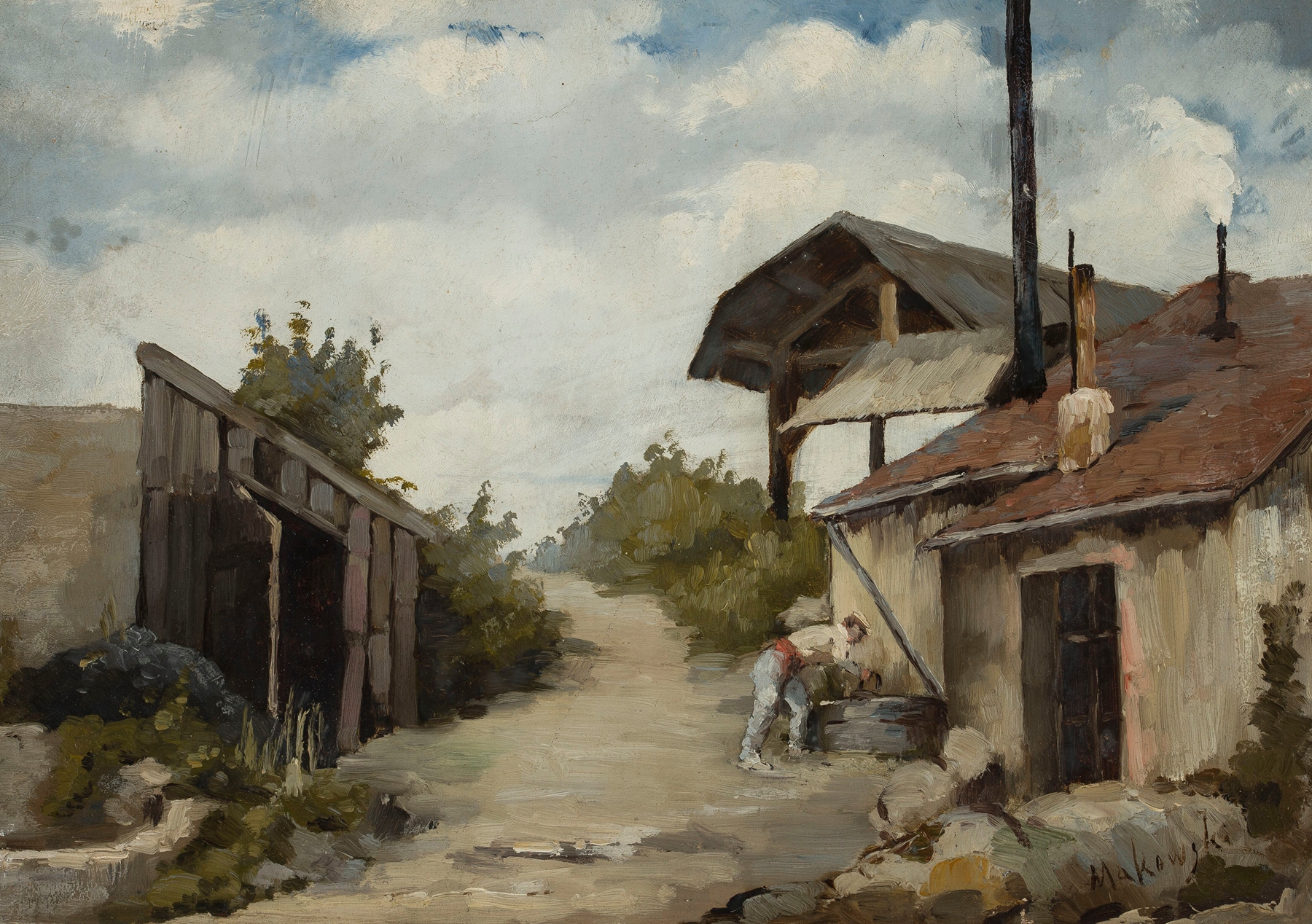
“Every silence here is a confession.” In the stillness, secrets lie entwined, waiting for the observer to unravel the threads of transformation woven into the fabric of life. Focus first on the figure at the center, a kołodziej, or wheelwright, positioning a wooden wheel against the backdrop of a humble home. The warm earth tones and subtle blues create a contrast between the laborer's earthy toil and the quiet dignity of his surroundings. Notice how the light dances on the grains of the wood, illuminating the craftsmanship while casting shadows that hint at the weight of tradition and the passage of time.
Within the frame, subtle details speak volumes. The kołodziej’s hands, calloused yet gentle, reveal a life of labor—an emblem of resilience amidst changing times. The modest home, with its simple structure, evokes the broader theme of transformation; it reflects the steady march of modernization against the backdrop of a time-honored craft. The tension between man and machine, past and future, resonates through the unspoken narrative captured in this moment.
In 1924, Tadeusz Makowski created this piece while living in Paris, navigating the cultural interplay between traditional Polish themes and the avant-garde movements emerging in the city. The world was in flux, as the aftermath of World War I reshaped identities and art forms. This work captures a yearning for connection to heritage, even as the world outside underwent profound transformation.