Landscape at Saint-Rémy (Enclosed Field with Peasant) — History & Analysis
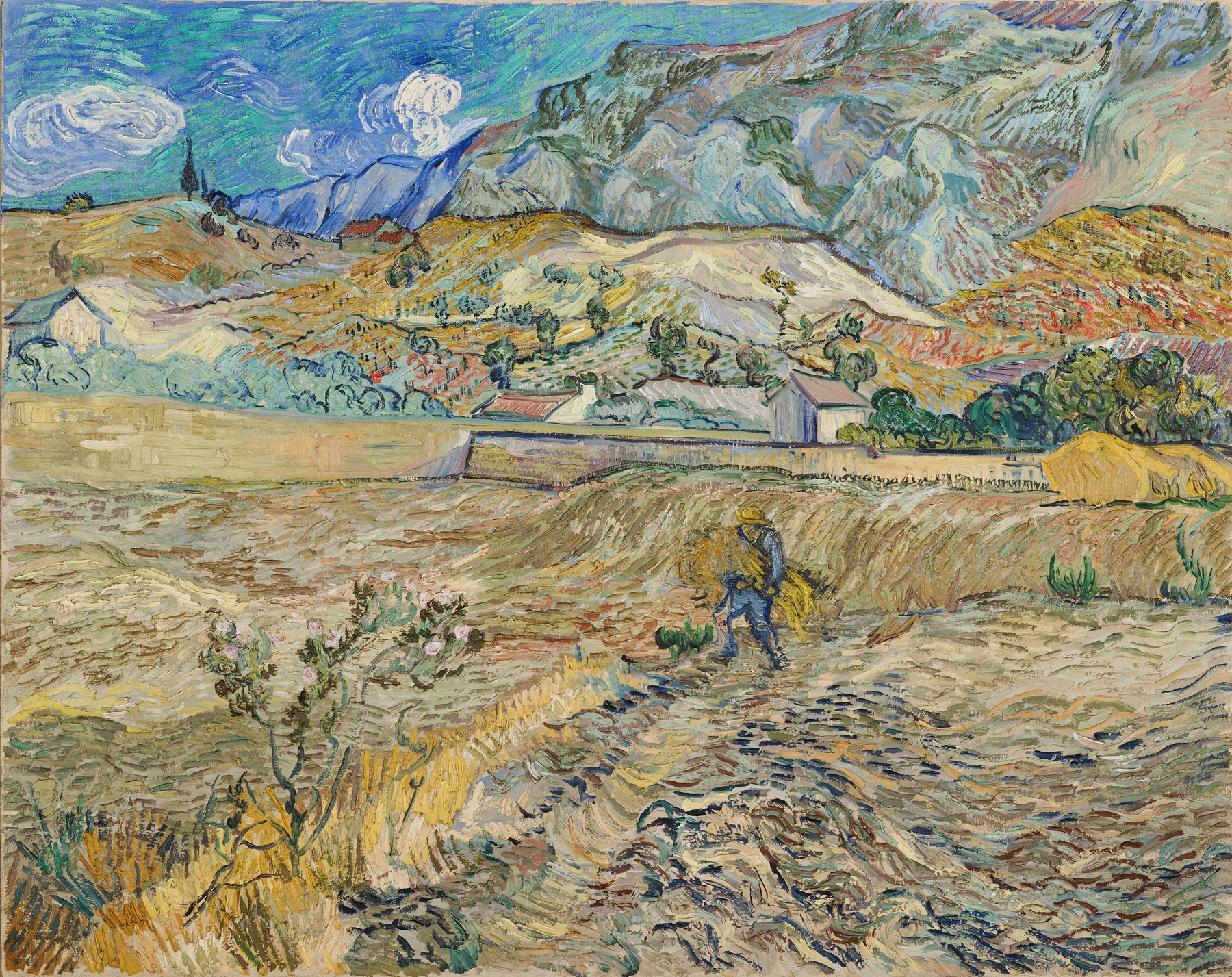
Can paint confess what words never could? In Landscape at Saint-Rémy, innocence unfolds through vibrant strokes, inviting viewers into a world where nature and simplicity intertwine. Focus first on the golden hues that sweep across the field, drawing your eyes to the expansive, sunlit landscape. The brushwork is expressive, with each stroke pulsating with energy and emotion. Notice how the gentle curve of the earth leads to a distant horizon, where the sky transitions from deep azure to soft pastels, hinting at the day's end.
The farmer, though small against this backdrop, stands as a testament to the harmony between humanity and the land. Delve deeper into this scene, and you’ll find layers of meaning hidden within the colors. The bold yellows symbolize warmth and life, while the greens evoke growth and serenity, contrasting with the starkness of the peasant's toil. Here lies a tension between the vibrancy of the land and the quiet solitude of labor, suggesting both the joy of connection and the weight of existence.
This duality speaks to the unwavering innocence of rural life, untouched by the complexities of modernity. In 1889, while residing at the asylum in Saint-Rémy, Van Gogh painted this piece amidst his ongoing struggle with mental health. It reflects a period marked by isolation yet filled with a profound appreciation for nature. At that time, the art world was shifting, with impressionism giving way to post-impressionism, and Van Gogh's work began to carve its own path, embracing emotional honesty and representation of the human experience.