L'Arlésienne: Madame Joseph-Michel Ginoux (Marie Julien, 1848–1911) — History & Analysis

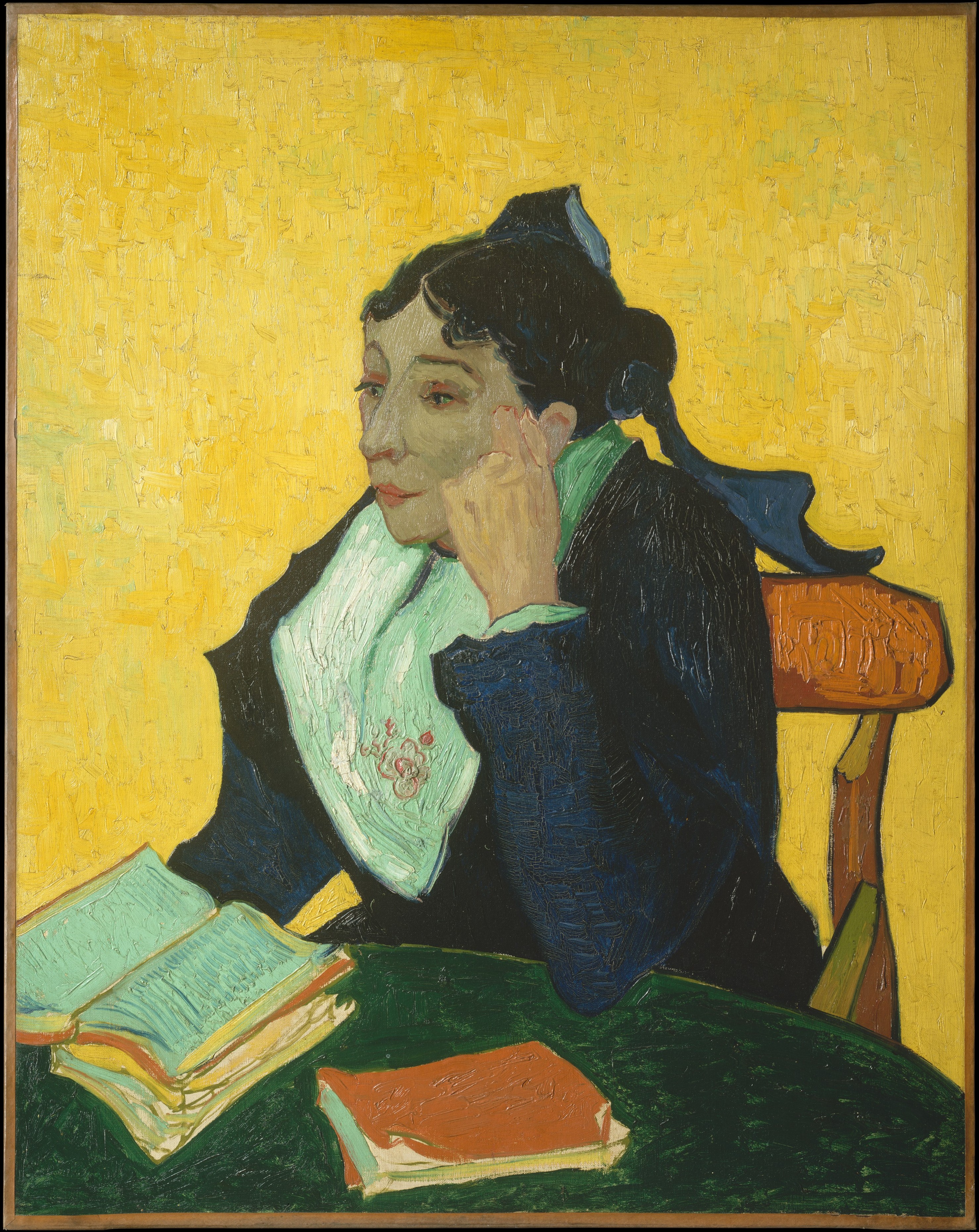
“Under the brush, chaos becomes grace.” In the stillness of thought, a solitary presence emerges, framed by an unyielding balance of color and form. Look to the vibrant blues and greens that envelop her; the background swirls with energy, yet her figure stands resolute amidst it all. Notice how the golden tones of her dress contrast against the vivid hues, drawing your gaze to her face—a blend of serenity and introspection. The attention to detail in her features, especially her piercing eyes, invites contemplation and connection, while the brushstroke's rhythm provides a pulsating life that belies the stillness of the moment.
There is an emotional tension between the chaos of the background and the calm of her expression, suggesting an inner world that is tumultuous yet composed. The heavy outlines around her figure create a sense of solidity, grounding her in a space that feels both alive and silent. The juxtaposition of intricate detail and sweeping strokes hints at the complexities of identity, evoking a narrative that is as much about the subject as it is about the artist's perception of her.
In 1888, Vincent van Gogh painted this work in Arles, France, during a fervent period of creativity. At the time, he sought to express profound emotions through vivid colors and dynamic forms while wrestling with his own mental health. This painting reflects not only his artistic ambitions but also the intimate relationship he forged with those around him, capturing a moment of stillness amidst the unfolding chaos of his life and the art world.