Massacre of the Innocents — History & Analysis
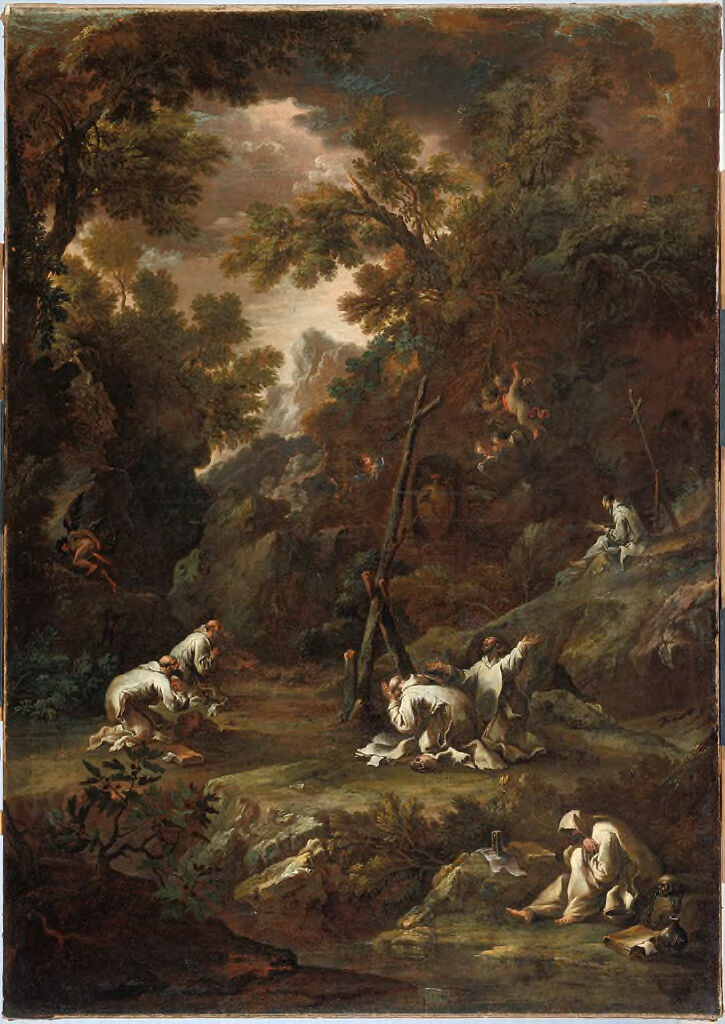
“Every silence here is a confession.” In the depths of chaos, madness unfurls like a haunting whisper, revealing itself in the anguished expressions of the figures caught in despair. How do we confront brutality when it manifests within the innocent? Look closely at the foreground, where contorted bodies and frightened faces emerge from the tumult. The chaos is punctuated by a dramatic play of light and shadow; the stark contrasts evoke an emotional upheaval. Notice how the muted palette of browns and ochres serves as a canvas for deeper revelations, drawing attention to the bright, piercing hues of blood that stain the innocence portrayed.
Each brushstroke seems to convey not just movement, but the very essence of fear and sorrow. Beneath the surface lies a poignant exploration of guilt and complicity. The anguished expressions of the mothers convey a love torn apart, while the distant figures loom like harbingers of doom, representing both societal indifference and the collective madness of humanity. This duality captures the tension between innocence and violence, illustrating how dread and despair are often intertwined.
In this setting, the cries of the innocent echo through time, a reminder of the lost souls caught in the crossfire of human cruelty. Created between 1715 and 1740 during a period marked by the turmoil of the War of the Spanish Succession, the artist captured a world fraught with conflict. Magnasco found himself in an Italy rife with both political and social upheaval, navigating the shifting dynamics of Baroque art. His work reflects the fervent emotional landscapes of his time, making a powerful statement about the cost of human madness in the face of tragedy.