Theodosius Repulsed from the Church by Saint Ambrose — History & Analysis
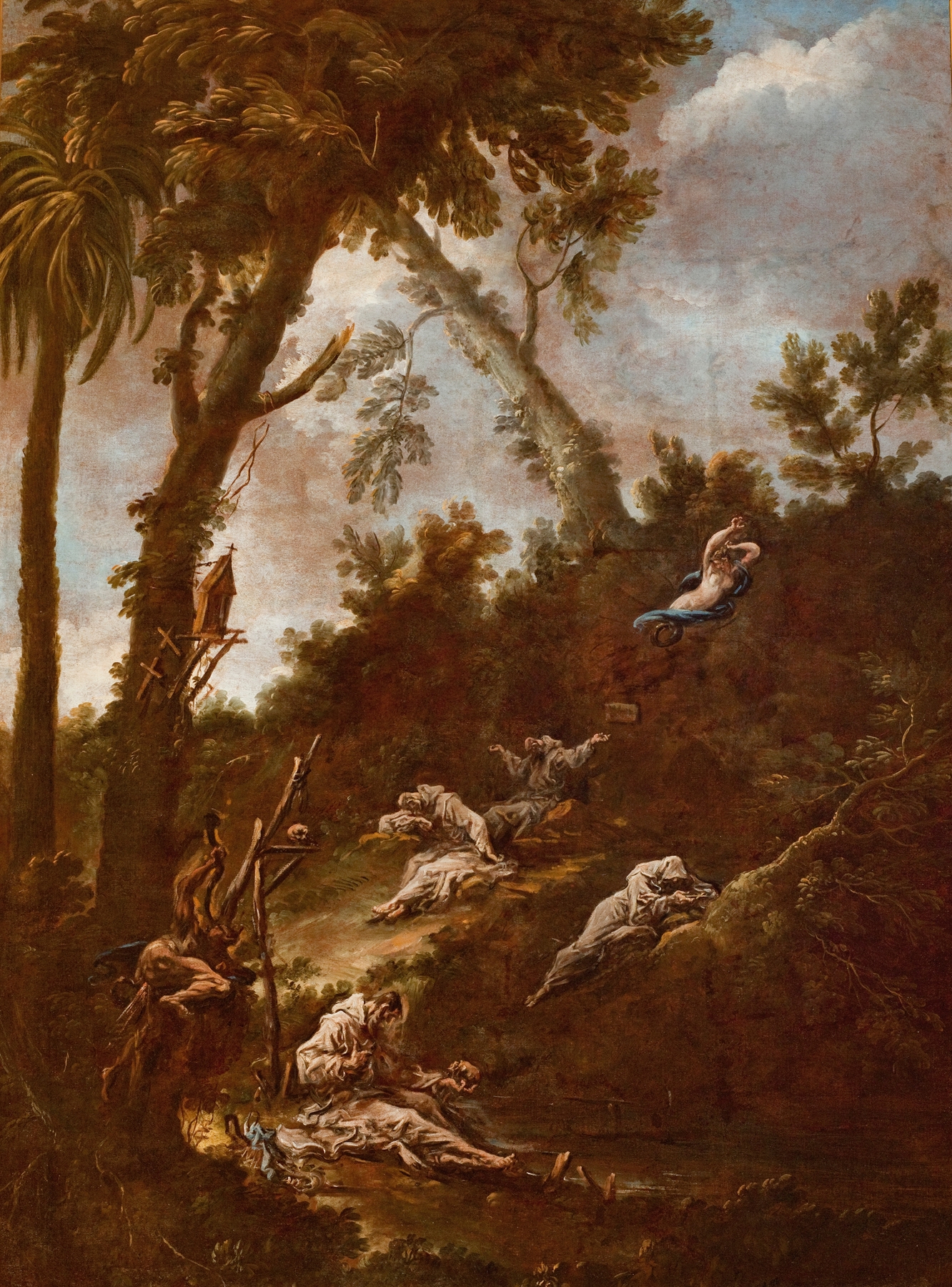
Where does light end, and longing begin? In the stillness of Theodosius Repulsed from the Church by Saint Ambrose, silence hangs heavy, mirroring the tension between authority and humility. Focus on the figure of Saint Ambrose, positioned centrally with an outstretched hand, as if both a guardian and a barrier. The vibrant hues of blue and gold envelop him, casting an ethereal glow that contrasts sharply with the muted tones of Theodosius, who stands outside the church—a powerful emperor rendered small and insignificant.
Notice how the flickering candlelight in the background illuminates the ornate details of the church’s architecture while leaving the emperor shrouded in shadow, amplifying his isolation and vulnerability. Beneath the surface, the painting pulsates with a clash of ideals. The confrontation is not merely between a saint and an emperor; it embodies the struggle between spiritual conviction and worldly power. The tension is evident in the rigid posture of Theodosius, standing defiantly yet unsure, juxtaposed with Ambrose’s composed serenity, suggesting that true strength lies not in dominance but in moral integrity.
The rich textures of their garments reflect the social hierarchies of the time, yet they also emphasize the innate humanity shared within this moment of spiritual conflict. Alessandro Magnasco created this work around 1705, during a period when the Baroque style was evolving, pushing boundaries in both content and technique. Living in Italy, he was influenced by the socio-political tensions of the era, including the ongoing struggles between the Catholic Church and secular authorities. This painting represents not just a historical event but a reflection of the broader conflicts in the art world, where artists sought to convey deeper truths through powerful imagery.