Landscape with Gypsies and Washerwomen — History & Analysis
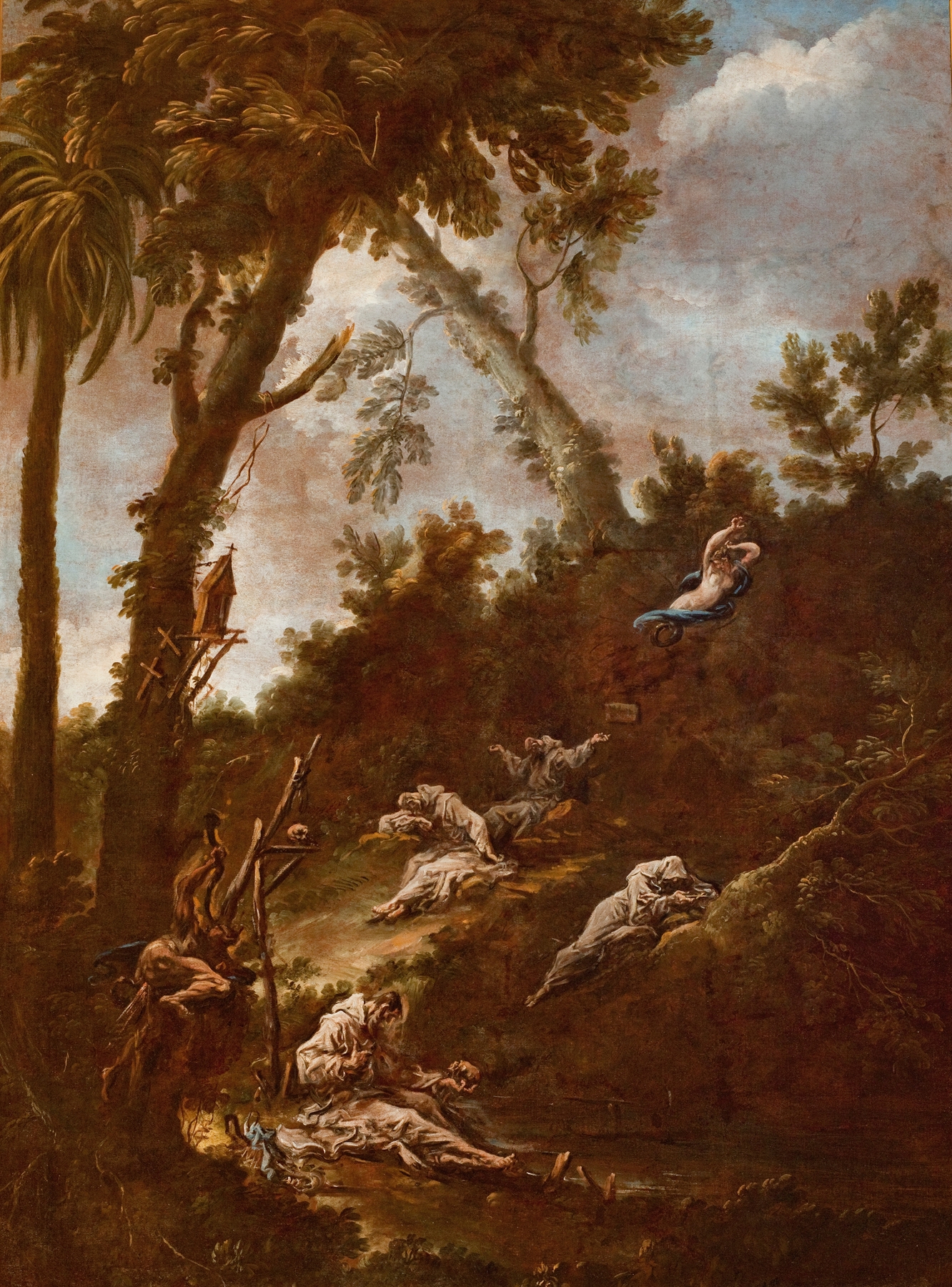
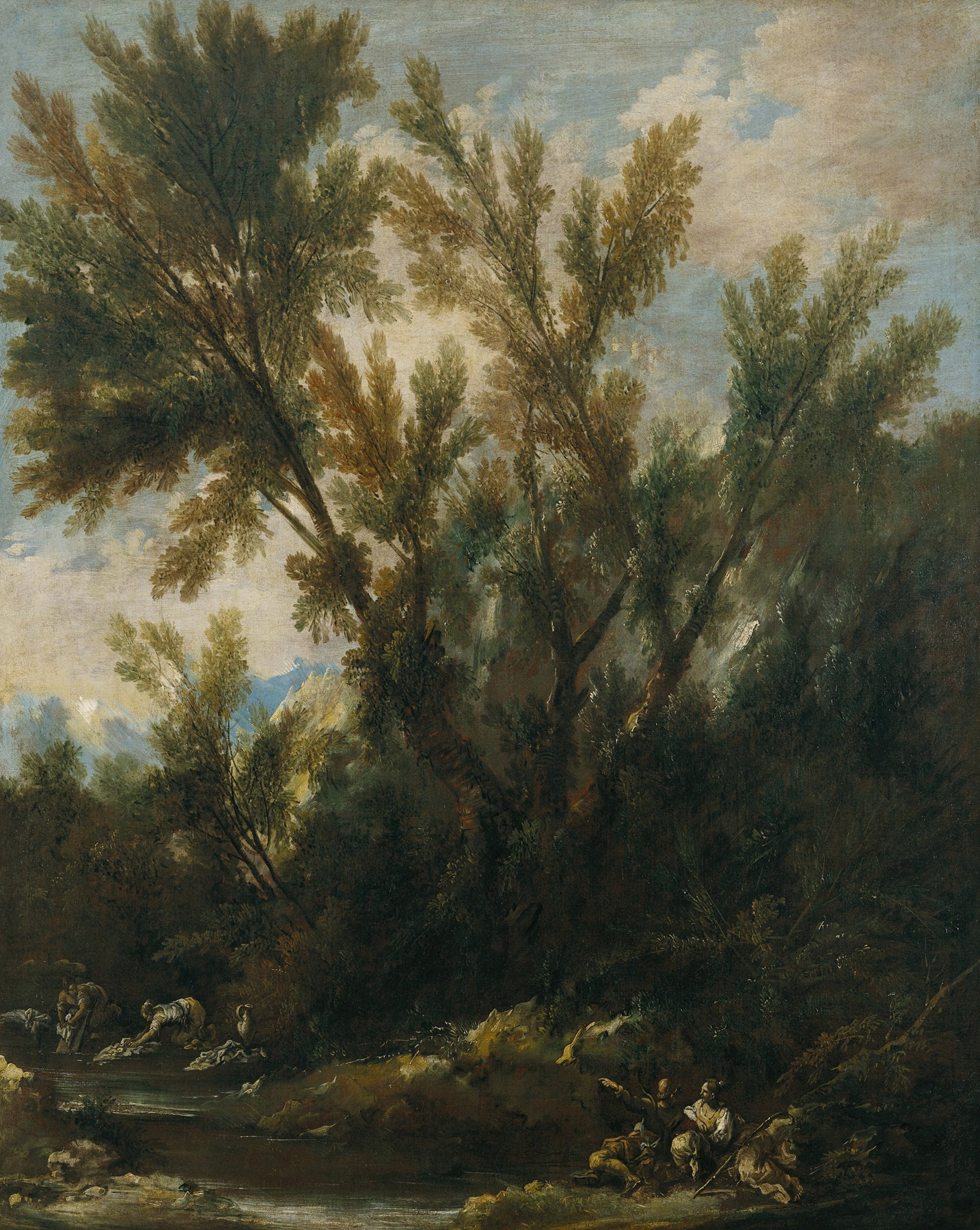
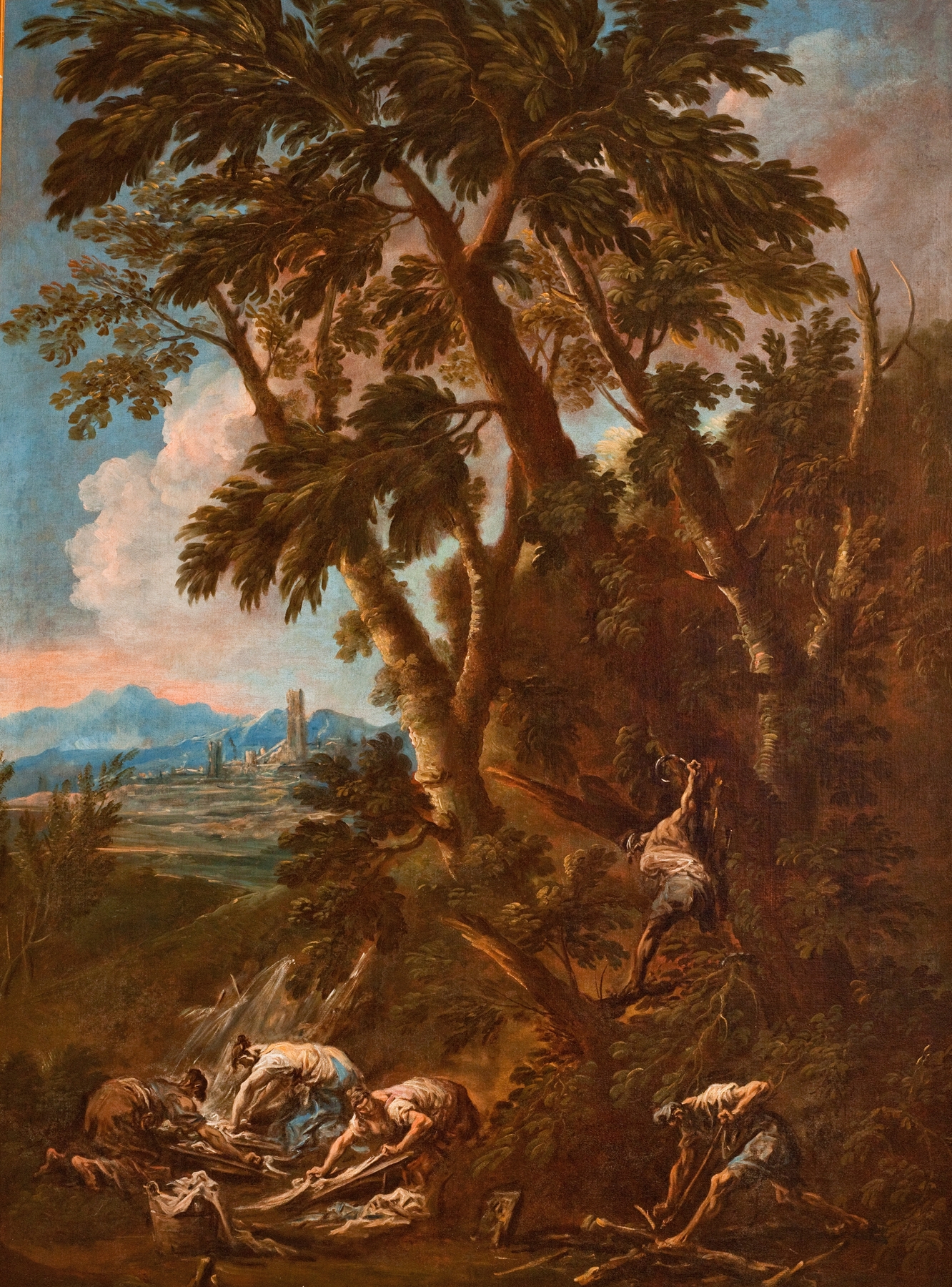
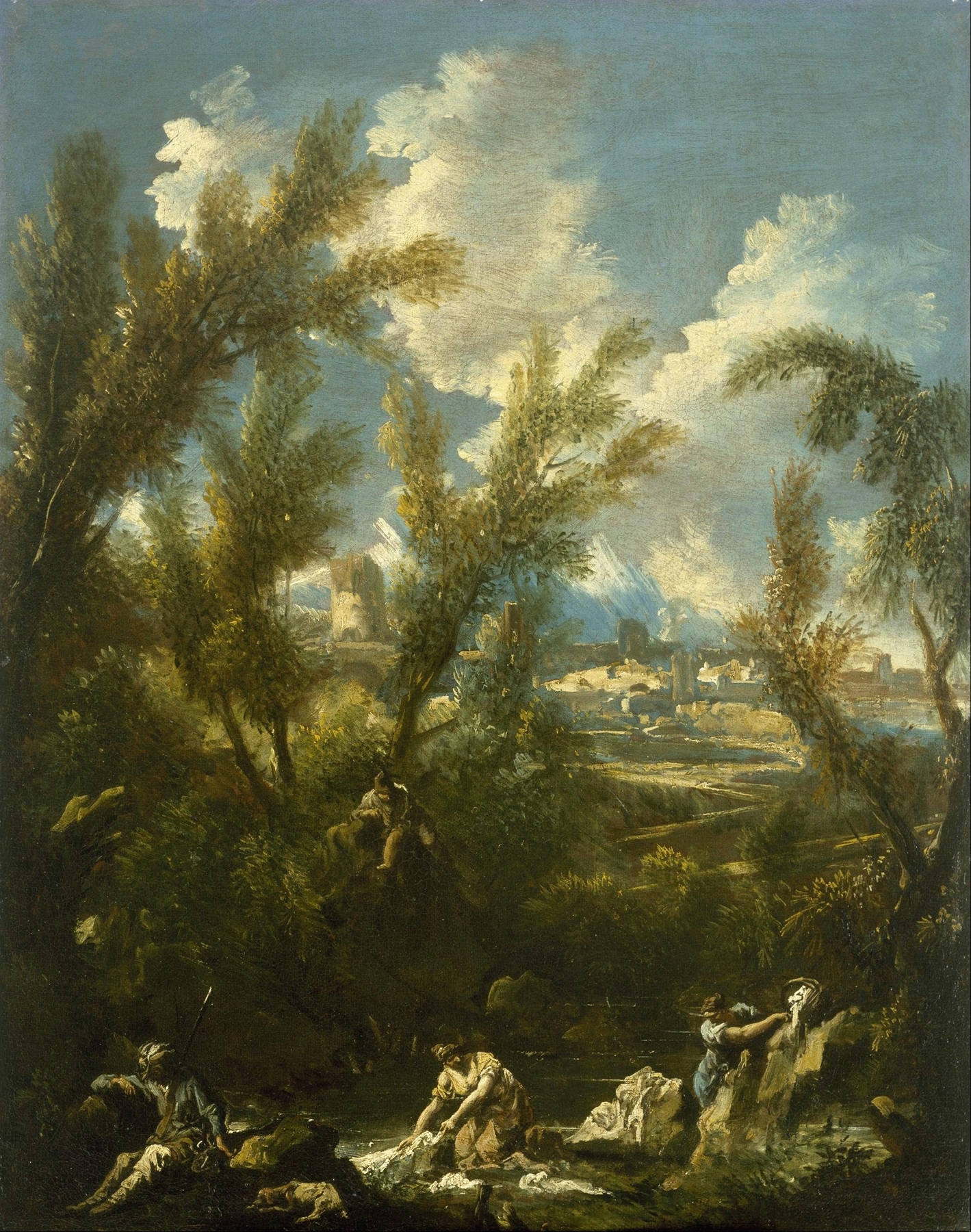
“To paint is to remember what time wants us to forget.” In Landscape with Gypsies and Washerwomen, movement pulses through each brushstroke, capturing the delicate dance of life as it ebbs and flows along the water's edge. Look to the left, where figments of the gypsies breathe vitality into the scene, their vibrant attire contrasting sharply with the muted earth tones that dominate the landscape. Notice how the sunlight cascades down, illuminating the figures of the washerwomen, their hands submerged in water, evoking a sense of labor and rhythm.
The composition draws the eye across the canvas, gracefully guiding one’s gaze from the lush greenery that frames the scene to the reflective surface of the water, where life mingles with nature's serenity. Within this striking tableau lies an intriguing juxtaposition: the carefree nature of the gypsies, infused with joy and spontaneity, stands in stark contrast to the unwavering diligence of the washerwomen. The swelling currents of the stream not only signify the passage of time but also echo the cycles of tradition and labor.
Each figure encapsulates a different narrative, suggesting a dialogue between freedom and duty, movement, and stillness, as the day unfolds in harmony with its surroundings. Created between 1705 and 1710, this work emerged during a transformative period for Alessandro Magnasco, who was navigating the complexities of Baroque style while exploring themes of everyday life. Living in Genoa amidst a backdrop of changing artistic influences, he sought to elevate common scenes into realms of allegory and reflection, presenting a vivid tapestry of human experience intertwined with the natural world.