Washerwomen and Woodcutters — History & Analysis
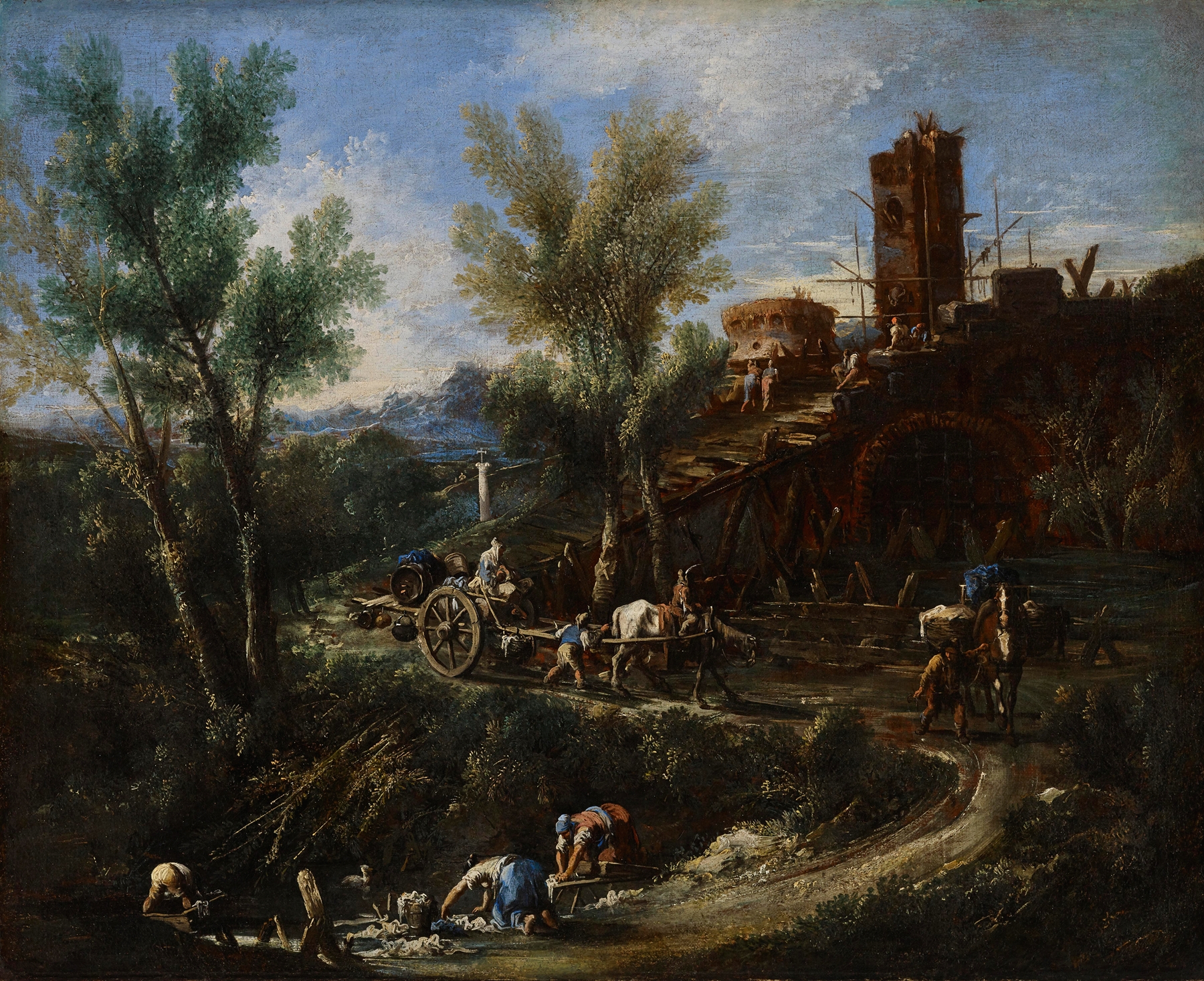
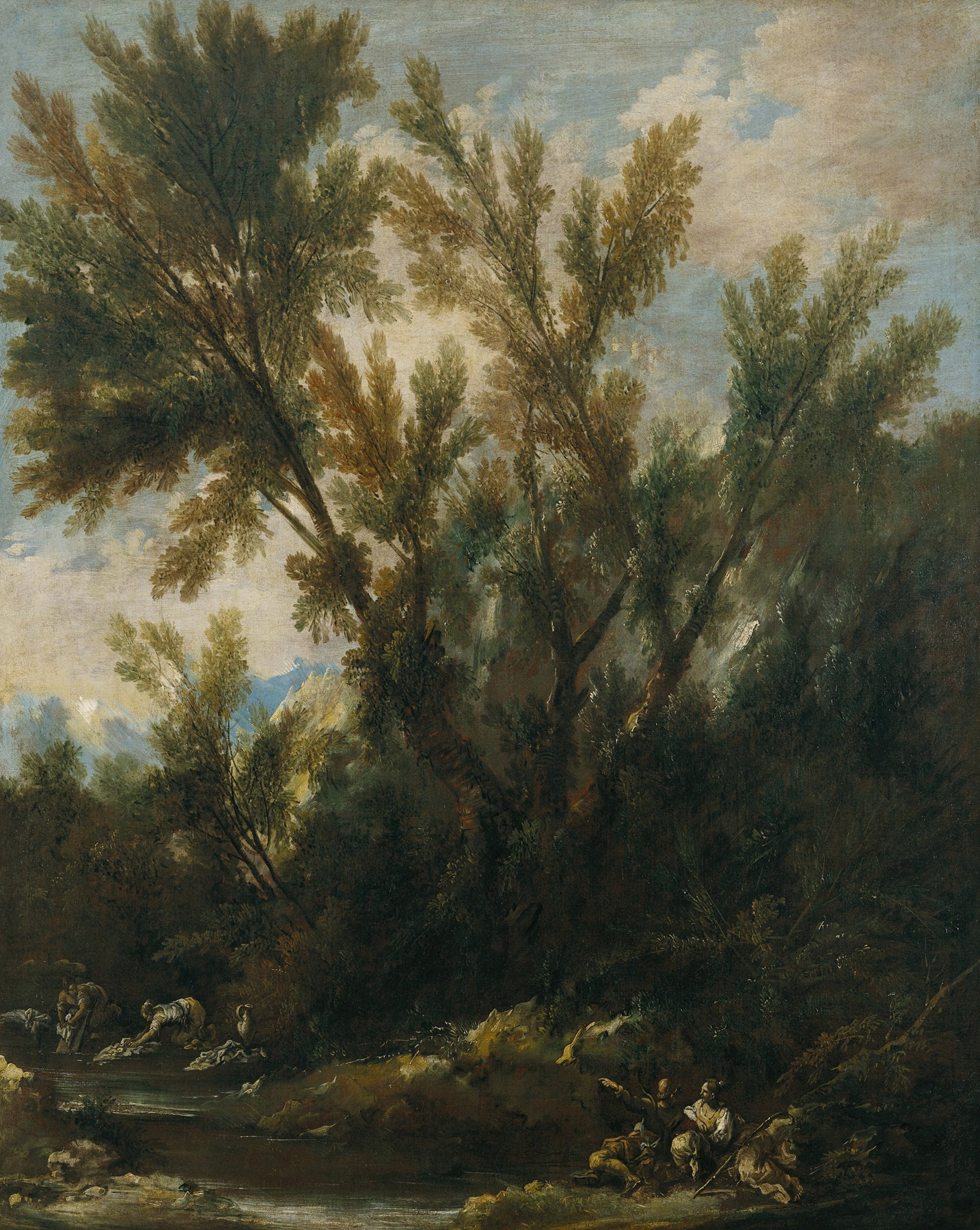
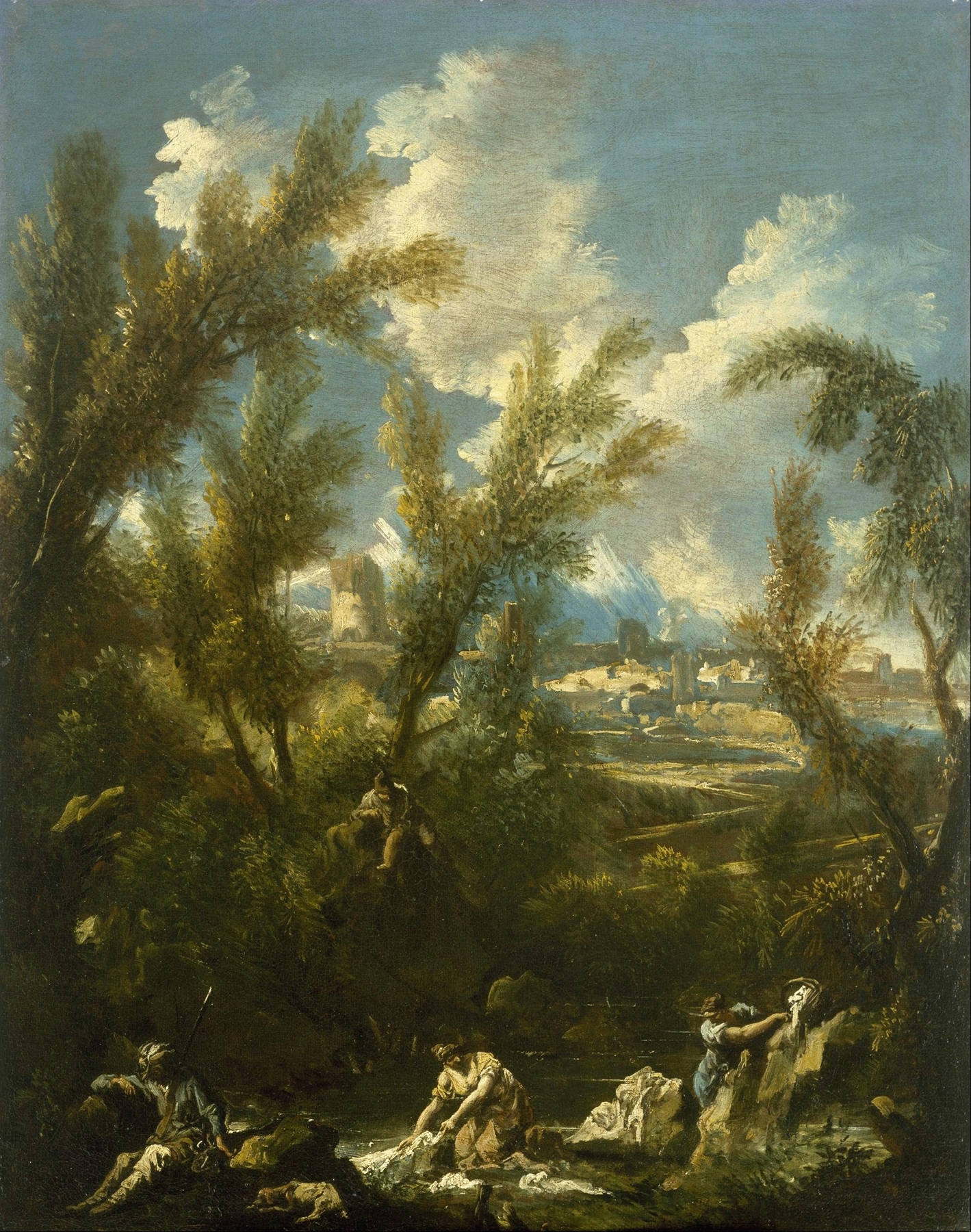
“Every brushstroke is a heartbeat remembered.” In a world often overshadowed by doubt, can faith manifest in the everyday lives of laborers? Look to the foreground at the two washerwomen, their faces etched with the weariness of toil yet illuminated by an unyielding spirit. Notice how the light dances on the water, creating a glimmering reflection that contrasts with the ruggedness of their surroundings. The deep, earthy tones of their garments speak to a life rooted in labor, while delicate highlights on their hands evoke a sense of tenderness amidst their hard work.
The composition draws the eye upwards, where towering trees and distant figures of woodcutters create a narrative of coexistence between nature and the relentless rhythm of labor. As you delve deeper, observe the interplay between stillness and motion — the tension between the serene water and the bustling activity of the figures. The juxtaposition of the women’s focused expressions hints at a deeper significance: their faith in the cycle of life and hard work as both a burden and a blessing. This duality resonates in the way the artist captures both the simplicity of their task and the profound dignity it conveys, inviting viewers to reflect on the often-overlooked beauty in daily life.
Between 1712 and 1715, while creating this piece, the artist was navigating the complexities of the Baroque era in Italy, a time marked by dramatic contrasts in society and art. Magnasco’s focus on the lives of ordinary people, particularly in his dynamic scenes, emerged during a period when the art world was increasingly celebrating naturalism and everyday experiences. His brushwork and thematic choices reveal a commitment to elevating the mundane to a canvas of reverence and faith.