Moonlight — History & Analysis
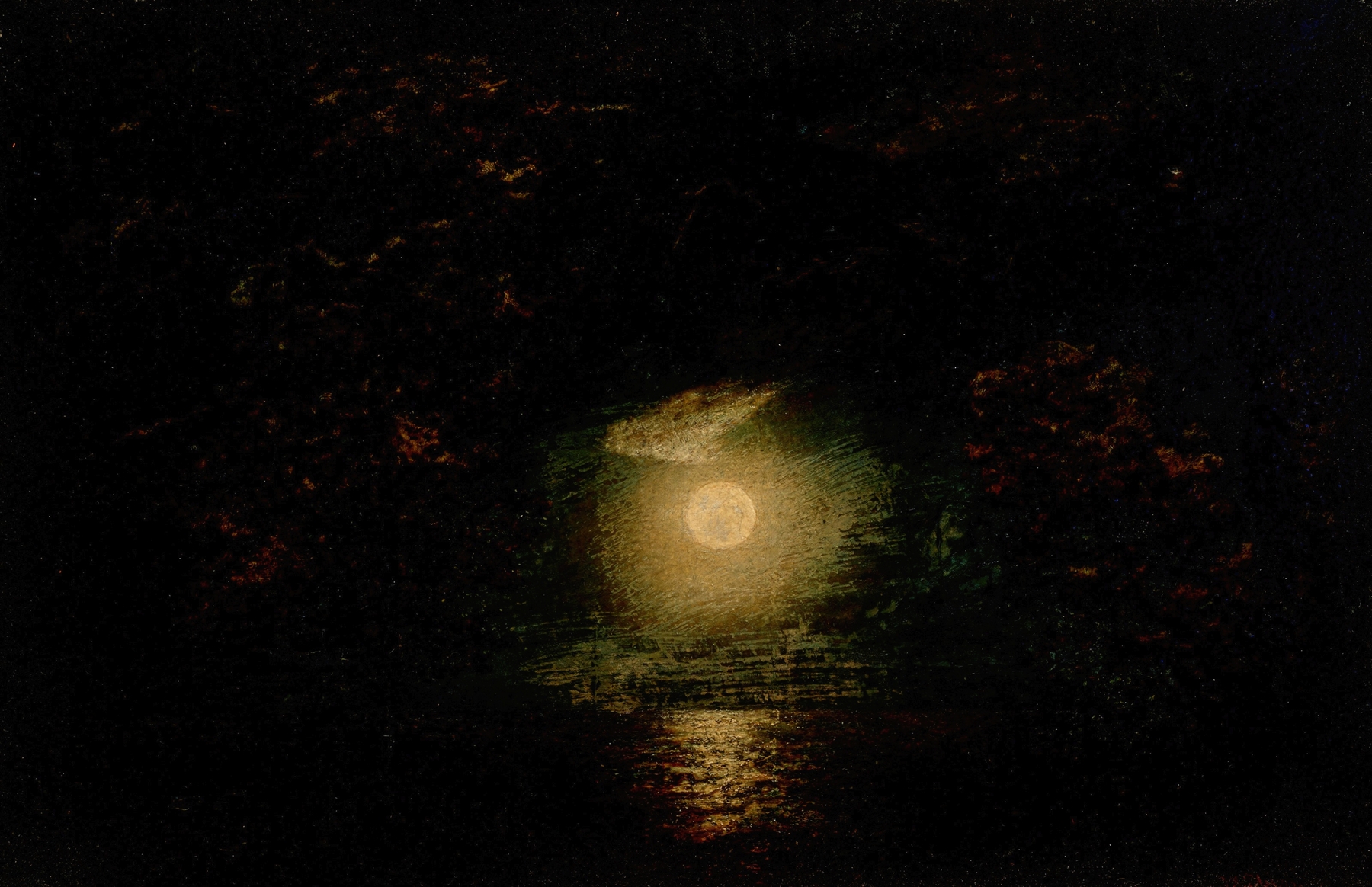
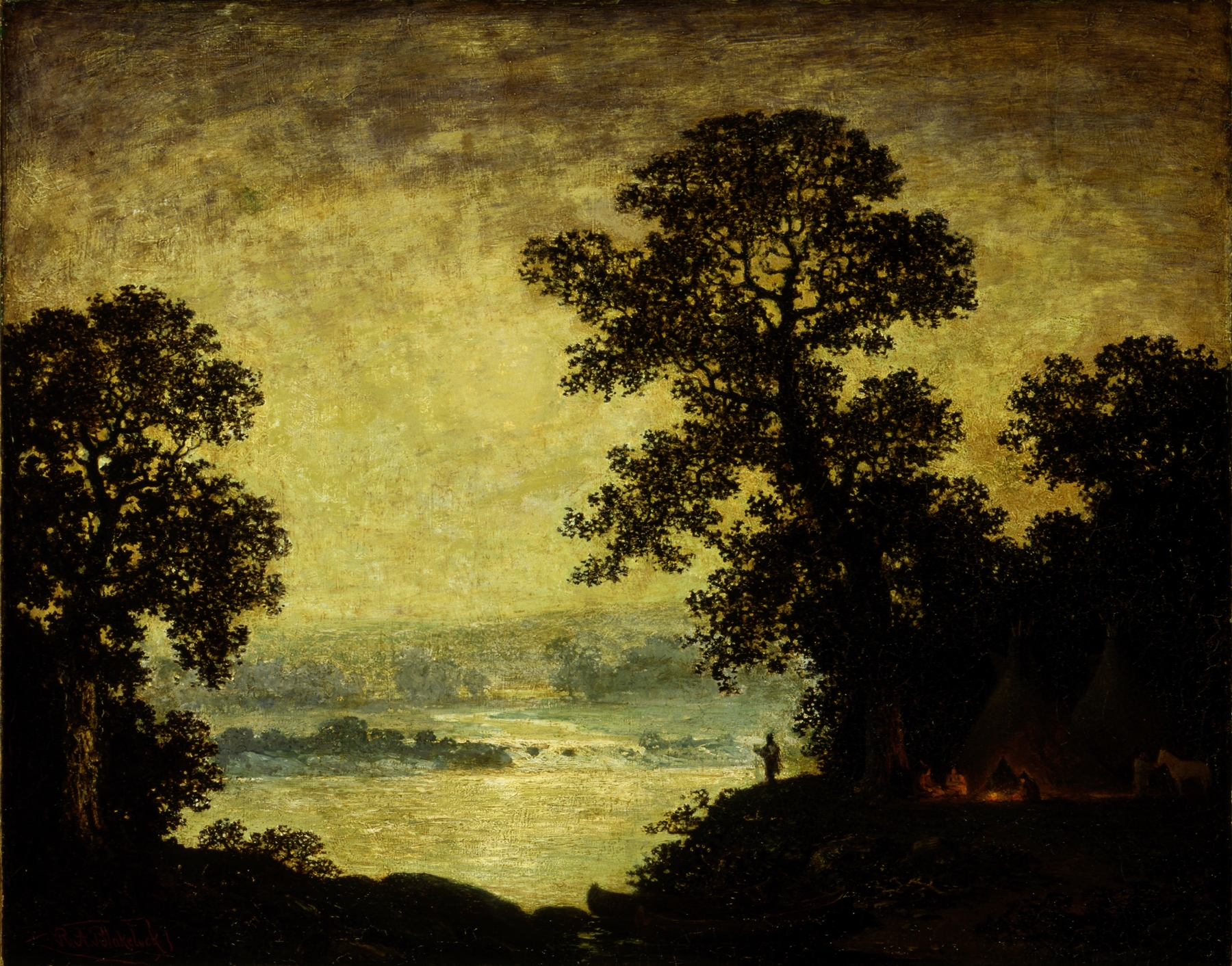
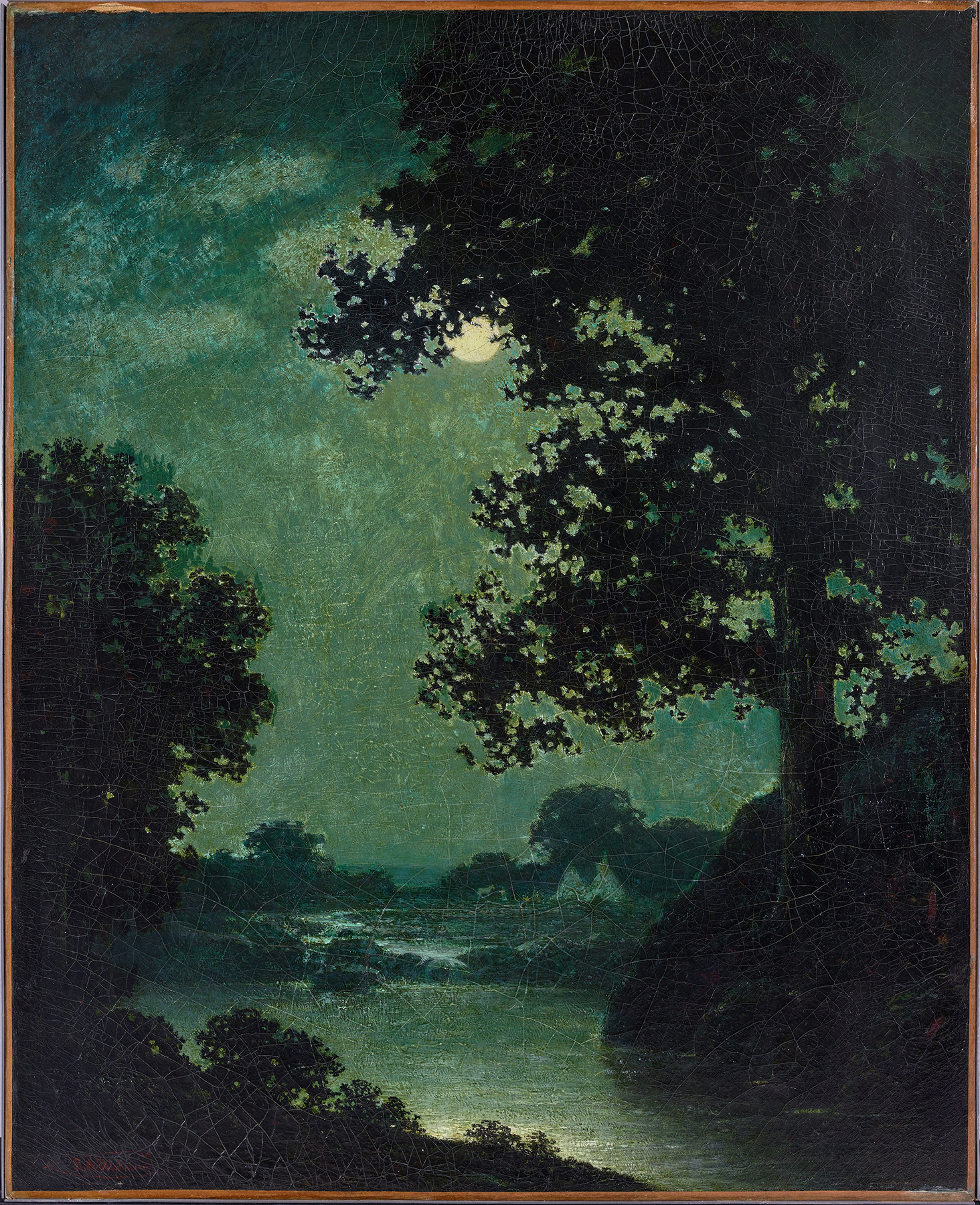
“To paint is to remember what time wants us to forget.” In Moonlight, the artist captures a fleeting moment suspended in dusk, where nature and memory intertwine in serene reflection. Look closely at the shimmering water’s surface, where silvery moonlight dances upon the gentle ripples. Notice how the dark, shadowy trees frame the canvas, their silhouettes stark against the luminous backdrop. The palette is rich and muted, blending deep blues and soft grays, evoking a calm yet haunting atmosphere.
Blakelock’s brushstrokes are fluid and delicate, lending a dreamlike quality as the light seems to pulse, inviting the viewer to step into this tranquil world. The interplay between light and shadow mirrors the dualities of existence—solitude and connection, clarity and obscurity. The serene water reflects the celestial orb, suggesting a dialogue between earth and sky, while the looming trees hint at the depth of the unknown, enveloping the scene in a gentle mystery.
This reflective quality encourages contemplation, as if each glance at the painting reveals another layer of feeling or thought, bridging the seen and the unseen. Created between 1883 and 1893, the work emerged during a transformative period for Blakelock, who was grappling with personal struggles and the competing ideologies of American art. As the nation was shifting towards modernism, his focus on the emotive power of nature positioned him uniquely within the artistic landscape, exploring themes of solitude and introspection in a way that resonated deeply with the Romantic ideals of his time.