Mountain Heights, Cader Idris — History & Analysis
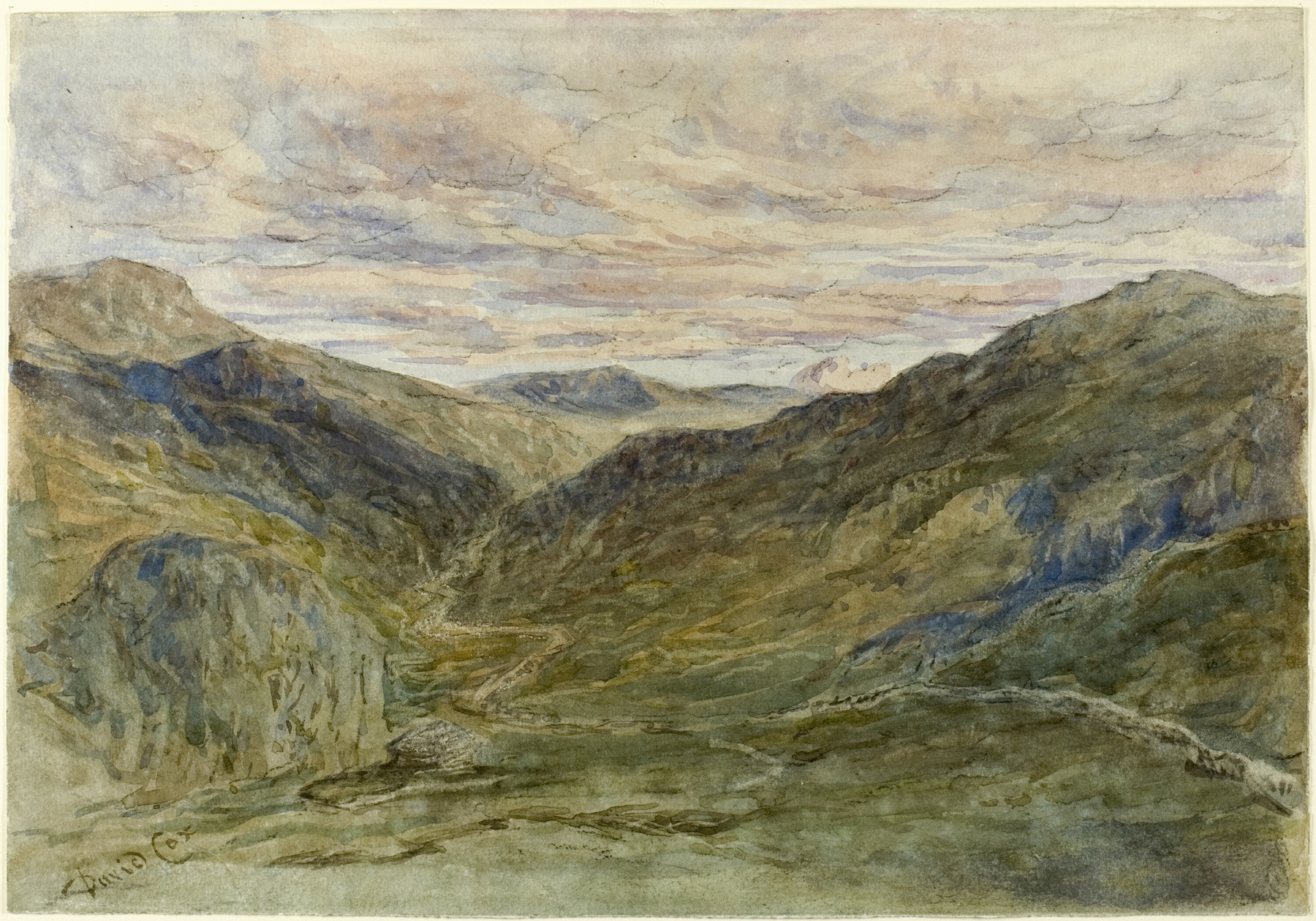
Can beauty exist without sorrow? In Mountain Heights, Cader Idris, the landscape speaks of both majesty and mortality, inviting contemplation on the transient nature of existence. Look to the left at the rugged peaks that pierce the sky, their craggy forms bathed in a soft, ethereal light. The delicate interplay of blues and greens creates a harmonious palette, while wispy clouds curl around the mountain tops, suggesting both movement and stillness.
Notice how the foreground gently leads the eye with vibrant patches of wildflowers, their vivid colors a stark contrast to the imposing granite, echoing the fragility of life against nature’s grandeur. In examining the deep shadows that cradle the valley, one can sense a whisper of melancholy woven into the fabric of the landscape. The juxtaposition of light and dark reflects the duality of human experience—exultation and despair, beauty and impermanence. The grand scale of the mountains might induce awe, yet the artist’s brush also captures the fleeting quality of light, a subtle reminder of time's relentless march and the inevitability of change.
David Cox painted this piece around 1850, during a period when Romanticism was evolving into a deeper exploration of emotional landscapes. Living in England, he was influenced by both the natural world and the growing fascination with capturing its essence. At this time, artists sought to convey not just the beauty of their surroundings but also the profound emotions that nature could evoke, reflecting a society grappling with industrialization and its impact on the human spirit.