Na skraju wsi — History & Analysis
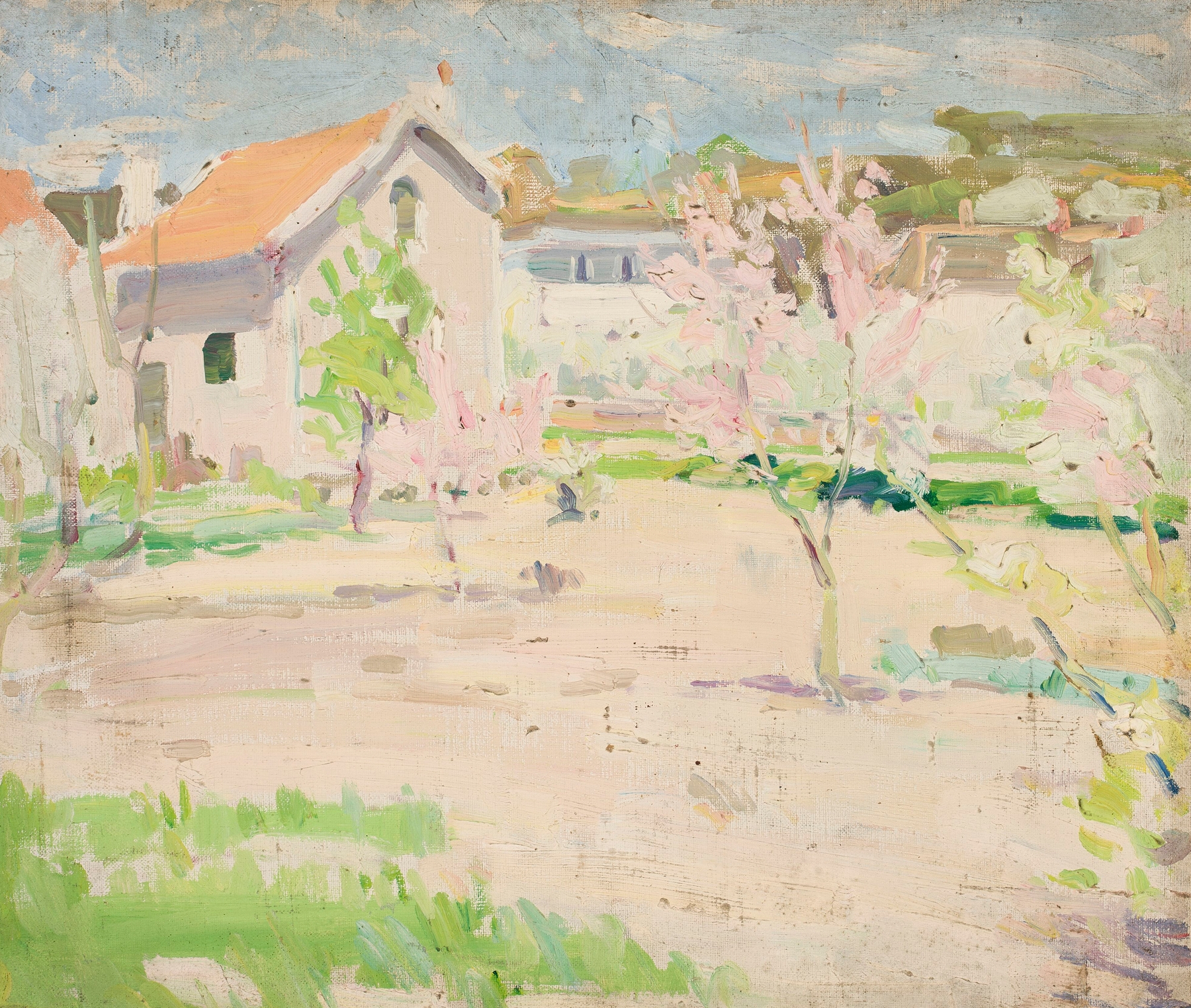
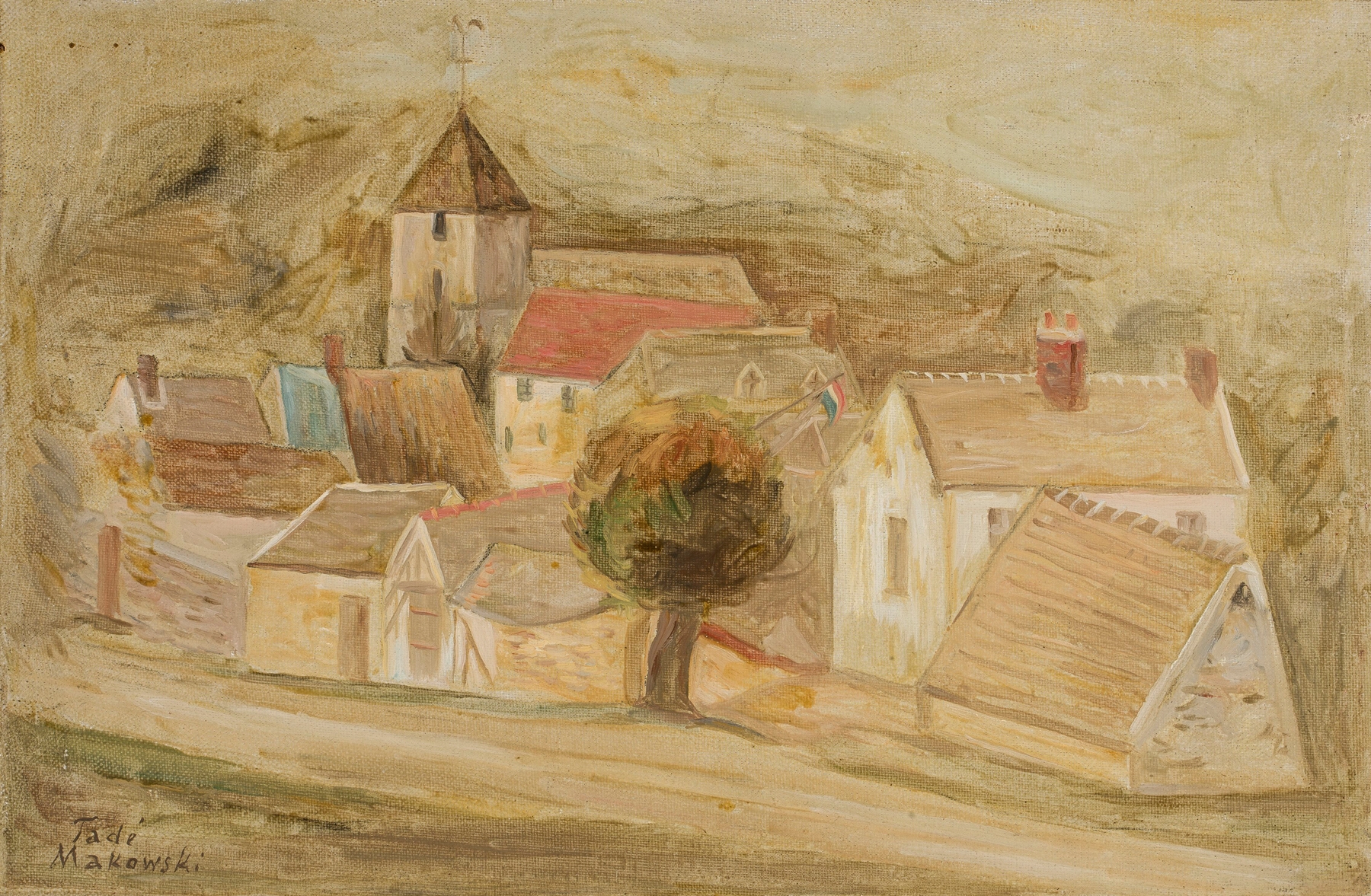
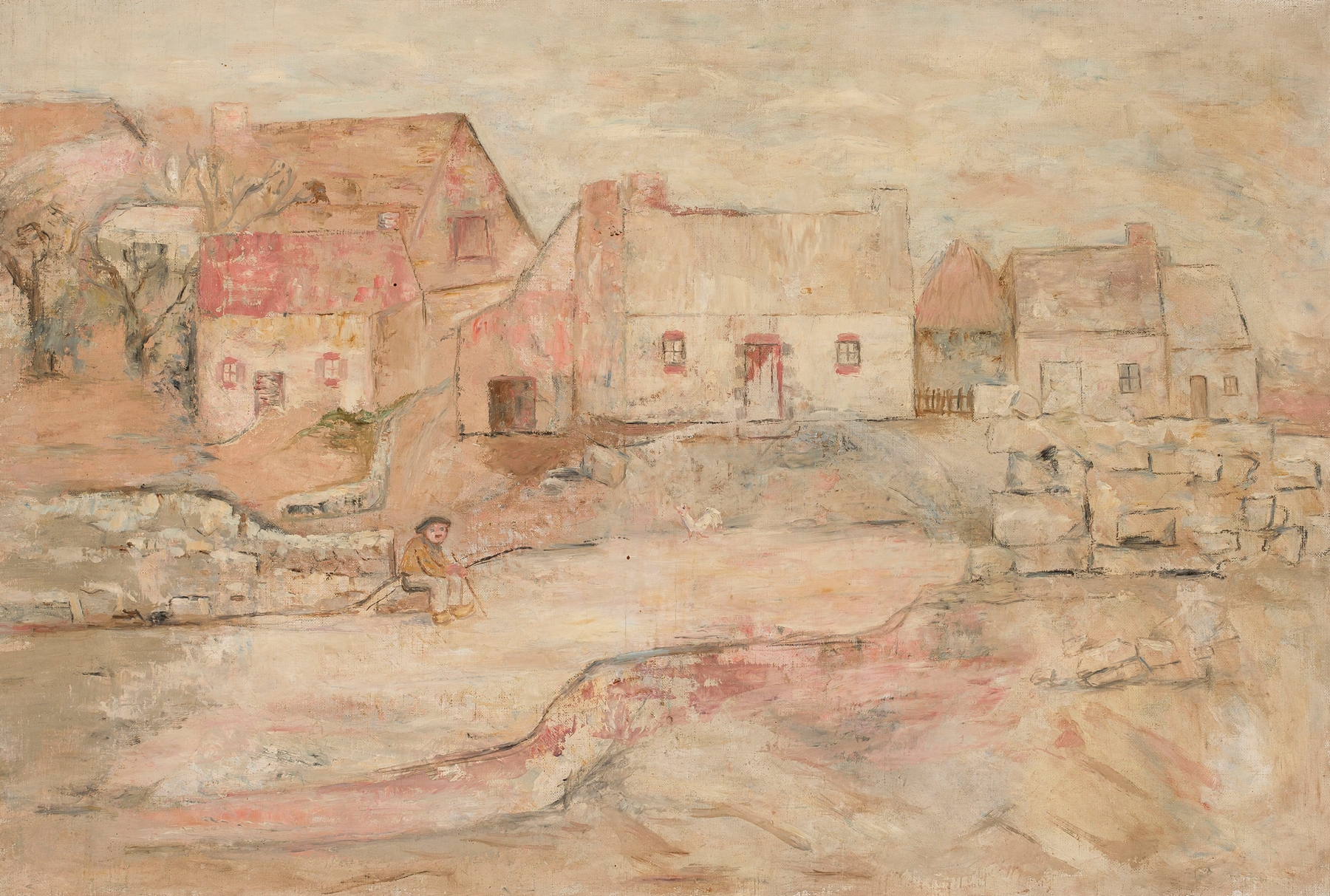
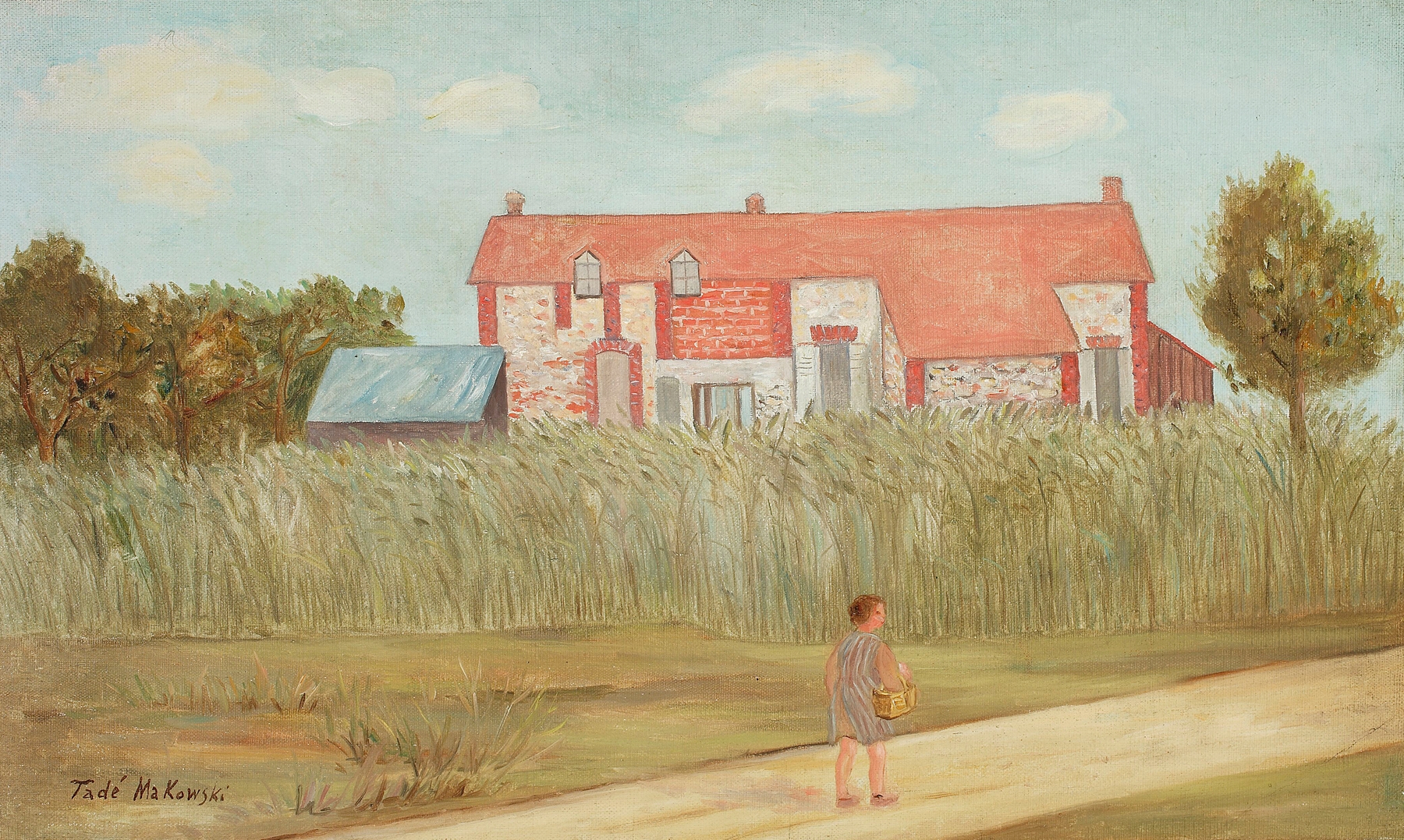
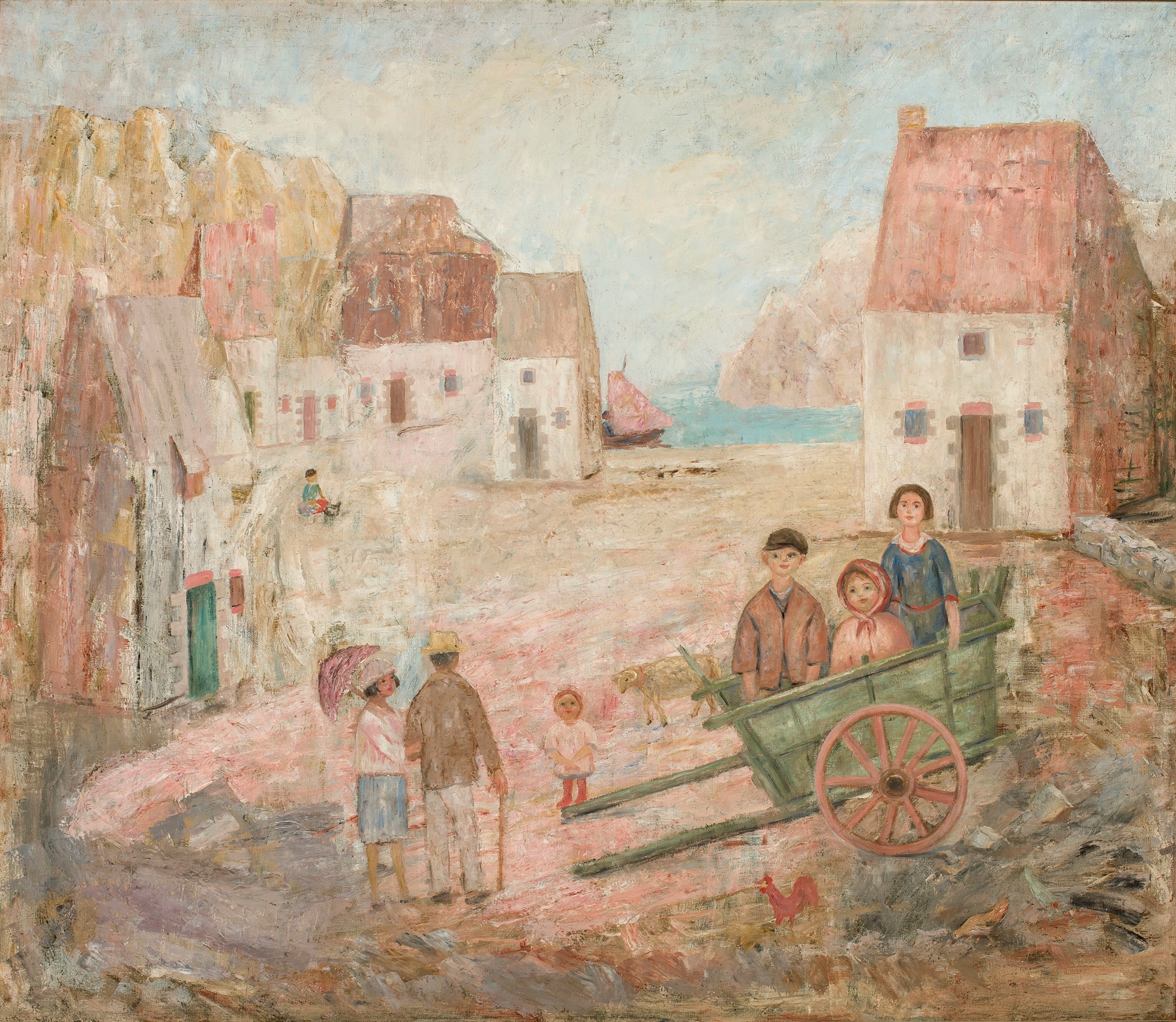
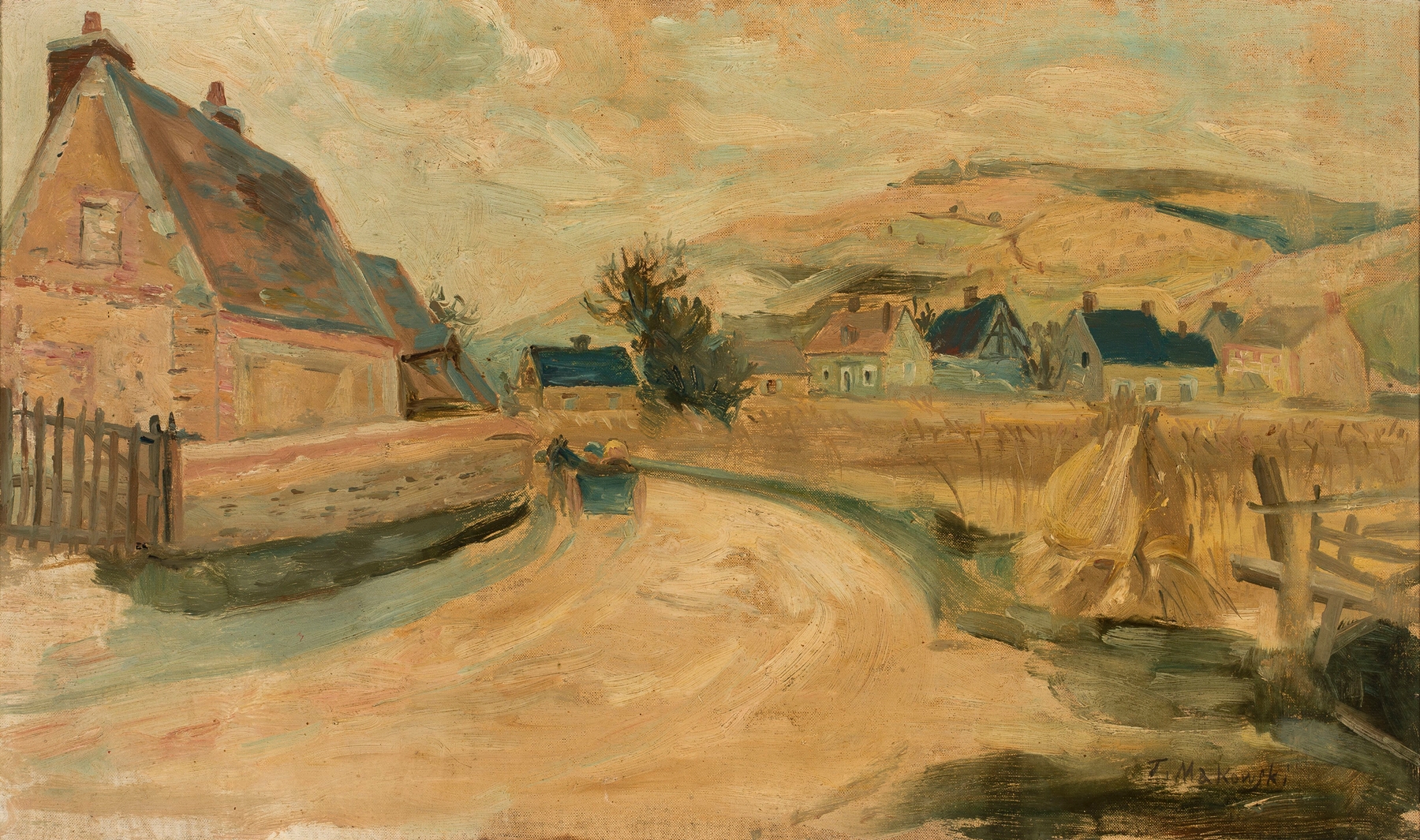
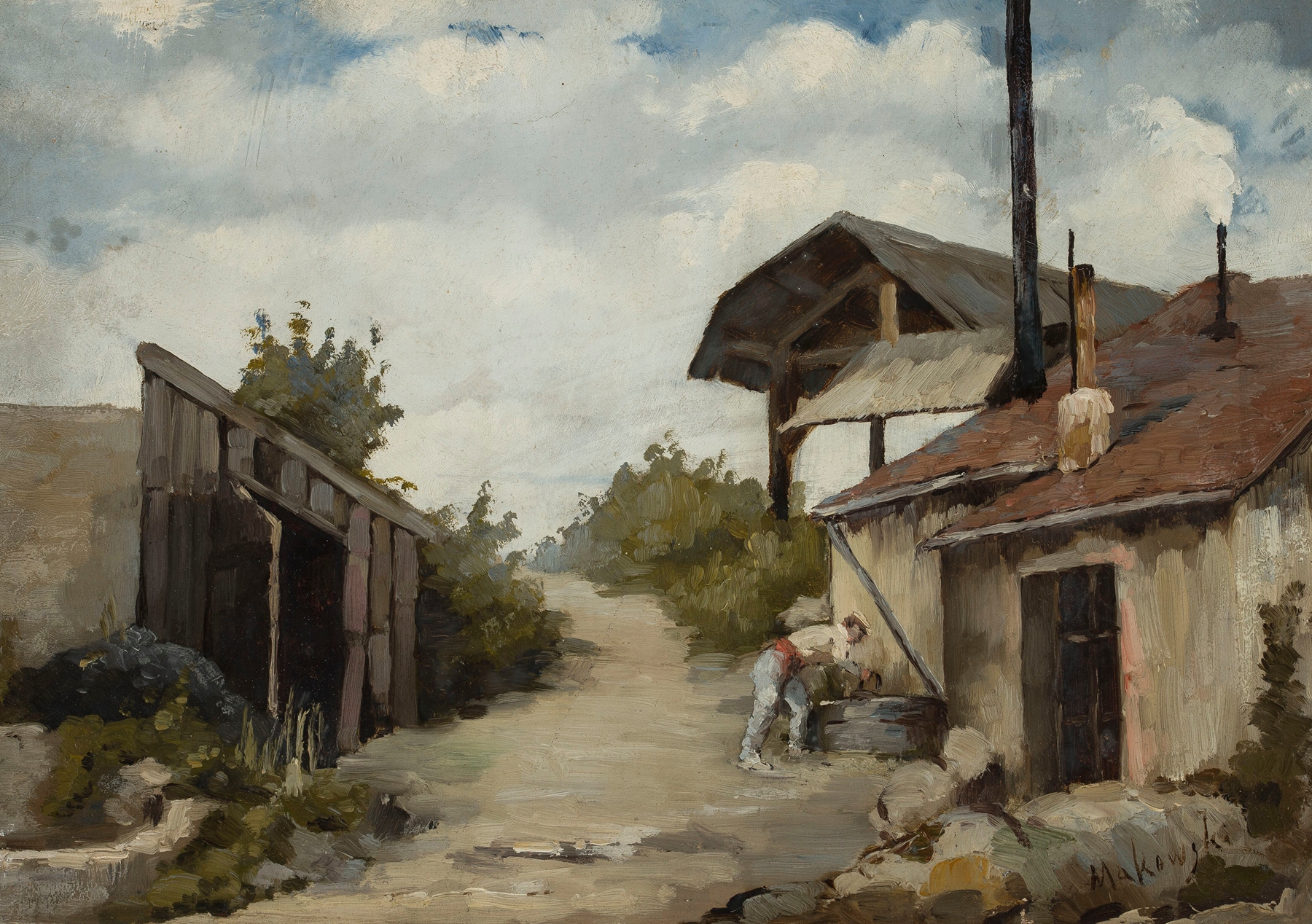
Did the painter know this moment would outlive them? In Na skraju wsi, a profound stillness captures the essence of truth, held forever within the frame of time. Look closely at the left side of the canvas; there, vibrant hues of green intertwine with the muted browns of the earth. The foreground bursts with life, while the vibrant sky above deepens into a luminous blue, creating a stark contrast that draws the eye upwards.
The composition is expertly balanced, evoking a sense of harmony between the simplicity of rural existence and the vastness of the landscape. The soft brush strokes reflect an intimacy with the subject, inviting the viewer to linger in this tranquil yet poignant moment. The poignancy lies in the tension between solitude and community. The solitary figure stands near the edge of a village, suggesting both belonging and isolation.
This duality is echoed in the interplay of light and shadow, embodying the human experience’s fragility and resilience. The distant horizon hints at possibilities and futures, while the earthy foreground roots us in the present, reminding us of our connections to place and identity. In 1926, Tadeusz Makowski created this work against a backdrop of post-war Europe, where artists were grappling with modernity and searching for authenticity. Living in Paris, far from his native Poland, he sought to capture the essence of his homeland through the lens of nostalgia and simplicity, reflecting a world that was both familiar and altered.