Olive grove — History & Analysis
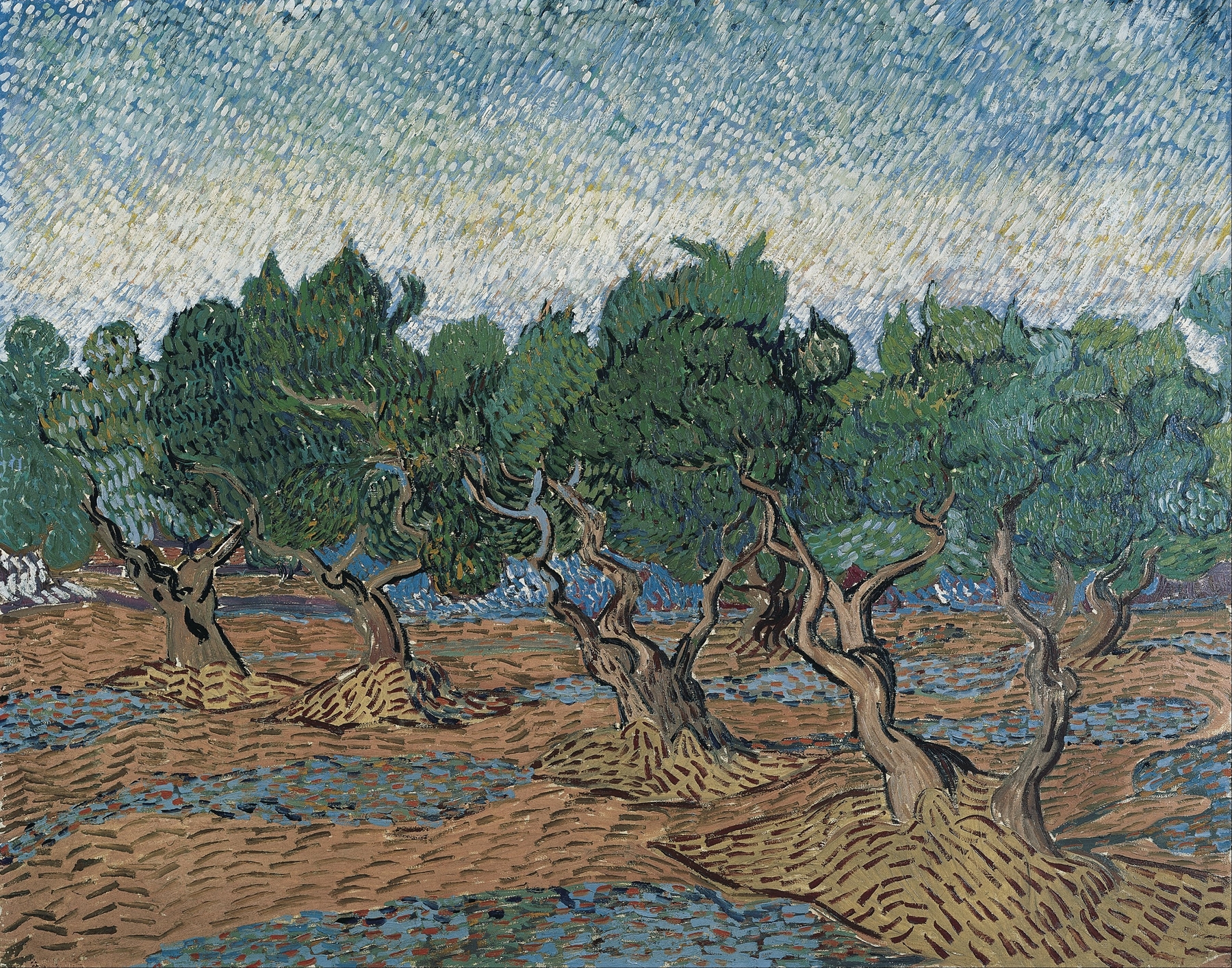
Can paint confess what words never could? The essence of betrayal lingers in the rich, swirling colors of this evocative landscape, where the olive trees stand as silent witnesses to both beauty and turmoil. Look to the left at the gnarled trunks of the trees, their twisting forms echoing a sense of struggle. Notice how the vibrant greens and deep blues pulse with life, yet are subtly marred by hints of tumultuous undertones.
The thick, expressive brushstrokes create a sense of movement, drawing your eye into the heart of the grove, where light dances over the foliage, weaving shadows that hint at secrets hidden beneath the surface. This painting suggests a duality; the olive grove, often a symbol of peace and reconciliation, is paradoxically alive with an underlying tension. The juxtaposition of the serene scene with the chaotic brushwork could represent the artist's own internal conflicts, reflecting feelings of isolation and despair. Each stroke speaks to a yearning for connection, while simultaneously hinting at an emotional rift that remains unresolved.
During the late 1880s, when this work was likely created, the artist found himself grappling with mental health challenges, living in the south of France. This period was marked by intense emotional fluctuations and a search for artistic expression amidst personal turmoil. The vibrant colors and bold strokes in the painting mirror not only the external beauty of the olive grove but also the inner chaos of the artist's life, revealing the profound depths of emotion that art can encapsulate.