On the Banks of the Nile, Upper Egypt — History & Analysis
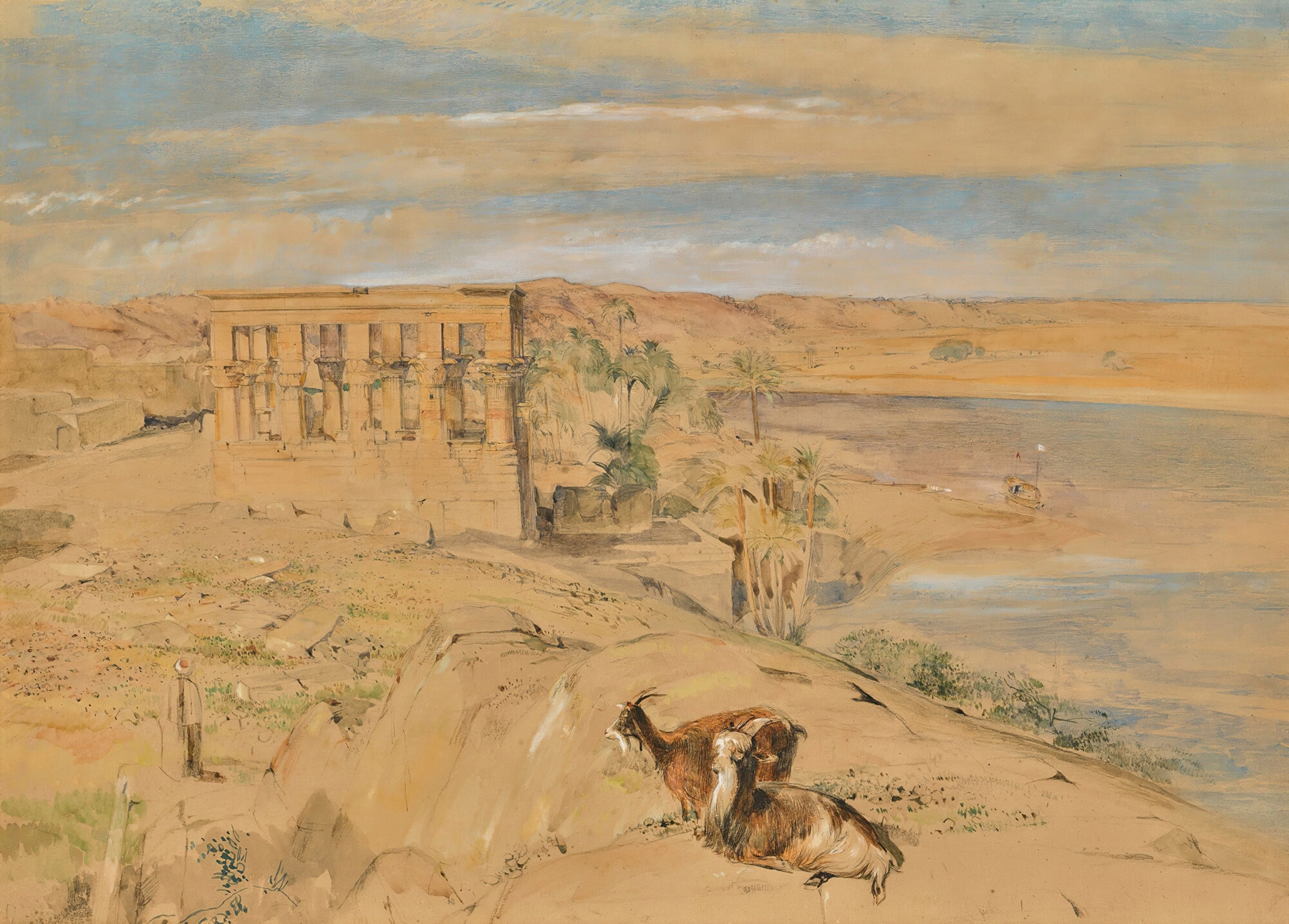
“Between color and silence, truth hides.” In the interplay of vibrant hues and deep shadows, a world unfolds where every detail whispers its story. Look to the right at the lush green palm trees, their fronds arching towards the river, framing the scene. The warm, golden light of the sun enhances the rich blues and earthy browns of the Nile’s waters, inviting the viewer’s gaze to linger. Notice how the figures, dressed in traditional attire, are illuminated in soft, diffused light, contrasting against the deep shadows that clutch the edges of the canvas, hinting at the mysteries of the land.
Each stroke blends into the next, creating a seamless flow that captures the essence of a tranquil moment by the riverbank. Amid the visible beauty lies a deeper narrative. The juxtaposition of light and shadow symbolizes the complexity of existence, suggesting the coexistence of joy and sorrow. The serene expressions of the figures invite contemplation, yet the encroaching darkness at the periphery hints at untold stories, perhaps of hardship or longing.
The river itself serves as a metaphor for life, flowing continuously, carrying both hope and despair in its current. In 1876, the artist painted this masterpiece during a period of exploration and fascination with the East, influenced by the Romantic movement. Living in London, he drew upon his travels in Egypt, immersing himself in its culture and landscapes. This work reflects an era where artists began to embrace realism while still retaining an air of exoticism, bridging the worlds of perception and imagination.