Sketches and Drawings of the Alhambra. London — History & Analysis
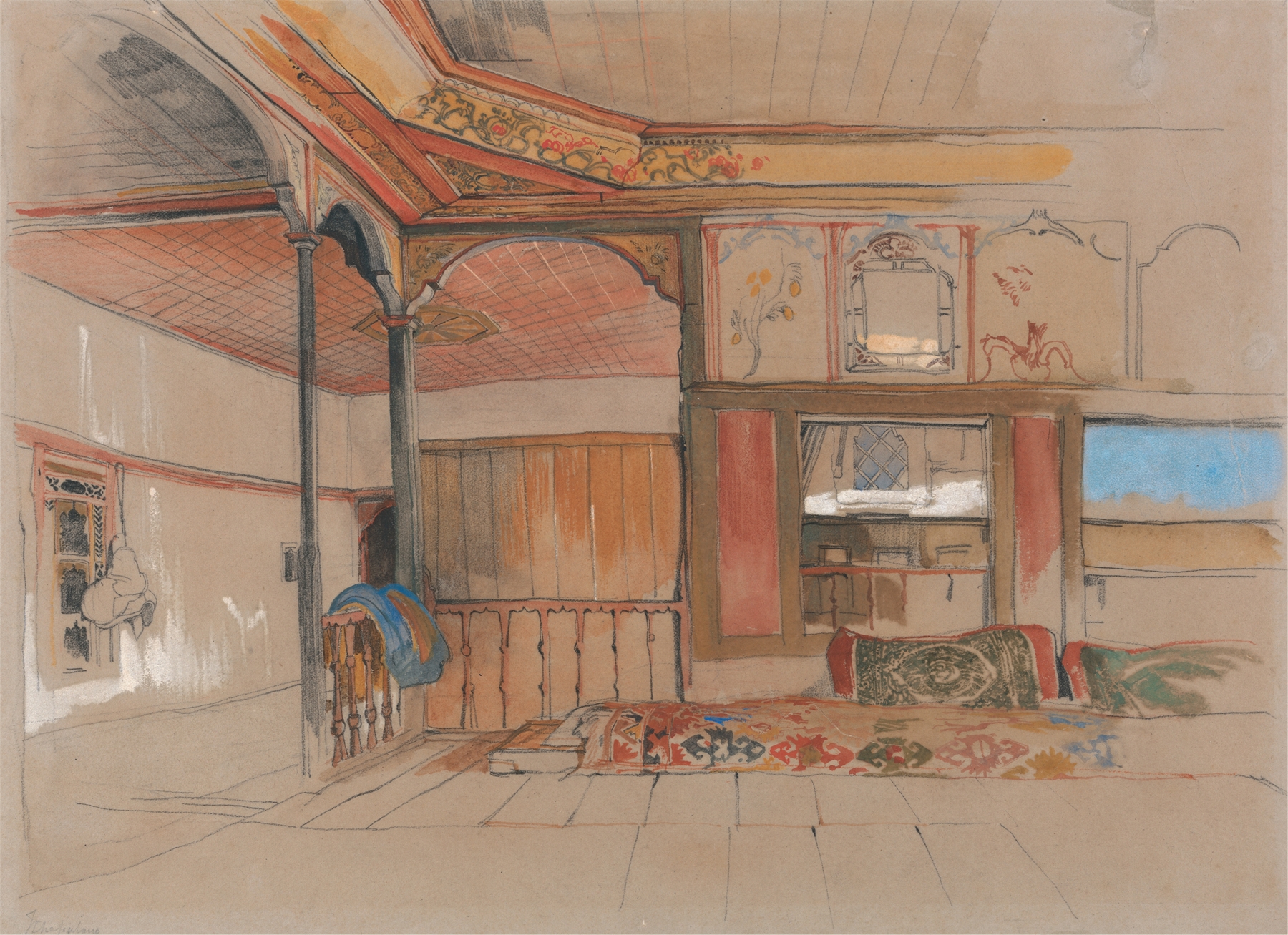
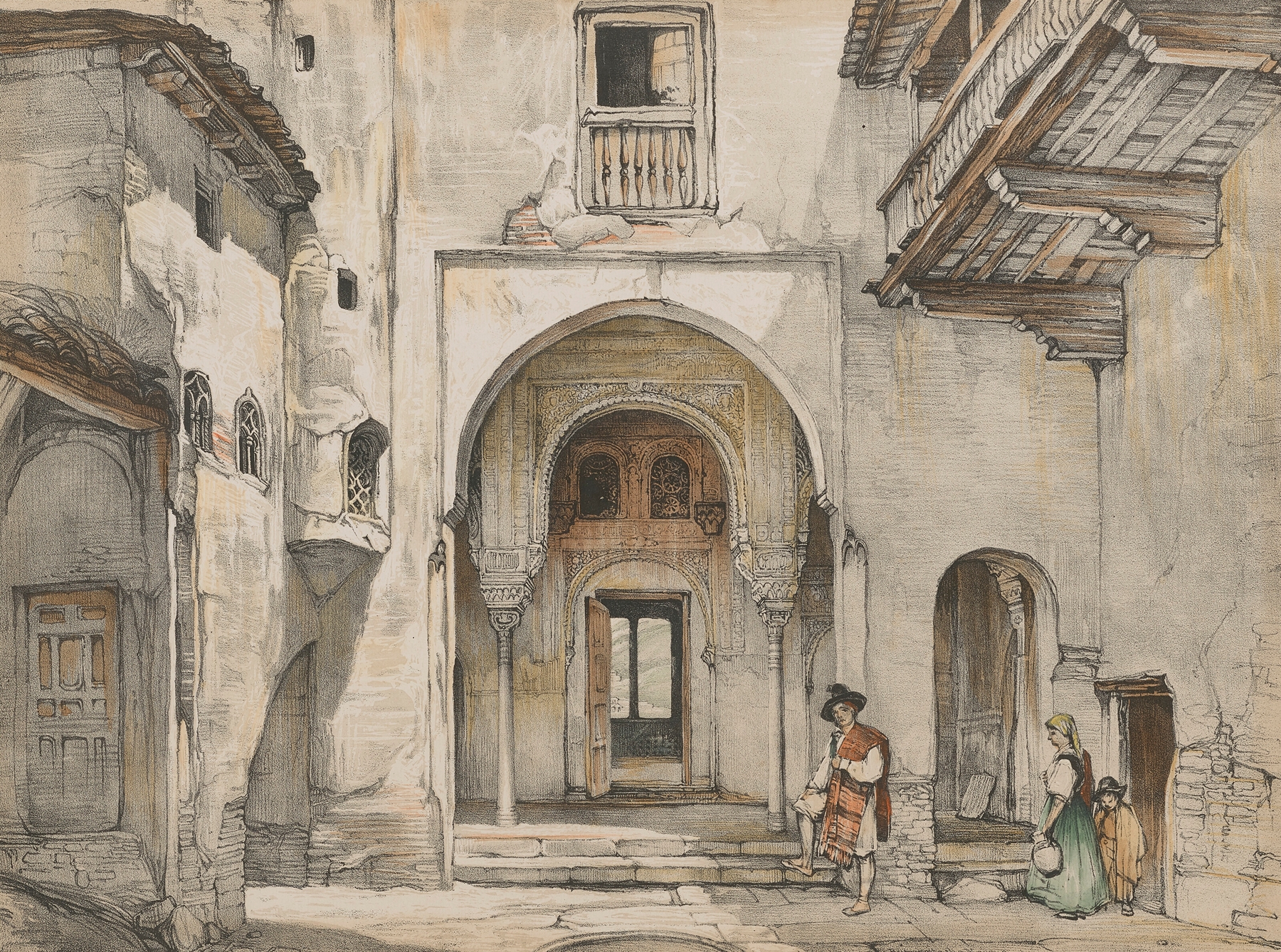
Can beauty exist without sorrow? In Sketches and Drawings of the Alhambra, a world of intricate architecture and lush gardens beckons, yet whispers of a turbulent past linger in the shadows of its elegance. Focus on the delicate arches that frame the scene, where intricate arabesques intertwine with the vivid foliage. The artist’s graphite lines dance gracefully across the page, guiding the eye through a maze of history.
The soft contrast of light and shadow reveals an architectural harmony that feels both inviting and melancholic, as if the walls themselves hold stories of love and exile. Notice how the interplay of lush green and stark stone evokes a sense of longing—a yearning for a beauty that remains unattainable, a paradise lost. Each element bears witness to the passage of time, reflecting the cultural richness of the Alhambra, while simultaneously hinting at the revolutions stirring in a world on the brink of change. The drawings capture a longing not just for the past, but for the revival of a spirit that finds solace in art amidst political upheaval.
In 1835, as Lewis illustrated this masterpiece from his studio in London, Europe was witnessing dramatic transformations. The Romantic movement was flourishing, pushing artists to explore themes of emotion and beauty, even as political revolutions surged throughout the continent. This period influenced Lewis deeply, as he sought to blend meticulous detail with a poignant narrative, encapsulating the dual essence of beauty and the inevitable shadows it casts.