On the Terrace — History & Analysis
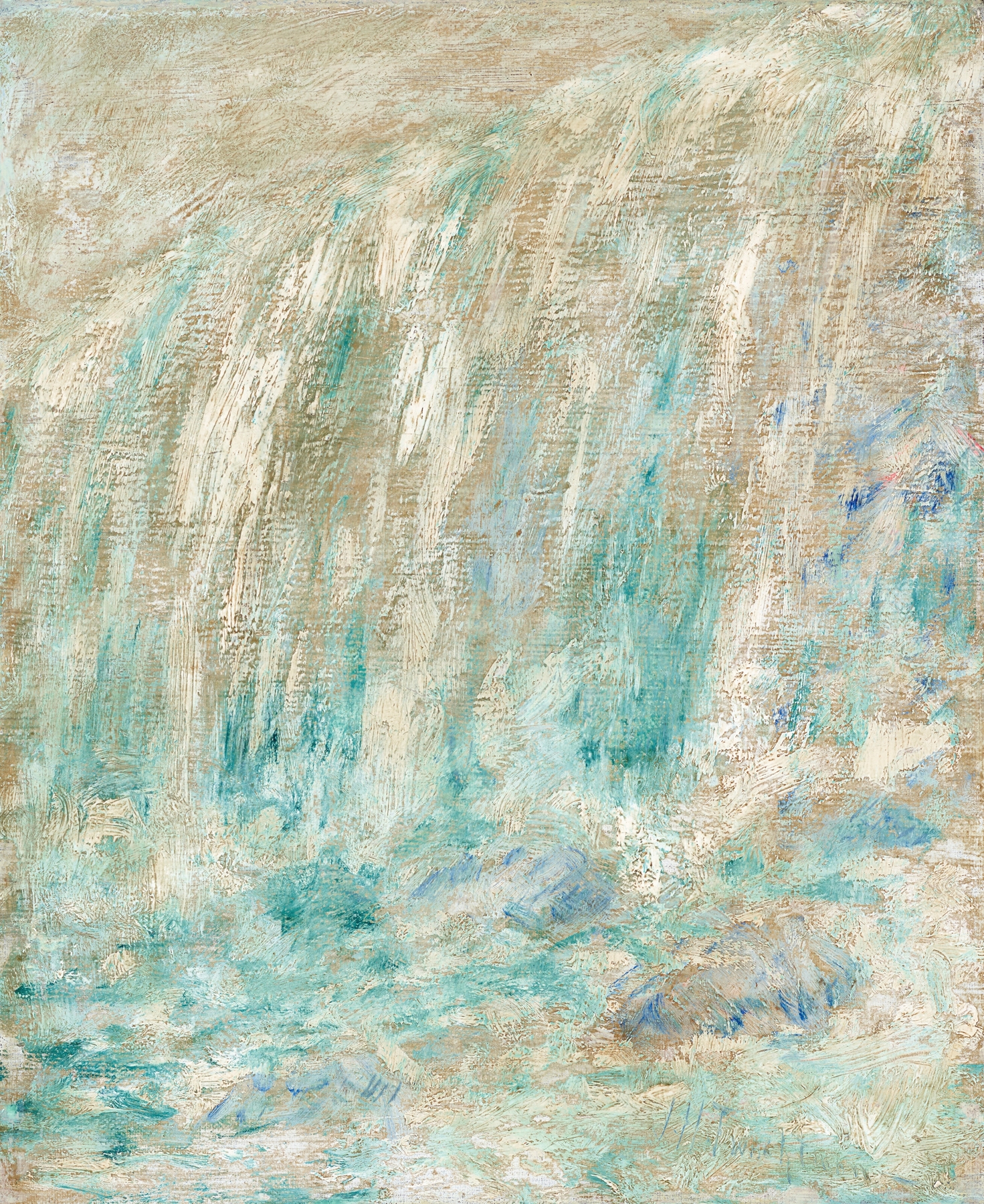
“To paint is to remember what time wants us to forget.” In a world bustling with noise and chaos, stillness rarely lingers, and yet that is precisely where the artist draws his focus. The canvas before us serves as a portal into a solitary moment, invoking the profound sense of emptiness that resides in the space between people and time. Look to the center of the painting where a vacant terrace stretches into the distance, the gentle curves of the railing guiding the eye towards the horizon. Soft, muted colors blend seamlessly, with shades of blue and green whispering of an uninhabited space bathed in dappled sunlight.
The delicate brushstrokes create an ethereal atmosphere, capturing the essence of a fleeting moment, as if the world paused only to breathe before continuing its relentless march. Delve deeper into the subtle contrasts within the composition — the empty terrace speaks of solitude, yet the shimmering light hints at memories of laughter and conversation that linger in the air. The absence of figures evokes a profound emotional tension, nudging the viewer to ponder the stories left untold. Here, space becomes a character itself, inviting contemplation on how emptiness can both comfort and haunt.
During this period, the artist created On the Terrace in the late 19th century, a time when Impressionism was flourishing in America. Twachtman, a figure in the American art scene, had been influenced by his studies in Europe, particularly under the guidance of the Impressionists. This painting reflects a moment of introspection in his journey, capturing the transformative nature of light and shadows amidst a rapidly changing art world.