Peace and Plenty — History & Analysis
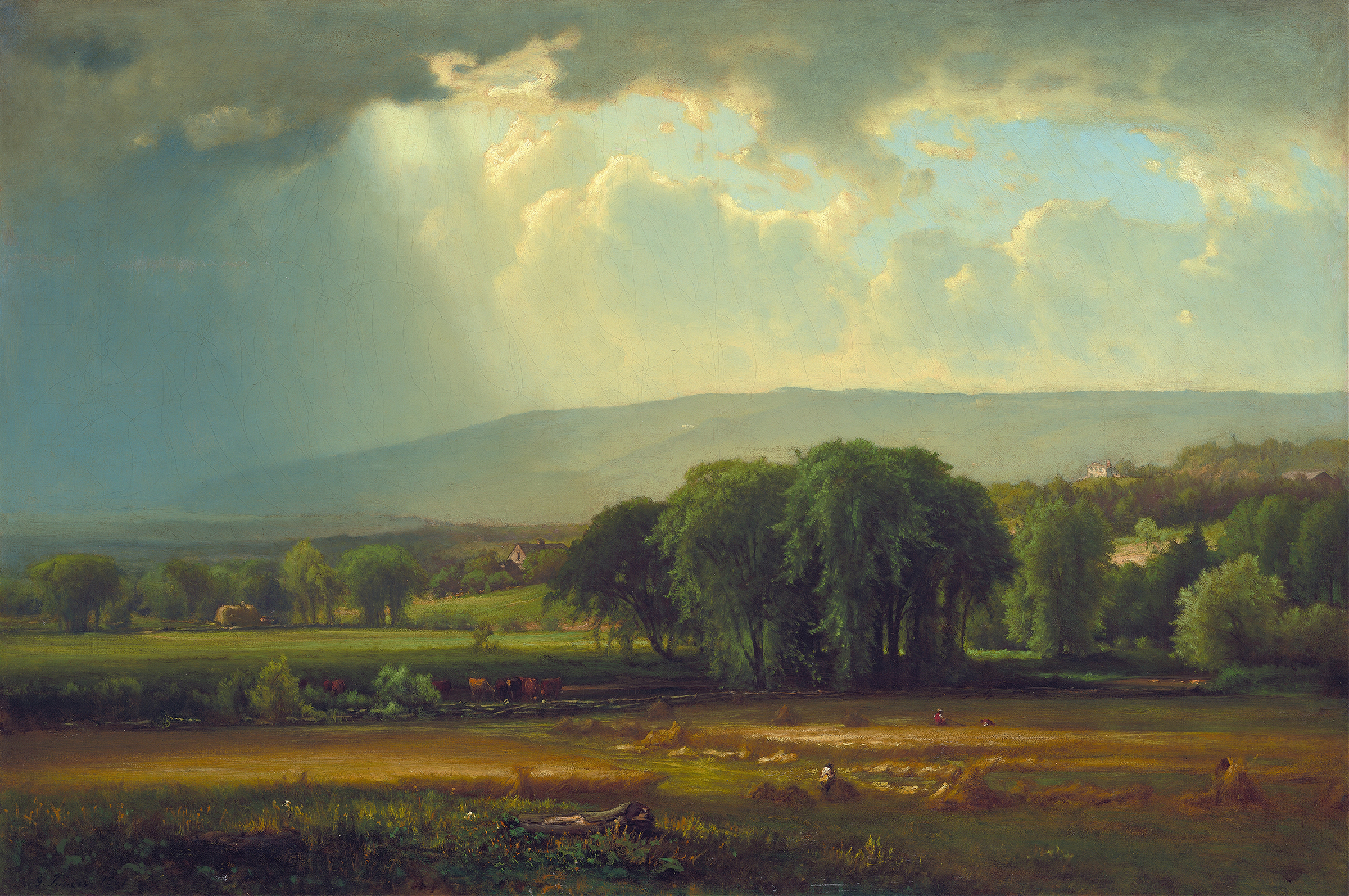
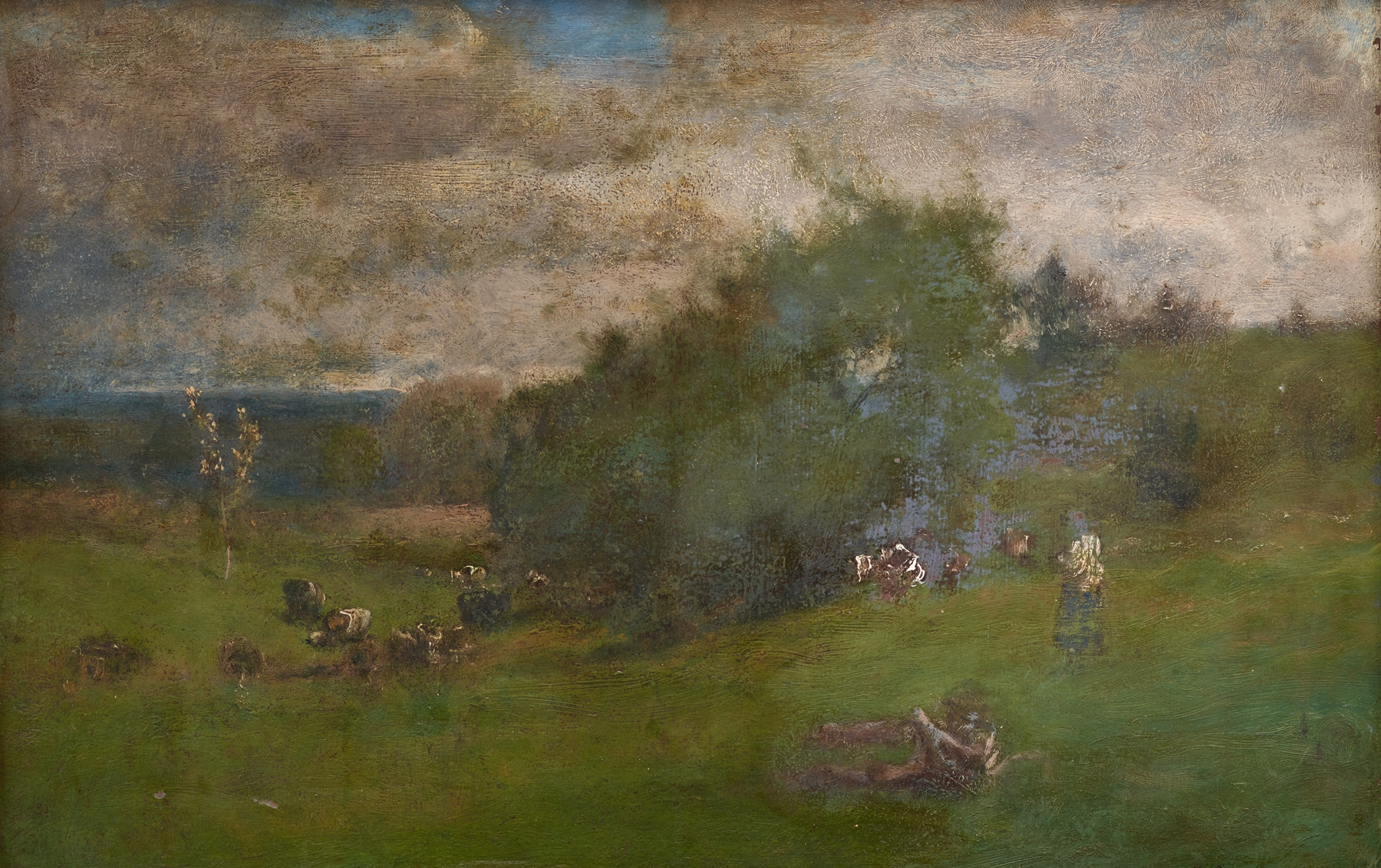
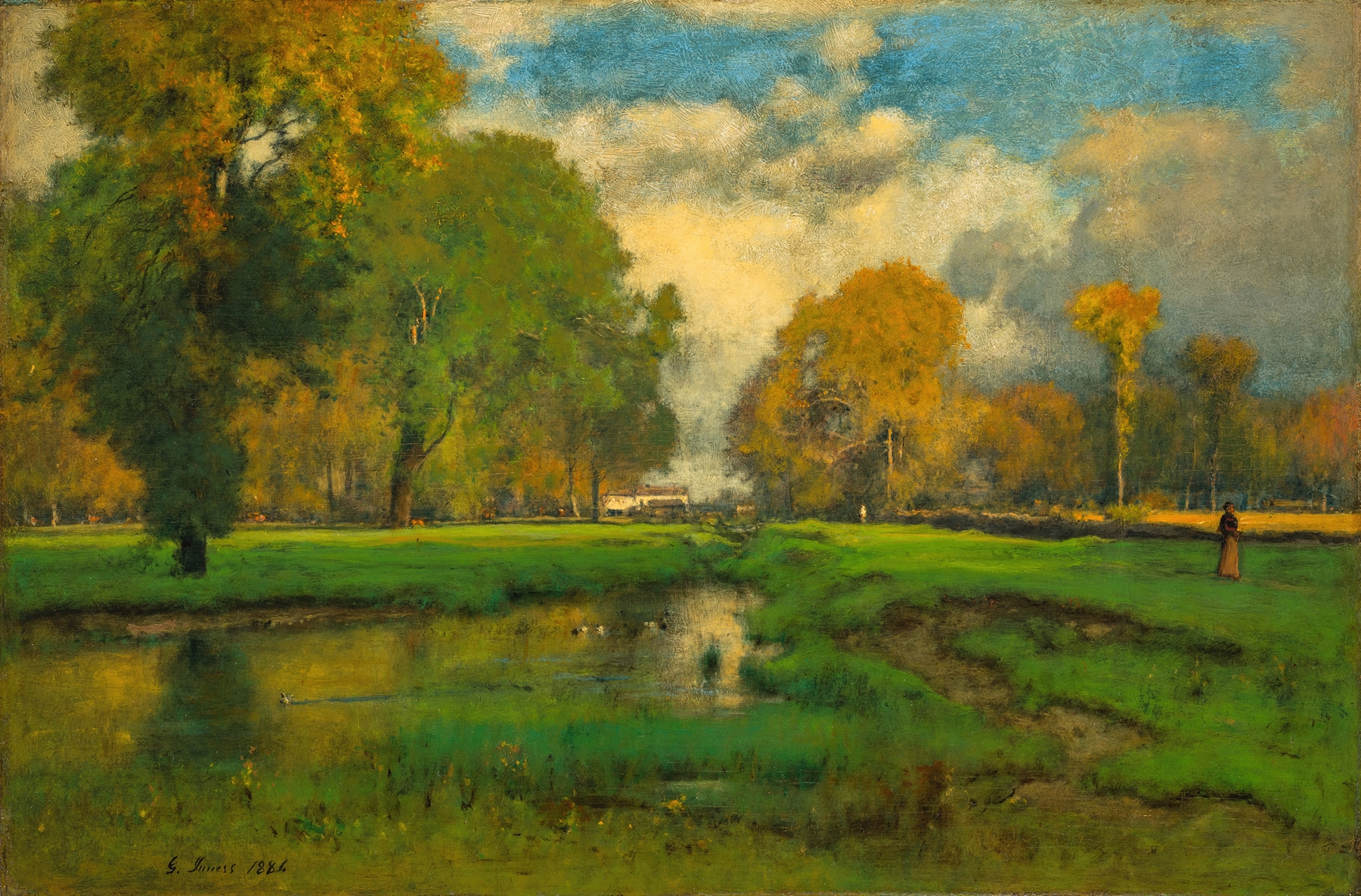
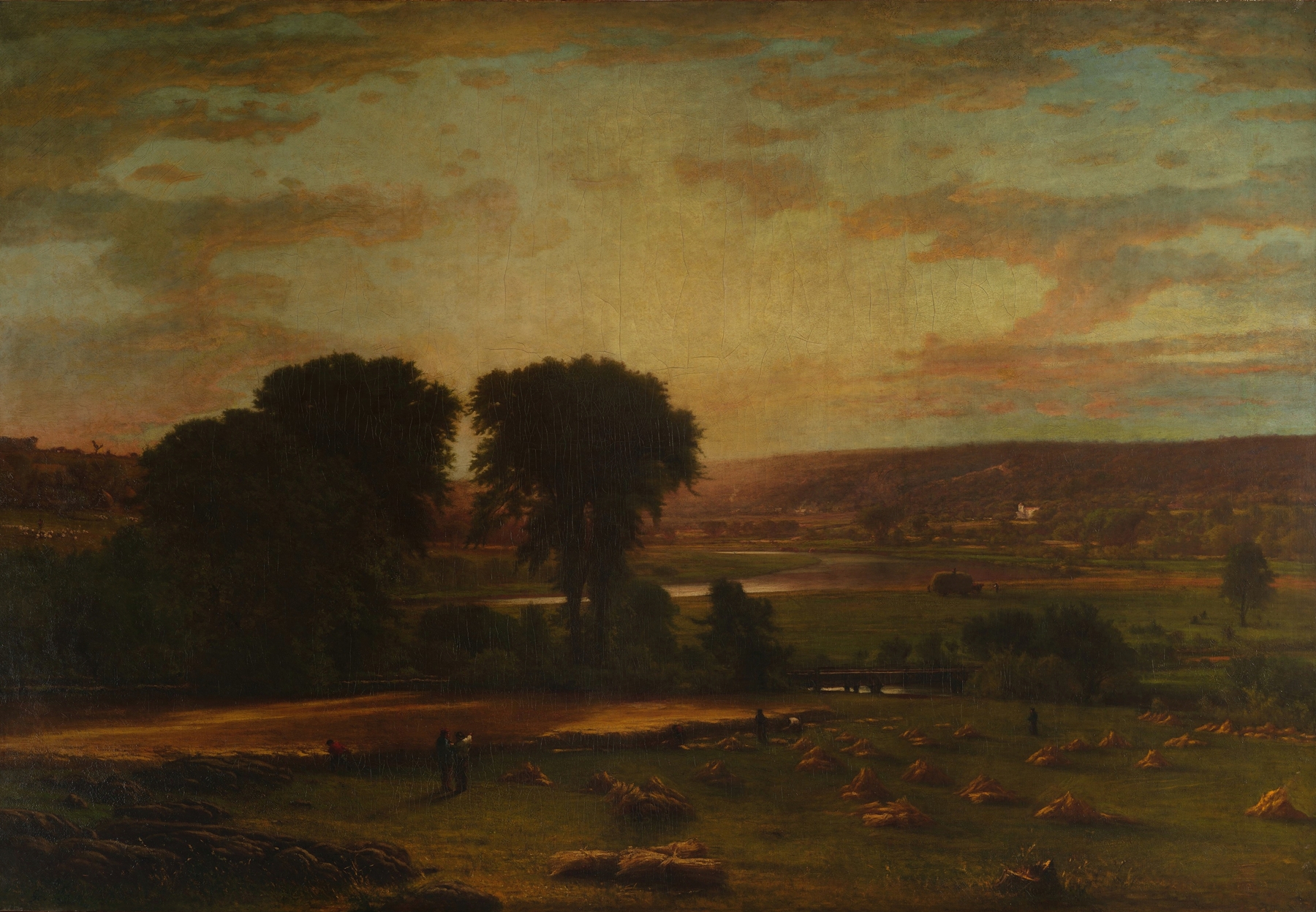
Could a single brushstroke hold eternity? In Peace and Plenty, George Inness captures the delicate balance between beauty and violence, evoking a world where tranquility teeters on the brink of chaos. Look to the foreground, where lush fields stretch invitingly under a gentle sky. The greens and golds blend seamlessly, inviting the viewer to wander through this serene landscape. Notice how the light falls upon the soft undulations of the terrain, illuminating patches of wildflowers that seem to dance with the breeze.
Inness employed a palette that harmonizes warm and cool tones, creating an atmosphere of rich abundance that draws us deeper into its embrace. Yet, beneath this idyllic surface lies an undercurrent of tension. The darkening sky hints at an impending storm, a foreboding suggestion that even the most peaceful moments can be shattered. This duality resonates with the viewer, reminding us that peace is often shadowed by the threat of violence, both natural and human.
The juxtaposition of vibrant life against the approaching darkness speaks to the fragility of existence and the inevitable cycles of nature. Inness painted Peace and Plenty in 1865, during a time of significant change in America, as the Civil War drew to a close. This period saw the artist exploring themes of harmony and conflict, reflecting his desire for reconciliation in a nation scarred by violence. His work, marked by a keen perception of light and atmosphere, positioned him as a leading figure in American landscape painting, navigating the complexities of the human experience through nature's lens.