Rest in the Syrian Desert — History & Analysis
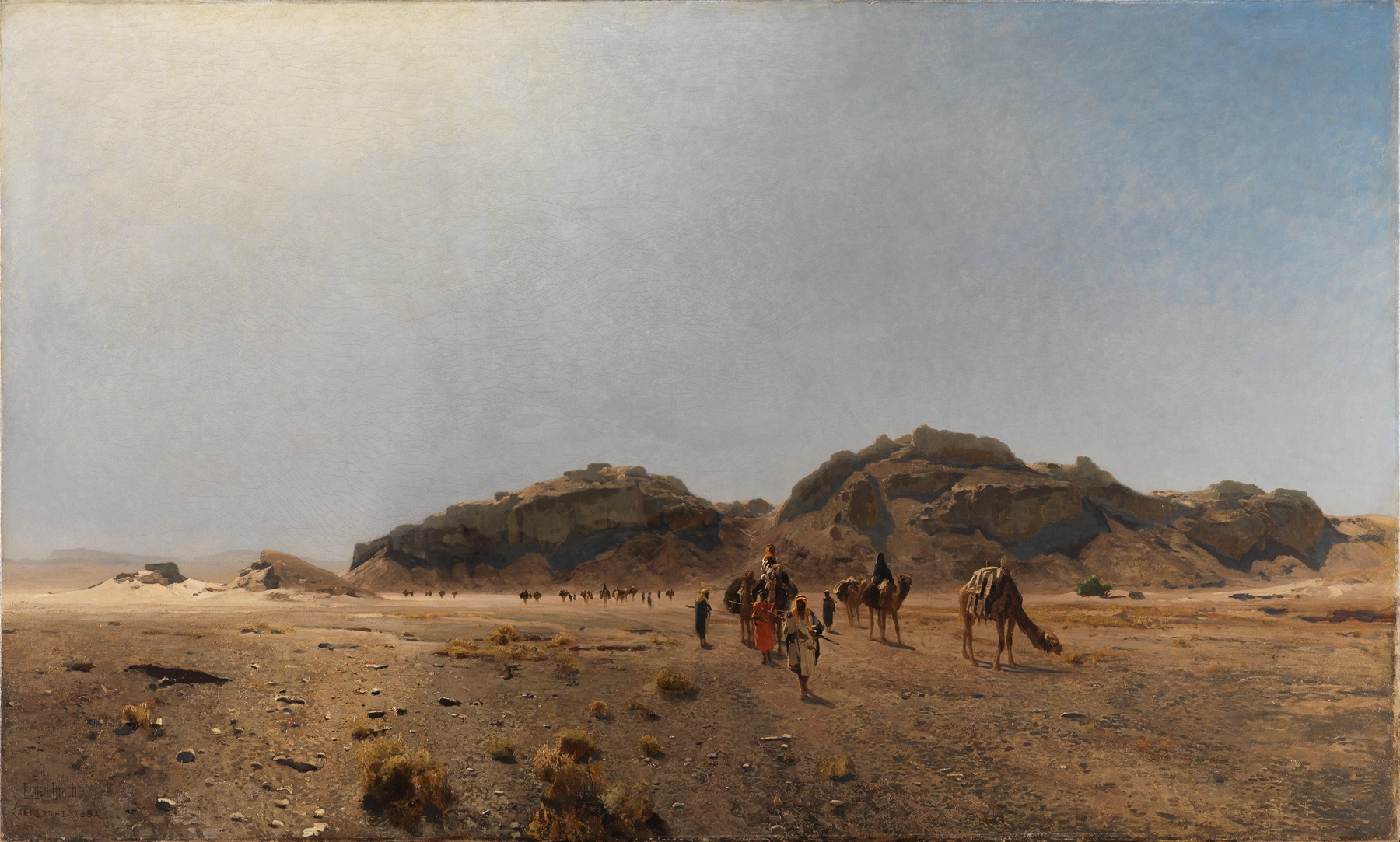
Where does light end, and longing begin? This question lingers like a mirage on the horizon, inviting contemplation of our deepest desires and the illusions we chase. Look to the center of the canvas, where a lone figure reclines beneath the vast expanse of a sun-drenched sky. The warm, golden hues of the sandy landscape envelop him, while subtle contrasts of deep ochre and rich umber draw the eye to the figure's stillness. Notice how the light falls upon the soft folds of his draped garments, creating a delicate interplay of shadow and highlight that speaks to the artist's mastery in capturing the play of nature’s elements.
This serenity, crafted through meticulous brushwork, evokes a sense of tranquility amidst the vastness of the desert. Yet, an underlying tension weaves through this seemingly serene scene. The figure, though at rest, exists in a world defined by an expansive emptiness, suggesting both solitude and introspection. The starkness of the desert amplifies his isolation, a reminder of our restless search for belonging. The gentle curve of the horizon hints at the mirage of distant freedom, reinforcing the notion that desires are often illusions, fleeting and unattainable.
This duality of peace and longing is palpably felt, inviting viewers to examine their own yearnings against the backdrop of vast realities. In 1883, the artist was in Germany, drawing inspiration from travels that took him to the Middle East. During this period, Bracht was exploring themes of exoticism and the sublime, reflective of broader European interests in Orietnalism. This work emerged amidst a fascination with distant landscapes, capturing both the beauty and the haunting solitude of a culture far removed from his own, while also echoing the widespread artistic movement that celebrated the mysterious allure of the East.