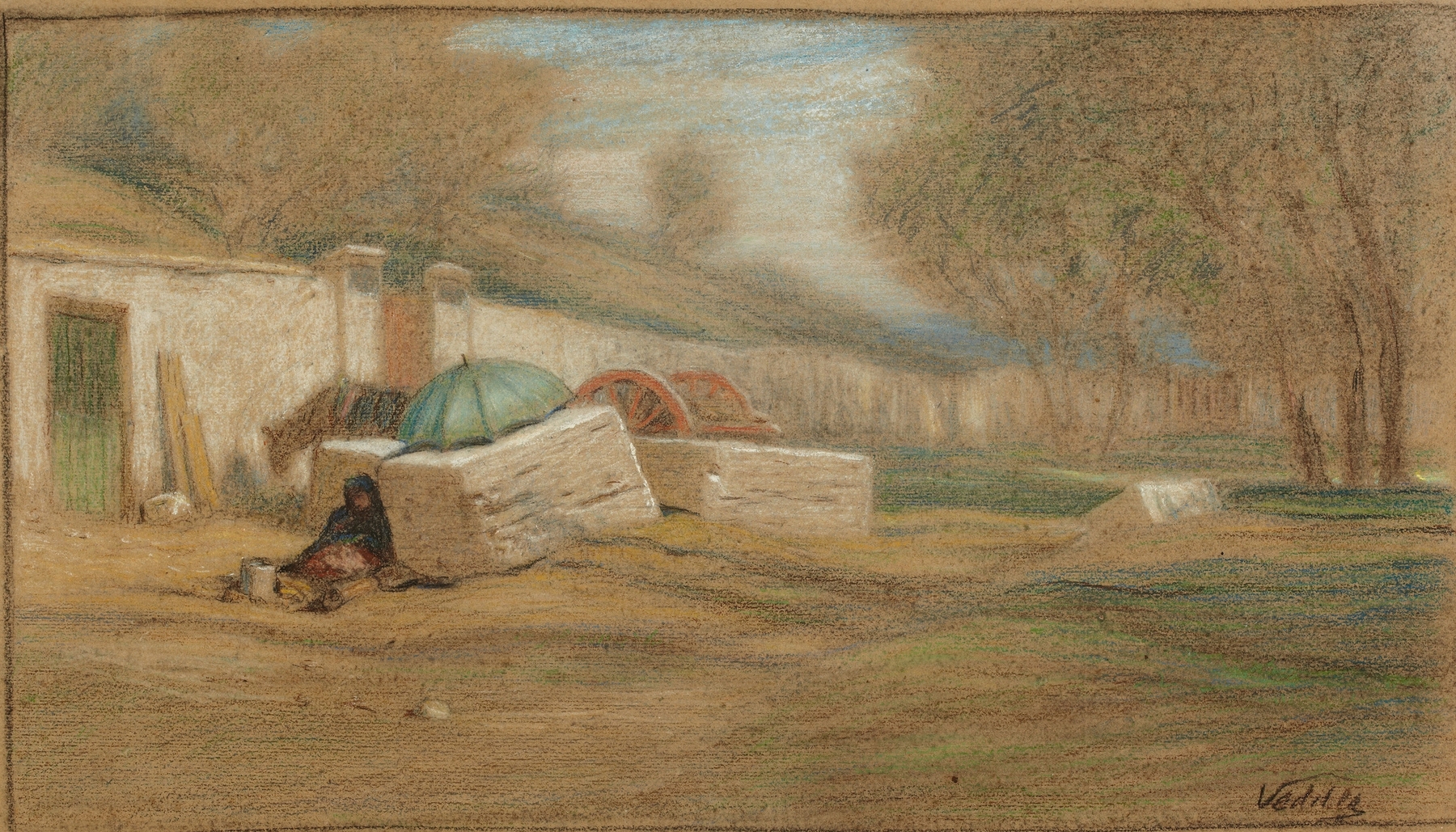
Roadside Figure and Umbrella — History & Analysis
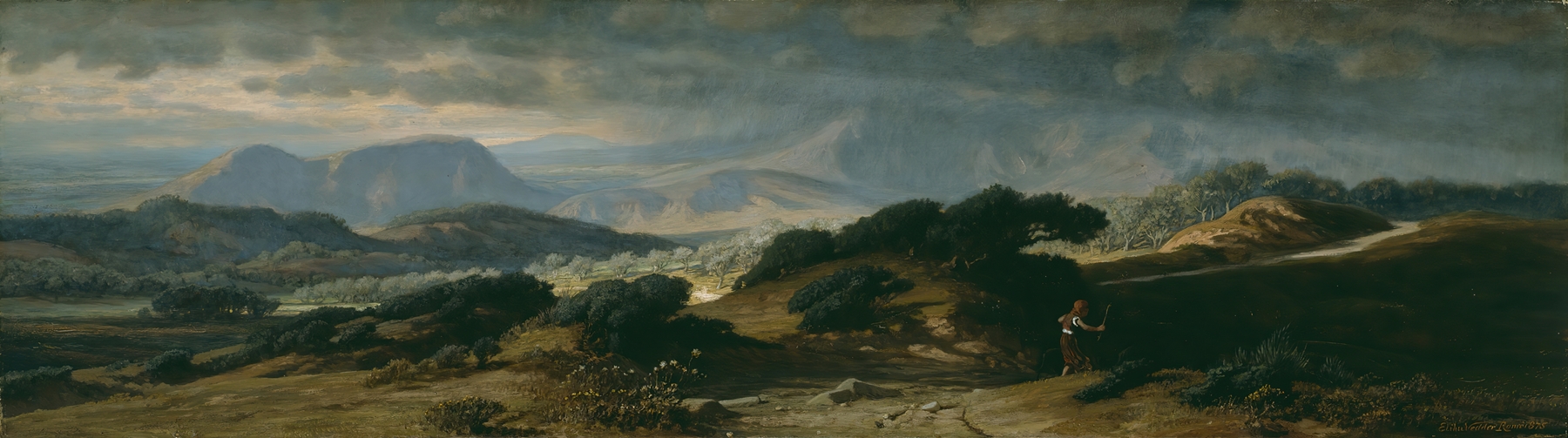
“To paint is to remember what time wants us to forget.” In an age where decay seeps into both life and memory, the essence of transience becomes ever more poignant. Focus on the figure standing alone at the roadside, seemingly lost in contemplation. The muted earth tones of the canvas evoke a sense of nostalgia, while the faded umbrella above suggests protection against the elements, yet hints at vulnerability. Look closely at the texture of the paint—the delicate brushwork captures the wear of time, revealing the intricate details of the folds in the fabric and the peeling paint on the nearby post.
The composition leads the eye to the horizon, where the background blurs into impressions of a distant world, creating a stark contrast between the figure’s solitude and the vibrancy of life beyond. The juxtaposition of the figure’s stillness against the fleeting nature of the landscape suggests a poignant meditation on existence itself. The umbrella, while a symbol of shelter, also stands as a token of impermanence, showcasing how protection can simultaneously signify isolation. Furthermore, the muted palette reflects the weight of decay, emphasizing themes of loss and remembrance, as though the figure embodies the remnants of a long-forgotten story.
Elihu Vedder painted Roadside Figure and Umbrella around 1890 during a period marked by a deepening interest in symbolism and the subconscious. At this time, Vedder was captivated by the interplay of reality and illusion, embracing a metaphysical approach to art that resonated with the broader currents in European painting. His exploration of themes such as memory and decay reflects both personal introspections and the stylistic shifts occurring within the artistic community of his era.