Round Hill Road — History & Analysis
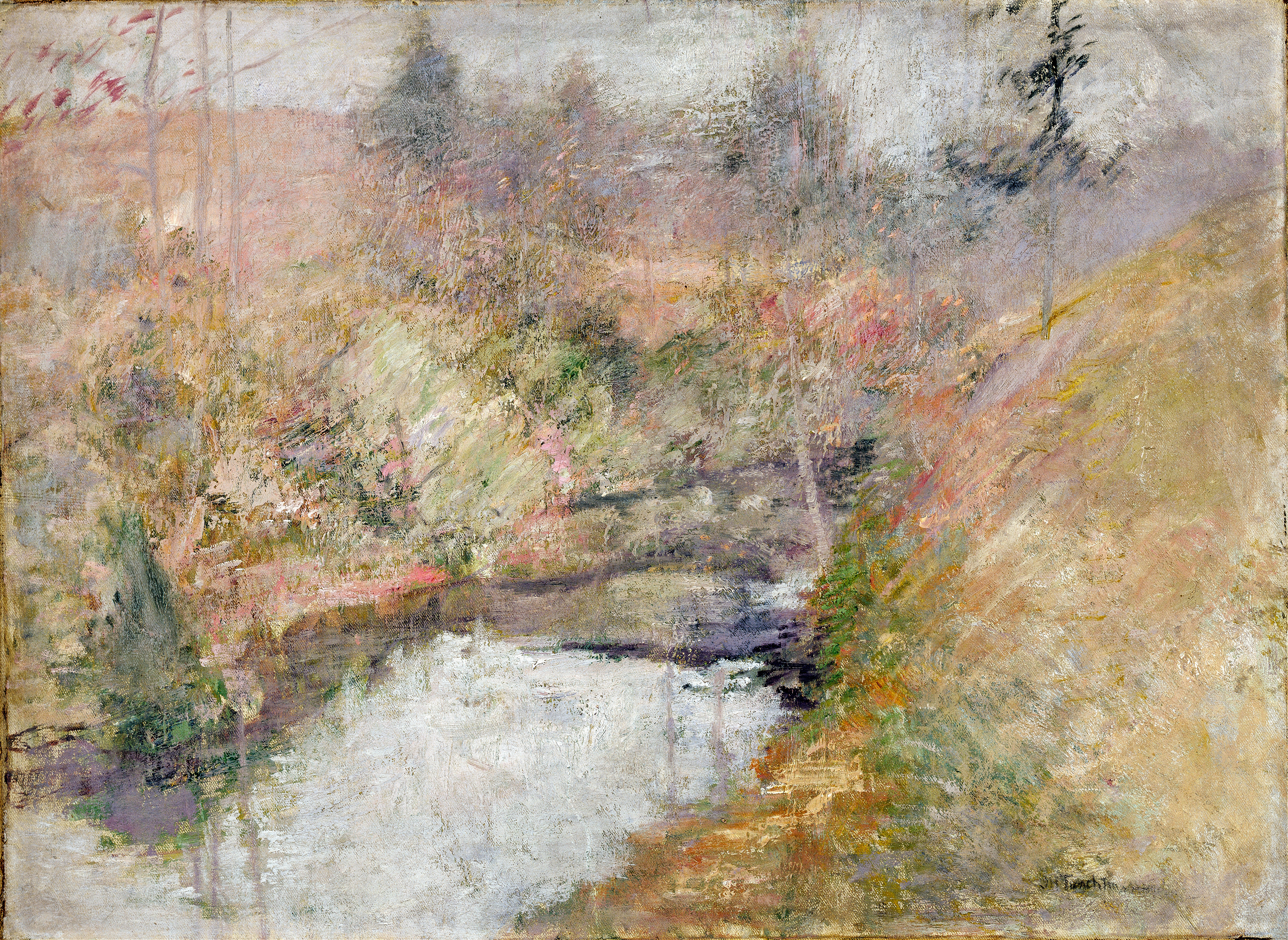
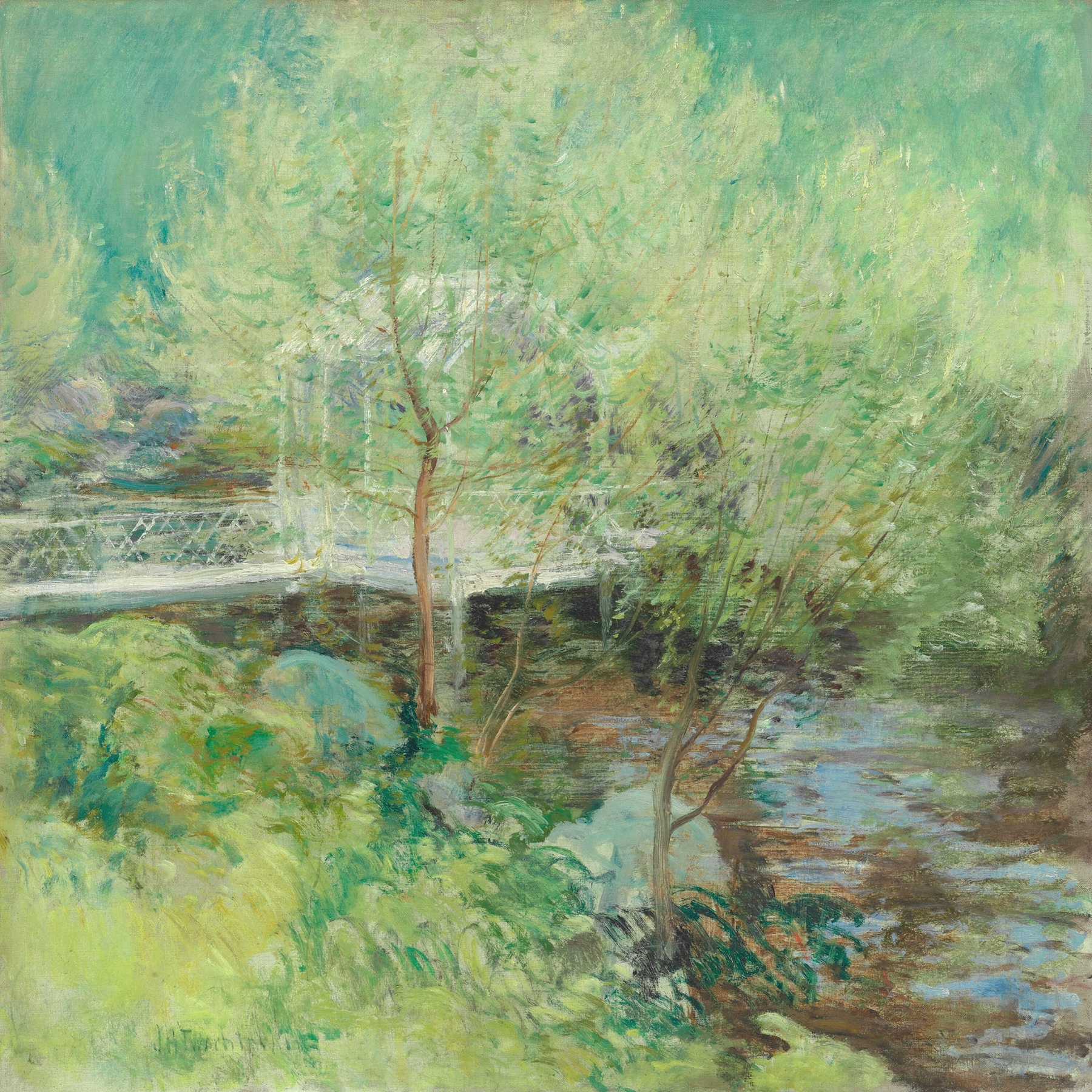
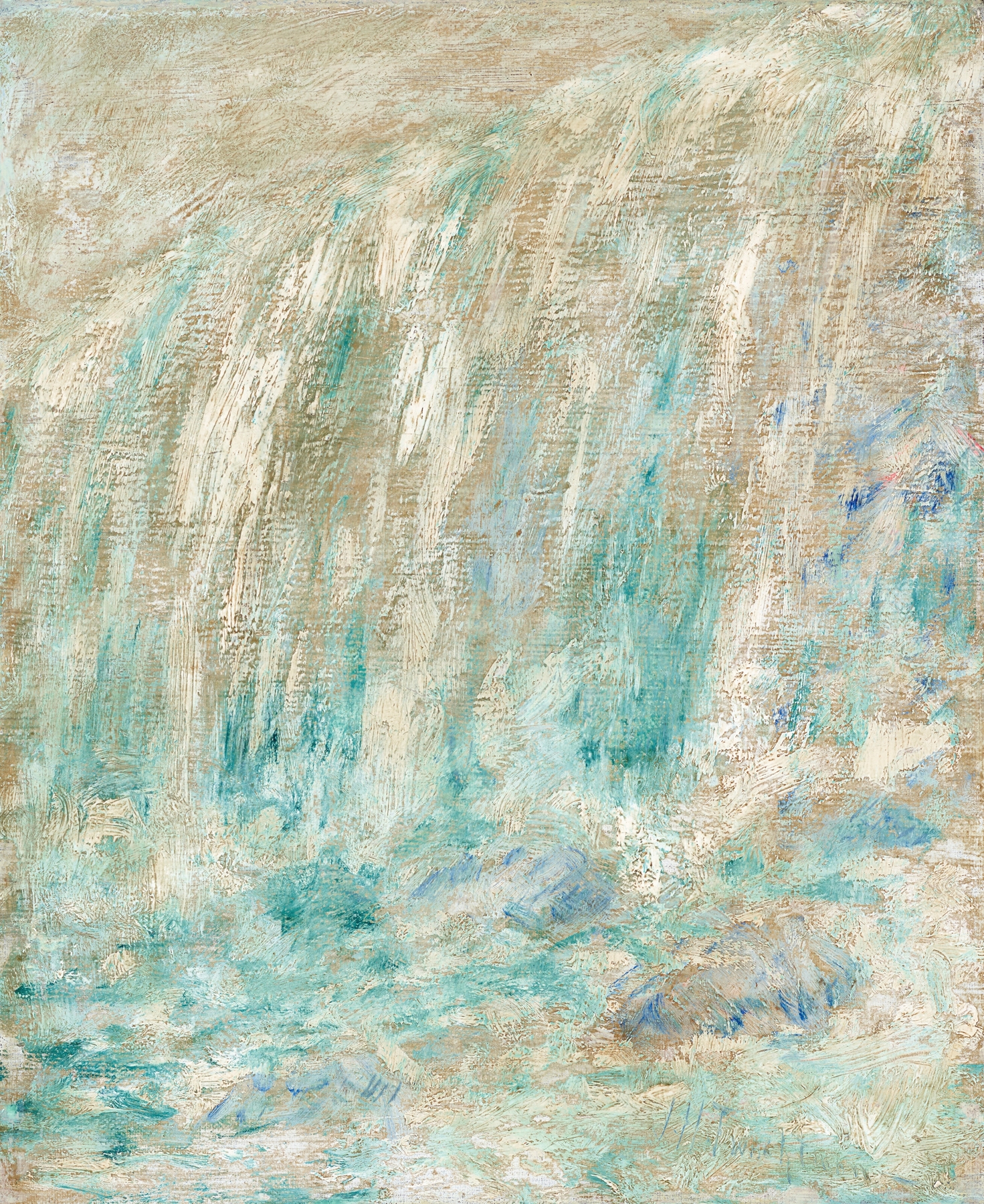
Can paint confess what words never could? In Round Hill Road, the landscape seems to breathe, revealing the divinity hidden in nature’s quiet moments. Twachtman invites us to experience a pastoral reverie, where colors whisper secrets and brushstrokes speak of a deeper connection to the sublime. Look to the left, where a verdant path winds into the embrace of a lush canopy. The interplay of greens, from deep emerald to soft moss, envelops the viewer, while dappled light punctuates the scene, casting both illumination and shadow.
Notice how the gentle curves of the road guide your eye deeper into the painting, suggesting a journey that invites contemplation and reflection. The artist’s mastery of impressionistic technique infuses the scene with an ethereal quality, where every stroke seems deliberate yet fluid, capturing the fleeting beauty of nature. As you delve deeper, consider the tension between the tranquility of the landscape and the subtle chaos of nature’s elements. The scattered leaves and the hints of movement in the branches evoke a sense of life that is both soothing and restless.
This duality reveals the artist’s understanding of nature not just as a subject, but as a living entity, imbued with spirit and mystery—a divine presence lurking within the mundane. Twachtman created this piece between 1890 and 1900, during a period when he was exploring the Impressionist style, influenced by his studies in Paris. Living in Connecticut at the time, he was surrounded by the natural beauty that inspired much of his work. This era marked a significant turn in American art, as artists sought to capture the essence of their surroundings with a fresh perspective, moving away from traditional forms and embracing the emotive power of color and light.