Snow at Ochanomizu — History & Analysis
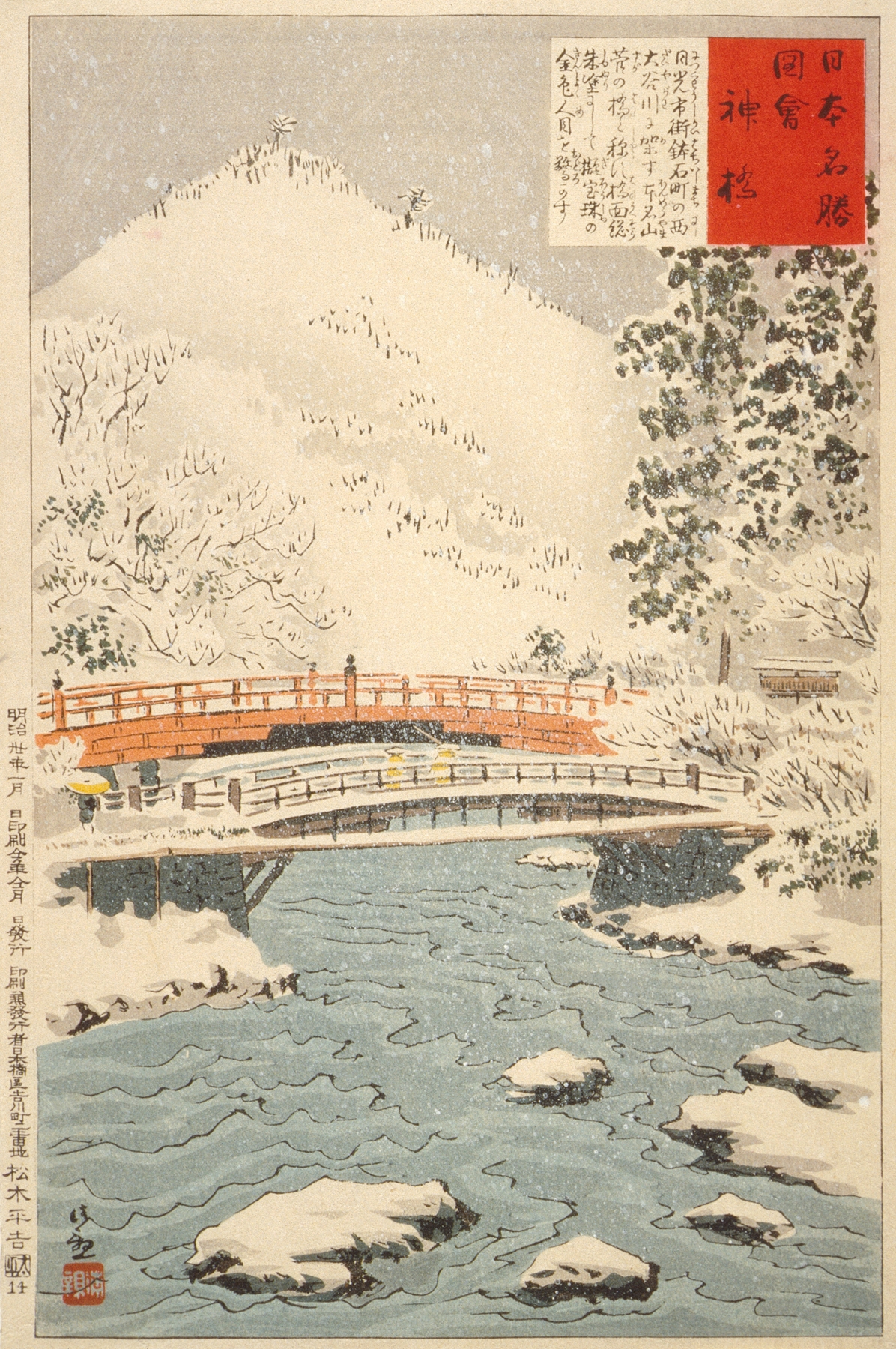
Who listens when art speaks of silence? In Snow at Ochanomizu, the hush of a winter's day resonates, awakening a sense of stillness that invites contemplation. Look to the left, where delicate flakes drift down from a muted gray sky, blanketing the rooftops and streets with tender white. The soft brushstrokes create a gentle texture, while the cool palette of blues and whites evokes both serenity and a hint of melancholy.
Notice how the distant figures, shrouded in the snowfall, appear as mere silhouettes, their presence both comforting and distant, merging with the wintry landscape as they navigate the quiet scene. Beneath the serene facade lies a deeper tension. The contrast between the vibrant warmth of the buildings and the frigid atmosphere accentuates a sense of isolation, reflecting the human experience amidst the tranquility of nature. Each glistening snowflake carries a whisper of forgotten stories, suggesting that while the world outside is serene, the inner life of those caught within it may be anything but.
The painting captures a profound moment of awakening to the beauty and solitude of existence. In 1880, Kobayashi Kiyochika was navigating the complexities of a changing Japan, as Western influences began permeating traditional art forms. Living in Tokyo, he was at the forefront of the ukiyo-e revival, embracing modern techniques while paying homage to classical themes. It was a time of artistic exploration, as Kiyochika merged Western realism with Eastern aesthetics, creating works that vividly depicted everyday life, even amid the stark beauty of winter.