Thunder and Lightning at Oumaya Bridge — History & Analysis
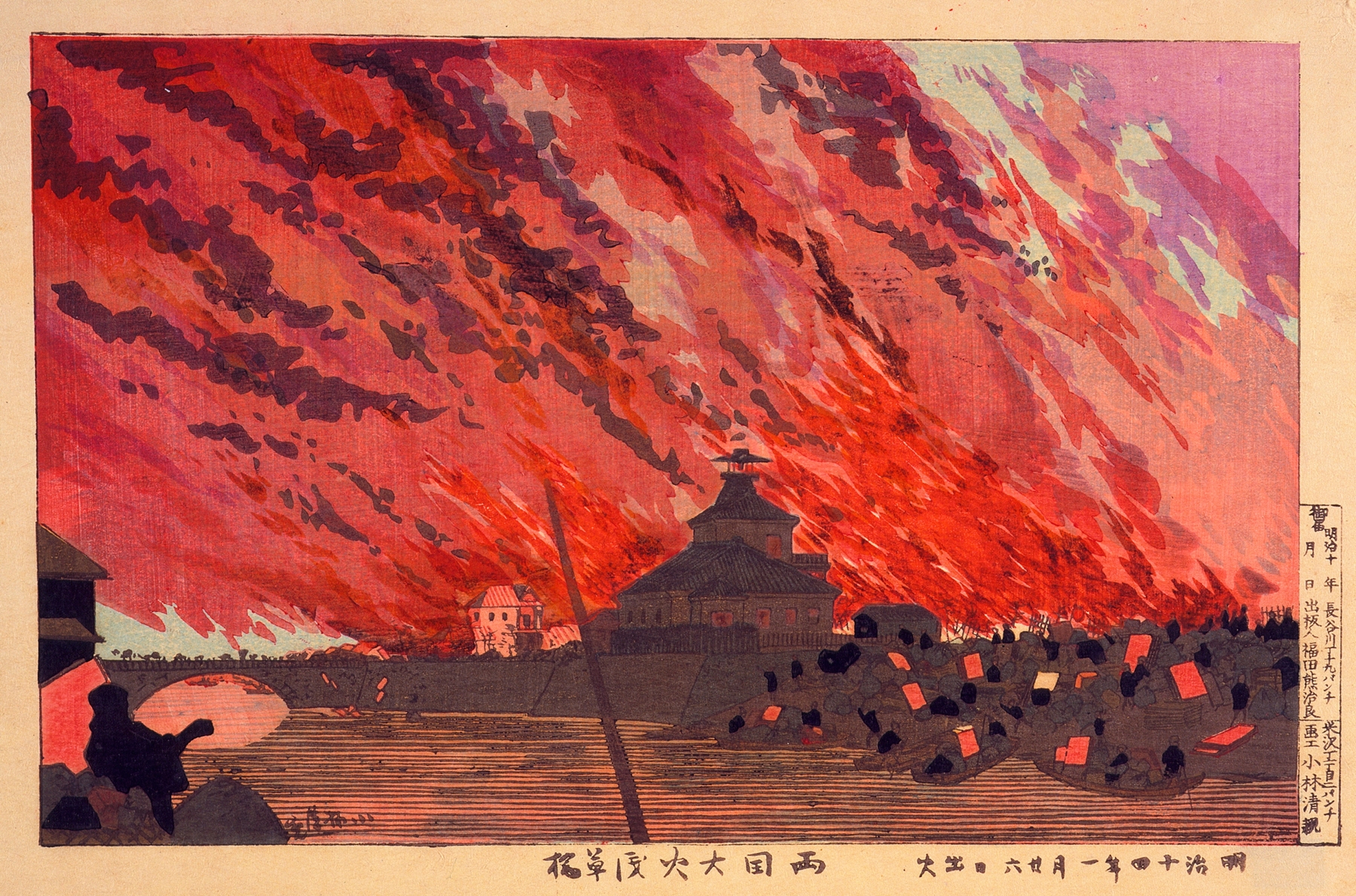
“Art reveals the soul when the world turns away.” In the midst of decay and the ephemeral nature of existence, we find the raw beauty that transcends time. Look to the center of the canvas, where ominous clouds swirl and clash in a riot of blues and blacks, hinting at an impending storm. The bridge, sturdy yet forlorn, stands in stark contrast against the chaotic sky, its weathered surface marked by time and neglect. Notice how Kiyochika employs a masterful interplay of color and light, the vibrant reds and yellows peeking through the tempest, evoking a sense of hope amidst despair.
Beneath the surface, the painting captures the tension between nature's wrath and humanity's resilience. The bridge symbolizes the passage of time, its decay reflecting the transient nature of life, while the electric energy of the storm serves as a reminder of unstoppable forces. Each brushstroke breathes life into this intersection of beauty and decline, inviting contemplation on the fragility of existence.
In 1879, Kiyochika painted this work during a period of transformation in Japan, as the Meiji Restoration was bringing modernization and change to the country. This era marked a shift from traditional practices to new influences, as artists sought to blend Eastern aesthetics with Western techniques. Immersed in this cultural upheaval, Kiyochika harnessed the tension of his surroundings, capturing a moment that resonates with the duality of progress and decay.