View of Rainfall on Shin-Ou-hashi in To-kei — History & Analysis
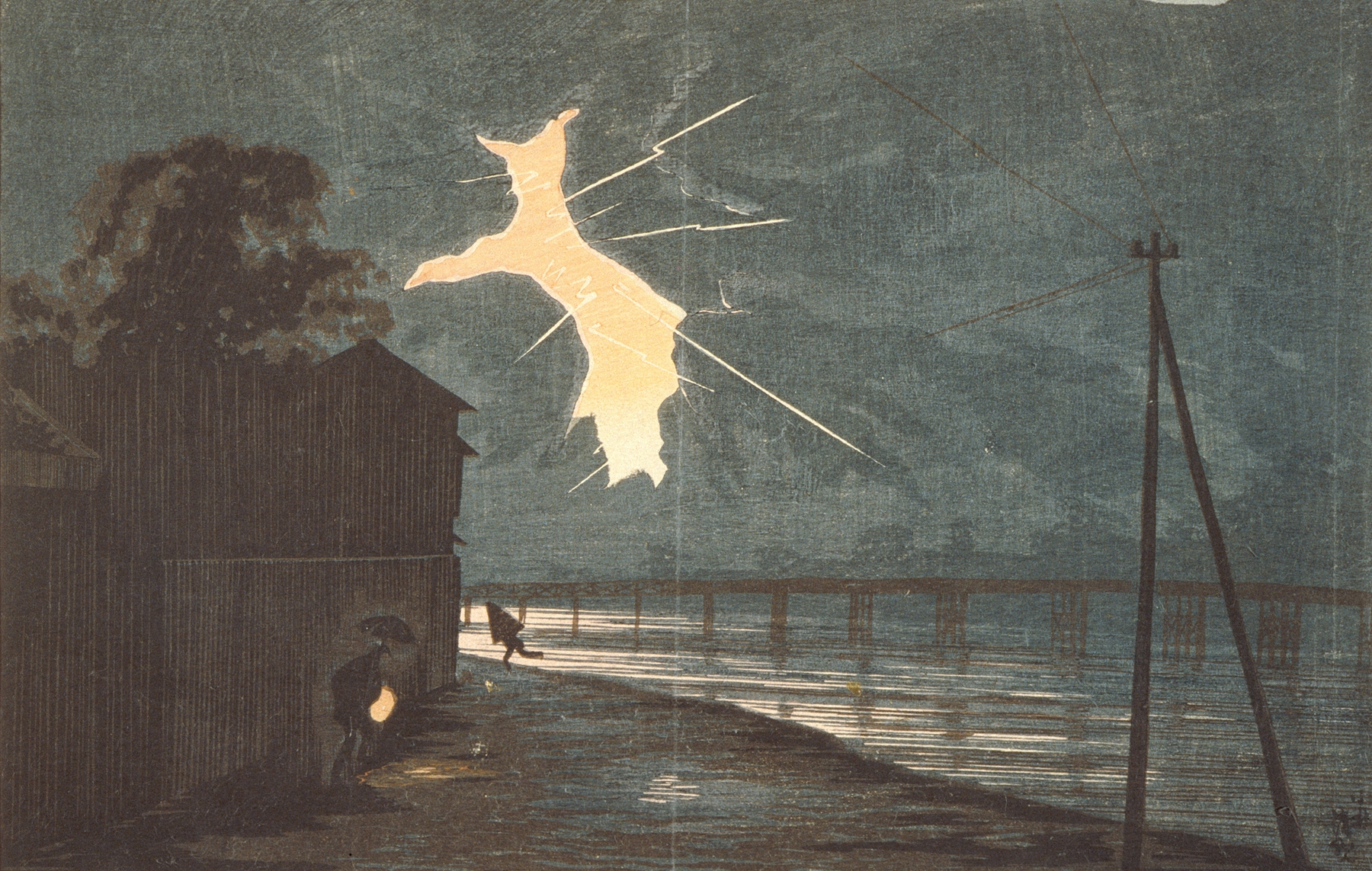
“Sometimes beauty is just pain, disguised in gold.” In the delicate interplay of light and shadow, longing transforms into a tangible experience. This painting invites you to explore the bittersweet nature of existence, where beauty is deeply intertwined with loss. Focus on the left side of the canvas, where gentle rain falls over the iconic Shin-Ou-hashi bridge. The cascading droplets dance upon the water's surface, creating ripples that seem to echo the murmurs of distant memory.
Notice how the muted palette of blues and greys envelops the scene, punctuated by the warm glow of lanterns, hinting at life beyond the rain. The brushwork evokes movement, drawing your gaze across the bridge and into the hazy depths of the city, where shadows and light converge. Within this tranquil yet melancholic landscape lies a profound tension — the juxtaposition of the serene beauty of the rain and the underlying solitude it evokes. The bridge, a symbol of connection, is rendered almost ghostly, suggesting longing for something just out of reach.
The interplay of nature and architecture reflects the artist’s contemplation of transience, reminding viewers that moments of beauty often come with a hint of sorrow. Created in 1876, this piece emerged during a transformative time in Japanese art, as traditional styles began to embrace Western influences. Kiyochika, already a prominent printmaker, sought to capture the changing urban landscape of Tokyo while also exploring emotional depths. His work reflects both personal introspection and a societal transition, as modernity clashed with the echoes of the past, leaving a legacy that continues to resonate.